
Is Your Car Your Castle? Iowa's Castle Doctrine and Your Vehicle
Joseph McLain Nov 10, 2026
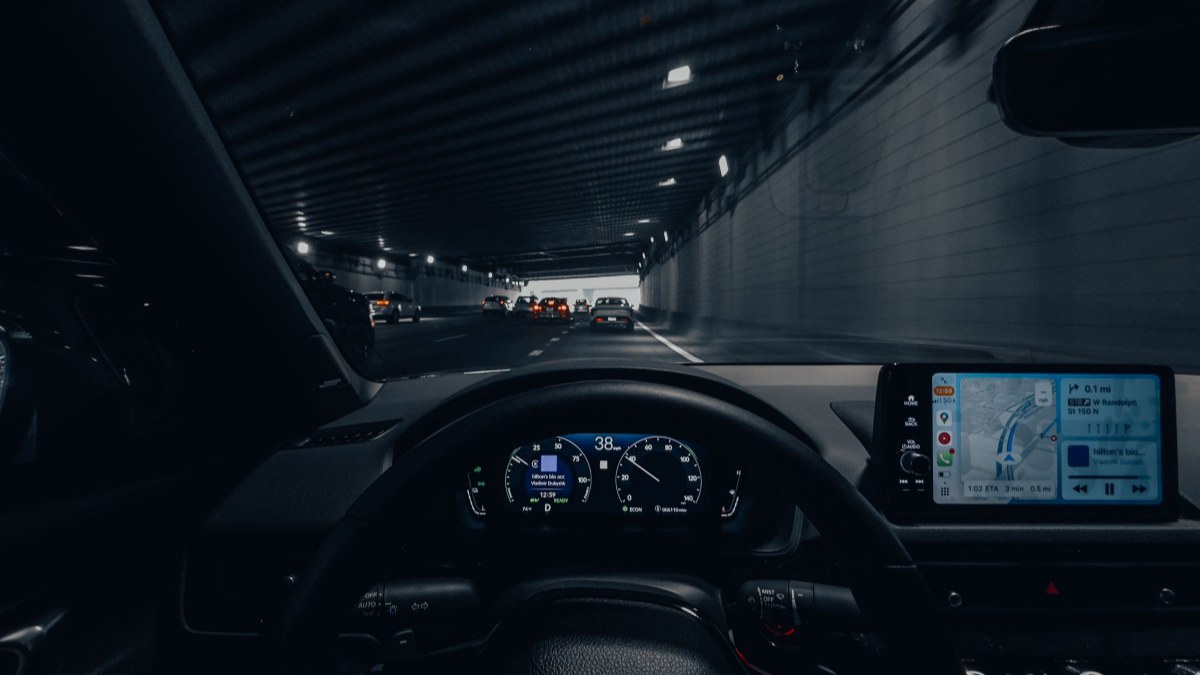
You are sitting in your car at a stoplight or in a store parking lot when a stranger walks up angry. He is shouting. Then he grabs the door handle. Then he smashes the window and reaches inside. Plenty of people would sum up that whole moment in one phrase: "My car is my castle."
Iowa's castle doctrine does cover occupied vehicles, and being inside the car is part of what triggers it. But a car by itself is just property, and the slogan hides the part that matters most: The law's answer changes as the stranger's conduct changes.
This is education, not legal advice; talk with an Iowa attorney about any specific situation. By the end you should be able to follow an encounter at your car step by step and tell which fact changes the legal answer.
Three questions hidden inside "my car is my castle"
When people say their car is their castle, they are really asking three separate questions, and Iowa answers each one with a different law.
The first question is whether you may use force at all. Iowa Code section 704.3 allows reasonable force when you reasonably believe it is necessary to defend yourself or someone else from actual or imminent unlawful force. That right goes with you everywhere: In your car, on a sidewalk, at a gas pump. You do not need a special vehicle law to defend yourself in your car.
The second question is whether you have to retreat first. Iowa's stand your ground rule, section 704.1(3), says that a person who is lawfully present and not engaged in illegal activity has no duty to retreat before using force that is otherwise justified. It answers only whether you must leave, not whether force is reasonable.
The third question is whether the law will presume your belief was reasonable. Section 704.2A creates that presumption in specific situations, including when someone is unlawfully entering your occupied vehicle by force or stealth. That is Iowa's vehicle castle doctrine.
Separating those questions matters in real life. Someone could point a gun at you through your windshield without ever trying to get in. You would not need to wait for an entry, because ordinary self-defense applies to the immediate threat. On the other hand, someone yelling insults at you from outside your car gives you no right to use deadly force, no matter which seat you are sitting in. The vehicle presumption is a powerful legal tool, but it is only one of three. Ask first what the person is doing that threatens you, then ask whether the vehicle presumption adds anything.
What Iowa's vehicle presumption actually says
Section 704.2A presumes that you reasonably believe deadly force is necessary to avoid injury or risk to your life or safety, or someone else's, when the person you use force against is doing one of two things. Either they are unlawfully entering, or have unlawfully entered and remain in, your occupied vehicle by force or stealth. Or they are unlawfully removing, or trying to remove, another person from that vehicle against their will. You must also know or have reason to believe that this is happening.
Notice the important words. "Occupied" means someone is inside; an empty car in your driveway does not qualify. "Unlawfully" means the person has no right to be there. "Force or stealth" means breaking in or sneaking in, not being invited. And "attempting" counts: In a 2024 decision, the Iowa Supreme Court discussed the presumption as covering someone attempting to unlawfully enter an occupied vehicle by force, so you do not necessarily have to wait until an attacker is fully inside.
A presumption is a head start, not a final verdict. It means the law starts from the position that your belief was reasonable. It does not settle every disputed fact, such as whether the person was really trying to get in, whether the entry was unlawful, or whether an exception applies. Those can still be argued. In Iowa, once a justification defense is properly raised, the state has to prove beyond a reasonable doubt that the force was not justified, and the presumption makes that harder for the state when its conditions are met.
That is why evidence matters even when a case seems clear. A broken window supports an account of a forcible entry. Dashcam video of the other person walking away undermines it. The presumption gives you a real advantage, but only on the facts as they are proven. Know exactly what the presumption requires, an occupied vehicle and an unlawful forcible or stealthy entry or removal, and do not stretch it beyond that.
Key idea: Iowa's vehicle castle doctrine protects people in vehicles, not vehicles. The word "occupied" is doing most of the work.
Follow the encounter as it changes
Go back to the angry stranger and walk through his actions one at a time, because that is exactly how investigators and jurors will look at it.
At first he is shouting from several feet away. That is frightening, but frightening is not the same as a threat that justifies deadly force. What he is saying, what he is doing, whether he appears able to hurt you, and how immediate the danger is all matter. Fear is part of the picture, but it does not decide the question. This is the moment to lock the doors, roll up the window and, if you can, drive away.
Next he grabs the door handle. That matters, but it still needs context. Is this an aggressive attempt to get in and attack you? A drunk person trying the wrong car? A friend of your passenger? The same action can mean very different things depending on what surrounds it.
Now he smashes the window and starts forcing his way in while threatening you. This is the kind of intrusion section 704.2A describes. The legal picture has changed because his conduct has changed.
Finally, suppose he gives up and runs. Whatever justification existed during the break-in does not follow him down the street. Once the threat has ended, your justification for force ends with it. An encounter can begin as lawful defense and end as a crime if force continues after the danger is over. Our article on when self-defense ends explains this in detail.
The vehicle presumption can apply suddenly, but it can also stop applying just as suddenly. Respond to what is happening now, not to what happened a few seconds ago.
Occupied and empty vehicles are different problems
Picture looking out your kitchen window and seeing someone stealing tools from your empty truck. You own the truck and the tools, and the theft is a crime. But the occupied-vehicle presumption does not apply, because no one is in the truck. Your problem is criminal interference with property.
Iowa allows reasonable force to prevent or stop criminal interference with property under section 704.4, but that does not authorize deadly force against a thief. However expensive the truck is, and however painful it would be to replace, it is not a human life. Call the police, take note of what you see, and stay safe.
Change the facts. Your child is in the back seat, and someone jumps in and tries to drive off. Now the danger is to a person. Ordinary defense of another applies, and section 704.7 allows reasonable force, including deadly force, to prevent or stop a forcible felony you reasonably believe is happening or about to happen. Iowa defines forcible felonies in section 702.11 to include crimes like robbery and kidnapping. Ordinary car theft is not on that list just because the car is valuable, but taking a car with a child inside raises an entirely different set of crimes.
The same vehicle can be property one moment and a place holding a person the next. Identify what is really being threatened, your property or a person, before you decide what you may do about it.
Common mistake: Thinking that because your car is covered by the castle doctrine, you can use deadly force to stop someone stealing it from your driveway. The vehicle presumption requires an occupied vehicle. An empty car is property, and property alone does not justify deadly force.
Parked cars, gas pumps and passengers
Iowa's statute does not say the vehicle must be moving or the engine running. The 2024 Iowa Supreme Court case involved an SUV parked along a street. A parked car with someone in it is still an occupied vehicle.
Standing next to your car is different. If someone attacks you while you are pumping gas, ordinary self-defense applies, but you are not in an occupied vehicle, so the presumption likely does not. On the other hand, if someone tries to drag your passenger out, the removal part of section 704.2A applies directly, even though the threat is aimed at someone other than you.
Be careful with the word "your." The statute speaks of the occupied vehicle "of the person using force," but it does not spell out how that applies to a rental car, a borrowed truck, a work vehicle or a rideshare. Ordinary self-defense is available to anyone in any vehicle when its conditions are met. Whether a passenger in an Uber or the driver of a friend's car also gets the presumption is a question the statute does not clearly answer. The same goes for unusual vehicles like motorcycles, open utility vehicles and boats. An RV or camper you sleep in may also count as a dwelling, which is a related protection covered in our article on the castle doctrine away from home.
The presumption clearly covers a typical car you own and are sitting in, but gets less certain at the edges. Rely on ordinary self-defense as your foundation, and treat the vehicle presumption as an added protection that may not reach every situation.
When the presumption does not apply
Section 704.2A lists situations where the presumption does not apply, even if someone is entering or removing a person from your vehicle. Several of them come up more often in cars than in houses.
- Someone with a right to be there. If the person has a right to be in the vehicle, like a spouse, co-owner or invited passenger, and no protective or no-contact order is in effect against them, the presumption does not apply.
- Your own child or someone in your custody. If the person being removed is the other person's child or grandchild, or otherwise in their lawful custody or guardianship, the presumption does not apply.
- Police doing their job. If the person entering is a peace officer lawfully performing official duties, the presumption does not apply.
- You were committing a crime. If you are committing a criminal offense, escaping from one, or using the vehicle to further one, the presumption does not apply.
Of these, the first does the most work in vehicles, because most passengers got in with permission. A heated argument between a couple in the front seat does not turn one of them into an unlawful intruder. A custody dispute in a parking lot does not make the other parent a kidnapper by default. And a lawful traffic stop where officers remove someone from a car is not a civilian abduction.
Losing the presumption is not losing your right to defend yourself. If an authorized passenger suddenly attacks the driver with a knife, the driver may still be justified under ordinary self-defense. The relationship does not excuse an assault. It just means the presumption is not the right tool. The exceptions keep the presumption from being abused in family and police situations. Before you think "castle doctrine," ask whether the person has a right to be in your vehicle.
Road rage and the duty you do not have
Road rage is where this law gets misused most often. A driver who pulls over, walks up to another car and starts an unlawful fight cannot climb back into his own driver's seat and claim the castle doctrine when the other person follows. Iowa's section 704.6 generally denies justification to someone who provokes force through their own unlawful acts, unless they clearly withdrew and showed they wanted to stop, or the other person's response was grossly disproportionate and put them in fear of imminent death or serious injury. Your car is not a place to manufacture a self-defense claim. Our article on provocation and self-defense covers these rules.
For someone who did not start it, Iowa's stand your ground rule means you are not legally required to drive away before using force that is otherwise justified. But having no legal duty to leave is not the same as having a reason to stay. If you can safely drive off, you protect yourself, your passengers and bystanders, and you avoid ever having to prove your actions were justified.
One more caution: Your vehicle can itself be deadly force. Iowa defines deadly force to include force that you know or reasonably should know creates a strong probability of serious injury. Driving away through an open lane is very different from deliberately running someone down. The castle doctrine does not automatically justify using your car as a weapon against someone standing in the road.
The law gives you the right to stay, but staying is rarely the safest choice. If you can safely drive away, drive away.
Good practice: In any confrontation at your car, your first moves should be lock, window up, and drive if the path is clear. Your vehicle is your best escape tool long before it is your castle.
A real Iowa case shows why the moment matters
In May 2024, the Iowa Supreme Court decided the case of Lasondra Johnson. After two fights near a parked SUV in Waterloo, Johnson fired from inside the SUV and killed another woman. Witnesses disagreed sharply. Johnson and one witness said the other woman kept coming toward the vehicle and claimed to have a gun. Other witnesses said the fight was over and the women were walking away.
A jury acquitted Johnson of murder but convicted her of a lesser offense. The Supreme Court reversed and ordered a new trial, because the jury instructions could have allowed jurors to treat the shooting itself as the "criminal offense" that takes away the castle doctrine presumption and stand your ground. The court said that reading would gut the defense. It did not say the shooting was justified. It said the jury needed to decide the disputed facts under the correct law.
The lesson is that getting back into a vehicle does not freeze a threat in place. Jurors had to decide whether the attack was still happening at the moment of the shot. What matters is what was happening at the instant you used force.
Immunity, duties after an incident and crossing state lines
Iowa's section 704.13 gives a justified defender immunity from criminal or civil liability for harm to the aggressor. In 2020, in State v. Wilson, the Iowa Supreme Court held that this is immunity from liability, not from prosecution, and that there is no right to a pretrial immunity hearing. A disputed case can still go to trial. And the immunity covers harm to the aggressor, not every person nearby. Firing toward a crowd or into traffic raises problems no presumption fixes.
Iowa also requires anyone who uses deadly force to notify law enforcement within a reasonable time, or have someone else do it, if able, and forbids destroying, altering or concealing evidence or pressuring witnesses, under section 704.2B. If you have a dashcam, preserve the footage. Never rearrange a scene to make it fit the law.
Finally, Iowa's vehicle presumption stops at the state line. Minnesota's statute on justifiable taking of life, section 609.065, speaks of preventing a felony in your "place of abode," and does not include Iowa's express occupied-vehicle presumption. That does not leave a Minnesota driver defenseless, because ordinary self-defense still applies, but you cannot assume Iowa's shortcut works there. Other states, like Florida, have their own vehicle provisions with different wording. Your carry permit's recognition in another state is a separate question from that state's rules on using force.
The vehicle presumption is strong in Iowa and absent or different elsewhere. When you drive into another state, learn its self-defense law, not just its carry law.
Putting it together
Iowa's castle doctrine does cover your vehicle, but only when it is occupied and someone is unlawfully entering by force or stealth, or unlawfully trying to remove a person from it, and only when no exception applies. It is a presumption, a legal head start, not a promise of no charges. It never covers an empty car, never turns property into a reason for deadly force, never protects someone who started the fight, and never survives the moment the threat ends.
Beneath it, your ordinary right to defend yourself and others goes with you into any vehicle, anywhere, when the threat justifies it. And above all of it sits practical judgment: Lock the doors, raise the window and drive away if you can.
Check your understanding
Try answering these before you open the answer. If you can decide what to do and explain why, you have it.
1. A man is breaking into your empty truck in your driveway at night while you watch from the house. Does Iowa's vehicle castle doctrine let you use deadly force?
No. The vehicle presumption requires an occupied vehicle. An empty truck is property, and while Iowa allows reasonable force to stop interference with property, that does not authorize deadly force. Stay inside, call 911 and note what you see.
2. You are sitting in your parked car when a stranger smashes the driver's window and starts climbing in while threatening you. What has changed compared to him just yelling outside?
His conduct now matches what section 704.2A describes: An unlawful entry by force into an occupied vehicle. That triggers the presumption that you reasonably believed deadly force was necessary, unless an exception applies. When he was only yelling outside, there was no entry and likely no threat justifying deadly force.
3. During an argument, your passenger, who you invited along, grabs the wheel. Does the castle doctrine presumption apply?
No, because a person who has a right to be in the vehicle and is not subject to a protective or no-contact order falls under an exception. That does not mean you have no right of defense. If the passenger's actions create an actual or imminent threat, ordinary self-defense under section 704.3 can still apply.
4. After a near miss, a driver follows another car, gets out, pounds on the window and dares the other driver to fight. The other driver gets out and swings. The first driver gets back in his car and fires. Can he rely on the castle doctrine?
Very likely not. Under section 704.6, a person who provokes force through their own unlawful acts generally cannot claim justification unless they clearly withdrew or the response was grossly disproportionate. The presumption also does not apply to someone engaged in a criminal offense. He created the danger, and returning to his car does not erase that.
5. You drive into Minnesota for a weekend. Does Iowa's occupied-vehicle presumption go with you?
No. Self-defense law is set by the state where the incident happens. Minnesota's statute does not include Iowa's express occupied-vehicle presumption, though ordinary self-defense still applies there. Learn the rules of any state you travel in.
Where to go next
For how Iowa's castle doctrine works in your home, read the castle doctrine and home defense. To understand why the right not to retreat is not a reason to stay, see stand your ground is not a license to kill. For what to expect if you are stopped by police while carrying, read carrying concealed during a traffic stop. And for what to do if your gun is ever taken from your car, see when a gun is stolen from your vehicle.
If this article helped you, we invite you to sign up for email notifications of new blog articles.