
You Fall Back on Your Training: What Practice Can and Cannot Do Under Threat
Joseph McLain Nov 10, 2026
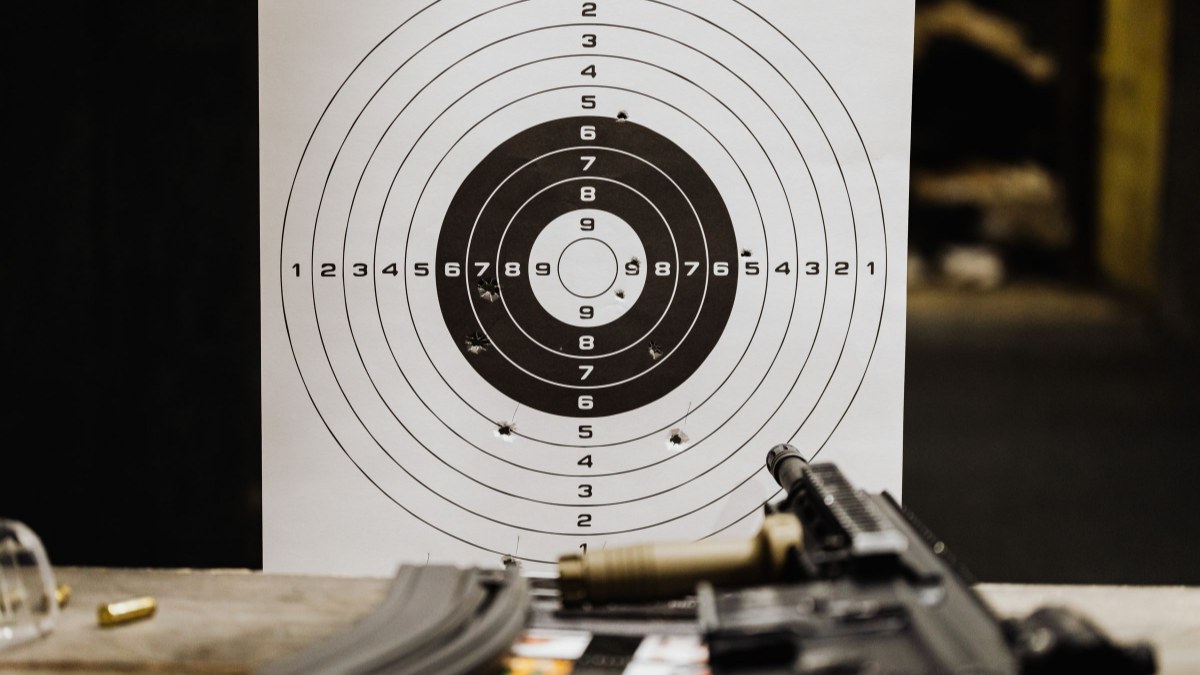
You have carried for three years. You took your permit class, you shoot a box of ammunition at the range every month or two, and you can put five rounds in a fist-sized group at seven yards. One evening a man comes across a dark gas station lot toward you, shouting, one hand hidden behind his leg. Your heart is pounding, your hands feel thick, and your jacket is zipped over the holster you have never actually drawn from in practice. In that moment, the question is not what you know about shooting. It is what your body can actually do, right now, while you are scared.
"You don't rise to the occasion; you fall back on your training" is true in a narrower way than most people think. Practice does decide what you bring to an emergency, and well-practiced movements can happen without conscious thought. But only the skills you practiced under conditions like the real ones carry over, and no training can promise how a real attack will go.
By the end you should be able to explain why stress changes how you perform, what kinds of training help most, why skills fade, and how to build a practice routine that prepares you for the situation you are actually worried about.
Knowing how is not the same as being able to
Think back to learning to drive. On your first day, you understood exactly what the mirrors, pedals and turn signal were for, and you still had to think hard about every one of them. Checking the mirror meant forgetting the speedometer. A few months later, you could do all of it while following directions and talking to a passenger. The movements had become easy enough that your attention was free for the road.
That is what practice does. It turns knowledge into coordinated action that takes less and less attention to perform. Researchers call this motor learning, and they have shown that it changes how the brain organizes movement as practice continues over time. People often call the result "muscle memory," which is fine as shorthand, as long as you remember the learning lives in the nervous system, not in the muscles.
Notice what the experienced driver still has to do, though. They still have to see the child stepping off the curb and decide to brake. Easy movements free your attention. They do not replace it. A smooth draw or a fast reload is valuable precisely because it leaves your mind available for the harder job, which is figuring out what is happening and what to do about it.
Building that kind of ease takes far more repetitions than understanding does. Do not count a skill as yours because you can explain it or did it once in class. Count it when you can do it smoothly while your attention is on something else.
Stress changes the task you thought you knew
At the range, you know what is going to happen. There is a target, a defined drill and a start signal. Nothing is coming toward you, and nothing depends on the result. A real threat adds everything the range removes: Uncertainty about what the other person intends, too much information arriving at once, a body flooded with stress hormones, and consequences that could not matter more.
A 2019 review of police training by Di Nota and Huhta describes performance under threat as the combined result of movement skill, perception, memory, decision-making and the body's stress response. Stress is not a weight added on top of otherwise unchanged mechanics. It changes what you notice, how quickly you make sense of it and how well your hands follow through. That is why a skill that looks solid on a calm Saturday morning can come apart in a parking lot at night.
Key idea: The question is not only "Have I learned this movement?" It is "Have I learned to perform this movement while I am uncertain, rushed and afraid?" Those are two different skills, and the second one has to be practiced on purpose.
Adding pressure to practice makes it less comfortable, and your scores will often look worse at first. Once a skill is smooth in calm conditions, start practicing it under some time pressure, uncertainty or mild stress, and judge your progress there.
What the shooting research actually shows
The best summary of the evidence comes from a systematic review and meta-analysis by Cooper and colleagues, published in the journal Human Factors. It gathered 17 studies of police, military and similar groups. Across the studies that compared shooting under higher and lower pressure, accuracy dropped by an average of about 14.8 percent under pressure. Across the studies that compared training methods, training that included realistic threat improved accuracy by about 10.6 percent compared with traditional training.
Those numbers describe measured accuracy on a target, not survival. The studies also varied a lot, so no one should promise a particular person a particular result. But the direction is clear and consistent with a broader 2021 meta-analysis by Low and colleagues, which pooled 14 pressure-training studies with 394 participants in sport and law enforcement and found a medium-sized benefit for training under pressure.
One of the clearest experiments was done by Nieuwenhuys and Oudejans in 2011. They worked with 27 police officers. Some trained against an opponent who shot back with colored soap cartridges, which made them genuinely anxious. Others trained against an opponent who did not. Before training, anxiety made both groups less accurate. After training, the group that had practiced while anxious no longer lost accuracy under pressure, and the benefit was still present four months later. The other group was still just as affected.
The lesson is not that fear goes away or that the task becomes easy. It is that people can get practice at performing while afraid, and that practice is itself part of being prepared. Build some form of pressure into your practice, and leave anything involving another person and marking rounds to a qualified instructor running a controlled course.
Fast is not the same as right
Picture two drills. In the first, every time the buzzer sounds you draw and fire. In the second, a screen shows a person who may be holding a gun or a phone, and you have to decide whether to shoot at all. Both demand good movement. Only the second tests judgment, and judgment is what a real encounter demands most.
Research shows how separate these abilities are. In a 2022 study by Heusler and Sutter, police cadets who trained in visual attention and threat assessment made more correct decisions to shoot in live-fire scenarios than cadets who received traditional precision-and-speed training, and they fired their first shot faster. But they did not improve more than the other group at correctly deciding not to shoot, and neither group got significantly faster at landing an effective hit. Training one capability improved that capability. It did not improve everything at once.
Common mistake: Measuring progress only by how fast you can draw and fire on a buzzer. Speed matters, but a fast response to the wrong situation is worse than a slower response to the right one. Practice recognizing when not to shoot as deliberately as you practice shooting.
Decision drills are harder to set up alone, and they make your times look slower. Make sure some of your practice requires you to decide, not just react, and treat a correct "don't shoot" as a success.
Why round count is the wrong measure
A lifetime ammunition total tells you how much you have shot. It does not tell you what you practiced, what mistakes were corrected, or whether the skill is still there today. Two people can each say they have fired ten thousand rounds. One spent those rounds repeating the same comfortable drill at the same distance. The other found a weakness each session, got coaching, and tested themselves again after a break. Their totals look the same. Their skills do not.
Research on expertise points the same way. A 2016 meta-analysis of sports performance by Macnamara and colleagues found that deliberate practice explained a real share of the differences between athletes, but far from all of it. How you practice matters as much as how much.
Keep the fun, but replace "How many rounds did I shoot?" with "What can I do reliably now that I could not do last month, and what still falls apart?"
Skills fade, and a good session can fool you
A great range day feels like proof that you have learned something. But doing well during a session, doing well after weeks without practice, and doing well in a different situation are three different things. Learning researchers call them acquisition, retention and transfer. A good session proves only the first.
Think of following turn-by-turn directions through a strange town. You arrive without a wrong turn, but a week later you could not retrace the route without help. Your performance was real. So was its dependence on the guidance.
Skills you stop using fade, and the evidence on how fast is sobering. A large 2025 meta-analysis in Psychological Bulletin pulled together 1,344 measurements from 457 reports on many kinds of procedural skills. On average, with no use, about half of the initial gains in accuracy were gone after roughly six and a half months. These were not firearms studies, and no one should treat that figure as a handgun expiration date. But it shows plainly that once learning something does not mean you can still do it.
Regular practice costs time and money that occasional big sessions seem to save. Practice your critical skills in short, frequent sessions rather than rare long ones, and every so often test yourself cold, on the first attempt of the day, because that is the only attempt you get in real life.
Repetition and variety each have a job
When a skill is new, repeating it the same way, over and over, makes it manageable. A new shooter learning to draw from a holster needs a quiet, predictable setting to put the pieces together. Later, though, doing only the same drill tells you little about whether you can adapt. Real situations come at different distances, angles and light, from different positions, wearing different clothes.
Researchers have studied whether mixing up practice helps people learn. The answer so far is "often, but not always." Mixed practice tends to make performance look worse during the session and better in later tests, especially in laboratory studies. Reviews of sport and physical education settings have been more cautious about how far that benefit generalizes. So there is no rule that all practice should be random.
The practical approach is to match practice to where you are. Repeat a new skill in a simple setting until it is smooth. Then start changing things: The distance, the target, your starting position, the clothing over your holster, the light.
Good practice: Practice in the clothes you actually carry in. A draw that is smooth from an open range belt can fail badly the first time you have to clear a zipped winter coat or a tucked shirt. If you carry under a jacket half the year, practice under a jacket half the year.
Repeat a skill until it is smooth, then vary the conditions until you find out where it breaks, and practice there.
"Without thinking" and the lizard brain
Experienced shooters often say they fired without thinking, or that they never saw their sights. Those statements can be honest and still mean less than they seem. "I did not consciously think about aiming" is about attention. "I do not remember seeing my sights" is about memory, which is famously unreliable under stress. "I used no visual information to aim" is a claim about how the shot was controlled. The first two do not prove the third.
Research on shooters' eye movements links better performance to where and how they direct their visual attention. It does not support the idea that enough repetitions will produce accurate hits without using your eyes during an unexpected attack.
The popular "lizard brain" story says fear switches off thinking and switches on trained habits. An influential 2009 laboratory study by Schwabe and Wolf did find that stress pushed people toward habitual responses in a simple reward task. But two carefully preregistered replication studies published in 2023 could not reproduce the effect cleanly. None of this is defensive shooting research, and the science of exactly how stress affects habits is unsettled. What is well supported is simpler: Training improves performance under pressure, even while scientists keep studying why.
A vivid story is easier to remember than an uncertain one. Do not trust a hope that your habits will take over. Verify, by testing, which skills you can actually perform under pressure, and train the ones you cannot.
Training more than the trigger press
The same thinking applies to everything else in defensive shooting: Drawing from concealment, clearing malfunctions, reloading, moving, giving commands and calling 911. Each can be learned and tested. Each also has to fit into the bigger job of seeing what is happening and responding to it.
One habit deserves special attention. It is easy to practice a drill that ends when the shots are fired, and that can teach your body that the problem is over at that point. Real situations do not end on a schedule. After any shot, practice pausing to look, breathe and reassess, scanning for whether the threat has stopped, whether there is a second person, and where your family is. Then holster slowly and deliberately.
Finally, realism has limits that keep people alive. Force-on-force training requires purpose-built marking equipment, strict safety checks and a qualified instructor. Dry fire at home requires an empty gun, no ammunition in the room and a safe backstop every single time. Realism is a teaching tool, never an excuse for an avoidable risk.
Include drawing, malfunction work and reassessment in your practice, and do every bit of it under strict safety rules.
One honest training month
Here is how to turn all of this into a month of practice aimed at the situations you actually worry about.
- Write down the three situations you most worry about, such as being approached in a parking lot, a threat at home at night, or a car-jacking. For each, list the skills it would actually demand, such as drawing from concealment, shooting at close range, or moving to cover.
- Pick one skill. Practice it in dry fire at home for five to ten minutes, four days a week, using an unloaded gun with no ammunition in the room, starting slowly and smoothly in the clothes you carry in.
- Once a week, add pressure: Use a shot timer app or have a family member give an unpredictable start signal, and record your times.
- At the range at the end of the month, make your very first string of the day a cold test of that skill, and record the result before you warm up.
- Add one decision drill, such as a partner calling out "gun" or "phone" before you begin, so that some starts end with you deciding not to fire.
It's working when your first, cold attempt at the range looks like your practice, and you can perform the skill smoothly while counting backward or talking, because that means it no longer takes all of your attention.
Putting it together
Go back to that dark gas station lot. What would have helped most was not more rounds fired at the same paper target. It was having practiced drawing from under that same jacket, many times, until it no longer took thought. It was having trained at least occasionally with a clock running and a decision to make, so that a pounding heart was familiar rather than paralyzing. It was having practiced recently, not three months ago. And it was having practiced looking, deciding and reassessing, not just shooting.
None of that guarantees how a real encounter would go. Nothing can. But it changes what you bring to it, and that is the only part you control.
Check your understanding
Try answering these before you open the answer. If you can decide what to do and explain why, you have it.
1. You shoot tight groups at the range every month, and a friend says that means you're ready for a real attack. What's missing from his reasoning?
The range removes everything a real threat adds: uncertainty, too much information at once, a body flooded with stress hormones, and real consequences. Stress changes what you notice, how fast you decide and how well your hands follow through. Shooting calmly and shooting while afraid are different skills, and the second has to be practiced on purpose, with time pressure, uncertainty or a decision built in.
2. An instructor offers two classes: one that's mostly static target work, and one that adds timed, scenario-based drills with some pressure. You can afford only one. Which, and why?
The pressure class, assuming your basics are already smooth. In the Cooper meta-analysis, accuracy dropped about 14.8 percent under pressure, and training with realistic threat improved accuracy about 10.6 percent over traditional training. Those are accuracy measures, not survival guarantees, but they point clearly toward practicing under some pressure.
3. A man at the range brags that he's fired over 20,000 rounds, so he's "trained up." What would you want to know before believing him?
What he practiced, what was corrected and whether the skill is still there today. A round count measures how much he's shot, not how. Two people with the same total can have very different skills depending on whether they repeated comfortable drills or worked on weaknesses with feedback and tested themselves cold.
4. You took an excellent defensive class last spring and haven't practiced since. It's now fall. How confident should you be in those skills?
Less than you'd like. Skills fade without use; a large 2025 meta-analysis of procedural skills found that about half of initial accuracy gains were gone after roughly six and a half months. Test yourself cold on the first string of your next range trip, then build short, frequent practice into your weeks.
5. A drill improves your draw-to-first-shot time. Has it improved your judgment about when to shoot?
Not necessarily. Research such as Heusler and Sutter's 2022 study shows that training one ability does not automatically improve others. Judgment has to be practiced directly, with drills where the correct answer is sometimes not to shoot.
Where to go next
You can find snap caps and dummy rounds for ball-and-dummy and dry-fire practice on our website, including A-Zoom and Tipton, and anything listed there can be ordered if it isn't in stock.
To build the habit that makes frequent practice affordable, read our guide to dry firing safely at home. For help finding courses that go beyond the basics, see choosing firearms training. To understand what Iowa's permit class covers and what it does not, read permits, training and self-defense. And for the awareness that gives you time to use your skills at all, see situational awareness.
If this article helped you, we invite you to sign up for email notifications of new blog articles.