
Carrying Concealed During a Traffic Stop: What Officers Recommend
Joseph McLain Nov 10, 2026
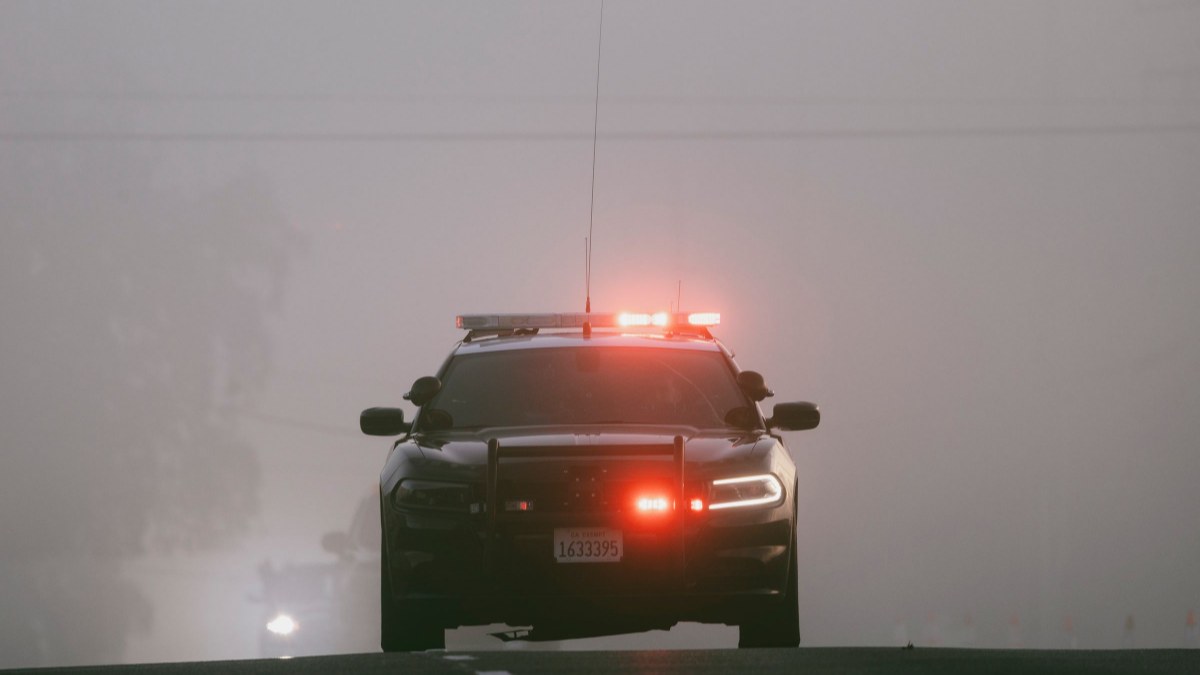
Red and blue lights fill your mirror on a two-lane highway outside town. You pull over, and as the deputy walks up, you realize something: Your wallet is in your right back pocket, and your pistol is holstered on your right hip, a few inches from the path your hand will take to reach it. You know you are only reaching for your license. The deputy cannot see what you know.
Iowa does not legally require you to volunteer that you are armed, but law enforcement organizations recommend telling the officer, and making the situation easy for the officer to read is the whole point. Some popular ideas, like putting the gun on the dashboard, make it harder.
By the end you should be able to explain the difference between Iowa's legal requirements and the recommended practice, describe exactly what to say and when, and handle document requests and officer instructions without ever making a movement the officer has to guess about.
The gap between what you intend and what the officer sees
Almost every piece of traffic-stop advice comes back to one idea. You know your intentions. The officer can only see your movements. A hand moving toward your waist could be reaching for a wallet or for a gun, and from outside the car those look the same.
Once you understand that, the advice stops being a list of rules to memorize. "Keep your hands visible" becomes obvious. So does waiting before you reach for anything, and explaining where your hand is going before it goes there. Each step closes the gap between what you mean and what the officer can see.
Think about how you would feel walking up to a stranger's car at night, knowing that some drivers are armed and a small number are dangerous. You would want to see their hands. You would want to know before they reached for anything. That is the officer's position on every stop.
Never let your hands do something the officer has not been told about.
What Iowa law requires, and what it does not
Whether you must tell an officer you are armed is a legal question. Whether police recommend telling them is a different question. Mixing the two up leads to bad advice in both directions.
Iowa law does not require you to volunteer that you are carrying during a traffic stop. That is true whether you carry with a permit or under Iowa's permitless carry law for adults 18 and older who are not prohibited. Iowa does have one related duty. Under Iowa Code section 724.4D, a person carrying a dangerous weapon whose behavior creates reasonable suspicion that they are a danger to themselves or others must cooperate with an investigating officer. The statute does not define "cooperate," so its exact reach is unclear.
Cross into Nebraska and the law is very different. Under Nebraska Revised Statute 28-1202.04, anyone carrying a concealed handgun who is contacted by a peace officer must immediately tell the officer, and must allow the officer to secure the gun if the officer decides it is necessary for safety. Failing to disclose is a crime. Our article on concealed carry reciprocity and traffic stops compares the rules in Iowa's neighboring states.
This is general education, not legal advice. Laws change, so check the current rules for any state you drive in.
Iowa gives you the choice, and the choice comes with responsibility for how the officer experiences the stop. Know which states require disclosure before you drive there, and in Iowa, decide in advance what you will do so you are not deciding under pressure.
Why police organizations recommend telling the officer
The recommendation to disclose is not just the opinion of a few officers. The American Association of Motor Vehicle Administrators publishes traffic-stop guidance approved by the International Association of Chiefs of Police, the National Sheriffs' Association, the National Organization of Black Law Enforcement Executives and the National Association of Women Law Enforcement Executives. Among its recommendations: Tell the officer right away if there is a weapon in the vehicle, and wait for the officer's instruction before reaching for your license or documents.
Many state agencies say the same thing, including some in states where disclosure is optional. Utah's Bureau of Criminal Identification recommends that armed permit holders tell the officer immediately while noting that it is not legally required. Indiana's Attorney General recommends calm notification while saying plainly it is not an Indiana requirement. Minnesota's driver's manual tells armed drivers not to search for documents or make sudden movements, to describe where a needed item is, and to wait for permission.
Be honest about what this guidance does and does not show. It reflects a broad consensus among law enforcement leaders. It is not a scientific study proving that disclosure makes stops safer. Its value is practical: It tells you what officers across the country have said they want, which is the best available guide to making the encounter go smoothly.
Key idea: Disclosure in Iowa is a choice, not a duty, but the people who conduct traffic stops have said clearly and consistently that they want to know. Telling them, calmly and with your hands still, removes the single biggest source of surprise in the encounter.
Disclosing may lengthen the stop or lead the officer to take extra steps, and not disclosing risks the officer discovering the gun at a much worse moment. Unless you have a specific reason not to, tell the officer, and do it before any reach.
Before the officer reaches your window
The stop starts before anyone talks about your gun. The AAMVA guidance recommends signaling and pulling over as soon as it is safe, turning off the engine and any music, turning on the interior light at night, lowering your window, staying in the car unless told otherwise, and keeping your hands on the steering wheel where they can easily be seen.
Pick your stopping spot with care. Passing traffic is a real danger to you and the officer. If the shoulder is narrow, signal, slow down and move to the first safe spot, such as a wide shoulder or a well-lit parking lot. Officers understand a short delay to find a safe place far better than a sudden stop in a dangerous one.
Just as important is what not to do. Do not move the gun. Do not take it off your hip and set it on the seat, put it in the console, or place it on the dashboard. Do not unload it. Every one of those actions means handling a firearm while a police officer is walking toward you, which is exactly the movement you are trying to avoid.
Common mistake: Getting your license and registration out while the officer is still walking up, to be helpful. It feels cooperative, but reaching into a back pocket, glove box or bag as an officer approaches is the most ambiguous thing you can do. Leave your hands on the wheel and wait to be asked.
Once you stop, your only jobs are hands visible, gun untouched and documents where they are until asked.
What to say, and how to say it
When the officer arrives, the useful information is simple: That you are armed, where the gun is, and, if relevant, where your documents are. Say it with words, not gestures. You do not need to touch your hip, lift your shirt or show the gun to prove what you said.
Saying the gun is "in the vehicle" leaves out something important if it is on your body. A pistol in the trunk and a pistol on your hip are very different situations for the officer. Be specific.
A permit holder might say:
"Officer, I want to let you know I have a carry permit and I'm carrying a holstered pistol on my right hip. My wallet is in my right back pocket. How would you like me to proceed?"
Someone carrying without a permit might say:
"Officer, I want to let you know I'm legally carrying a holstered pistol on my right hip. My wallet is in my right back pocket. How would you like me to proceed?"
These are examples built from the guidance, not official scripts. Adjust them to where your gun and documents actually are. Do not worry about choosing the perfect word, such as "firearm," "handgun" or "pistol." Agencies use all of them. A calm, complete sentence and still hands matter much more than vocabulary.
A permit adds useful information, because it tells the officer a background check was done. Utah's guidance makes exactly that point. But a permit card cannot tell the officer whether you are carrying right now, where the gun is, or that your wallet is next to it. That is why the spoken sentence matters more than the card.
One calm sentence that covers the gun, its location and your documents, then let the officer tell you what happens next.
When "license and registration" means reaching near the gun
Go back to the highway. The deputy says, "License and registration, please." Your wallet is behind your holster. The request tells you what the deputy wants. It does not mean the deputy has pictured the path your hand will take.
The fix is a short clarification before you move: "My wallet is behind my holster on my right side. Is it okay if I reach for it?" Wait for an answer. If the officer gives a different instruction, such as asking you to step out or reaching for the wallet themselves, follow it. If the officer says stop at any point, stop and talk it through.
The same approach works for anything else that requires a reach. Unbuckling your seat belt, grabbing your phone for proof of insurance, opening the glove box or leaning toward a bag all deserve a quick heads-up first. Name what you need and where it is, then wait for acknowledgment.
If you can, make this easier on yourself long before you are ever stopped. Keep your registration and insurance in a visor clip or a spot away from where the gun rides. Carry your license somewhere other than directly behind your holster. Small changes like these remove the awkward moment entirely.
Good practice: Sit in your car in your driveway, fully dressed the way you normally carry, and practice the stop. Notice exactly where your hands would go to get your license, registration and insurance. If any of those paths crosses your gun, move the document now, not on the side of the highway.
If a reach comes anywhere near your gun, say so first and wait.
Let the officer decide what happens to the gun
After you disclose, officers handle things differently. Some simply say thank you and leave the gun where it is. Some ask you to keep your hands on the wheel. Some ask you to step out, and some secure the gun for the length of the stop. Minnesota's driver's manual notes that an officer may take possession of the weapon during the interaction. Nebraska's law expressly allows officers to secure a concealed handgun when they believe it is necessary.
Whatever the procedure, the key is that the officer initiates it and you follow instructions. Never decide on your own to draw the gun and hand it through the window. If an instruction is unclear, such as "Let me see it," ask exactly what movement the officer wants before your hand goes anywhere near the gun. "Do you want me to take it out, or would you prefer to remove it yourself?" is a reasonable question.
If you are asked to step out, tell the officer where the gun is again as you move, and keep your hands visible. Being asked to exit does not mean you did something wrong. It is often simply how that officer prefers to handle an armed driver.
The officer leads every step involving the gun, and you ask before you move if anything is unclear.
Passengers, disabilities and disagreement
The driver's explanation does not cover everyone else in the car. Ask passengers to keep their hands visible and stay still. If a passenger needs to get the insurance card out of a bag, tell the officer who will reach and where before they do. If a passenger is also armed, they should say so too.
If you have trouble hearing over traffic, a shoulder that does not move well or another condition that affects how quickly you can follow instructions, say so plainly: "I can't hear you over the trucks" or "I need to move slowly because of my back." That gives the officer information they can work with.
Cooperation does not require agreeing with the stop. The AAMVA guidance suggests respectfully asking for clarification if you disagree, but not arguing, and contesting the ticket in court. You can comply with lawful instructions, decline consent to a search, ask necessary questions and still disagree with the outcome. If you have concerns about how an officer behaved, contact the officer's agency and ask for a supervisor afterward.
Comply and communicate during the stop, and save disagreements for the courthouse or the supervisor's phone line.
Putting it together
Return to that two-lane highway. You signal, pull over somewhere safe, turn off the engine, turn on the dome light if it is dark, lower the window and put your hands on the wheel. You leave the gun alone. When the deputy arrives, you say calmly that you are carrying, where the gun is and where your wallet is, and you ask how they would like you to proceed. When asked for your license, you say your wallet is behind your holster and wait for the go-ahead. You follow every instruction about the gun and ask before moving if anything is unclear.
None of it is complicated. It is simply about never making the officer guess what your hands are doing. A permit can help explain who you are. Clear communication explains what you are about to do.
Check your understanding
Try answering these before you open the answer. If you can decide what to do and explain why, you have it.
1. A trooper stops you on I-80 near Iowa City for speeding. You're carrying on your hip, and since Iowa doesn't require you to say so, you'd rather not bring it up. What should you weigh?
You're within the law either way, because Iowa has no general duty to inform. But the trooper will see your hands move toward your wallet and may see the gun when you shift or step out. Police organizations ask drivers to tell them because a gun discovered mid-stop is the worst surprise for both of you. One calm sentence before any reach costs you nothing and removes that risk.
2. You are pulled over in Nebraska while carrying concealed. What changes?
Nebraska law requires anyone carrying a concealed handgun to immediately inform a peace officer who contacts them, and to allow the officer to secure the gun if the officer thinks it is necessary. Failing to disclose is a crime. Iowa's choice does not follow you across the state line.
3. Your uncle says to put the gun on the dashboard before the officer walks up so they can see it. Why is that a bad idea?
It means handling a firearm while an officer is approaching, which is exactly the kind of movement the officer cannot interpret. Police guidance consistently says to leave the gun where it is, keep your hands visible, and tell the officer its location with words.
4. The officer asks for your license, but your wallet is right behind your holster. What should you do?
Before moving, say where the wallet is and that it is near your gun, and ask if it is okay to reach for it. Wait for an answer and follow any different instruction the officer gives. Better still, move your license somewhere away from your holster before you ever get stopped.
5. After you disclose, the officer says, "Let me see it." What should you do?
Ask exactly what the officer wants before your hand moves toward the gun, such as whether they want you to remove it or prefer to take it themselves. The officer should lead every step involving the firearm, and you should never draw and hand over a gun on your own initiative.
Where to go next
For the rules in Iowa's neighboring states and how your permit is recognized when you travel, read concealed carry reciprocity and traffic stops. To understand Iowa's permitless carry law, see understanding constitutional carry. For carrying a gun safely in and out of a vehicle, read our guide to firearm transport. And for how to choose a holster that keeps the gun secure during a stop, see holster retention levels explained.
If this article helped you, we invite you to sign up for email notifications of new blog articles.