
Teaching Children What to Do Around Firearms
Joseph McLain Oct 27, 2026
Picture a seven-year-old at the kitchen table, proudly reciting what she learned at school: "Stop, don't touch, run away, tell a grown-up." Her parents smile. A week later, she is at a friend's house when the friend pulls a black object out of his dad's nightstand. It is heavier than her toy guns and does not look quite like the cartoon in the video. Her friend says it is not real, and anyway it is not loaded. She knows the words. The real question is whether she recognizes that this is the moment to use them.
Parents hear different things about this. A grandparent says kids raised around guns learn to respect them, and that hiding guns only makes them curious. A pediatrician says no amount of teaching makes a child safe around an accessible gun. A friend says her son took a class and knows exactly what to do. Each of them is right about something. Familiarity can take away some mystery, storage matters more than anything a child learns, and good teaching does change behavior. But the research shows that knowing the rule and following it under real pressure are two very different things.
This article explains what research shows about teaching children gun safety, how to teach the response so a child understands it rather than just recites it, how to prepare kids for the social pressure that often comes with a found gun, and why adult storage must never depend on the lesson working. By the end you should be able to teach your child the encounter response in a way they understand, practice it safely without a real gun, and keep your own storage strong enough that your child's choice is a backup, not the plan.
Two different situations: A found gun and a supervised lesson
The response to an unexpected gun should be simple. The NRA's Eddie Eagle GunSafe program, aimed at children from pre-K through about third grade, teaches four steps: Stop, don't touch it, move away from it, and tell a trusted adult. The American Academy of Pediatrics gives the same basic advice in its guidance for parents: Teach children to stay away from a gun they find and tell an adult right away.
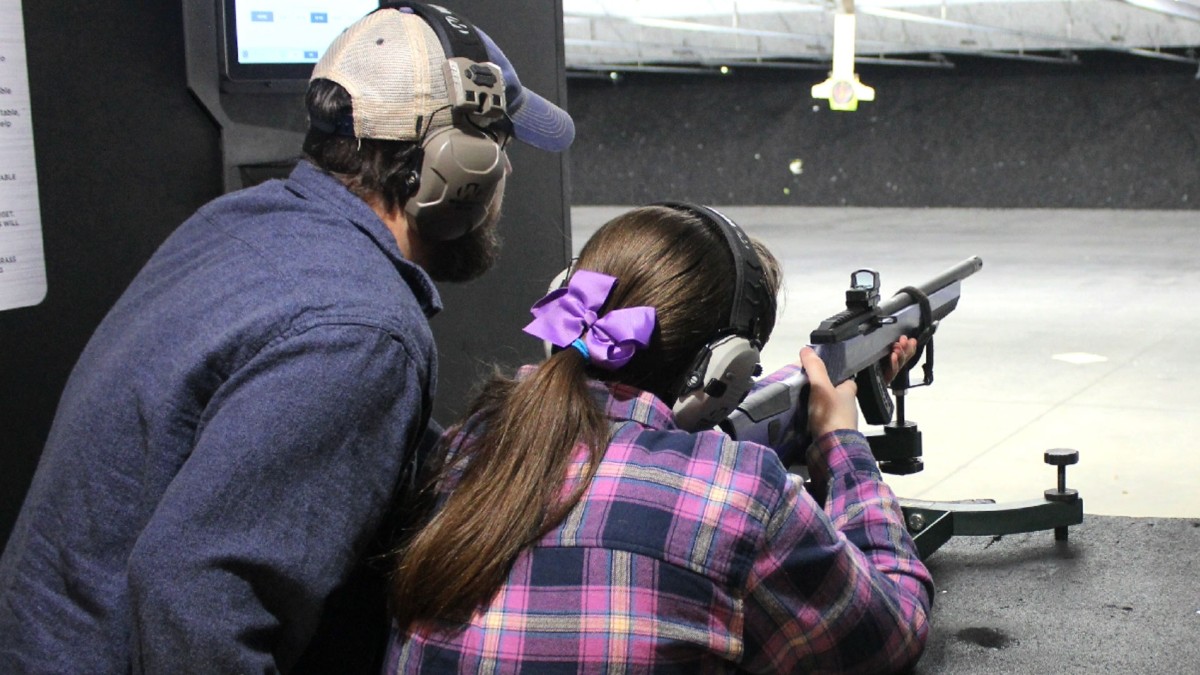
A supervised shooting lesson is a completely different situation. Many Iowa families hunt or shoot together, and kids learn to handle firearms safely under an adult's direct supervision. Our article on a child's first range visit covers that. Families who do this need to make the difference crystal clear: Permission at the range does not mean permission at home, at a friend's house or anywhere an adult is not directing the lesson.
That difference heads off a very natural mistake. A child who has been taught to check whether a gun is unloaded may think, "Dad showed me how to check, so I should check this one." The safer explanation is that the found-gun rule exists precisely because the situation is not controlled. The child does not know the gun's condition, who has handled it, or whether it works like the one at the range. Deciding whether a found gun is loaded is an adult's job.
The rule should also cover uncertainty. Children cannot reliably tell real guns from toys by color, size or weight. If something might be a gun, leave it alone and get an adult. Do not pick it up to find out.
The trade-off is between a child's growing skill and the need for one simple rule in uncontrolled situations. The rule: Teach your child that any gun found without an adult in charge, or anything that might be a gun, means stop, don't touch, move away and tell an adult, no matter what they have learned at the range.
What the research shows
Earlier research is sobering. Small studies in 2004 found that young children could learn to repeat a gun-safety message, and some could act it out in role play, but many did not follow it when tested in more realistic situations. Instruction combined with practice and feedback did better than simply telling children the rule, especially when practice happened in the kind of setting where the skill was tested. A 2019 systematic review of school and community programs concluded that research had not shown they reliably prevent children from handling guns, partly because the studies were small and too different to combine.
Newer research is more encouraging, with important limits. In a 2023 randomized trial published in JAMA Pediatrics, researchers at Ohio State had 226 children ages 8 to 12 watch either a one-minute gun-safety video featuring a police officer or a car-safety video at home. A week later, the children played in a room containing two real but disabled handguns. According to Ohio State's summary, 39 percent of children who saw the gun-safety video touched a gun, compared with 67 percent of those who saw the car-safety video. Thirty-four percent of the gun-safety group told an adult, compared with 11 percent of the other group.
Read those numbers both ways. A one-minute video cut gun handling sharply, which is encouraging. Yet more than a third of children who had just been taught still touched a gun, and two out of three did not tell an adult. The study measured behavior one week later in a lab, not years later in a friend's bedroom.
Key idea: Teaching children about guns works, but not perfectly. It improves behavior without guaranteeing it. That is why teaching is your child's backup, and locked storage is the plan.
The trade-off is between hope that teaching will keep your child safe and the evidence that it helps only part of the time. The rule: Teach your children, and also secure every firearm as though the lesson might not hold.
Explain the reason for each step
Rules stick better when children understand why. "Don't touch" makes more sense when a child understands that a gun lying quietly on a dresser, or one that looks familiar, or one belonging to someone they trust, can still fire. The child is not being asked to figure out whether it will fire. They are being asked not to create the chance.
"Move away" matters because a child who refuses to touch but stays to watch a friend play with the gun has done only half the job. Teach them to go to a safer place and to an adult, without picking the gun up, taking a picture of it or trying to grab it from another child.
"Tell an adult" works best with a clear destination. For a young child, "a trusted adult" can be too vague. Name real people: Mom, Dad, Grandma, the teacher, the friend's mom. Talk about what to do if the first adult is busy or does not take it seriously: Keep looking for help, and stay away from the gun.
Give your child something simple to say, such as, "I saw something that might be a gun. It's in the bedroom. I didn't touch it." That gives an adult what they need to act without asking the child to go back and look.
The trade-off is between a quick slogan and real understanding. The rule: Explain why each step matters, name the adults your child should go to, and give them a short sentence to say.
Practice without a real gun
Practice helps, but it must never involve a real firearm. Use a conversation, a drawing, a picture or a purpose-made, obviously fake training aid. Never use a real gun, even an unloaded one, for these rehearsals, and never hide a gun to test whether your child will follow the rule. Researchers set up those tests in carefully controlled labs with disabled guns. That is not something to recreate at home.
Start by explaining a situation and showing the response yourself. Then have your child walk through it: Stop, step back, leave the room and come tell you. Praise the specific action, such as "You left it alone and came straight to me," rather than "You're a safe kid now." Repeat the practice another day, with a different made-up situation.
Try a picture of a bedroom with something gun-shaped on a dresser and ask what your child would do. If they say, "See if it's a toy," that is not disobedience. They may think the rule only applies once they know it is a real gun. Explain that not knowing is exactly when the rule applies, and practice again.
Common mistake: Testing your child by leaving an unloaded gun somewhere to see what they do. It is dangerous, it can teach the wrong lesson, and a single "pass" proves very little about how they will act at a friend's house. Practice with pictures and pretend situations instead.
The trade-off is between realistic practice and safety. The rule: Rehearse the response often with pictures, stories and pretend situations, and never with a real firearm.
Teach the social part, too
Many children understand that guns are dangerous but still hesitate to tell an adult. They worry about getting a friend in trouble, being called a baby or being left out. In real life, the hardest part is often not the gun. It is the friend saying, "Don't be a baby, it's not even loaded."
Help your child see that telling an adult is not tattling. It is getting someone who can keep everyone safe, including the friend who is making a dangerous choice. Your child does not have to win the argument, prove they are brave or keep a secret.
Practice a short line that ends the conversation: "I'm not staying around a gun. I'm getting a grown-up." Then leave. Kids do not need a speech about how guns work. A short sentence and walking away puts the responsibility where it belongs.
Practice a situation that starts before a gun even appears: "Your friend says, 'I know where my uncle keeps his gun. Want to see?'" Your child can say no, leave and tell an adult without first finding out whether the friend is telling the truth. If your child communicates with pictures, a device or help from someone else, build that into the plan. A plan that depends on a skill your child does not have will not work.
The trade-off is between fitting in with friends and staying safe. The rule: Give your child a short, confident line to say, practice walking away, and make clear that telling an adult protects everyone.
Make it safe to tell, even after a mistake
Tell your child ahead of time that you will never be angry at them for telling you about a gun, even if they touched it before they remembered the rule. Your first concern will be their safety. A child who thinks they will be punished for what they did has a reason to stay silent, and silence is the most dangerous outcome.
If your child tells you about a gun, stay calm, thank them and keep them away from it. Do not send them back to get it or check on it. If someone is in danger, call 911. If you are not comfortable handling a gun, do not try to handle it to show confidence.
Later, once everyone is safe, talk about what happened without turning it into an interrogation. What made it hard to leave? Was it hard to find an adult? Did a friend say it was fine? Those answers tell you what to teach again, and what the adults need to change.
The trade-off is between correcting mistakes and encouraging honesty. The rule: Promise your child they will never be in trouble for telling you about a gun, and keep that promise.
Adjust to your child, but do not trust age alone
A preschooler needs a very short message, a familiar adult and lots of repetition. A school-age child can talk about not knowing whether something is real and about pressure from friends. A teenager needs frank conversations about photos and social media, handling guns without permission, and what to do if a friend in crisis talks about a gun. Our article on teenagers, firearms and crisis covers that age group.
These are ways to adjust the conversation, not ages at which a child becomes safe around an accessible gun. Research on young children and on older children used different methods and settings, and there is no established "safe age." Experience works the same way. A child who has taken a class or shot safely with you may still face an unfamiliar situation and make a poor choice. Training history tells you what they were taught, not what they will do next.
The trade-off is between trusting a child's maturity and keeping control of access. The rule: Adjust the lesson to your child's age and abilities, but keep your firearms secured no matter how confident or experienced your child seems.
Storage is the plan; teaching is the backup
The AAP recommends that any gun in the home be stored locked and unloaded, with ammunition locked separately, and keys and combinations kept away from children and teens. It also suggests adding a question to your playdate checklist, alongside pets and allergies: "Is there an unlocked gun in your house?" Our article on safety in other people's homes explains how to ask without starting an argument.
Iowa law adds consequences. Under Iowa Code 724.22(6), leaving a loaded firearm without a trigger lock, a locked container or other reasonably secure storage, where you know or have reason to believe a child under 14 is likely to get it, is a serious misdemeanor if the child then gets it and displays it unlawfully in public or uses it to injure or kill someone. The law steps in only after that chain of events. Good storage stops the chain at the first link. Our article on child access prevention laws covers this law and neighboring states' rules.
The trade-off is between convenience and protection. The rule: Lock every firearm, lock the ammunition separately, keep the keys and codes away from children, and treat your child's lesson as a second layer, never the first.
Putting it together
Go back to the seven-year-old at her friend's house. Because her parents talked about why the rule applies even when you are not sure it is a real gun, she does not wait to find out. Because she practiced a short line, she says, "I'm not staying around a gun. I'm getting your mom." Because she knows she will not be in trouble, she tells her friend's mom right away, and then tells her own parents that evening. Her parents thank her, call the friend's parents and gently ask whether the gun can be locked up. They also double-check their own safe.
Not every child will respond that way, which is exactly why the adults' storage matters most. But a child who understands the rule, has practiced it and trusts the adults around them has the best chance of making the right choice when it counts.
Try this: A ten-minute kitchen-table lesson
- Make sure every firearm in the house is locked up and that no real gun is anywhere near the lesson. Use only pictures, drawings or pretend.
- Explain the four steps: Stop, don't touch, move away, tell an adult. Then ask your child to explain, in their own words, why each step matters.
- Show a picture or describe a situation where something might or might not be a gun. Ask what your child would do, and practice leaving the room and telling you.
- Role-play a friend saying, "It's not loaded, don't be a baby." Have your child practice the short line and walk away.
- Name three adults your child can tell, and promise out loud that they will never be in trouble for telling you about a gun.
You will know it worked when your child can explain why they should leave something alone even if it might be a toy, can say their line without hesitation, and can name the adults they would tell.
Check your understanding
Try answering these before you open the answer. If you can explain it in your own words, you understand it.
1. Your child has learned at the range how to check whether a gun is unloaded. Should they check a gun they find at a friend's house?
No. The found-gun rule applies precisely because no adult is in charge and the child does not know the gun's condition. Deciding whether a found gun is loaded is an adult's job. The child should stop, not touch, move away and tell an adult.
2. In the 2023 Ohio State study, what happened after children watched a one-minute gun-safety video?
They were much less likely to touch a gun than children who watched a car-safety video, 39 percent compared with 67 percent, and more likely to tell an adult, 34 percent compared with 11 percent. But more than a third still touched a gun, which shows that teaching helps without guaranteeing safety.
3. Why should you never test your child by leaving an unloaded gun out to see what they do?
It creates real danger, can teach the wrong lesson and proves little about how your child will act elsewhere. Practice with pictures and pretend situations, never a real firearm.
4. Your child says they did not tell you about a gun at a friend's house because they had touched it and were afraid of getting in trouble. What should you change?
Make it clear, ahead of time and again now, that they will never be in trouble for telling you about a gun, even if they made a mistake. Thank them for telling you now, and focus on safety rather than punishment.
5. Your ten-year-old is mature and has passed a safety class. Can you leave a loaded handgun in the nightstand?
No. No age or class makes a child reliably safe around an accessible gun. And if a child under 14 gets an unsecured loaded gun and then shows it unlawfully in public or hurts someone with it, Iowa Code 724.22(6) makes leaving it there a serious misdemeanor. Lock it up.
Where to go next
For how to introduce your child to shooting safely under supervision, read a child's first range visit. For asking about guns at friends' and relatives' homes, see safety in other people's homes. For storage that keeps kids out while keeping a gun ready, read our guide to gun storage. And for what Iowa and nearby states require, see child access prevention laws.
We carry quick-access safes, lockboxes and cable locks for every budget, and if we do not have what you need, we will order it. Text or call us anytime.
If you found this informative, we invite you to sign up for email notifications of new blog articles.