
Understanding the Taurus TX22: Gen 1, Gen 2 and Compact
Joseph McLain Nov 16, 2026
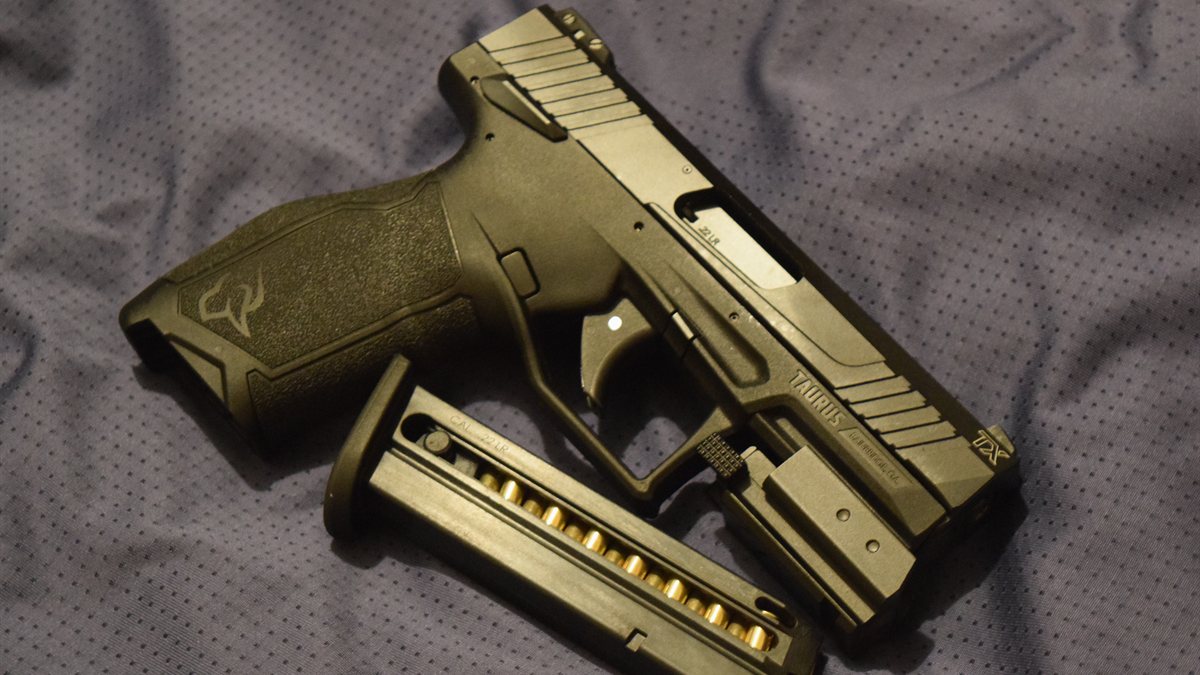
You walk into a gun shop because three different people have told you the Taurus TX22 is great. On the counter, three of them sit side by side. One is a full-size pistol with a plain slide. Next to it is a slightly longer one with cuts in the slide and a notch for a red dot. The third is noticeably smaller. The tags say "original," "Gen 2" or "T.O.R.O.," and "Compact," and every one of them says .22 LR. Which one did your friends mean, and do the differences matter for what you want to do with it?
This article explains what separates the three, so you can decide which differences matter for you or the family member you are buying for. By the end you should be able to say what Taurus changed between the first TX22 and the newer one, what the Compact changes, which of those differences you would actually notice, and what to check when you pick them up.
The short answer
All three are the same basic pistol: a striker-fired, single-action .22 LR built to feel like a modern centerfire pistol. Taurus lists the same trigger system on the original and the newer pistol, and reviewers measured both at about 4.5 pounds. What changed is mostly the top half of the gun, meaning the barrel, the slide, the sights, and what comes in the box. So the useful question is not "which TX22 is best." It is "which of these changes will my way of shooting actually use?"
- A red dot. The newer pistols and the Compact have a slide cut to take one. The original does not.
- Hand size. The Compact is the one that changes how the pistol fits your hand.
- Everything else. The trigger, the action, and the controls are shared, so the older pistol gives up less than the word "Gen 1" suggests.
What every TX22 shares, and why people like it
Taurus introduced the TX22 in 2019, and its own page notes that Guns & Ammo named it Handgun of the Year that year. It was built around one idea: a .22 that feels like the 9mm many people carry or shoot, with a full-size grip, a rail for a light, and controls in familiar places. That is why trainers like it. Think of practicing free throws on a regulation hoop rather than a toy one. Both build skill, but only one matches the real thing, and .22 ammunition lets you practice far more often for the same money.
How it works. The TX22 is striker-fired, which means a spring-loaded firing pin is held back under tension and released when you press the trigger. It is single action only, so the trigger only releases the striker, and the slide resets it after each shot. It is also a blowback design. A .22 LR cartridge makes so little pressure that no locking system is needed. The weight of the slide and the recoil spring hold the action closed until the bullet leaves, and then the empty case pushes the slide back to eject it and feed the next round. This matters later, because a slide that is pushed by so little energy is sensitive to its own weight.
The trigger. Taurus calls it the Performance Trigger System, and both the original and the newer pistol list it. Reviewers describe some take-up, the light slack at the start of the press, then a wall and a clean break. One long-term owner measured about 4.5 pounds on an original, and American Rifleman measured 4 pounds, 9 ounces on a T.O.R.O.
The safeties. Every TX22 has a striker block, which keeps the striker from reaching the cartridge unless the trigger is pressed, and a small trigger safety blade in the trigger face. Some versions also have a manual safety lever, and Taurus makes versions with and without it. If the TX22 is practice for a pistol that has a manual safety, a version with one lets you practice using it. If your carry pistol has none, a version without one matches it more closely.
Safety: The TX22 has no magazine disconnect, and Taurus's manual says it can fire with the magazine removed. A pistol is unloaded only when the magazine is out and you have looked at and felt an empty chamber.
Gen 1 and Gen 2: what changed and what each change does for you
The original TX22 from 2019 is what people now call Gen 1. In 2024 Taurus released an enhanced TX22, including a version called the T.O.R.O., short for Taurus Optic Ready Option, and stores and distributors call these Gen 2. Taurus's own pages do not use the term "Gen 2," so the tag may say either one. What you are holding is decided by its features, so here they are side by side.
| Original (Gen 1) | Gen 2 T.O.R.O. | |
|---|---|---|
| Barrel | 4.1 in., muzzle threads recessed and used with an adapter collar | 4.6 in. thicker barrel, threads exposed at the muzzle |
| Slide | No optic cut | Weight-saving cuts at the front, and a cut for a small red dot |
| Rear sight | Adjusts sideways and up and down | Moves sideways only (drift-adjustable) |
| Magazines in the box | Two 16-round | One 16-round and one 22-round |
| Trigger system | Taurus Performance Trigger System | Same |
| Listed weight, unloaded | 17.3 oz | 17.3 oz |
Read the table as three themes. Gen 2 was built to carry a red dot, it has a longer barrel, and it comes with more rounds on hand. The trigger and the weight on the spec sheet did not change. Here is what each change means in practice.
The barrel
A longer, thicker barrel puts a little more weight out front, which can steady the pistol, and it lengthens the sight radius, the distance between the front and rear sights, which makes small aiming errors smaller. How much does it show on paper? American Rifleman shot five 5-shot groups at 25 yards and averaged 2.98 inches with an original and 2.45 inches with a T.O.R.O. The two were shot with different ammunition, as the reviewer noted, so you cannot say how much of that half inch came from the barrel. Treat it as a small edge at most.
A short aside on threads. Most TX22s have a threaded muzzle, which lets you add a suppressor or another muzzle device later. On the original, the threads sit inside the slide and a collar adapts them. On the Gen 2, the threads stand out past the slide and need no adapter. If you never plan to add a device, the difference means nothing. If you might, rules on suppressors vary by state, so check yours, and our guide to how suppressors work explains the technology.
The slide and the red dot
A red dot sight is a small electronic sight that projects an aiming dot onto a lens, and every dot has a footprint, the pattern of screw holes on its base. The Gen 2 T.O.R.O. slide is cut for the Shield RMSc footprint, which many compact optics share. The original has no cut, so a dot would need another solution. Some Gen 2 pistols are sold without the cut, so look at the slide, not just the name.
Why did Taurus also cut metal from the front of the slide? Remember the blowback design: a .22 LR pushes the slide back with very little energy. A red dot adds weight to the slide, and a heavier slide is harder for that small push to move, especially with gentle ammunition. Taurus says the lightening cuts are there to offset an optic's weight. Think of a door that swings freely until you hang a heavy coat on it. The cuts take some weight off the door so the coat does not change how it moves.
The sights
The original's rear sight moves both sideways and up and down. The Gen 2's moves only sideways. That sounds minor until you remember that different .22 loads often hit at different heights. A sight that can move up and down lets you correct for the ammunition you actually shoot. One reviewer said he preferred the older screw-adjustable sight, and he called the Gen 2's rear sight plastic. If you will mostly shoot with a red dot, the iron sights matter less, because the dot becomes your main sight.
The magazines
The Gen 2's 22-round magazine has the same body as the 16-round magazine, with a six-round extension, and Taurus lists it as fitting the original as well. So the larger magazine is not a reason the newer pistol is special, because the older pistol can use one too. Reviewers split on the 22-round magazine. American Rifleman found it as reliable as the 16-round, while Guns.com reported early hiccups with it and slower loading, because it lacks the helper stud on the follower that the 16-round has. More rounds mean fewer reloads at the range, but they also lengthen the grip, so practice with a magazine close to the size you plan to use.
What did not change
The trigger, the frame, the controls, the rail, and the blowback action are shared. Even the trigger copy on Gen 2 listings, which highlights the "Performance Trigger System," describes a system the original has too. One more detail: Taurus does not publish whether the internal recoil parts changed, but aftermarket makers sell recoil assemblies for the Gen 2 and say they will not fit the Gen 1. That tells you the parts differ, so check which generation you own before buying replacements.
Common mistake: Paying more for a Gen 2 because the listing talks up the trigger. The original uses the same trigger system, and the measured pull weights are about the same, so the real differences are in the top half of the gun.
The Compact: what it changes and what it does not
The Compact arrived for 2023 as a smaller TX22. It has a 3.6-inch barrel, is 6.7 inches long and 4.9 inches tall, and holds 13 rounds. It has the same optic cut as the T.O.R.O., and reviewers say it also fits Holosun K-series dots.
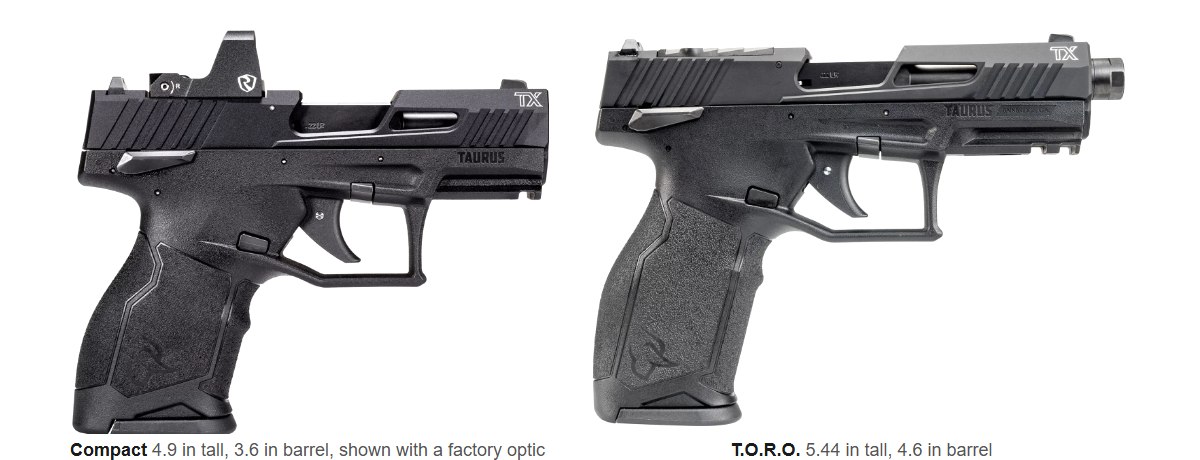
Most people assume a compact pistol is mainly a lighter one. Taurus lists the Compact at 16.5 ounces against 17.3 for the T.O.R.O., a difference you would barely feel. What you feel is the grip. Shooting Illustrated said it fits adult hands and is close in size to compact 9mm pistols, and Guns & Ammo thought the shorter grip may suit smaller hands and shooters with limited hand strength. A shorter barrel also means a shorter sight radius, so aiming errors look slightly bigger. Think of a shorter wheelbase on a car. It fits tighter spaces, but it does not make the car lighter.
Does the smaller pistol shoot worse? Reviewers shot 2- to 3-inch groups from a rest at 15 to 25 yards with a red dot. That is in the same range as the T.O.R.O. result above, but the tests used different ammunition and shooters, so nobody can say the Compact groups larger. What the reviews did show is more ammunition sensitivity. Shooting Illustrated saw about 30 percent of a subsonic load fail to cycle, and Guns & Ammo saw one brand hang nose-down twice. A lighter, shorter slide has less margin, so it makes sense that it would care more about ammunition, although the reviews did not test that directly. Reviewers also found the manual safety on the Compact hard to engage without shifting the pistol in the hand.
In short, choose the Compact for fit, not for weight, and test the controls with your own hand.
What about "every .22 jams"?
If you have heard that every .22 jams, it usually comes from people who do not know that rimfire ammunition runs dirtier than centerfire and has quirks of its own. The priming compound lives inside the case rim, the lead bullets are coated with wax or lubricant, and the residue builds up in the chamber and magazine faster than it does in a 9mm. That makes cleaning and ammunition choice matter more. Test pistols bear this out. One long-term owner reported no stovepipes, which are spent cases caught upright in the ejection port, and only a handful of light primer strikes over a lot of rounds, and American Rifleman saw two failures to eject in the first 50 rounds of a T.O.R.O. and none afterward. For more on why, read our guide to rimfire ammunition, and why your .22 is picky. Taurus's manual adds two rules of its own: use only clean, dry factory ammunition, and never reloads.
New or used, and the warranty
Taurus covers the TX22 with a limited lifetime warranty, but with conditions that matter when you compare prices. It covers defects in material, function, and workmanship for as long as the original purchaser owns the pistol. Finish, magazines, sights, and accessories are covered for the first year only. It covers the original purchaser only, it ends automatically when the pistol is transferred, and Taurus asks you to register within 30 days. A new Gen 1 on sale carries the same coverage as a new Gen 2. A used one, of either generation, has none.
At the counter: what to check
When the pistols are side by side, ask the clerk to hand each one over unloaded, and check these things.
- The grip. Can you reach the trigger with the pad of your finger, and work the magazine release and any manual safety without shifting your hand? Try the Compact and a full-size pistol back to back.
- The slide. Does it have an optic cut, and which footprint? Rack it and notice how easy it is.
- The sights. Does the rear sight move sideways only, or both ways?
- The box. Count the magazines, and check for the thread protector or adapter. Read the barrel length on the tag, because some listings mislabel it.
- The safety. Does this one have a manual safety, and does that match what you want?
Some states limit magazine capacity, and Taurus makes 10-round versions for them, so check your state's rules before you pick one.
Where this advice stops
The accuracy and reliability notes here come from a handful of test pistols, shot with different ammunition by different people, and no test we found compares the original and the Gen 2 side by side with the same ammunition. Taurus does not publish details such as recoil spring changes, so some of what separates the generations is inferred from what other companies say they sell. Lineups, prices, and availability change, so confirm the specs on the pistol in front of you. Your hand and your plans are what decide which of these differences matter.
Check your understanding
Try answering these before you open the answer. If you can decide what to do and explain why, you have it.
1. A friend says the Gen 2 has a better trigger because it has the new "Performance Trigger System." What do you tell him?
Taurus lists the same trigger system on the original, and reviewers measured both at about 4.5 pounds. The Gen 2's changes are in the top half of the pistol, so a better trigger is not a reason to choose it.
2. You will never add a red dot or a suppressor. The original and the Gen 2 are on the counter. What does the Gen 2 give you that you would use?
Very little. The 22-round magazine is sold separately and fits the original, the longer barrel is a small edge at most, and the original's rear sight adjusts both sideways and up and down. The Gen 2's real additions are the optic cut and exposed threads, which you said you would not use.
3. You want to add a red dot to a TX22 later. What do you look for on the slide?
An optic cut. The Gen 2 T.O.R.O. and the Compact are cut for the Shield RMSc footprint, and the Compact also takes Holosun K-series dots. The original has no cut, and some Gen 2 pistols are sold without one, so look at the slide, not just the name.
4. Your TX22 has one round that clicked without firing and, in a different magazine, one case stuck partway out of the chamber. What does each suggest?
The click without a shot is usually a rimfire ammunition problem, such as a spot with too little priming compound. The stuck case usually points to a dirty chamber, a weak load, or the pistol itself. Telling them apart keeps you from blaming the wrong thing, and cleaning the chamber and trying a different brand are the first steps.
5. A used original is much cheaper than a new Gen 2. What do you give up besides the Gen 2 features?
The warranty. Taurus's lifetime warranty covers only the original purchaser and ends when the pistol is transferred, so a used one has none, whichever generation it is.
6. A coworker wants the Compact for his 12-year-old, who has small hands. Which differences do you point out, and which do not matter?
The shorter grip is the difference that counts, because it can make the controls easier to reach for a small hand. The weight is nearly the same, and the trigger and the action are the same, so those do not matter. The shorter barrel gives a slightly shorter sight radius, and the Compact may care more about ammunition, so a handful of reliable loads is worth finding. Let the child hold both pistols, unloaded, before deciding.
Where to go next
You can find handguns on our website.
If you are still deciding whether a training-style .22 is the right type, Choosing a .22 Pistol compares it with target pistols and revolvers. To see why .22 ammunition behaves as it does, read Understanding Rimfire Ammunition. If you add a red dot, Mounting and Sighting in Pistol Optics walks you through installing and zeroing it.
Photos: Original TX22: "Taurus TX22 with magazine and aftermarket laser sight" by Thornfield Hall, via Wikimedia Commons, licensed CC BY 4.0; cropped and retouched. Compact and T.O.R.O. comparison: Taurus USA product photographs.
If this article helped you, we invite you to sign up for email notifications of new blog articles.