
Smith & Wesson SW22 Victory: A Modern Classic in .22 LR Pistols
Joseph McLain Nov 07, 2026
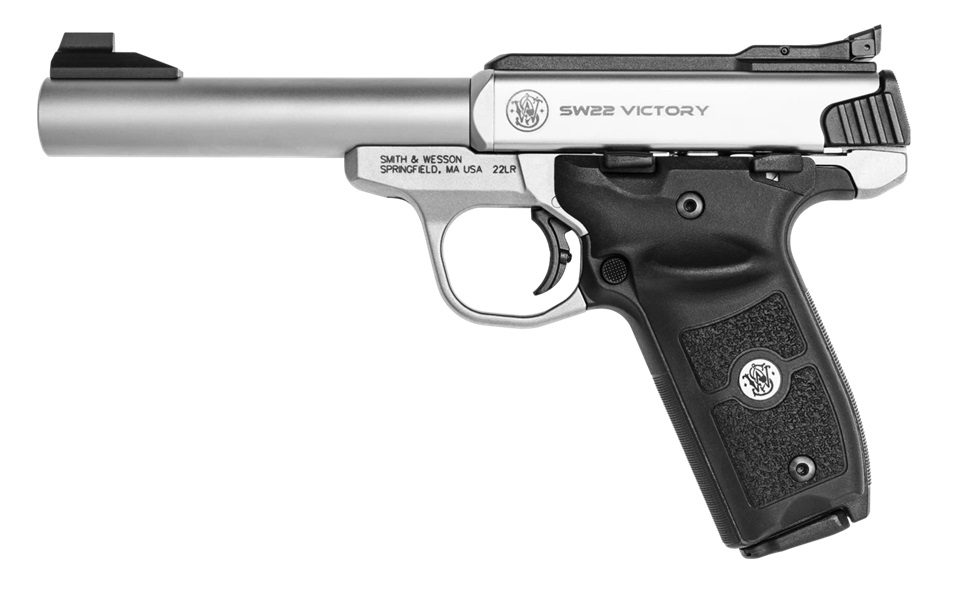
You are comparing .22 pistols, and the Smith & Wesson SW22 Victory is priced as a value target .22, and it sits on your list beside the Ruger Mark IV. What are you actually buying: a name and a nice profile, or a set of design choices that will help or hinder you every time you press the trigger?
By the end you should be able to explain why the Victory shoots the way it does, how it compares with the other well-known .22 pistols, and whether it fits what you want to do.
Where the SW22 Victory fits among .22 LR pistols
Smith & Wesson introduced the SW22 Victory in 2016 with a clear goal, which was to offer an affordable, reliable and highly accurate .22 LR pistol that appeals to new shooters and seasoned enthusiasts alike. Its development focused on shooters who value three things. Those are consistency, ease of maintenance, and the ability to deliver tight groupings in both competitive and recreational settings.
Keep those three priorities in mind, because nearly every feature of the pistol serves one of them. Since its introduction Smith & Wesson has offered several variants, such as threaded-barrel, Target and Kryptek-finish models, which differ mainly in barrels, sights and finish.
How the design choices show up at the range
Start with the fixed barrel and rigid frame. On this pistol the barrel is attached to the frame and does not move with the slide, so it sits in the same position for every shot. The rigid frame minimizes movement during firing. Picture shooting from a solid bench compared with a wobbly card table. The more stays the same from one shot to the next, the tighter the holes cluster. That is why the Victory has a reputation as an accurate target pistol, although how tightly yours groups depends on the ammunition and on you as much as on the pistol.
Next is the blowback operation. In a straight blowback pistol the slide is held closed by spring pressure and its own weight instead of a locking mechanism. When a round fires, the cartridge's own energy pushes the slide back, and the spring then returns it and feeds the next round. Fewer parts means fewer things to wear or fail, which is why the Victory is known for reliable cycling with a wide variety of .22 LR ammunition. The same simplicity makes it easier to maintain. Even so, .22 ammunition varies from brand to brand, so you will still want to find what your own pistol likes (see General Considerations for .22 LR Ammunition Selection).
The third choice is the modular design, which emphasizes ease of assembly and maintenance. Takedown for cleaning requires removing a single screw at the front of the frame, and the barrel itself can be swapped for a different one. Rimfire ammunition tends to leave fouling, meaning residue that builds up and must be cleared regularly to keep accuracy where it should be. A pistol that is easy to take apart gets cleaned more often, and a pistol that gets cleaned more often stays accurate and reliable, especially for people who log high volumes at the range. Always unload the pistol and confirm it is empty before you begin any disassembly or cleaning.
Finally there is how it fits your hand. The Victory is designed to be lightweight and well balanced, with a slim profile. Its ergonomic grip has contours and textured surfaces that help you keep a secure hold, which matters because a repeatable grip is what lets you return the sights to the target the same way each shot and keep recoil under control. Sights deserve a careful look, because they can be a shopping surprise. The standard Victory comes with an adjustable fiber-optic rear sight and a fiber-optic front sight, and a Picatinny rail for mounting an optic is included in the box. Some variants use different sights, so check the exact model. Adjustable sights let you move the point of impact, the place where the bullet lands relative to where you aimed, which is a real advantage for fine-tuning precision in competition.
Key idea: A pistol's accuracy comes from what stays the same from shot to shot. A fixed barrel, a rigid frame and a grip that fits your hand remove variables, which leaves only you and your ammunition to account for.
Here is a rule you can use. If you mostly plink and teach new shooters, the standard features are plenty. If you plan to compete, confirm which sights and barrel the exact model in front of you has, and whether you will want to mount an optic, before you buy.
Accuracy, reliability and versatility in practice
Because the Victory combines accuracy with affordability and ease of use, it works as a target pistol and also for casual plinking or teaching the fundamentals of marksmanship to someone new. Its simple blowback operation and robust construction mean it cycles reliably even under high-volume shooting, which makes it dependable for both practice and competition. A reputation for accuracy is only useful if you can test it against your own results.
Finding the load your Victory prefers
Every .22 pistol has ammunition it likes, and a bench session finds it. With eye and ear protection on and the muzzle downrange, rest your hands on a bag or rolled jacket and fire a five-shot group at 25 yards with one quality .22 LR load, then measure the widest spread of the holes. Clean the pistol if it feels gritty, then repeat with a second quality load. The smaller group is your pistol's preference, and the difference between the two shows how much ammunition matters in your gun. Groups wider than you expected usually point to the load, a dirty pistol or your grip, sight alignment and trigger control, which How to Master Pistol Shooting Fundamentals covers.
Common mistake: Treating one wide group as proof that something is wrong with the pistol. In a .22, ammunition, cleanliness and your own fundamentals all show up on the target before the pistol does.
What to check on the model in front of you
Because the Victory comes in several variants, judge the specific pistol you are holding rather than the name on the box. Four checks matter most.
| Check | What to look for | Why it matters |
|---|---|---|
| Sights and optic rail | Which sights it has and whether the rail is included | Decides how easily you can fine-tune point of impact or add a red dot |
| Barrel | Standard, threaded or Target profile | A threaded barrel accepts a suppressor or muzzle device; barrel profile changes weight and balance |
| Grip | How it fills your hand and reaches the trigger | A repeatable grip is the foundation of accuracy |
| Takedown | Single-screw takedown | A pistol you find easy to clean gets cleaned |
The first two rows change what the pistol can do, and the last two decide whether you will enjoy owning it. If you want to compare it with a trigger you already know, our article on trigger control explains what a smooth pull feels like.
How the Victory compares with the Ruger Mark IV, Buck Mark and compact .22s
Comparing pistols is really about deciding what you are willing to trade. These comparisons reflect what shooters commonly say, not laboratory measurements, so treat them as a guide to what to check in your own hands.
| Pistol | What it is known for | How shooters compare it with the Victory |
|---|---|---|
| Ruger Mark IV | Ease of disassembly and consistent accuracy, and a favorite among traditionalists | Many prefer the Victory's slimmer grip and modern look. The Mark IV's one-button takedown is a strong point of its own, so compare how each comes apart and how each trigger feels |
| Browning Buck Mark | Reliability and fixed-barrel accuracy | Some find the Buck Mark's grip less comfortable for extended range use than the Victory's contoured grip. Both have strong aftermarket support, and some shooters feel the Victory's design integrates slightly more easily with contemporary accessories |
| Walther P22 and S&W M&P22 Compact | A compact, tactical appearance and fun casual plinking | These are built more for casual shooting and training than for target work, which is the job the Victory is geared toward |
Read across the rows and a pattern appears. The Mark IV and Buck Mark are close rivals, and the differences come down to grip, trigger feel and how you like to maintain the pistol. The compact models are a different style of pistol, and shooters who want a serious target pistol tend to favor the Victory for its precision and build. Since opinions differ, the grip is the tiebreaker. Our articles on the Ruger Mark IV and the Browning Buck Mark line give the same kind of closer look at each rival.
Is the SW22 Victory right for you?
The Victory is an outstanding .22 LR pistol for those who value reliability, ease of maintenance and precision. Use these four questions to decide.
- Purpose. If your focus is target shooting, training or consistent plinking, the Victory's design and performance make it an excellent choice.
- Maintenance. Its user-friendly disassembly keeps it reliable after extended use, which is critical for high-volume shooters.
- Customization. Extensive aftermarket options let you tailor improved triggers, sights and custom grips to your preferences.
- Versatility. It works as both a range pistol and a training tool, for a seasoned competitor or someone just starting.
The Victory and the Mark IV are both proven target .22s, and the better one is the one that fits your hand and your plans. Of the four questions, purpose and fit matter most, because they decide whether you will enjoy shooting it. Smith & Wesson's decades of expertise and the pistol's standing in the .22 LR community are reassuring, but they are no substitute for holding it. A few minutes with one in hand can tell you a lot.
Checking fit before you buy
Fit is the part no review can judge for you. With the action open, the pistol confirmed unloaded, the muzzle in a safe direction and your finger outside the trigger guard, take your normal shooting grip: the grip should fill your hand comfortably and your trigger finger should reach the trigger without straining. Then raise the pistol toward a safe direction, close your eyes, settle into your aim and open them. If the sights are already close to lined up without twisting your wrist, the grip suits the way you naturally hold a pistol. If you're buying for a beginner, our guide to choosing a pistol as a beginner expands on fit and comfort.
Check your understanding
Try answering these before you open the answer. If you can decide what to do and explain why, you have it.
1. Your friend's slide-operated .22 groups wider than your Victory with the same ammunition. What design difference could explain it?
The Victory's barrel is fixed and doesn't move with the slide, so it sits in the same position for every shot, and its rigid frame minimizes movement during firing. Less shot-to-shot variation means tighter groups.
2. A friend says easy takedown is not a big deal on a .22. How would you respond?
Rimfire ammunition tends to produce fouling that must be cleared regularly to maintain accuracy. A pistol that is easy to disassemble gets cleaned more often, so it stays accurate and reliable.
3. You want one pistol for plinking now and competition later. What should you check on the specific model?
Check the sights and barrel on that exact model. The standard Victory has an adjustable fiber-optic rear sight and comes with a rail for an optic, but variants differ. Adjustable sights let you fine-tune your point of impact for competition. Also check that the grip fits your hand.
4. Your Victory shoots a 3-inch group at 25 yards. What do you try before deciding something is wrong?
Test another quality .22 LR load, make sure the pistol is clean, and review your grip, sight alignment and trigger control. A .22's groups depend heavily on the ammunition and the shooter, so test those before blaming the pistol.
Where to go next
You can find the Smith & Wesson SW22 Victory on our website, including standard, threaded-barrel and Performance Center Target models and spare magazines, and anything listed there can be ordered if it isn't in stock.
If you are new to rimfire, read why the .22 LR is such a good firearm for building and refining shooting skills to see how a pistol like this fits into a practice plan. To get the most out of your group test, General Considerations for .22 LR Ammunition Selection explains how to choose loads worth testing. And before your first range trip, The Importance of Eye and Ear Protection is a quick read that makes every session safer.
If this article helped you, we invite you to sign up for email notifications of new blog articles.