
Silhouette Shooting with Pistols
Joseph McLain Nov 07, 2026
You can put five shots into a tight group on paper, so knocking down a steel silhouette at 50 yards should be easy. Then the first shot sails over the animal's back, and the second lands low and the target doesn't move. Do you need a scoped, long-barreled pistol, or will iron sights teach you more? Either way, pistol silhouette punishes small mistakes in a way paper never does.
By the end you should understand why, and be able to choose a suitable pistol, sights and ammunition, work out your own holdover, and build from paper groups to steel.
What pistol silhouette shooting asks of you
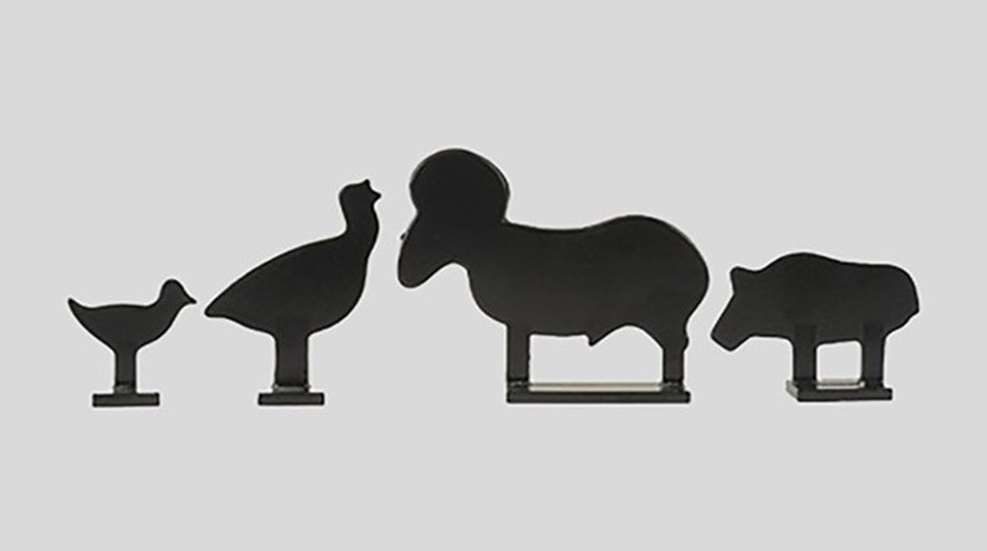
Pistol silhouette shooting is a precision discipline in which competitors engage steel targets, typically cut in the shape of animals, with a handgun. The targets are small and unforgiving, and they are designed to fall only when hit with sufficient energy and accuracy. That feedback is immediate. The target either goes down or it does not. The discipline asks for three things.
- Rapid target acquisition and precise trigger control
- Accurate holdover and sight or scope adjustments
- A deep understanding of your pistol's ballistics at close to moderate ranges
The first is something you do, the second is something you calculate, and the third is something you learn about your own gun and ammunition. The sport sharpens marksmanship and teaches target transitions and environmental compensation, which benefit your shooting overall. Today it is practiced in club and competitive settings, where governing bodies and clubs have standardized target sizes, distances (typically 25 to 50 yards) and scoring so shooters are tested on both accuracy and speed. Rules vary by club and organization, so confirm the details with the group you plan to join.
Key idea: Steel tells you the truth immediately. Every miss is information about your trigger, your hold or your ammunition, so the discipline works best when you treat each shot as a question and each result as an answer.
Bullet drop and holdover: Why 50 yards feels different from 25
Toss a ball to a friend across the yard and you naturally aim a little above them, because the ball falls on the way. A bullet does the same thing, only faster. Every bullet follows a parabolic trajectory, an arc that bends downward under gravity. In a short-barreled pistol, a .22 LR may leave the muzzle at 1,000 to 1,100 fps. The drop is less dramatic than from a high-powered rifle, but the short sight radius, the distance between your front and rear sights, makes any drop more noticeable. A tiny tilt of a short sight base moves the point of impact more than the same tilt on a long one. A 9mm and other centerfires have higher velocities and flatter paths, yet the effective range of a pistol is usually limited to 25 to 50 yards.
Here is what that looks like on the range. At 25 yards, most pistol rounds are nearly on target. By 50 yards, even small variations become apparent. If you zero your pistol at 25 yards, you may need to aim slightly higher, a couple of inches, at 50 yards. Aiming higher on purpose is called holdover.
To know exactly how much to hold over, build a DOPE chart, which stands for Data on Previous Engagements. It is a log of what your pistol and ammunition actually did. Write down the date and conditions, the distance, the ammunition, the holdover you used and the group size. Ballistic calculators and smartphone apps can predict bullet drop at various ranges, and they help you build confidence and custom DOPE cards. They still do not replace testing with your own gun.
Then decide how to apply it. If you shoot consistently at a set range, adjust your red dot or iron sights (if adjustable) so you can aim center. If you shoot at several distances, learn your holdover for each. Many shooters prefer dialing in their sights for target competitions.
Common mistake: Assuming a pistol has no bullet drop because it is nearly on target at 25 yards. The drop is small there, which is exactly why shooters forget about it until they move back to 50.
Choosing a pistol for silhouette: Accuracy, recoil and ergonomics
A wide variety of handguns can be used, but three characteristics make a pistol more suitable. The first is high accuracy. Fixed barrels, crisp single-action triggers and solid iron or red dot sights give you a consistent platform. The second is low recoil, which helps you keep your sights aligned and make quick follow-up shots. The third is ergonomics, because you will be engaging multiple targets, and a comfortable grip and well-designed controls (magazine release, safety, trigger) let you work without fumbling.
Popular choices include high-accuracy rimfire pistols like the Browning Buck Mark, which has a reputation in rimfire silhouette events, the Ruger Mark series, and match-oriented 9mm pistols with crisp triggers. The rimfire is gentle and economical to practice with, while the 9mm gives you a flatter trajectory. Pick based on the events you want to shoot and what you are willing to practice with often.
Sights: Iron, red dot or scope
- Iron sights. Some traditional silhouette shooters favor ghost-ring iron sights, a thin aperture ring that your eye centers on naturally, for their simplicity and rapid target acquisition.
- Red dot or reflex sights. Mini red dot optics are increasingly popular, offering quick target transitions and improved accuracy, particularly in low-light conditions. Examples include the Aimpoint Acro P-2 or a compact reflex sight from Trijicon, both popular for ruggedness and clarity.
- BDC reticles and mini scopes. Less common on pistols than on rifles, a bullet drop compensator (BDC) reticle has marks that help you adjust for slight drop even at shorter distances. A compact scope with BDC markings can help a high-end shooter, especially with a longer-barreled pistol.
Which one is right depends on how you shoot. Choose irons if you value simplicity and durability, a red dot if you want to move quickly between targets, and a BDC scope if holdover at several distances is your biggest challenge. For help choosing an optic, see Choosing the Right Optics for Pistols.
Ammunition: Consistency before speed
Ammunition can dramatically affect performance. Pistol barrels are typically shorter, so your load must balance velocity and stability. Many silhouette shooters favor match-grade or premium rimfire loads for .22 LR pistols, whereas some 9mm competitors use high-velocity rounds. The key quality is consistency. Consistent velocity and bullet quality mean predictable bullet drop, and that is what makes your DOPE chart reliable. A useful measure is extreme spread, the difference between the fastest and slowest rounds in a string. Premium ammunition with a low extreme spread, such as Federal Gold Medal Rimfire for .22 LR or high-quality 9mm loads, will yield more consistent results in competition and serious practice.
For high-volume practice, reliable and affordable options include Federal American Eagle and CCI Standard. Hornady Black is often chosen for its consistency and low-flash performance, and Remington and Winchester also have strong reputations in the rimfire and handgun categories. A sensible approach is to use budget ammunition to build hours and premium ammunition to confirm your holdover numbers. Whatever you pick, record your DOPE with the same ammunition you plan to shoot, because a different load can change your drop. For deeper reading on rimfire loads, see General Considerations for .22 LR Ammunition Selection.
How pistol silhouette differs from rifle silhouette
The core principles are the same, accurate shot placement and understanding bullet drop, but the differences are significant.
| Factor | Pistol silhouette | Why it matters |
|---|---|---|
| Distance | Typically 25 to 50 yards | Bullet drop is less pronounced, but the target is smaller relative to the sight picture |
| Barrel length and velocity | Shorter barrels, lower muzzle velocities | Slight holdover errors can have a more pronounced effect |
| Sighting systems | Red dot optics or fixed iron sights | Rifles more often use variable magnification scopes |
| Trigger control and stability | Must work harder on both | Minor deviations can be magnified at close range |
The table is a story about size. With less barrel, less velocity and a shorter sight base, a pistol leaves less room for error, so your technique has to carry more of the load. If you also shoot a rifle, our article on silhouette shooting with rifles shows what changes at longer distance.
Drills: Building from paper groups to steel
The drills below move you from knowing your gun to using it under time pressure. Keep the muzzle downrange, your finger off the trigger until the sights are on target, and follow the rules of your range. Our range etiquette guide covers many of them.
Static and transition drills
Start with baseline grouping. Set up a target at a fixed distance, typically 25 to 50 yards, fire groups of 5 to 10 shots and measure your spread. This shows your pistol's inherent accuracy. Then practice consistency drills, shooting 5-shot groups with as little deviation as possible and recording them across sessions to track improvement. When you are ready, arrange several silhouettes at different distances and practice transitioning your sight picture quickly from one to the next, adjusting your holdover each time. Add a stopwatch to simulate competition. The goal is to knock down as many silhouettes as possible in a set time, which builds both speed and accuracy. A bench rest or shooting rig can help with drills focused on group consistency, because it removes the interference of human error.
Movement, positions and conditions
Some ranges and custom setups have moving steel silhouettes, which helps you practice tracking a target and adjusting holdover on the fly. You can also practice from standing, kneeling or even prone positions (if your pistol allows stable positioning), but only where your range permits and with the muzzle always downrange. Practice in different weather and lighting to see how wind and light change your trajectory and sight picture. Night shooting with low-light reticles or red dot sights can improve your reaction time and accuracy, but it is only for ranges that allow it. If silhouette work is part of your defensive training, practice drawing and engaging targets from a holster only where permitted and after proper instruction.
A practice plan from paper to steel
Silhouette skill builds in a clear order. It starts with a zero at a standard distance such as 25 yards and a record of your groups. Holdover comes next: moving out step by step and noting the adjustment each distance needs. Then target transitions, engaging several targets quickly while keeping the right holdover, and, where your range permits, different positions such as standing and kneeling. A training log or DOPE card of conditions, distances and group sizes ties it together, and a ballistic calculator or app checks your numbers. The plan is working when you can read your card, pick the holdover for any distance you shoot and hit the steel on the first shot.
Putting it together
Optics and long barrels make distant steel easier, and iron sights force the fundamentals that every class still demands. Pick the class you want to shoot, choose a pistol and sights it allows, learn your holdover at each bank, and build from paper groups to steel at the distances the match uses, keeping the muzzle downrange through every position change.
Check your understanding
Try answering these before you open the answer. If you can decide what to do and explain why, you have it.
1. Your pistol is zeroed at 25 yards, and your shots at 50 yards land low. Why, and what do you do?
Bullet drop becomes apparent at 50 yards even though it is hardly noticeable at 25. Hold a little higher, a couple of inches, and record the result on a DOPE card.
2. A slight tilt of your pistol's sights sends a shot well off a 50-yard ram, while the same tilt on your rifle barely matters. Why?
The pistol's sights sit close together, so a small misalignment changes the bullet's angle much more than on a rifle's longer sight base, and the error grows with distance.
3. You shoot at one fixed distance every week. Should you rely on holdover or adjust your sights?
Adjust your sights if they are adjustable, so you can aim center at that distance. Holdover is better when you shoot at several distances.
4. One load chronographs fastest but varies 60 fps shot to shot; another is slower but varies only 12. Which do you shoot in a silhouette match?
The consistent one. Consistent velocity gives predictable bullet drop, which makes your holdover and DOPE card reliable. A low extreme spread matters more than top speed.
5. Why does a pistol silhouette shooter have to work harder on trigger control than a rifle shooter?
Pistols have less barrel, lower muzzle velocity and a shorter sight base, so minor deviations can be magnified at close range.
Where to go next
If you want to sharpen the skill underneath everything here, start with Trigger Control Tips because silhouette punishes a rushed press. Then read How to Master Pistol Shooting Fundamentals to build the stance, grip and aiming habits that make every drill work. If a red dot is in your plans, Mounting and Sighting in Pistol Optics shows how to mount and zero it correctly. And to see why consistent loads group better, read How Ammunition Affects Your Accuracy.
If this article helped you, we invite you to sign up for email notifications of new blog articles.