
Mastering the Fundamentals of Shooting
Joseph McLain Nov 07, 2026
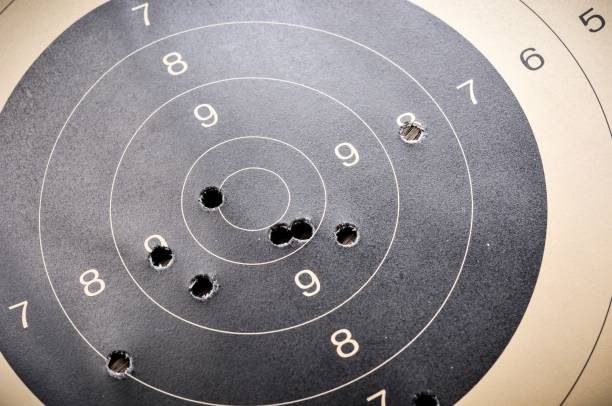
It is your second trip to the range, and your shots are scattered across the paper. Is it your grip, your trigger press or just nerves? It could be any of them, because accurate shooting rests on several fundamentals that depend on each other, and your target holds clues to which one broke down.
By the end you should be able to look at a target, recognize which fundamental most likely broke down, and choose what to work on next.
One goal, several fundamentals
Every fundamental serves the same goal: Keeping the sights steady and on the target at the instant the shot fires, and for a moment after. Grip and stance build a steady platform. Sight alignment and sight picture point that platform at the target. Trigger control fires the shot without disturbing the aim. Breathing, follow-through and focus protect all of it from your own body and mind.
Think of the fundamentals as links in a chain. A chain is only as strong as its weakest link, and it does not matter which link breaks; the load still falls. When your shots wander, the question is not "what is wrong with everything?" but "which link is giving way?"
Key idea: The fundamentals are one idea approached from several directions: Keep the sights steady and on target while the shot breaks. When groups open up, look for the single link that is failing.
Grip: The foundation of control
With a pistol, grip does more than any other fundamental to control recoil and keep the sights where you put them. Place your shooting hand as high on the grip as the frame allows, with the web of the hand pressed into the backstrap. A high grip puts your hand closer to the line of the bore, so recoil has less leverage to flip the muzzle upward. Think of choking up on a hammer: The closer your hand is to the work, the more control you have.
Wrap the support hand around the shooting hand to fill the gap the shooting hand's fingers leave on the grip, with both thumbs pointing forward along the frame. Grip firmly with both hands, more with the support hand than many new shooters expect, so the trigger finger can move independently without the rest of the hand squeezing. Keep your trigger finger straight along the frame, outside the trigger guard, until your sights are on the target and you have decided to shoot.
With a rifle, grip is about consistency: The same firm hold on the pistol grip or wrist, the same cheek weld on the stock, and the butt pulled into the same spot in your shoulder every time. For both, build a grip you can repeat exactly, because inconsistency in the hold shows up as inconsistency on paper.
Stance: Stability against recoil
A stable stance lets your body absorb recoil and bring the sights back quickly. For a pistol, the isosceles stance is a natural starting point: Feet about shoulder-width apart, toes toward the target, knees slightly bent, both arms extended, and shoulders leaning slightly forward so your weight is over the balls of your feet. The forward lean matters because a shooter leaning back gets rocked by recoil and is slow to recover.
For a rifle, standing, kneeling, sitting and prone positions each trade stability against speed and flexibility. Prone is the steadiest because your body contacts the ground, while standing is the least steady. Whatever the position, lean slightly into the rifle and use bone support, such as an elbow resting on a knee, rather than muscle wherever you can, because muscles tire and shake while bones do not. Choose the steadiest position the situation allows.
Sight alignment and sight picture
These two terms are often confused. Sight alignment is the relationship between the front and rear sights: On typical pistol iron sights, the front sight centered in the rear notch with the tops level and equal light on each side. Sight picture adds the target: The aligned sights placed on the spot you want to hit.
Your eye can focus sharply at only one distance at a time, so with iron sights you choose the front sight. The rear sight and target will look slightly blurred, and that is correct. A small error in alignment becomes a much larger miss at the target, which is why the alignment deserves your sharpest focus. With a scope or red dot, the reticle or dot and the target are on the same focal plane, so you focus on the target and place the aiming point on it.
Common mistake: Staring at the target with iron sights. It feels natural to look at what you want to hit, but then the sights blur and you cannot see whether they are aligned. Bring your focus back to the front sight.
Trigger control: Where the other fundamentals pay off
A solid grip and perfect sights mean little if the trigger press moves the firearm at the last moment. The goal is to press the trigger straight back, smoothly and steadily, until the shot breaks, without the rest of your hand tightening or the muzzle dipping in anticipation of the recoil. That anticipation, called a flinch, is one of the most common causes of low or low-left shots for right-handed pistol shooters.
Most shooters get better control by placing the trigger on the pad of the index finger, roughly between the tip and the first joint, though finger and trigger size change the ideal spot. After the shot, keep the trigger pressed briefly as part of follow-through, then release it only until it resets, so you are ready for the next shot without slapping the trigger. Our guide to trigger control tips includes drills for each part.
If your sights look right but your shots scatter, suspect the trigger first; it is the fundamental most likely to undo the others.
Breathing, follow-through and focus
Breathing moves your chest, and your chest moves your sights. The effect is small with a pistol at close range and large with a rifle at distance. Most rifle shooters fire during the natural pause at the bottom of a relaxed exhale, when the body is quiet. Do not hold your breath for long; after a few seconds, oxygen drops, tension rises and your vision and steadiness suffer. If the shot is not ready, breathe normally and start again.
Follow-through means keeping your grip, position and sight picture through the shot and for a moment after. Picture a golfer who holds the finish rather than looking up early. Watch the sights or reticle lift and return; where they were when the shot broke is where the bullet went. This habit also lets you "call your shots," predicting where each bullet landed before you look.
Focus is about attention, not intensity. Before each shot, walk through your process briefly, then concentrate on doing each step well rather than on the result. Worrying about hitting the target tends to produce the very flinch and rushing that cause misses. Our article on the role of mental focus in shooting covers staying calm under pressure.
Reading the target to find the weak link
Your target is feedback. A tight group away from the center usually means the sights need adjusting or your sight picture is consistent but off. A group that is large in every direction usually points to grip, stance or general steadiness. Shots strung low, or low and to the side opposite your shooting hand, often point to trigger control or anticipating recoil with a pistol. A single flyer outside an otherwise good group may be a lapse in one shot rather than a pattern.
These patterns are tendencies, not certainties, and they vary with the shooter and firearm. Fix the pattern you see repeatedly, not the single bad shot.
Practicing one fundamental at a time
Trying to fix everything at once fixes nothing. Choose one fundamental for a range session, such as trigger control or follow-through. With eye and ear protection on and the muzzle downrange, fire five-shot groups at a modest distance, 5 to 7 yards with a pistol, thinking only about that one thing. After each shot, hold your follow-through and say out loud where the sights were when it fired, before you look at the target. When your calls match the holes and the groups tighten, that fundamental is becoming automatic, and it's time to add the next one. Dry practice at home, with the gun unloaded, the magazine out and all ammunition in another room, builds the same habits for free.
Check your understanding
Try answering these before you open the answer. If you can decide what to do and explain why, you have it.
1. Your five shots made a tight group, but it's 3 inches left of the bullseye every time. Which fundamental is failing?
Probably none. A tight group means your grip, trigger and follow-through are consistent. A group that's consistently off center usually means the sights need adjusting, or your sight picture is consistent but placed off. Adjust the sights or your hold, not your technique.
2. A new shooter says the target looks crisp but the front sight is a blur, and her shots wander. What do you tell her?
Shift her focus to the front sight. With iron sights the eye can focus at only one distance, and a small misalignment she can't see becomes a large miss. The target should look slightly blurred.
3. Your sights look right but your shots scatter low. Which fundamental do you suspect first?
Trigger control and anticipation of recoil, which push the muzzle down as the shot breaks.
4. Why not hold your breath as long as possible before a rifle shot?
A long hold builds tension and reduces steadiness and vision. Fire during the natural pause after a relaxed exhale, and breathe again if the shot is not ready.
5. You fired a shot and immediately looked over the sights to see where it hit. Your groups are larger than you expect. What habit might help?
Follow-through. Keep your grip and sight picture through the shot and watch the sights lift and return before you look. Where the sights were when it fired is where the bullet went, and practicing that lets you call your shots and stops the shot-to-shot disturbance of looking up early.
Where to go next
To go deeper on handgun technique, read pistol shooting fundamentals, which adds drills for stance, grip and recoil. Trigger control tips focuses on the fundamental most likely to cause misses. Because a low-recoil firearm is a forgiving place to practice, the .22 LR as a training tool explains why it teaches so well, and shooting range etiquette helps you feel at ease on the line.
If this article helped you, we invite you to sign up for email notifications of new blog articles.