
From Rules of Engagement to Self-Defense: What Changes at Home
Joseph McLain Nov 10, 2026
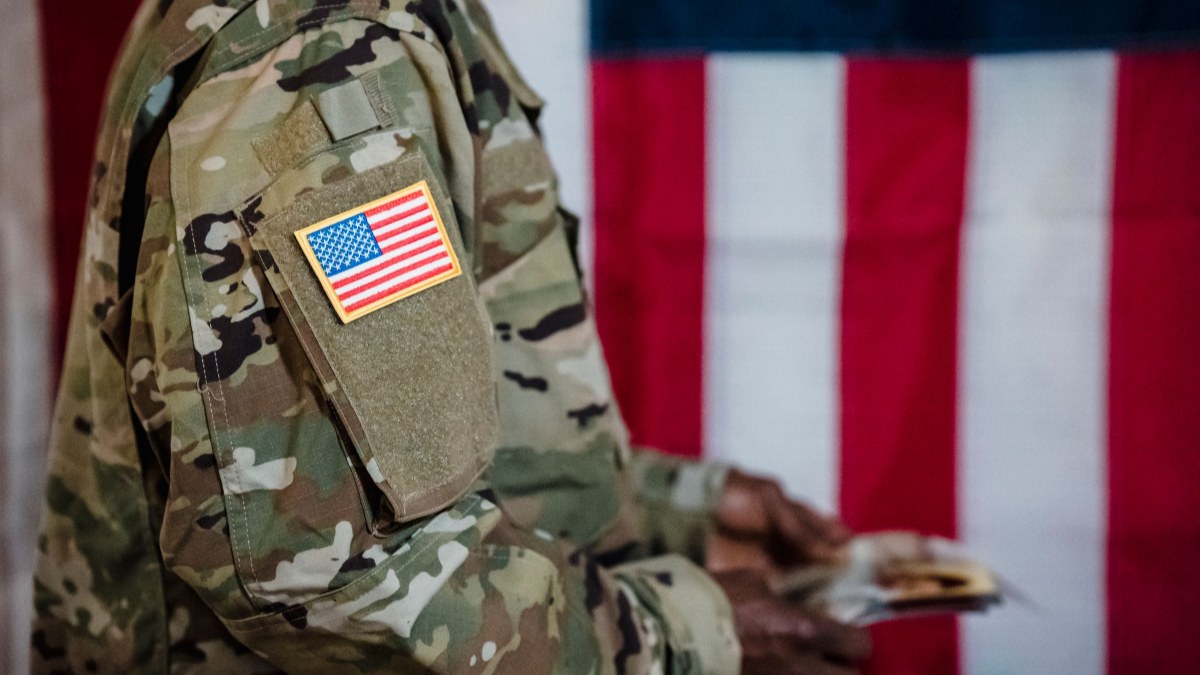
Picture two scenes. In the first, a soldier on patrol overseas sees a man with a rifle step out from behind a wall, a few yards from another member of the squad. In the second, a veteran who has been home for years walks across a big-box store parking lot and sees a man climb out of a pickup with a pistol in his hand. Both scenes have a stranger, a deadly weapon and someone who could be hurt in seconds. To a person who has lived the first one, the second can feel exactly the same.
Military experience can make a person calmer, sharper and better at spotting real danger, and civilians don't have to take the first bullet. But the legal authority behind a soldier's shot does not come home with the soldier. At home, what matters is what the person is doing, not whether they are armed.
By the end you should be able to explain why seeing a gun is not, by itself, a legal reason to shoot, describe what Iowa requires before deadly force is justified, and recognize which military habits serve you well at home and which ones need to change.
What rules of engagement really are
Many veterans use the phrase "rules of engagement" to mean the conditions you must meet before firing. That is part of it, but it misses something important. The Army's own Operational Law Handbook describes rules of engagement as "not law, but instead policy." They are command directives that shape how force is used to accomplish a mission, and they can never be more permissive than the law of armed conflict allows.
Behind those rules sit a few key ideas that most service members learn:
- Hostile act. An attack or other use of force against U.S. forces or other designated people or property, such as an enemy firing on a patrol.
- Hostile intent. A threat of imminent force, and the handbook notes that in this setting imminent "does not necessarily mean immediate or instantaneous."
- Declared hostile force. A group that appropriate authority has formally declared hostile, whose identified members may be engaged without first seeing a hostile act or hostile intent, because the basis shifts "from conduct to status."
Of these, the third is the one that matters most for understanding the difference at home. In some combat settings, a soldier's legal reasoning is not "that man is about to shoot my buddy." It is "that man has been identified as a member of a force we are authorized to engage." Even then, surrender and wounds that take someone out of the fight still matter, and identification still has to be right. But the authority comes from status and mission, not from what the person is doing at that second.
Experiences vary enormously. A checkpoint mission may have had very restrictive rules. A logistics specialist may never have operated under combat engagement authority at all. And plenty of military training is about restraint, positive identification and graduated force. The point is not that the military teaches shooting first. It is that whatever authority a service member had came from a mission and a legal framework that do not exist in a parking lot.
Treat everything you learned about when to fire as tied to a mission that ended when you came home.
What changes when the uniform comes off
The veteran in the parking lot has no mission, no declared hostile force and no commander. The man with the pistol is not a lawful target because he resembles someone from a deployment. The only question is what civilian law allows.
In Iowa, the answer starts with Iowa Code section 704.3: reasonable force is justified when a person reasonably believes it is necessary to defend themselves or another from actual or imminent unlawful force. Section 704.1 adds that deadly force is reasonable only when it is reasonable to believe it is needed to avoid injury or risk to life or safety, or to resist a like force or threat, and that a reasonable mistake about danger does not automatically defeat the claim.
Notice the shift. Civilian law looks almost entirely at conduct: What is this person doing, right now, to threaten unlawful harm? There is no status-based authority. Nobody is a target because of who they are. And "imminent" in civilian self-defense means close to happening, much tighter than the military sense of the word.
Iowa also allows most adults 18 and older who are not prohibited from having guns to carry without a permit. That means a man with a handgun on his hip, or even in his hand while he moves it from a truck to a holster, may be doing nothing illegal at all. A visible gun in Iowa is often just a visible gun. For more on that, see our article on understanding constitutional carry.
This is general education about how the law is structured, not legal advice about any situation. If you are ever involved in a defensive incident, talk to an Iowa attorney before giving a detailed account.
Civilian law asks for more evidence of a present threat before you act, and in exchange it protects you from being judged by labels. At home, only what a person is doing can justify deadly force, never what they are.
Capability is not intent, and intent is not necessity
Three questions get mashed together in a split second, and pulling them apart is the most useful habit an armed citizen can build.
The first is capability: Can this person seriously hurt someone? Anyone with a gun can. The second is threat: Is this person actually threatening unlawful serious harm? That depends on what they are doing and saying. The third is necessity: Is deadly force needed right now to stop it? That depends on how close the danger is and what other options exist.
A man walking to a store with a pistol on his belt has capability and nothing else. A man pointing that pistol at a family while shouting that he will kill them has capability, threat and very likely necessity. The gun is the same in both cases. What changed is his conduct.
That cuts both ways. Civilians do not have to wait to be shot. If someone levels a gun at you or another person and makes clear they are about to fire, the threat is imminent even though the trigger has not been pulled. The U.S. Supreme Court recognized long ago, in Brown v. United States (1921), that "detached reflection cannot be demanded in the presence of an uplifted knife." The law does not require a perfect calculation. It requires a reasonable one, based on what the person is doing.
Key idea: A gun tells you what someone can do. Only their actions tell you what they are doing. Civilian self-defense is built on the second, never just the first.
Waiting for conduct costs a fraction of a second, and acting on capability alone can cost someone's life and your freedom. Before you draw, be able to name what the person did, not just what they had.
One parking lot, five different situations
Go back to the man climbing out of the pickup with a pistol held down by his leg. Watch how the right answer changes as one fact changes at a time.
As it stands, he has done nothing threatening. In Iowa he may be carrying lawfully. You can dislike it, watch him, move away, put a car between you and him, or call police if something seems wrong. You cannot shoot him for holding a gun.
Now he raises the pistol toward a family walking to the entrance and shouts that he will kill them. You have not become a soldier again. But Iowa's defense-of-others law may now justify deadly force, because the threat to identifiable people is immediate and grave. Our article on defense of others walks through that decision in depth.
Change it again. He is running with the pistol while another man runs ahead of him. Is he chasing a victim? Maybe. He might also be a plainclothes officer, someone chasing a person who just robbed him, or a terrified shopper running from a third person you cannot see. Urgency and a gun do not tell you who is threatening whom.
A fourth version: He points the gun at shoppers, then drops it and puts his hands up. Whatever justification may have existed a moment ago is gone. In the law of war, surrender matters. In civilian law, the end of the threat matters just as much. Anger does not authorize more force in either setting.
And a fifth: He has already shot someone and is turning toward a group of people with the gun raised. That is powerful evidence of immediate danger to others. A veteran who stops him is justified because civilian law allows it, not because combat training labeled him hostile.
Real scenes rarely announce which version they are. Keep asking what changed, and let your response change with it.
What Iowa courts have said about firing first on a hunch
Two recent federal appeals from Iowa show, in plain terms, the difference between being right that someone was armed and being justified in shooting them. Neither involved a veteran, and both were sentencing appeals after guilty pleas rather than murder trials, but the reasoning is directly useful.
In United States v. Greer (8th Cir. 2023), surveillance video from a Davenport convenience store showed a man in a face mask, with a bulge in his sweatshirt pocket, get in line a few people behind Greer. Greer drew and fired four shots at him from about five feet away. The wounded man then pulled his own pistol and fired back. Greer said he believed "something was about to go down." The court rejected his self-defense claim. The man was simply standing in line, and the fact that he did have a gun did not justify deadly force before he did anything threatening.
In United States v. Cooper (8th Cir. May 2026), a Waterloo case, the man Cooper shot at had displayed a gun to others earlier, but there was no evidence Cooper knew that. The man kept his gun pointed down, never aimed it at anyone, and was running away with his back turned while Cooper followed and kept firing. The court found that the man took no action likely to cause death or great bodily harm before Cooper fired, and that Cooper's belief a gun was present was not enough.
Common mistake: Thinking that if the other person turns out to have been armed, or to have a violent record, your shot is vindicated. Courts judge what you knew and saw when you fired. Facts discovered afterward cannot be pasted back into your decision.
A person with good instincts may sense trouble before it happens, and sometimes be right. A hunch can justify moving, watching and leaving, but only a present threat justifies firing.
Does military training help or hurt in court?
It can do either, and there is no special law for veterans. The same justification rules apply to everyone. What differs is how a defense attorney and a prosecutor might use a veteran's background.
A defense attorney might explain that a trained person noticed concrete warning signs other witnesses missed, such as a hand moving to a waistband or a shift in stance before a draw. A prosecutor might argue the opposite: That a trained person should have understood the difference between someone who is armed and someone who is attacking, and that the defendant reacted to a label instead of the facts. Which argument works depends on the evidence, not on the word "veteran."
Language matters here too. "I engaged a hostile target" tells a jury almost nothing about the danger. "I saw him point the gun at the woman by the truck and heard him say he would shoot her" describes facts that can justify force, if those are the facts that happened. The point is not to rehearse a better story. It is to recognize that the law cares about what you saw and heard, so that is what you need to be paying attention to in the moment.
It is also worth separating civilian law from police standards. Many veterans meet use-of-force training built around court decisions about police, such as Graham v. Connor (1989). Those cases govern officers' duties and constitutional limits. A private citizen has neither the authority of a soldier nor that of an officer, only the justification rules in Iowa's chapter 704.
The background that makes you more capable also makes the jury expect more of you. Let your training sharpen what you notice, and let civilian law decide what you do about it.
Skills that come home, and the rule that has to change
None of this diminishes military experience. Safe gun handling, composure under stress, situational awareness, first aid, clear communication and the habit of identifying a target before acting are all tremendously valuable at home. Many veterans are among the safest and most level-headed people at any range.
What has to change is the decision rule. In some military settings, positive identification of a lawful target can supply authority to engage. At home, identifying someone as armed supplies nothing. You need a reasonable belief that deadly force is necessary to stop an actual or imminent unlawful threat, based on what that person is doing.
Stand your ground does not fill the gap. Section 704.1(3) removes the duty to retreat for someone lawfully present and not engaged in illegal activity, but it does not create justification where there is no threat. Iowa does have special rules, such as the presumption in section 704.2A for certain unlawful entries into a home or occupied vehicle and section 704.7 on stopping forcible felonies, but each depends on specific facts, not on someone simply having a gun. For more on what stand your ground does and does not do, see why stand your ground is not a license to kill.
Good practice: When you replay a scenario in your head, narrate it in plain civilian language: "He raised the gun toward her," not "he presented a threat." If you cannot describe the threat in ordinary words, you probably have not identified one yet.
Keep every skill, and change the question from "is he hostile?" to "what is he doing right now, and does it require deadly force?"
Putting it together
Return to the two scenes. The soldier may be authorized to engage based on mission, identification and status, within the law of war and the rules of engagement. The veteran in the parking lot has none of that authority. What he has is Iowa law, which allows deadly force when he reasonably believes it is necessary to stop an actual or imminent unlawful threat of death or serious injury to himself or someone else. A gun alone is not that threat. A gun pointed at a family with a threat to kill them very likely is.
The skills from service travel home. The authority does not. The question in a parking lot is never whether that person could kill someone. Anyone armed could. The question is whether what they are doing makes deadly force necessary right now.
Check your understanding
Try answering these before you open the answer. If you can decide what to do and explain why, you have it.
1. A veteran friend says that in the military he could engage anyone identified as enemy, so he would treat a known gang member with a gun the same way at home. What is wrong with that?
Status-based engagement authority comes from a declared hostile force and a military mission under the law of war. Civilian law has nothing like it. In Iowa, only conduct that creates a reasonable belief that deadly force is needed to stop an actual or imminent unlawful threat can justify it, no matter who the person is.
2. You see a man in a store with a bulge under his shirt that looks like a gun, and he seems nervous. Can you draw and fire first?
No. In United States v. Greer, a man who shot another customer in a Davenport store under almost these circumstances lost his self-defense claim, even though the other customer really was armed. Suspicion can justify watching, moving away or leaving, but not deadly force before the person does something threatening.
3. Your relative says civilians have to wait until the other guy shoots. Is that right?
No. Civilian law requires an actual or imminent threat, not a completed attack. If someone points a gun at you or another person and makes clear they are about to fire, the threat can be imminent even before the trigger is pulled.
4. After a shooting, police learn the man you shot had a long violent record and a loaded gun in his pocket. Does that prove you were justified?
Not by itself. Courts look at what you knew and saw when you fired. In United States v. Cooper, the court noted there was no evidence the shooter knew of the other man's earlier threats, and that the man never pointed his gun at anyone. Facts discovered later do not fill in a threat you did not observe.
5. Your nephew just got out of the Marines and plans to start carrying in Iowa. He asks what from his training he should keep and what he should change. What do you tell him?
Safe handling, composure, awareness, first aid and careful identification all help. What changes is the decision rule: Instead of asking whether someone is a lawful target, you ask whether what they are doing right now makes deadly force necessary to stop an imminent unlawful threat.
Where to go next
To see how a jury decides whether your belief was reasonable, read the reasonable person test in armed self-defense. For the hard questions that come up when you protect someone else, see defense of others. To understand when a threat has ended and force must stop, read when self-defense ends. And for why a visible gun in Iowa is often perfectly lawful, read open carry or concealed carry.
If this article helped you, we invite you to sign up for email notifications of new blog articles.