
Revolvers Explained: How They Work and When One Makes Sense
Joseph McLain Nov 07, 2026
Picture your aunt shopping for her first handgun. She has been told a revolver is perfect for a beginner because it is simple and never jams, and also that revolvers are outdated and hold too few rounds. Which is it?
Revolvers are simpler to operate than most semi-automatic pistols, they do hold fewer rounds, they can be wonderful target guns, and the biggest ones are hunting tools. But "simple" doesn't mean "easy to shoot," and "never jams" isn't quite true. The useful question isn't whether revolvers are good, but which revolver fits which job, and which shooter.
By the end you should be able to decide whether a revolver fits what you want to do, and choose the right kind if it does.
How a revolver works
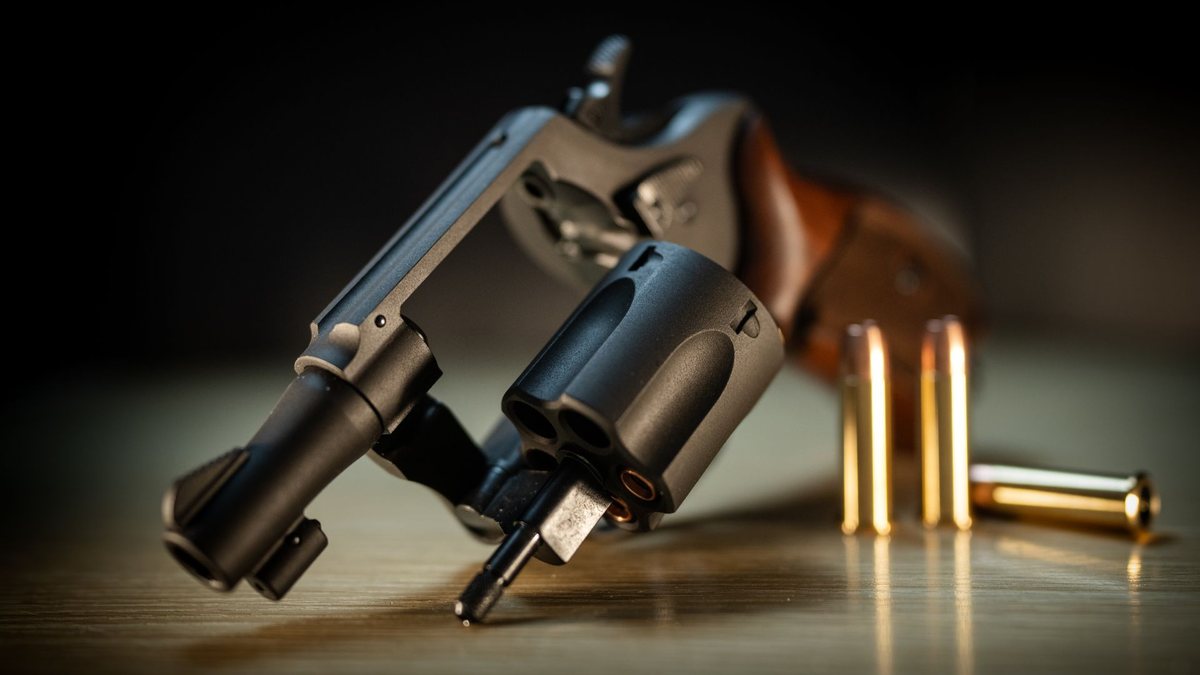
A revolver holds its cartridges in a rotating cylinder, with one chamber for each round. Each time the hammer is cocked, either by your thumb or by the trigger, a small part called the hand pushes the cylinder around to the next chamber, and the cylinder stop locks it in line with the barrel. When the hammer falls, the firing pin strikes the cartridge, and the bullet crosses a small gap from the cylinder into the barrel through a tapered entry called the forcing cone.
Notice what does not happen. Unlike a semi-automatic pistol, a revolver does not use the energy of the shot to eject the empty case and load the next round. The empties stay in the cylinder until you remove them. That one fact explains most of a revolver's strengths and weaknesses.
Think of a revolver as a carousel of chambers turned by your trigger finger, rather than a machine that reloads itself. That leads to the basic bargain: Your hand does the work the pistol's slide would do, so the trigger is heavier, but the gun does not depend on the ammunition to cycle it.
Single-action, double-action and both
The word "action" here describes what the trigger does. It is the most important thing to understand about any revolver.
- Single-action. The trigger does one thing: It releases a hammer you have already cocked with your thumb. The trigger is light and crisp. Most single-action revolvers, like the classic cowboy style, load and unload one chamber at a time through a loading gate on the side.
- Double-action/single-action. The trigger can cock and release the hammer in one long pull, or you can thumb-cock the hammer first for a light single-action press. Most traditional double-action revolvers work this way, with a cylinder that swings out to the side for loading.
- Double-action-only. The trigger always does both jobs in one long pull, and the hammer often is hidden or bobbed so it cannot be thumb-cocked. Many small carry revolvers are built this way.
The trade is between speed and precision. A double-action pull is long and heavy, often 10 to 12 pounds, but it is always ready. A single-action press is light and precise, but it takes an extra motion before each shot. Choose single-action for slow, precise shooting and tradition, and a double-action design for a revolver you might need to fire quickly.
Frame size and weight
Revolvers come in a range of sizes, usually described by frame. Small-frame revolvers, often with two-inch barrels and five-round cylinders, are built to be carried. Medium frames, with six or seven rounds and three- to four-inch barrels, are the classic all-around service size. Large frames handle the most powerful cartridges, such as .44 Magnum, with long barrels for hunting.
Weight changes everything about how a revolver shoots. A lightweight small-frame revolver chambered in .357 Magnum is easy to carry and miserable to shoot, with sharp recoil and a short sight radius, the distance between the front and rear sights. A heavier steel medium frame in .38 Special is easy to shoot and harder to carry all day.
Common mistake: Handing a new shooter a tiny, lightweight revolver because it is "simple." Its heavy trigger, strong recoil and short sights make it one of the hardest handguns to shoot well. A heavier medium-frame revolver, or a .22, is a far better teacher.
Choose the smallest, lightest revolver only if carrying is the main job, and choose more weight and barrel length when shooting well matters more.
Calibers and the .38/.357 trick
Revolvers are chambered for a wide range of cartridges, from .22 Long Rifle to .454 Casull. Some of the most useful features come from cartridge families that share a bullet diameter.
| Revolver chambered for | Can also safely fire | Common use |
|---|---|---|
| .357 Magnum | .38 Special | All-around, with mild .38 practice and stronger .357 loads |
| .44 Magnum | .44 Special | Hunting and woods carry, with milder .44 Special practice |
| .22 Magnum (WMR) | .22 LR only with a separate .22 LR cylinder, which some models include | Small game, plinking and pest control |
| .38 Special | Only .38 Special, never .357 Magnum | Target, training and carry |
The table works in one direction only. A longer, stronger magnum cartridge will not fit or is not safe in a revolver chambered for the shorter one, but the shorter cartridge can be fired in the magnum revolver. That gives a .357 Magnum owner cheap, gentle .38 Special practice and full-power loads from the same gun. Our article on rifles chambered in revolver cartridges shows how some owners pair a revolver and a carbine on the same ammunition. Buy the magnum revolver if you want flexibility, and practice with the milder cartridge.
What revolvers do better
Revolvers have real advantages that keep them popular.
Simple operation. To fire a double-action revolver, you pull the trigger. There is no slide to rack, no manual safety on most models, and no magazine to seat. For a person who will not practice much, fewer steps mean fewer chances to get them wrong.
Ammunition flexibility. Because the revolver does not rely on recoil to work the action, it runs with light target loads, heavy hunting loads, flat-nosed wadcutters and nearly anything else in its caliber. A semi-automatic may fail to cycle with very light or oddly shaped bullets.
Dud handling. If a round fails to fire, pulling the double-action trigger again rotates a fresh cartridge into place. With a semi-automatic, you must clear the malfunction by hand.
Power in a handgun. The strongest handgun cartridges for hunting are found mostly in revolvers, which handle the pressure and long cases well.
If any of those describe you, a revolver deserves a close look.
What revolvers do worse
The disadvantages are just as real. Capacity is limited to five to eight rounds, compared with 10 to 17 or more in many pistols of similar size. Reloading is slower; even with a speedloader or moon clips, which hold a full cylinder's worth of rounds together, it takes more practice than swapping a magazine. The cylinder makes the gun wider, which matters when carrying concealed.
The heavy double-action trigger is the biggest challenge. Shooting a revolver well in double action takes more practice than shooting a typical striker-fired pistol, not less. And revolvers do have their own failures. A high primer or a bullet that creeps forward under recoil can lock up the cylinder, and a worn or dirty revolver can stop rotating fully. Our guide to gun malfunctions and what causes them covers those problems.
Key idea: A revolver is simpler to operate, not simpler to shoot well. It removes steps from the manual of arms but asks more of your trigger finger.
Choose a revolver because its strengths fit your job, not because you have heard it is easy.
Safe handling for revolvers
Revolvers have a few handling habits of their own. To check one, open the cylinder, swing it out or open the loading gate, and look into every chamber, not just the one at the top. Keep your hands away from the cylinder gap when firing, because hot gas escapes there with enough force to burn or cut a finger.
Older single-action designs deserve special care. Many traditional single-action revolvers without a transfer bar, a modern safety part that only lets the hammer reach the firing pin when the trigger is pulled, are not safe to carry with a round under the hammer, because a blow to the hammer can fire it. Owners load five and leave the hammer down on an empty chamber. Most modern single-actions have transfer bars, but if you do not know which kind you have, treat it as the older kind and read the manual.
Inspect every chamber, keep fingers away from the gap, and know whether your single-action is safe to carry fully loaded.
Buying a used revolver
Good used revolvers are common, often from estates, and many will outlast their new owners. A few simple checks, done on an unloaded revolver, tell you a lot.
- Timing and lockup. Slowly cock the hammer for each chamber and confirm the cylinder locks firmly in place every time.
- End shake. With the cylinder closed, gently push it forward and back. A little movement is normal; noticeable clunking is wear.
- Barrel and forcing cone. Look for cracks or erosion where the barrel meets the cylinder gap, and a clean, bright bore.
- Cylinder gap. Look at the gap between cylinder and barrel. It should be narrow and even.
Of these, timing matters most, because a cylinder that does not lock in line can shave lead and spit fragments sideways. If any check worries you, our article on when a firearm needs a gunsmith explains when to have it inspected. Buy the used revolver that locks up tight on every chamber, and let a gunsmith look at any that do not.
Putting it together
For your aunt, a revolver's simplicity is real, but a small, light one is not easy for a beginner to shoot well. Capacity is lower, but if she wants a gun she can operate under stress with little practice, a revolver may still fit. Target revolvers and hunting revolvers show how wide the range of jobs is.
Name the job first. For carry, weigh capacity and concealment against simplicity. For target shooting, look for a heavier gun with a longer barrel and adjustable sights. For hunting, choose a large frame in a magnum cartridge. Then pick single-action or double-action to match, and practice the trigger you chose.
If you want one revolver that does most jobs well, start with a steel medium-frame .357 Magnum with a three- or four-inch barrel, such as the Ruger GP100 or Smith & Wesson 686. It shoots .38 Special gently enough to learn on and full-power loads when you need them. For carry, the lightweight Ruger LCR and Smith & Wesson J-frames are the common choices, with the trigger practice they demand. For an inexpensive trainer that teaches the single-action press, a .22 such as the Ruger Single-Six or Heritage Rough Rider is hard to beat. Snap caps in your caliber let you practice the double-action pull at home without wearing the firing pin.
Check your understanding
Try answering these before you open the answer. If you can decide what to do and explain why, you have it.
1. Your father left you a revolver marked ".38 Special," and a friend offers you a box of inexpensive .357 Magnum. Can you shoot it? What if the revolver were marked .357 Magnum?
Not in the .38 Special. A .357 Magnum is longer and far more powerful, and that revolver wasn't built for it. If the revolver were marked .357 Magnum, it could safely fire both .357 and .38 Special, which is why so many owners practice with milder .38s in a .357.
2. Your semi-automatic keeps failing to cycle the light wadcutter target loads you like for bullseye practice. Why would a revolver handle them without trouble?
A revolver doesn't use the recoil of the shot to work its action. Your trigger finger or thumb turns the cylinder, so light loads and odd bullet shapes that won't cycle a slide run fine.
3. A new shooter is struggling with a two-inch, lightweight .357 revolver. What would you suggest?
Try a heavier medium-frame revolver with a longer barrel, shooting .38 Special, or a .22 revolver. Weight and sight radius make learning far easier.
4. You inherit an old single-action revolver and do not know whether it has a transfer bar. How should you carry it?
Treat it as an older design: Load five, leave the hammer down on an empty chamber, and read the manual or ask a gunsmith before carrying it fully loaded.
5. At a gun show you have a minute to look over a used revolver that's been confirmed unloaded. What do you check first, and why?
Timing and lockup. Cock the hammer slowly for each chamber and make sure the cylinder locks firmly in line every time. If it doesn't, the bullet can strike the forcing cone and spray lead fragments sideways. If anything feels loose, pass or have a gunsmith look at it.
Where to go next
You can find revolvers and revolver holsters on our website, along with GP100 grips, sights and speedloaders, and anything listed there can be ordered if it isn't in stock.
To compare revolvers with semi-automatic pistols of every size, read handgun sizes and actions explained. If you are new to handguns, Choosing Your First Firearm helps you narrow the field. For an inexpensive way to master a revolver trigger, choosing a .22 pistol discusses .22 revolvers. And to build your trigger skills, read our guide to trigger control.
If this article helped you, we invite you to sign up for email notifications of new blog articles.