
Out-of-the-Box Pistol Quality: What to Expect at $300, $600, $1000, and $1500+ Price Points
Joseph McLain Oct 26, 2026
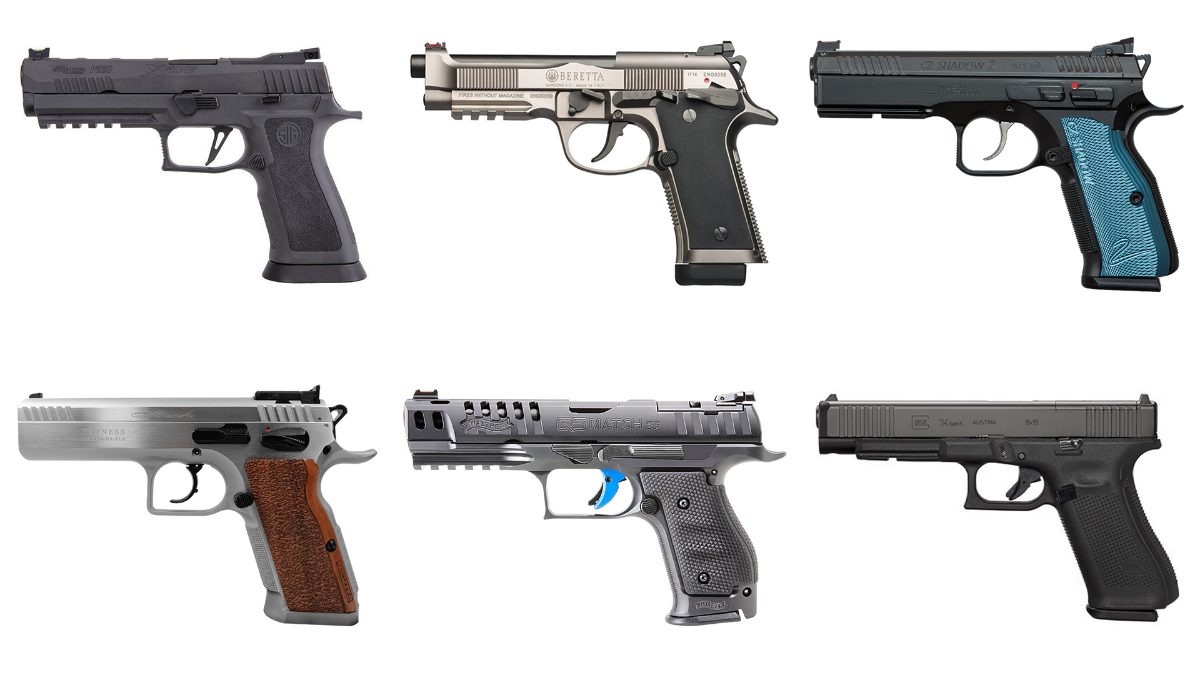
Two semi-automatic pistols sit side by side in the case. They are close to the same size and shape, and they are built to do the same job, yet one costs several times what the other does. One friend says a $300 pistol shoots as well as anything; another says you get what you pay for. A fair question is what the extra money actually buys and whether you need any of it. This article walks through what changes as the price climbs from the $300 range to $1500 and above. By the end you should be able to match a pistol's tier to what you really plan to do with it, and judge the differences in your own hands before you spend a dollar.
What "out-of-the-box quality" really means
Out-of-the-box quality is how well a pistol serves you on day one, before any upgrades or tinkering. For a first serious firearm, or for someone building a collection, that early experience shapes performance, long-term reliability and how much maintenance you will face later. Four qualities do most of the work.
- Reliability. A well-made pistol should function with minimal tinkering, which means fewer malfunctions and consistent performance round after round.
- Ergonomics and fit. The design and materials decide how comfortable the pistol is to shoot, and a comfortable grip, smooth trigger and balanced weight can greatly improve both accuracy and enjoyment.
- Upgrade potential. Even if you plan to modify the pistol later, a quality platform reduces how much you need to change, and a solid foundation gives better results when you add accessories.
- Maintenance and longevity. Higher-quality materials and precision manufacturing reduce wear, which makes maintenance easier and extends the firearm's life.
Reliability can only be proven over many rounds, but fit and trigger feel can be judged in your hands in about a minute. That is why this article keeps coming back to what you can feel and see at the counter.
Key idea: Price mostly buys refinement in the parts you touch and look through (trigger, grip, sights and finish) and in how precisely the parts are built. The right amount of refinement depends on what you will do with the pistol.
What changes as the price climbs
It helps to learn the four things that change from tier to tier before looking at individual pistols. Once you know what each one does for you, a price tag becomes a clue about what you are getting.
Materials and finish
At the entry level you will see basic polymer frames (strong, light plastic) paired with less expensive steel alloys for the slides and barrels. These materials are chosen for durability and cost efficiency, and the finish is utilitarian. It is adequate for everyday use. Mid-range pistols use higher-quality polymer and better-engineered steel, and the slide and barrel may carry advanced coatings such as Cerakote or nitride finishes that improve durability and resistance to corrosion. At the $1000 level, frames are often high-quality steel or aluminum alloys with coatings that give superior wear resistance, and the slide serrations and overall finish show more care. At $1500 and above, expect premium-grade steel, aluminum or even titanium frames with advanced coatings and fit and finish made to exacting standards.
A finish is the coating on the metal that protects it from wear and rust. If a pistol will ride on your belt every day, finish matters more, because it faces sweat, holster contact and weather. Our guide to handgun finishes explains what the common coatings actually do.
The trigger
Most of the trigger conversation comes down to two moments. The break is the instant the trigger releases the firing mechanism, and the reset is how far you let the trigger travel forward before it can fire again. A crisp break feels like a light switch that clicks, while a mushy, heavy one feels like a sticky drawer that finally gives way. The difference matters because the harder you have to pull, the more likely you are to move the sights as the shot breaks.
In the $300 range you will find either striker-fired or hammer-fired systems. A striker-fired pistol uses a spring-driven pin inside the slide to fire the cartridge, and a hammer-fired pistol uses a hammer that swings to strike. Either way, triggers at this price tend to be heavier and non-adjustable. They are serviceable, but they usually lack the crisp break and short reset of higher-end pistols. At $600, triggers are typically smoother and lighter, and some models offer adjustable triggers so you can fine-tune the pull. At $1000, match-grade triggers with crisp breaks and short reset times are common, and some let you tailor the pull weight. At $1500 and above, ultra-crisp match-grade triggers with adjustable pull weights are often one of the most celebrated features. For the technique that lets you use a good trigger well, see our trigger control tips.
Sights and optics
Entry-level pistols usually have basic fixed iron sights, often made of plastic or lower-grade steel, and some have basic Picatinny rails for a light or optic. At $600 you will see upgraded steel sights, options for night sights or fiber optic enhancements, and many models with drift-adjustable sights, which can be nudged left or right to move where the bullet lands. At $1000 and above, many pistols are optics-ready, meaning the slide is pre-drilled and tapped so a red dot sight bolts on directly. Premium night or fiber optic sights are often standard, and at $1500 and above the mounting systems are pre-configured for red dot sights or magnifiers.
If you already know you want a red dot, favor an optics-ready model from the start instead of treating it as a later project. Our article on choosing the right optics for pistols helps with that decision.
Ergonomics, tolerances and recoil
Mid-tier pistols add improved grip textures and more contoured frames that stay comfortable during extended sessions. At the $1000 level the internals are built to tighter tolerances, which means the parts fit together more closely. That is what produces consistent cycling and repeatable performance shot after shot. You will also see customizable grips and improved recoil management. At $1500 and above, customizable grip textures and ergonomic contours are designed to maximize comfort and control, and refined internals minimize recoil and keep cycling smooth.
| Tier | Materials and finish | Trigger | Sights | Where it fits best |
|---|---|---|---|---|
| $300 | Basic polymer frame, less expensive steel alloys, utilitarian finish | Heavier, non-adjustable, serviceable | Basic fixed iron sights, some basic rails | Range practice, backup or concealed carry, first pistol |
| $600 | Higher-quality polymer, better steel, coatings such as Cerakote or nitride | Smoother and lighter, some adjustable | Upgraded steel, night or fiber optic options, drift-adjustable | Self-defense, frequent range use, carry and home defense |
| $1000 | Steel or aluminum alloy frames, Cerakote or nitride, refined serrations | Match-grade, crisp, short reset, some adjustable | Optics-ready, premium night or fiber optic often standard | Competition, precision shooting, high-end self-defense |
| $1500+ | Premium steel, aluminum or even titanium, advanced coatings | Ultra-crisp match-grade, adjustable pull weight, short reset | Optics-ready with pre-configured mounting, night or fiber optic often standard | Competition, professional use, collectors and enthusiasts |
Read down a column to see how one feature develops, such as the trigger moving from "serviceable" to "adjustable" to "ultra-crisp." Read across a row to see what a tier is designed for. Notice that the first two tiers are about being dependable and comfortable, while the top two are about tuning the pistol for a specific purpose.
Four tiers, eight real pistols
Each pair of pistols below shows the trade-offs of its tier. Pay attention to the limitations as well as the strengths, because they tell you who the pistol is for.
The $300 range: Functional, simple and a fine place to start
Pistols at this price are engineered to be reliable and straightforward for shooters on a tight budget. You will feel the savings mostly in the trigger, sights and finish. They suit casual range practice where the goal is honing basic skills, budget-conscious buyers who need a reliable backup or concealed carry option, and new shooters who want to learn proper handling and safety without a steep initial investment. Although they may require some upgrades or personal modifications over time, their reliability and functionality make them an excellent starting point.
The Taurus G3C and the Canik TP9SF solve two different problems. The G3C is a compact and popular option for concealed carry and self-defense, and its small size, ease of carry and dependable striker-fired action make it a solid entry-level pistol. Its trade-off is a trigger that can be heavy, along with less customization and less refined ergonomics than higher-priced options. The TP9SF is widely praised for excellent value. It is a full-size pistol with a comfortable grip, good accuracy, an ergonomic design and a decent trigger at a very competitive price, though it may lack some advanced features of more expensive models. If your main goal is carrying, start by looking at the compact. If your main goal is learning and range comfort, the full-size is worth a close look.
The $600 range: Where triggers, sights and comfort start to improve
At this tier the focus shifts from mere functionality to improved performance, ergonomics and added features. The internal mechanisms are designed for consistent cycling and fewer malfunctions. These pistols suit daily carry and personal defense, frequent practice, and both concealed carry and home defense, and in some cases competitive shooting. The trade-offs are a slightly higher cost and more modest customization potential than the higher tiers, but the step up from entry level is significant for shooters who want a dependable self-defense pistol or a platform for regular range use.
The Glock 19 Gen5 is a staple in both civilian and law enforcement circles. It offers improved ergonomics, accuracy and a smoother trigger than earlier models, its compact size makes it versatile for concealed carry, and its range performance is well regarded. While extremely reliable, some shooters may want more refinement in trigger customization. The Smith & Wesson M&P9 M2.0 is known for a comfortable grip, a refined trigger and a versatile design, and its improved ergonomics and consistent performance make it a strong contender in the mid-tier market. When two pistols are this close on paper, the deciding difference is usually how the grip and trigger feel in your hand, so try both.
The $1000 range: Craftsmanship and precision
Here the quality of construction reaches a higher level of refinement, with premium materials, advanced internal components and features aimed at competitive shooting and high-performance self-defense. These pistols suit competitors who demand pinpoint accuracy, shooters who want the best in a self-defense pistol, and anyone who wants a versatile platform for both range use and serious tactical applications. The cost is higher, and the slightly heavier components may affect concealability.
The Sig Sauer P320 X-Five Legion is engineered for serious competition. Its tungsten-infused frame adds weight for better control, and its precision-tuned trigger and optics-ready design make it a top choice for demanding shooters. Strengths are exceptional accuracy, a refined trigger and robust build quality. Weight is the matter to think through. A heavier pistol absorbs more of the recoil, so the sights settle back faster between shots, but the same mass makes it harder to conceal. The increased weight may not suit those who prioritize concealability, but for this pistol it is a worthwhile trade-off for precision. The CZ Shadow 2 is known for its incredible accuracy and robust construction and is a favorite among competitive shooters. Its steel frame, refined trigger and enhanced ergonomics support precision and consistency in rapid, controlled shooting. Its slightly heavier build is less appealing for concealed carry, but it excels in a competitive or range setting.
The $1500+ range: Built for specific demands
Pistols at the top are designed for competitive shooters, professional law enforcement and those who demand the very best in accuracy, control and finish. They offer reliability and precision under the most demanding conditions, and they also attract collectors and enthusiasts who value craftsmanship, aesthetics and the latest firearm technology. The cost is a premium price, and these pistols are often specialized for competition rather than everyday carry.
The Heckler & Koch VP9 Match OR is built for competition and high-performance use. Its long-slide design enhances accuracy, and it is optics-ready. A longer slide gives a longer distance between the front and rear sights, so small alignment errors move the bullet less on target. Its precision-tuned trigger, superior balance and excellent reliability make it a top choice for serious shooters. The advanced features come at a premium, and its weight may not suit concealed carry, but it excels in competition and high-end tactical use. The Staccato P is renowned for its double-stack design (the magazine holds rounds in two staggered columns) and match-grade performance. With a crisp trigger, exceptional accuracy, smooth cycling and a refined feel, it is a premier choice for those who want the ultimate in out-of-the-box performance. Its premium price and specialized design cater to serious shooters, which makes it less accessible for casual or budget-conscious buyers.
Common mistake: Buying the most specialized pistol for the least specialized job. A competition-tuned pistol is a joy on the line, but the weight that helps you there is something you will feel every day if you carry it. Match the tier to the job you do most often.
Choosing a tier that fits your purpose
Out-of-the-box quality varies widely across price ranges, so your choice should reflect your needs, your experience and your intended use. Three situations cover most buyers. If you are on a tight budget or want a reliable backup firearm, entry-level pistols in the $300 range provide excellent value and sufficient performance for range practice and self-defense. If you want enhanced features and refined ergonomics for daily carry and frequent use, the $600 range offers a significant upgrade without a dramatic price increase. If you want precision and performance in competitive or tactical settings, models in the $1000 to $1500+ range deliver top-tier quality and let you fine-tune the setup for accuracy.
A better pistol makes good fundamentals easier to show, but it does not replace them. Whatever you choose, stance, grip, aiming and trigger work are what turn a good pistol into good shooting.
Before you buy: Handle, plan and budget
Your first pistol is more than a tool. It is the foundation of your shooting journey. The best way to test everything above is to handle and, if possible, test-fire different models in your preferred price range at your local range or firearms dealer, because physical feel and personal comfort are paramount. Beyond that, keep four things in mind.
- Long-term goals. Decide whether you might modify or upgrade the pistol over time, since a platform with extensive customization options can be a major advantage as your skills grow.
- Accessories and aftermarket support. Look at what is available, such as optics and enhanced triggers, because the more support a model has, the easier it is to upgrade.
- Ease of maintenance. A pistol that is comfortable, reliable and easy to maintain will improve both your performance and your enjoyment.
- Upkeep costs. A quality firearm needs ongoing care, so factor in cleaning supplies, maintenance and potential upgrades as part of your overall investment.
Of these four, long-term goals matter most because they decide how much you will lean on the others. A shooter who expects to add a red dot and a better trigger should care a great deal about aftermarket support, and one who wants a simple carry pistol may care mostly about upkeep. If you are brand new, a .22 caliber firearm is worth a look as a starting point because of its low recoil, affordable ammunition and versatility. On the rifle side, the Ruger 10/22 is a well-known platform with extensive customization options. Our article on the .22 LR as a skill builder covers that route.
Try this: The counter comparison
You can do this with three pistols from different tiers, with the help of a store employee. Every time a firearm is handed to you, check it yourself to confirm it is unloaded, keep the muzzle in a safe direction and keep your finger off the trigger. If you are new to this, firearm safety for beginners is worth a read first.
- Pick up each pistol and form your normal grip. Note how the grip fills your hand and whether you can reach the trigger without shifting your hold.
- Raise each one toward a safe spot the employee points out. Note whether the sights are easy to see and line up without changing your grip.
- If the employee allows it, and only when the pistol has been shown to be unloaded and pointed in a safe direction, press the trigger on each one. Note how heavy it feels, where it breaks and how far it travels forward to reset.
- Rank the three on grip, trigger and sights, and write one sentence on what the price difference seemed to buy.
You will know it worked when you can name one or two differences you actually felt and say whether they matter for what you plan to do with the pistol.
Putting it together
Both friends have a point. A reputable $300 to $600 pistol can be fully reliable and accurate enough for carry, home defense and practice. Higher prices buy better triggers, finish, sights, materials and fitting that matter most in competition or to shooters who want them. Choose the tier your use calls for, put reliability and fit first, and spend part of the budget on ammunition, a good holster and training.
Check your understanding
Try answering these before you open the answer. If you can explain it in your own words, you understand it.
1. A $1000 competition pistol is heavier than a $600 compact. Why is that good for the range but a problem for concealed carry?
Added weight steadies the pistol and helps control during rapid, precise shooting, which is why it is a worthwhile trade for competition. The same weight makes the pistol harder to conceal and more tiring to carry all day.
2. What are the break and reset of a trigger, and why does a heavy, less crisp trigger make accuracy harder?
The break is the moment the trigger releases the firing mechanism, and the reset is the forward travel before it can fire again. A heavy or mushy trigger takes more force and gives less warning when it will fire, so it is easier to disturb the sights as the shot breaks.
3. What does "optics-ready" mean, and when should it influence your choice?
It means the slide is pre-drilled and tapped or otherwise prepared so a red dot sight can mount directly. It should matter if you already expect to add a red dot, because you start with a model built for it.
4. A friend says a $300 pistol is not worth buying. How would you respond, based on what you learned?
Pistols in the $300 range are engineered to be reliable and straightforward, and they are a good starting point for range practice, a backup or concealed carry option, and learning. The savings show up in the trigger, sights, finish and customization, so the real question is whether you need those refinements for your purpose.
5. You carry daily and shoot at the range a few times a month. Which tier is the most sensible starting point, and why?
The $600 range. It offers refined ergonomics, smoother triggers and better sights for daily carry and frequent use, without the specialization and extra weight of the competition-oriented tiers.
Where to go next
If you are choosing a first pistol, choosing the right pistol as a beginner shows how to put these tiers to work around skill and confidence. Once you have a pistol, how to master pistol shooting fundamentals teaches the habits that make any tier shoot well, and breaking in a pistol explains how to get smooth, reliable performance from a new one. If you want to see how popular models compare in one common caliber, exploring popular 9mm semi-auto pistols is the natural next read.
Explore our inventory here. We tend to order on demand so let us know what you're after and we'll get it for you.
If you found this informative, we invite you to sign up for email notifications of new blog articles.