
Personal Protection / Home Defense Caliber Comparison: 9mm, .40 S&W, .45 ACP, .380 ACP, and .38 Special
Joseph McLain Nov 07, 2026
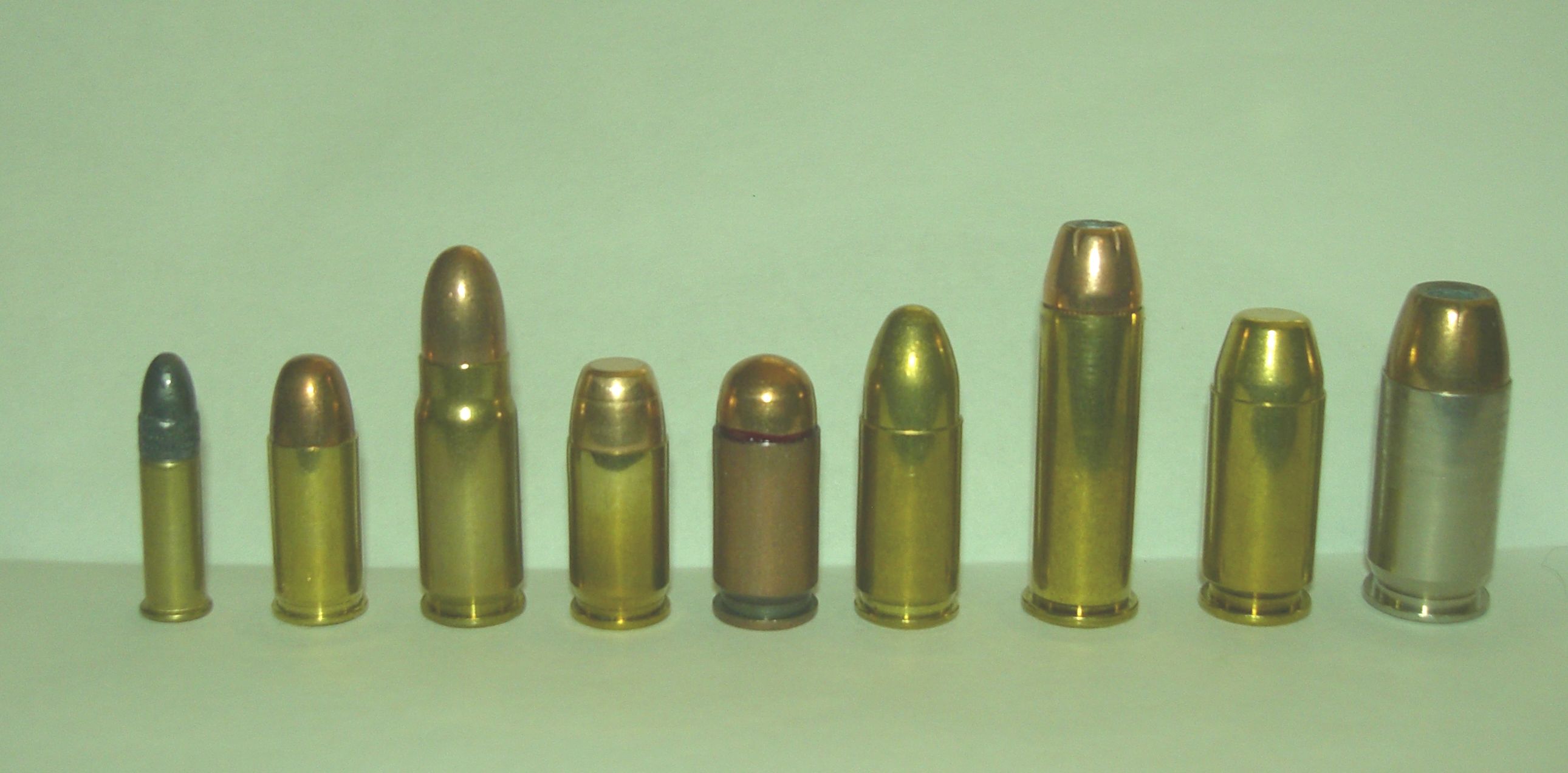
You are choosing a handgun for personal protection, and several calibers are on the table. The .45 ACP has a long record, the 9mm is the most common choice, a tiny .380 disappears into a pocket, and a family .38 Special revolver may already be waiting for you.
By comparing five popular calibers (9mm, .40 S&W, .45 ACP, .380 ACP and .38 Special), you will be able to choose the one that fits your hands, your home and your willingness to practice.
Four trade-offs behind every caliber choice
There is no one-size-fits-all defensive caliber. Your skill level, physical build, firearm platform and even the layout of your home all influence the right answer. What stays the same is that every caliber is a package of four things that pull against each other, so improving one usually costs you something in another.
Stopping power is the phrase people use for how effectively a round stops a threat, and it deserves some care. It is not one number printed on the box. Bullet weight, energy, how deeply the bullet penetrates and how well it expands all play a part, and so does where the bullet hits. Larger calibers generally carry more bullet mass and energy, which is why they get described as more powerful, but modern bullet design has narrowed the gap between calibers.
Recoil is the backward push you feel when the gun fires. Heavier bullets and bigger powder charges push back harder. Recoil matters because the sooner the sights settle back on target, the sooner you can fire a second accurate shot. Magazine capacity is the number of rounds the gun holds. A larger cartridge takes up more room, so a gun of the same size generally holds fewer of them. The fourth factor, ease of use, is how recoil, size, weight and handling combine in your own hands.
Think of choosing a hammer. A heavy framing hammer drives a nail in fewer swings, but a lighter one lets you swing faster and more accurately all afternoon. Neither is wrong. The right one depends on the job and on the person holding it.
Key idea: A caliber you can shoot accurately and practice with regularly will serve you better than a more powerful one you dread shooting. Regular practice with your chosen caliber builds the confidence and proficiency that personal protection depends on.
Comparing the five at a glance
Bullet weights in this table are given in grains. A grain is a small unit of weight, and 7,000 of them make a pound. Within one caliber, lighter bullets generally move faster with less recoil, and heavier bullets generally carry more energy and penetrate deeper. If the vocabulary is new, our beginner's guide to ammunition covers caliber and bullet types.
| Caliber | Common bullet weights | Recoil | Capacity or platform | Best known for |
|---|---|---|---|---|
| 9mm | 115, 124 and 147 grains | Manageable, relatively low | Generally higher magazine capacity | Most widely used, balanced performance |
| .40 S&W | 165 and 180 grains | More pronounced than 9mm | Sometimes fewer rounds than 9mm | Middle ground between 9mm and .45 ACP |
| .45 ACP | 185 and 230 grains | Heavier | Typically lower than 9mm or .40 S&W | Large diameter, deep penetration, long history |
| .380 ACP | 90 to 100 grains | Low, minimal | Subcompact handguns | Compact size for concealed carry |
| .38 Special | 125 and 158 grains | Low to moderate | Revolvers, generally 5 to 6 rounds | Reliable, simple revolver round |
The first three rows form a staircase: from the 9mm to the .40 S&W to the .45 ACP, the cartridge gets bigger and carries more energy, while recoil grows and capacity tends to fall. The .380 ACP and .38 Special sit off to the side because people choose them for size and simplicity rather than raw power. The 9mm is the one caliber with no obvious weak column, which is a big part of why it is so popular. The sections below fill in the reasons behind each row.
The five calibers in practice
9mm: The balanced baseline
The 9mm is by far the most widely used caliber for personal protection and home defense, trusted by civilians, law enforcement and military personnel alike. Its popularity is rooted in balance, with manageable recoil, high magazine capacity and modern bullet technology. The low recoil makes it easy to control and supports quick follow-up shots, which matters in stressful situations where precision still counts. The high capacity gives you more rounds without frequent reloading. Ammunition is plentiful and typically less expensive than many larger calibers, so you can afford the extensive practice that builds skill.
Among the bullet weights, 115 grains is often used for standard practice and self-defense and offers a good balance of velocity and expansion. The 124-grain load is common in self-defense and gives a slight increase in energy and penetration. The 147-grain load is typically subsonic, especially when paired with suppressors for quieter operation. Defensive hollow points such as Federal HST and Hornady Critical Defense offer excellent expansion and penetration.
The con people raise is perceived stopping power. Some shooters argue the 9mm falls short of the .45 ACP or .40 S&W, especially where overpenetration is a concern, but modern bullet designs have largely addressed this. A good rule is that if you want one caliber to carry, to keep for home defense and to practice with affordably, the 9mm is the usual place to start. Many law enforcement agencies favor it for the same balance of performance and capacity.
.40 S&W: The middle ground
The .40 S&W was developed as a compromise between the 9mm and the .45 ACP, and law enforcement widely adopted it for its balance of power and magazine capacity. It delivers more energy than the 9mm while holding relatively more rounds than the .45 ACP. The 165-grain bullet is the most common weight for self-defense loads, balancing velocity and penetration. The 180-grain bullet is heavier and increases penetration, which some shooters choose when they want more of it. Modern defensive loads such as Federal HST and Speer Gold Dot are available in .40 S&W and offer reliable expansion and controlled energy transfer.
The price is in the hand and the magazine. Recoil is more pronounced than the 9mm's, which can slow rapid follow-up shots, especially for shooters who are sensitive to recoil, and because the cartridge is larger, pistols in .40 S&W sometimes hold fewer rounds than those in 9mm. Historically many agencies favored it, though trends have shifted back toward the 9mm in recent years. For home defense, where the slightly heavier recoil is manageable in a controlled environment, it is a robust choice. The deciding question is whether you shoot it as well as you shoot a 9mm.
.45 ACP: The heavy-hitting classic
The .45 ACP has a long history in both military and civilian use. It is known for its large diameter and substantial stopping power, and people who favor a "bigger is better" philosophy often choose it. It delivers significant energy and deep penetration. The 185-grain load is the lighter option, balancing velocity and stopping power, and the 230-grain load is the standard for many .45 ACP rounds, with deep penetration and a high level of energy transfer. Modern hollow points such as Federal Hydra-Shok and Hornady Critical Duty expand reliably and create large wound channels.
The trade-offs are the same two that show up for every larger round. Pistols in .45 ACP typically have lower magazine capacities than 9mm or .40 S&W models, and the recoil is heavier, which can slow follow-up shots and affect shootability, especially for less experienced shooters. It is well suited to stopping threats at close range at home, remains popular with certain military and law enforcement units, and some shooters simply prefer its feel and impact despite the trade-offs. A fair way to decide is to ask yourself whether you will practice enough with it to be as fast and accurate as you would be with a lighter-recoiling caliber.
Common mistake: Choosing a caliber on reputation alone. A friend's favorite round is only the right one for you if you can shoot it comfortably and well. Try to handle and shoot more than one before you decide.
.380 ACP: The compact option
The .380 ACP is chosen for its compact size and ease of carry, which makes it popular in subcompact handguns. It lacks the stopping power of larger calibers, but its low recoil and small dimensions make it an excellent option for concealed carry, especially for shooters who prioritize discretion and comfort. Standard self-defense loads typically run 90 to 100 grains, balancing velocity and expansion. Its minimal recoil suits shooters with smaller frames and those new to concealed carry, and the small, light handguns are generally user-friendly and simple to operate.
Its limits are real. It generally lacks the penetration and energy transfer of the 9mm or larger calibers, and because its lighter bullet loses velocity more quickly, it is best suited to short-range engagements. That fits a very close-range defensive role, and ammunition tends to be very affordable for high-volume training. A handgun that is comfortable enough to be on your body every day protects you more than a larger one left at home, and that is the real case for the .380 ACP.
.38 Special: The reliable revolver round
The .38 Special has been in use for over a century and is especially popular in revolvers. It blends reliability, manageable recoil and proven performance. A revolver stores its rounds in a rotating cylinder instead of a magazine and has fewer moving parts, so there is less that can go wrong. Recoil in a .38 Special revolver is typically low to moderate, which makes it comfortable to shoot even for less experienced users. The 125-grain load is often used for self-defense, giving quicker velocity and less recoil, while the 158-grain load offers more penetration and energy where stopping power is critical.
The costs are capacity and speed. Revolvers generally hold 5 to 6 rounds, significantly fewer than semi-automatic magazines, and reloading is slower. In a defensive situation, that could be a critical factor. It remains a strong choice for concealed carry and home defense, is often carried as a backup because of its simplicity and low failure rate, and appeals to shooters who appreciate a classic, time-tested design. If simplicity matters more to you than capacity, it deserves a serious look.
Beyond the caliber: Your hands, your home and your ammunition
Once you know the five calibers, three practical factors help you tailor the decision.
Comfort and skill
If you are sensitive to recoil, or rapid follow-up shots are central to your plan, a round with minimal recoil such as the 9mm or .380 ACP may be preferable. Also consider how the firearm's size and weight affect your ability to shoot accurately under stress. A gun that feels comfortable in your hand tends to perform better when it counts. If you want to prepare your mind as well as your hands, see the role of mental focus in shooting.
Your home and your distances
If you live in a densely populated area or a home with close quarters, overpenetration becomes a significant concern. Controlled-expansion ammunition, such as modern 9mm hollow points or .40 S&W defensive rounds, can be crucial. Most home defense scenarios occur at close range, where the .380 ACP and .38 Special are effective, though they may lack the power needed in larger or more open environments. Whatever you keep at home, know your target and what is beyond it, and store the firearm securely (see proper gun storage).
Modern ammunition
Advances in bullet technology, especially improved hollow point designs, have enhanced the effectiveness of traditionally "weaker" calibers. Today's 9mm rounds, for example, can deliver impressive terminal performance when properly designed. Choose ammunition from reputable manufacturers that has been rigorously tested for reliability and performance in defensive scenarios. Our guides to premium defensive ammunition and to ballistic gelatin testing show how those designs are compared.
Of these three factors, comfort and skill matter most, because they decide whether you will practice and whether you will shoot well when it counts. Your home and your ammunition then fine-tune the choice.
Making your own caliber decision
Your answer comes from three facts about you. Where the firearm will mostly live, carried daily, kept at home or both, decides how much size you can accept. How you handle recoil decides how quickly you can place a second accurate shot. And how often you will practice, and what ammunition costs, decides how good you will get. Compact, discreet carry points toward the .380 ACP. A balance of recoil, capacity and cost points toward the 9mm. Simplicity points toward a .38 Special revolver, and a priority on power, with the recoil to match, points toward the .40 S&W or .45 ACP. If you can, fire two calibers side by side with an instructor or experienced shooter, with eye and ear protection, and notice which lets you put a second shot on target faster.
Putting it together
Every defensive caliber is a package of four trade-offs: Stopping power, recoil, capacity and ease of use. Moving up from the 9mm to the .40 S&W and .45 ACP adds energy and bullet size while adding recoil and usually reducing capacity. The .380 ACP gives up power for a small, easily carried pistol, and the .38 Special gives up capacity and reload speed for a simple, reliable revolver. Modern defensive bullets have narrowed the differences, which makes your ability to shoot accurately and quickly the deciding factor. For most people that points to the 9mm as a starting place, with the other calibers earning their place when a specific need, such as deep concealment, revolver simplicity or a strong preference for a larger bullet, outweighs what they give up.
Choose the most capable caliber you can shoot accurately, quickly and comfortably enough to practice with regularly, then choose quality defensive ammunition for it and confirm it runs in your firearm.
Check your understanding
Try answering these before you open the answer. If you can decide what to do and explain why, you have it.
1. You fire a 9mm and a .45 ACP pistol of similar size back to back, and your second shot lands much faster with the 9mm. Why does that matter for self-defense?
Lower recoil lets the sights settle back on target sooner, so you can fire quick, accurate follow-up shots. Under stress, accurate hits matter more than the size of any single bullet.
2. A friend says the .45 ACP is better because it has more stopping power. What would you weigh against that claim?
The .45 ACP does deliver significant energy and deep penetration, but it typically holds fewer rounds and has heavier recoil that can slow follow-up shots. Modern bullet design has also narrowed the gap between calibers, so the real question is which caliber you can shoot well and practice with regularly.
3. A small-framed shooter wants a pistol to carry every day. Which caliber is worth a look, and what does it trade away?
The .380 ACP, because of its compact size, low recoil and ease of carry in subcompact handguns. It trades away stopping power, penetration and range, so it is best suited to very close-range defense.
4. You've settled on a .380 for pocket carry and are deciding between cheap FMJ and a quality defensive hollow point. Does the ammunition matter that much?
Yes. Modern hollow point designs have made traditionally weaker calibers far more effective, and reputable, well-tested defensive ammunition is more reliable. A good load in a caliber you shoot well beats a poor load in a bigger one, so choose a quality defensive load and confirm it feeds in your pistol.
5. What do you gain and give up by choosing a .38 Special revolver?
You gain simplicity, reliability from fewer moving parts and manageable recoil. You give up capacity, since revolvers generally hold 5 to 6 rounds, and you reload more slowly than with a semi-automatic.
Where to go next
When you have a caliber in mind, selecting the right personal and home defense ammunition is the next step, because the load you choose matters as much as the caliber. If the 9mm is on your list, exploring popular 9mm semi-auto pistols shows which guns carry it. To put any caliber to good use, pistol shooting fundamentals teaches the stance, grip, aiming and trigger control that make you effective with it. Whichever you choose, keep practicing.
If this article helped you, we invite you to sign up for email notifications of new blog articles.