
Pistol-Caliber Carbines (PCCs): A Comprehensive Guide
Joseph McLain Nov 07, 2026
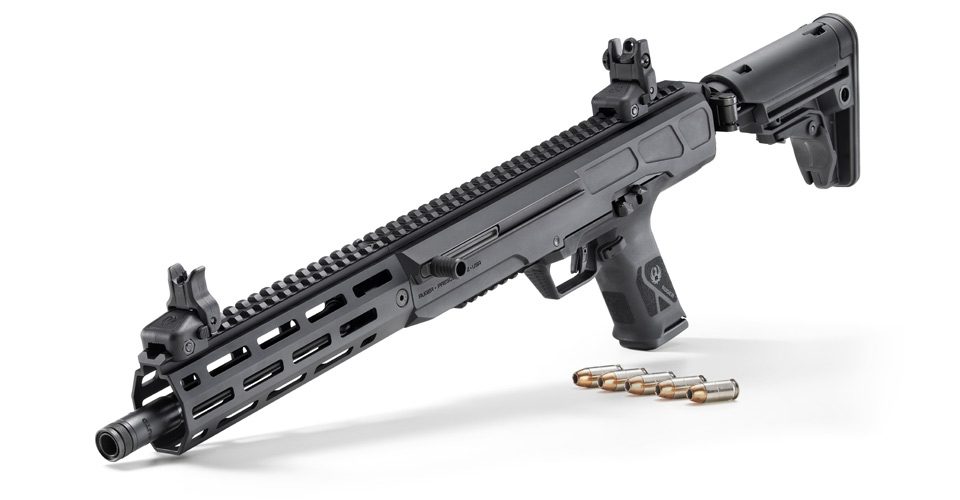
You shoot your 9mm pistol reasonably well. Then you try a compact carbine that fires the very same ammunition, and your shots suddenly land closer together. Is the pistol-caliber carbine an ideal home-defense gun, a compromise that does nothing as well as a real rifle, or simply the most fun you can have with a box of 9mm?
By the end you should understand why the same cartridge behaves differently from a carbine than from a pistol, how the main designs compare, what federal law says about barrel length, and whether a PCC fits your plans and which kind suits you.
What a PCC is and why it shoots differently
A pistol-caliber carbine, or PCC, is a shoulder-fired long gun chambered for a handgun cartridge such as the 9mm. It has a longer barrel and a stock, and it comes in semi-automatic, lever-action and other designs.
Three things change when the same cartridge moves from a pistol to a carbine. First, the stock gives you a third point of contact. A pistol is held only by your hands, so recoil lifts the muzzle; a carbine is braced against your shoulder and cheek as well, so it moves less and settles faster. Think of pushing a door with your hands compared with leaning your whole body into it. Second, the longer barrel gives the burning powder more time to push the bullet, so a carbine usually adds velocity, often a hundred feet per second or more with common 9mm loads, depending on the load and barrel. Third, a longer sight radius or a mounted optic, plus more weight, steadies your aim.
The result is that most shooters hit more accurately and quickly with a PCC than with a pistol of the same caliber, especially beyond close range.
Key idea: A PCC does not change the cartridge. It changes how you hold it and how long the powder has to work, which is what makes it easier to shoot well.
Why people choose them
PCCs recoil gently, so they suit new shooters, smaller-framed shooters and anyone sensitive to recoil. Pistol ammunition generally costs less than rifle ammunition, which makes long practice sessions affordable. And many PCCs share ammunition, and some share magazines, with popular pistols. A Glock owner, for example, can choose carbines such as the Ruger PC Carbine or certain versions of the Kel-Tec Sub-2000 that accept Glock magazines, so one set of magazines and one supply of ammunition serve both firearms.
A pistol cartridge, even from a carbine, carries much less energy than a rifle cartridge and loses it faster at distance. A PCC is easier to shoot than a pistol and more limited than a rifle. Think of it as a very controllable way to shoot pistol ammunition, not as a substitute for a rifle at longer ranges.
Barrel length and federal law
Federal law defines a firearm with a shoulder stock and a rifled barrel shorter than 16 inches, or an overall length under 26 inches, as a short-barreled rifle under the National Firearms Act. That is why most PCCs sold as carbines have 16-inch barrels. Congress eliminated the $200 tax on short-barreled rifles, and since October 9, 2026, the ATF has said it will not enforce the NFA's approval and registration requirements for them (see ATF's current guidance). That is an enforcement policy, not a repeal, and it could change. Short-barreled rifles still have federal rules for travel across state lines, and state laws still apply; Iowa allows short-barreled rifles possessed in compliance with federal law. Short-barreled PCCs sold as pistols, without a shoulder stock, fall under different rules, and the rules for stabilizing braces have been the subject of federal regulation and court challenges.
Because these rules have changed recently and may change again, check ATF's current guidance and your state's law, or ask a qualified attorney or licensed dealer, before you add a stock to a short-barreled pistol or shorten a carbine's barrel.
Choosing a configuration
| Design | Examples | Strengths | Trade-offs |
|---|---|---|---|
| Semi-automatic, magazine-sharing | Ruger PC Carbine, Kel-Tec Sub-2000 | Uses common pistol magazines; Ruger's takes down for storage; Kel-Tec's folds | Feel and adjustability vary; check which magazines your version accepts |
| AR-style | SIG Sauer MPX, CMMG Banshee and other 9mm AR designs | Familiar AR controls, rails and stocks; many accessories | Often heavier and more expensive |
| Lever-action | Henry Big Boy and others in .357, .44 or 10mm | Traditional handling; powerful revolver cartridges | Slower to reload; tube magazine |
Start from your priorities. If sharing magazines with your pistol matters most, start with the first row and confirm the exact magazine compatibility of the version you choose. If you already know the AR-15 and want the same controls, the second row fits. If you like traditional lever guns and revolver cartridges, the third row is the answer; our guide to the Smith & Wesson Model 1854 in .357 Magnum covers one such rifle.
Home defense: What is true and what is not
A PCC can be a good home-defense firearm. It is easier to shoot accurately under stress than a pistol, its recoil is mild, and it can carry a light and an optic. Those are real advantages.
One common belief deserves caution: That pistol bullets are less likely than rifle bullets to go through walls. Both pistol and rifle bullets can pass through multiple interior walls, and some lightweight 5.56 rifle loads actually penetrate interior walls less than many pistol bullets because they fragment. No firearm or cartridge makes a shot safe for people on the other side of a wall. Choose a PCC for its handling, use quality defensive ammunition, and plan your home defense around knowing your target and what is beyond it. Our guide to premium defensive ammunition compares common defensive loads, and remember that a carbine's longer barrel changes velocity, so test your chosen load in the carbine itself.
A PCC kept for defense also needs secure storage that still allows quick access by you. Our guide to proper gun storage covers how to balance the two.
Competition and practice
PCC divisions in action-shooting sports such as USPSA and Steel Challenge have grown quickly because carbines combine speed, accuracy and low recoil. Competitors tend to favor light carbines, red dot sights and reliable high-capacity magazines. For everyday practice, the low cost of 9mm and the gentle recoil make a PCC an excellent way to build skill and an inviting first firearm for new shooters.
What to weigh before you buy
Start with the job and your existing pistol. Magazine compatibility is the most practical filter if you own a pistol you plan to keep. An optic, usually a red dot, makes a PCC much faster and more accurate than iron sights, so budget for one; rails for lights and slings matter for defense. A threaded barrel allows a suppressor, which works especially well with pistol cartridges and subsonic ammunition, and suppressors carry their own federal and state rules, which have also changed recently; see what suppressors are and how they work. Finally, decide how much weight and length you can handle comfortably. Choose by the job first, magazines second, and features third.
Common mistake: Adding a stock to a short-barreled PCC "pistol" without checking current law. The stock makes it a short-barreled rifle, and the federal and state rules for those have changed recently and can change again.
Choosing your PCC
Three facts narrow the field quickly: your main use, the pistol you already own and the features you'll add. Home defense, competition and relaxed range practice each point to a design in the table. If you own a pistol you plan to keep, a carbine that accepts its magazines lets you share magazines and ammunition, so confirm that compatibility on the exact model. A 16-inch barrel keeps the carbine outside the short-barreled rifle rules, and an optic, light or suppressor adds to the cost. If you can, fire five shots with your pistol and five with a carbine at the same distance, with eye and ear protection and the muzzle downrange; the difference in your groups and follow-up speed shows what a PCC adds for you.
Putting it together
A pistol-caliber carbine takes a familiar handgun cartridge and makes it far easier to shoot well by adding a stock, a longer barrel and steadier sights. It offers gentle recoil, affordable practice and, often, magazine sharing with your pistol. It is more limited than a rifle at distance, and it is not a wall-safe choice for home defense, because no firearm is. A stocked carbine with a barrel under 16 inches is a short-barreled rifle under federal law, so check current ATF guidance and your state's law before you buy or build one. Choose by the job, then by magazine compatibility, then by features, and test your defensive load in the carbine itself.
Check your understanding
Try answering these before you open the answer. If you can decide what to do and explain why, you have it.
1. Your 9mm pistol groups at 4 inches at 15 yards, but a 9mm carbine with the same ammunition groups at 1.5 inches. Why the difference?
The carbine's stock adds a third point of contact, its extra weight absorbs recoil, and its longer sight radius or optic steadies the aim, so the same cartridge is far easier to shoot well.
2. You find a stocked 9mm carbine with a 14-inch barrel. What is it under federal law, and what should you check?
It is a short-barreled rifle under the National Firearms Act. Congress eliminated the $200 tax, and since October 9, 2026, the ATF has said it will not enforce the approval and registration requirements, but that policy could change, interstate travel rules and state laws still apply, so check current ATF guidance and your state's law first.
3. Is a pistol-caliber carbine less likely than a rifle to send bullets through walls?
Not reliably. Both can penetrate multiple interior walls, and some light rifle loads penetrate walls less. Plan around knowing your target and what is beyond it.
4. A Glock 19 owner wants a carbine. What should they check first?
Whether the specific carbine version accepts Glock magazines, so magazines and ammunition can be shared.
5. A friend wants a 9mm carbine for coyotes at 200 yards. What would you tell him?
A pistol cartridge carries much less energy than a rifle cartridge and loses it faster with distance, so a PCC is best at shorter ranges. For 200-yard coyotes, a rifle cartridge suited to them is the better tool.
Where to go next
To choose ammunition for a PCC kept for defense, read selecting personal and home defense ammunition. If you are weighing calibers, the personal protection caliber comparison explains why 9mm dominates PCCs, and the 5.7mm round covers a carbine cartridge with very different trade-offs. For optics and lights, rail systems explains how accessories mount.
If this article helped you, we invite you to sign up for email notifications of new blog articles.