
Open Carry or Concealed Carry: Understanding the Debate
Joseph McLain Nov 10, 2026
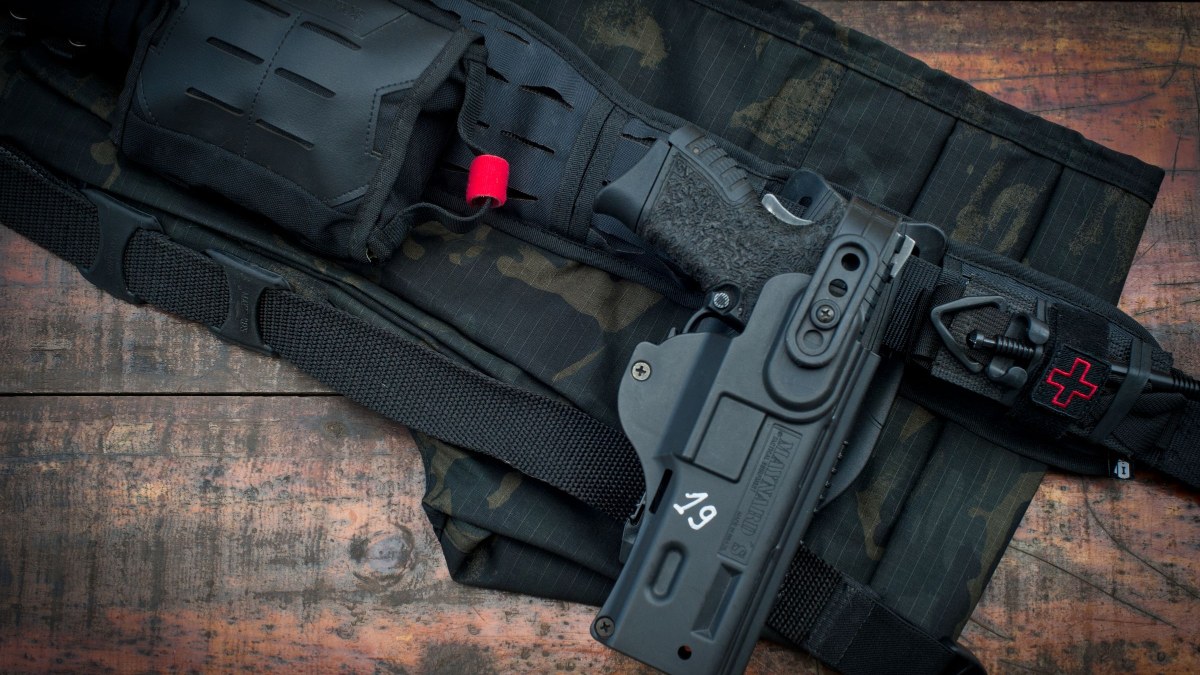
Picture a new permit holder standing in front of a bedroom mirror on a July afternoon. The pistol is a full-size model, the holster rides on the hip, and the T-shirt is not hiding much. Untucking a shirt or adding a light overshirt would hide it. Or the gun could simply stay out in plain view, which is legal in Iowa. Which is smarter?
Visible guns may deter some criminals, concealment preserves your options, and how the public sees carriers matters. Those are three different questions, and taken one at a time they don't produce a single winner, because for many people the right answer changes with where they are, what they are doing and what equipment they use.
By the end you should be able to explain the strongest case for each method, recognize the claims that go beyond the evidence, and choose a method for each setting in your life for reasons you can explain.
Legal is the starting line, not the answer
Since July 1, 2021, Iowa has allowed most adults who may legally possess a handgun to carry it openly or concealed without a permit, and since July 1, 2025, that applies from age 18. Our article on understanding constitutional carry explains the details. In many states, open carry once mattered because a person could carry openly right away but needed a permit to conceal. In Iowa today, that licensing difference is gone for most people. Both methods are generally legal, so the law no longer makes the choice for you.
"Generally legal" still has limits. The places where you cannot carry, such as school grounds, apply to both methods. Businesses can post notices or ask you to leave. And some Iowa laws turn on how a gun is shown. Under Iowa Code 708.1(2)(c), intentionally pointing a firearm toward another person, or displaying a dangerous weapon toward another person in a threatening manner, is an assault. A gun riding quietly in a holster is not a threatening display. A hand resting on the grip while you argue with someone in a parking lot may be treated very differently.
Iowa law also protects people who simply carry. The crime of going armed with intent, at Iowa Code 708.8, says intent cannot be presumed from the mere fact that a person carries a weapon openly or concealed. So the method alone does not make carrying suspicious under the law. Your behavior does.
Legal freedom gives you a choice but not a reason. Once you know a method is legal where you are, choose it for what you are trying to accomplish, not just because you are allowed to.
The strongest case for open carry: Prevention
The best argument for open carry begins before any trouble starts. A criminal looking for an easy victim may prefer someone who seems defenseless. A visible handgun sends a clear message that this person can fight back. Retired Texas sheriff Jim Wilson, writing in Shooting Illustrated, explains the argument that an offender looking for an easy payoff may simply move on rather than take on an armed target.
Picture someone watching shoppers leave a store, sizing up who to rob. They see a pistol on a hip and decide to wait for someone else. The open carrier never knows anything happened. There was no confrontation and no police report. That is why open-carry advocates say deterrence is real even when it cannot be counted.
But the same picture shows the limit of the argument. A peaceful trip to the store cannot tell you whether a criminal was deterred, whether no one was planning anything, or whether a criminal simply never noticed the gun. The absence of trouble does not prove what caused it. The fairest version of the argument is conditional: A visible gun may deter a criminal who notices it, understands it and prefers to avoid an armed person. That is a real mechanism. It is not a guarantee.
Open carry has practical benefits too. Without a cover garment, drawing can be simpler, and it can be easier to carry a larger handgun comfortably in summer, when concealing one is harder.
If you carry openly to deter, understand that deterrence works only on those who notice and care, and that you cannot know when it has worked.
The strongest case for concealed carry: Choices
Concealed carry is often defended with the phrase "the element of surprise," which can sound like it is mainly about shooting first. The stronger argument is about keeping control over whether you get involved at all.
Picture yourself at the back of a convenience store when two armed robbers walk in. If they do not know you are armed, you have options. You might stay still and be a good witness. You might slip out the back, shield your child or wait to see whether they take the money and leave. If they see your gun, they may decide for you that you are the biggest threat in the room and act on that before you have chosen anything. Concealment keeps that decision in your hands.
Open-carry supporters can reasonably answer that those robbers might never have come in if they had seen an armed customer through the window. Both arguments can be true. They describe different moments: Deterrence before a criminal commits, and discretion after they already have.
Concealment also brings social benefits. You do not alarm people who are uneasy around guns. You are not drawn into conversations or arguments about your gun while picking up groceries. And employees and other shoppers are less likely to call police out of fear.
If your main goal is keeping your options open in a situation you did not choose, concealment is usually the stronger tool.
"They will shoot the guy with the gun first"
Critics of open carry often say a visible gun makes you the first person an attacker must deal with. Retired police officer and trainer Greg Ellifritz makes that case forcefully in his article "Friends Don't Let Friends Open Carry," which collects more than a hundred news reports of guns snatched from holsters, carriers targeted for their guns and people ambushed. He makes an exception for hunting and very rural settings.
His collection proves something important: Gun grabs from openly carrying citizens really happen. It does not tell us how often they happen compared with how many people carry openly every day, and some incidents involve police and security guards, whose jobs bring them into conflict. Knowing that something happens and knowing how likely it is are different things. To know the risk, you would need to know how many people carried openly, for how long, where and with what equipment.
The same caution applies in the other direction. "Criminals" are not one type of person. Someone planning a quick theft, someone who wants a gun and someone intent on killing will not react to a visible handgun in the same way. Neither "open carry always deters" nor "open carry always makes you the target" fits all of them.
Key idea: An example proves something can happen. It does not prove how often it happens. When someone argues for either method with a dramatic story, ask how many times the opposite happened, and whether anyone counted.
Treat the risk of a gun grab as real, especially in crowds and close quarters, and choose your equipment and setting as though it could happen to you.
Retention: The equipment changes the comparison
Many open-versus-concealed arguments quietly compare different equipment. A pistol in a loose, cheap holster on the hip is very different from one in a well-made security holster worn by someone trained to keep it. A concealed pistol in a good holster is very different from one tucked loosely into a waistband.
Retention holsters use devices such as a hood, a thumb break or a locking mechanism that a grabber has to defeat. They make a gun harder to take, but they also require the wearer to operate the release correctly, every time, under stress. Our article on holster retention levels explains how these systems work and why the number one company calls "Level 2" may not mean the same thing as another's.
Most experienced instructors who support open carry still insist on a retention holster and training in keeping your gun during a struggle. If you choose to carry openly in public, that equipment and training are part of the choice, not an optional extra.
If you carry openly around other people, use a retention holster and train to draw from it and to defend it.
Concealed is not invisible
Concealment is not perfect either. Reaching for something on a high shelf, bending over to tie a shoe, sitting in a booth or a gust of wind lifting a jacket can all expose a "concealed" gun. Many people who believe they are carrying discreetly are "printing," meaning the outline of the gun shows through clothing, far more than they realize.
Iowa's seasons add a twist. In January, a winter coat hides almost anything, but it can also make the gun slow to reach. In July, a T-shirt hides almost nothing. Some carriers change methods or holster positions with the seasons, which is reasonable, as long as they practice with each setup.
It also helps to separate two choices people often lump together. Open versus concealed is one question. Inside versus outside the waistband is another. Many good holsters ride outside the waistband and are concealed by an untucked shirt or a light jacket. If concealed carry feels uncomfortable, the problem may be a particular holster, belt or gun rather than concealment itself. Our article on IWB holster rake and cant can help solve comfort problems.
Common mistake: Choosing concealed carry and then constantly touching, adjusting and checking the gun in public. Those habits draw more attention than a well-holstered open carry pistol. A good belt and holster that keep the gun stable let you stop fidgeting.
Check your concealment in a mirror while reaching, bending and sitting, and assume someone may notice it anyway.
Normalization: A different goal
Some open-carry supporters agree that concealment usually wins on tactics alone, and then make a different argument. They say that if every lawful gun is hidden, the public never sees that ordinary armed citizens are peaceful, so open carry helps make lawful carry familiar and accepted. That is an argument about public opinion and political change, not about your personal safety in a parking lot, and it should be judged on those terms.
Critics answer that visible guns sometimes produce fear instead of familiarity, leading to police calls, store evacuations and new restrictions. In September 2019, after several frightening incidents, Walmart asked customers to stop openly carrying in its stores, while leaving its approach to concealed carry unchanged. That shows how businesses can respond, though it does not tell us how the public as a whole reacts to ordinary open carry.
How people react often depends on what comes with the gun. A friendly, familiar neighbor with a holstered pistol at the hardware store sends a very different message than a stranger with a rifle in the middle of an argument. Both are visible guns. Only one makes lawful carry look normal.
Remember too that a business's request is not the same as a law. In Iowa, a business can post notice at its entrance or ask you to leave, and refusing can turn into trespass. Our article on carrying where you are not welcome covers those rules.
If you carry openly partly to normalize lawful carry, remember that your behavior teaches more than the gun does.
Setting changes everything
Much of the apparent disagreement between experts disappears when you look at where people carry. Even strong critics of open carry, like Ellifritz, accept it while hunting or in very rural places with few strangers around. Many people who usually conceal carry openly while doing chores on their own land.
Think about three settings. On your own acreage, checking fences, you will rarely be close to strangers, and comfort and quick access matter most. In a crowded checkout line in Des Moines, strangers are within arm's reach and your attention is divided, so retention and discretion matter more. At a gun show or a shooting event, people expect to see guns, and the social questions largely disappear. The same person can reasonably choose differently in each place.
Decide your carry method by setting, and practice with each setup you actually use.
Putting it together
Go back to the new permit holder in front of the mirror. For chores around the house and on rural property, open carry in a sturdy belt holster is comfortable and practical. For errands in town, they choose concealment with an outside-the-waistband holster and an untucked overshirt, because they want to keep the choice of whether to get involved, and because they would rather not answer questions about their gun in the cereal aisle. They check the setup in the mirror while bending and reaching, practice drawing from both setups with an unloaded gun at home, and keep their hands off the gun in public.
Neither method is reckless, and neither is a magic shield. Each has a purpose, a cost and a setting where it makes the most sense. What matters is that the choice is deliberate and that the carrier can explain it.
Check your understanding
Try answering these before you open the answer. If you can decide what to do and explain why, you have it.
1. A friend who just started carrying asks which way Iowa law wants him to carry, openly or concealed. What do you tell him?
The law doesn't choose for him. Since permitless carry, most adults who may possess a handgun can carry either way, so the old reason to open carry, avoiding a concealment permit, mostly no longer applies. He should choose by purpose and setting: concealment to keep his options in town, open carry where comfort and access matter and strangers are few, with good equipment for whichever he picks.
2. In a heated argument over a parking spot, your neighbor, who carries openly, rests his hand on his holstered pistol while he talks. Is that still just open carry?
Maybe not. A holstered gun isn't a threatening display, but Iowa Code 708.1(2)(c) makes displaying a dangerous weapon toward someone in a threatening manner an assault, and a hand on the grip during an argument can be read that way. His behavior, not the method of carry, is what creates the risk. Hands off the gun, and walk away.
3. A friend says open carry always deters crime. What is wrong with that?
Deterrence works only on criminals who notice the gun, understand it and want to avoid an armed person. Some criminals may not notice, and some may target the carrier for the gun. A peaceful day cannot prove deterrence happened.
4. You walk into a gas station just as two robbers pull guns on the clerk. Your pistol is concealed. What does that give you that open carry wouldn't?
Choices. Because they don't know you're armed, you can stay still and be a good witness, slip out, shield someone or intervene only if it becomes necessary. If they'd seen your gun, they might have treated you as the main threat before you'd decided anything. (An open carrier might argue they'd never have come in, which is the deterrence side of the same debate.)
5. Your concealed carry setup is uncomfortable. Does that mean you should switch to open carry?
Not necessarily. Open versus concealed is a separate question from inside versus outside the waistband. The discomfort may come from a particular holster, belt, position or gun. An outside-the-waistband holster under a cover garment, or a better belt, may solve it.
Where to go next
You can find inside-the-waistband, outside-the-waistband and pocket holsters on our website for popular carry pistols, and anything listed there can be ordered if it isn't in stock.
For Iowa's permitless carry law and the places you still cannot carry, read understanding constitutional carry. To choose a holster that resists a grab, see holster retention levels. For making concealment comfortable, read IWB holster rake and cant. And for posted businesses and requests to leave, see carrying where you are not welcome.
If this article helped you, we invite you to sign up for email notifications of new blog articles.