
MantisX X2, X3 or X10 Elite: Choosing the Level That Fits How You Train
Joseph McLain Nov 02, 2026
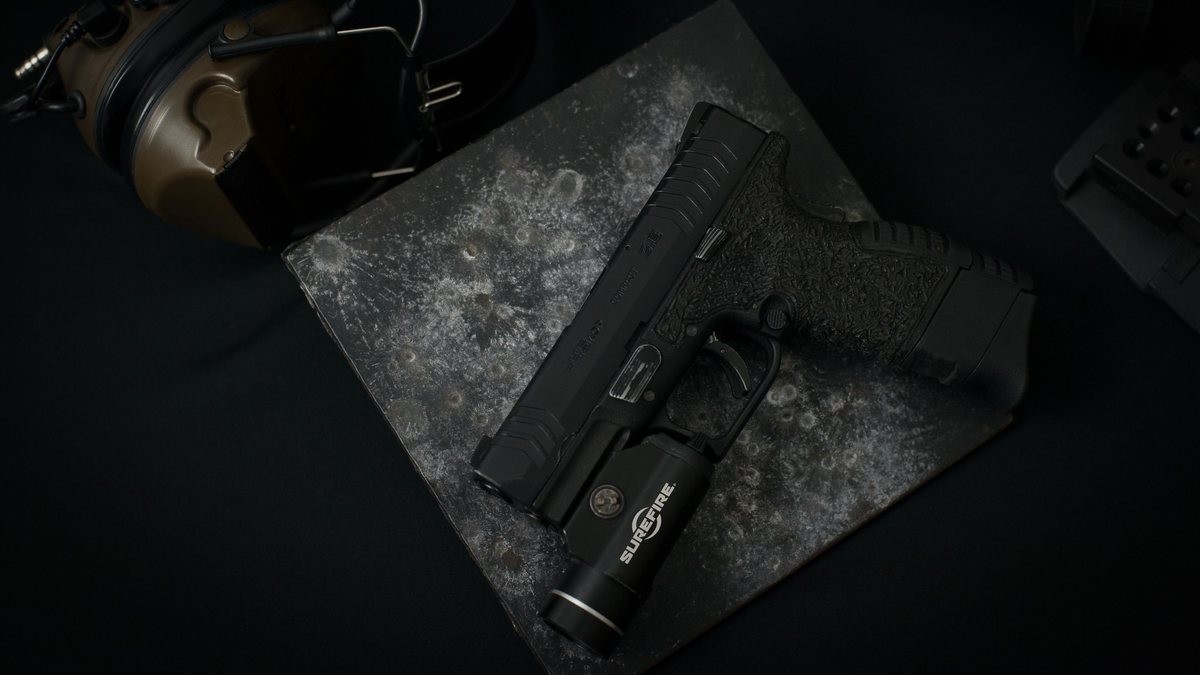
Picture a coworker who has decided to get serious about shooting better. They have read that a MantisX sensor can show exactly what their hands do during the trigger press, and they are ready to buy one. Then they open the Mantis website and find three versions. A friend from church says the cheapest one is all anybody needs. A buddy who shoots competition says to buy the top model once and be done. The person at the next lane says the middle one is the sweet spot.
Each of them is right about something. The three models use the same small sensor and the same free app, and they differ in what the app will let that sensor do. The cheapest one is plenty for some shooters, the middle one fits others, and the top one is worth every dollar to a third group. Which group you are in depends on where you train, what you shoot and what you are trying to fix.
This article explains what a MantisX actually measures, what each level adds, what each costs once you count adapters and holsters, and how to match a model to your own practice. By the end you should be able to name the one model that fits how you train, explain why the others do not, and know what else, if anything, you need to buy with it.
What a MantisX does: A coach that watches the gun, not the target
A MantisX is a motion sensor about the size of a matchbox that clamps to the accessory rail under your gun's barrel. It talks to an app on your phone over Bluetooth. While you aim and press the trigger, it records how the muzzle moves, many times a second, and when the shot breaks it shows you a trace of that movement and a score. The less the gun moved during the press, the higher the score. Mantis describes a perfect 100 as essentially unattainable.
The sensor also tells you which direction the gun moved. If you tend to push the muzzle down and to the left as you press, the app lights up that part of a wheel and, after a few shots, shows the pattern and offers coaching on the likely cause. That is the real value. A target only tells you a shot went low and left. The MantisX shows you that it went there because the gun dipped in the last instant before the shot.
Think of it like a golf swing analyzer rather than a scorecard. The scorecard tells you that you sliced. The analyzer tells you your club face was open at impact. One is a result, and the other is a cause you can work on.
It is just as important to know what a MantisX does not do. It does not know where your sights were pointed, so it cannot tell you whether you would have hit the target. A shooter with perfectly still hands and a poor sight picture can score well and still miss. It also has no laser, so it shows no point of impact on a wall or target. For that you pair it with a laser system, which our article on pairing Laser Academy with MantisX or TitanX explains.
Key idea: A MantisX measures the cause of a bad shot, which is gun movement during the press. It does not measure the result, which is where the bullet would have gone. Buy it to find and fix what your hands are doing.
The rule: If you want to know why your shots go where they go, a MantisX answers that question. If you only want to see hits on a target, you are shopping for a laser trainer instead.
What stays the same on every model
Before comparing the three, it helps to see how much they share, because it means the cheapest model is not a stripped-down toy. All three use the same sensor size and the same quick-release lever to attach to a rail. All three use the same free app with no subscription, receive the same free software updates, and come with phone and email support and a two-year warranty.
All three also include the core training that most shooters need most. That covers the shot-by-shot score and muzzle trace, trigger control analysis, a shot timer, the coaching tips, the structured training courses, the Benchmark test that measures where you stand, history tracking so you can see progress over weeks, and groups for training with friends. All three work on handguns and rifles.
Notice what that means. A new shooter with an X2 and a seasoned shooter with an X10 doing the same slow-fire trigger drill at the kitchen table are getting the same measurement and the same coaching. The higher models add situations, not accuracy.
The rule: Do not buy a higher model hoping for a better basic measurement. Buy it only if you will use the situations it adds.
The X2: Dry fire at home
The X2 is built for dry fire only, meaning practice with an unloaded gun. Mantis lists it at $99.99. It records every dry press, scores it, shows the trace and coaches you, and it runs the full set of marksmanship drills and courses.
What it will not do is record live fire. If you mount it on your gun at the range, it will not analyze the shots. It also lacks the holster draw analysis and recoil analysis found on the top model.
For a large share of shooters, that is not a limitation at all. Most trigger-control problems, such as jerking the trigger, tightening the whole hand as you press, or pushing the gun forward, show up plainly in dry fire, and dry fire is where they get fixed, because you can do hundreds of careful repetitions at home for free. Picture someone who shoots a few times a year, wants tighter groups, and is willing to spend ten minutes a night at home. The X2 gives that person everything they will use.
The rule: Choose the X2 if nearly all of your practice will be dry fire at home and your goal is a cleaner trigger press and steadier hold.
The X3: Adds live fire at the range
The X3 does everything the X2 does and adds live-fire analysis. Mantis lists it at $169.99. You can take the same sensor to the range, mount it on your gun and get a score and trace for real shots. It also works with CO2 and airsoft guns, which some people use for indoor practice with a little recoil and noise.
Why does live fire matter if dry fire fixes the trigger press? Because some problems only appear when the gun is about to go bang. A shooter can press beautifully in the living room and then, at the range, brace for recoil a split instant before the shot. That anticipation, a flinch, often shrinks or vanishes in dry fire, because your body knows nothing is going to happen. The X3 lets you compare your dry and live scores. If the live scores are much worse and the trace shows a push or a dip right at the break, you have found a flinch rather than a trigger problem, and the fix is different. Our article on fixing a flinch explains that fix.
The X3 does not add holster draw analysis, recoil analysis, shotgun or archery. It is still a marksmanship tool: How well do you press the trigger, dry and live?
The trade-off is $70 more for one capability. If you shoot regularly at a range where you can mount a sensor and take your time, it earns that money quickly by telling you whether the range problem is the same as the home problem.
The rule: Choose the X3 if you go to the range regularly and want to know whether your live shots match your dry practice.
The X10 Elite: Draws, recoil and more kinds of shooting
The X10 Elite does everything the X3 does and adds several kinds of analysis the others do not have. Mantis lists it at $249.99.
- Holster draw analysis. It times each part of the draw, from establishing your grip, to clearing the holster, to getting the gun level, to driving it out to the target, to pressing the shot, so you can see which step is costing you time.
- Recoil analysis. In live fire it measures how far the muzzle rises, how it moves between shots and how quickly you get back on target, which is the heart of shooting fast and accurately.
- Smoothness and consistency analytics. It compares how alike your shots and movements are, which matters once your basic press is good.
- Shotgun and archery. It works with the Mantis shotgun app, which is built around trap and skeet and includes a scorecard, and with the archery app.
- Included adapters. It comes with a barrel-mount rail for rifles and shotguns and a universal magazine-floorplate rail. The X2 and X3 include no adapters.
Read that list as a set of questions. Do you carry a handgun and want to draw faster without giving up accuracy? Do you want to control recoil in fast strings? Do you shoot clays or a bow and want feedback there too? Each yes is a reason for the X10. If every answer is no, the X10's extras will sit unused, and the X2 or X3 gives you the same core training for less.
One practical point catches carry shooters by surprise. To analyze a draw, the sensor must ride on the gun while it is in the holster, and a standard holster will not fit a gun with a sensor hanging under the barrel. Mantis says the sensor fits holsters made for small weapon lights such as the SureFire XC1 or Olight PL Mini II, and it sells a few holsters of its own. Budget for a light-bearing holster if you do not already own one, or the draw feature cannot be used.
Common mistake: Buying the X10 for holster draw analysis and then discovering the sensor will not fit your carry holster. Check holster fit before you buy, and count that holster in the price.
The rule: Choose the X10 if you will practice drawing from a holster, train fast strings with recoil, or shoot shotgun or archery. Otherwise, its extras are money spent on features you will not open.
Comparing the three at a glance
| What you want to do | X2 | X3 | X10 Elite |
|---|---|---|---|
| Dry fire analysis on handgun or rifle | Yes | Yes | Yes |
| Live fire analysis at the range | No | Yes | Yes |
| Training courses, Benchmark, shot timer, history | Yes | Yes | Yes |
| Holster draw analysis | No | No | Yes |
| Recoil analysis | No | No | Yes |
| Shotgun and archery | No | No | Yes |
| Rail adapters included | No | No | Yes, two |
| Mantis list price (November 2026) | $99.99 | $169.99 | $249.99 |
Read the table from the top down. The first and third rows are the same for everyone, and they hold most of the training value. Each step to the right adds a situation: The range for the X3, then the holster, recoil, clays and archery for the X10. Prices change and Mantis runs sales, so check the current price before you buy, but the steps between models have stayed roughly the same.
The rule: Find the lowest row that describes something you will actually do every month, and buy the cheapest model that has a Yes in that row.
Before you buy: Will it fit your gun?
The sensor attaches to a Picatinny or similar accessory rail. Most full-size and compact pistols, and most modern rifles and shotguns, have one or can take one. Many small carry pistols do not.
If your gun has no rail, Mantis sells adapters. A universal magazine-floorplate adapter, called a MagRail, puts a short rail on the bottom of your magazine for about $10, and model-specific versions for popular pistols such as the Glock 43X and 48, Sig P365 and Smith & Wesson Shield run about $25. Clamp-on barrel rails cover rifles and shotguns. Mantis keeps an adapter lookup on its site, and the few minutes it takes to check your exact model is the best insurance against a disappointing first night.
Two more practical points belong in your decision. Each sensor pairs with one phone at a time, so two people training side by side need two sensors and two phones. And the sensor detects a dry-fire shot by feeling the hammer or striker fall, which is harder than detecting a live shot. Mantis reports catching most dry presses, but not all, and it deliberately ignores some rather than count racking or bumps as shots. An occasional press that does not register is normal, not a defect.
The rule: Look up your exact gun in Mantis's adapter list before ordering, and add the adapter to the price if you need one.
Upgrading later versus buying once
It is tempting to start with the X2 and upgrade if you outgrow it. That works, but it costs more than it seems. Buying an X2 and then an X3 runs about $270, against $170 for buying the X3 at the start. The X2 does not become worthless, since a second sensor lets a spouse or teenager train at the same time, but you will have paid for two sensors.
A better approach is to be honest about the next year, not the next ten. Ask what you will actually do between now and next winter. If the answer is dry fire at home, buy the X2 and spend the difference on ammunition, a class or a good holster. If you already know you will be at the range twice a month, buy the X3. If you carry every day and plan to work on your draw, buy the X10 and the holster that fits it.
The rule: Buy for the training you will do this year, not for what you might do someday.
Putting it together
Go back to the coworker with three tabs open. The friend who said the cheapest is enough is right for anyone who will practice mostly at home, because the X2 delivers the same core measurement and coaching as the others. The person at the next lane who liked the middle model is right for a regular range shooter who needs to know whether a flinch appears with live ammunition. The competition shooter is right for someone who will work on draws, recoil and fast strings, or who shoots clays or a bow.
So the decision comes down to three questions, in order. Will you take it to the range? If not, buy the X2. Will you train draws from a holster or fast strings with recoil, or shoot clays or archery? If not, buy the X3. If yes, buy the X10, and budget for a holster that fits the sensor. Then check your gun in the adapter list, and you will have bought exactly what you need.
Try this: Pick your model in ten minutes
- Write down every place you expect to practice in the next twelve months: Home, an indoor range, an outdoor range, a clays course.
- Write down every skill you want to improve: Trigger press, flinch, draw, fast follow-up shots, clays.
- Find the lowest row in the comparison table above that matches something on your two lists, and note the cheapest model with a Yes in that row.
- Look up your exact gun in Mantis's adapter list, and add the adapter, and for the X10 a sensor-compatible holster, to your total.
- Compare that total to your budget. If it does not fit, check whether the next model down still covers everything you wrote in step two.
You will know it worked when you can finish the sentence, "I would choose the ___ because I will ___, and I don't need the ___ because I won't ___."
Check your understanding
Try answering these before you open the answer. If you can explain it in your own words, you understand it.
1. Your neighbor wants a MantisX to see where their shots would hit on a target in the basement. Which model should they buy?
None of them for that purpose alone. A MantisX measures gun movement, not point of impact. They need a laser trainer, such as Laser Academy, either by itself or alongside a MantisX.
2. You practice only at home, ten minutes most nights, to clean up your trigger press. Which model fits, and why?
The X2. It provides the same dry-fire measurement, coaching and courses as the more expensive models, and you would not use the live-fire or draw features you would be paying for.
3. Your groups are tight in dry fire at home but open up at the range. Which model helps you find out why?
The X3 or X10, because they analyze live fire. Comparing live and dry traces shows whether you are bracing for recoil, a flinch, which appears only when the gun is about to fire.
4. You carry a compact pistol daily and want to work on your draw. What should you check before ordering the X10?
That the sensor will fit your gun, through its rail or an adapter, and that you have a holster that accepts the gun with the sensor mounted, such as one made for a small weapon light. Without that holster, the draw analysis cannot be used.
5. Your teenager wants to train with you at the same time. What do you need?
A second sensor and a second phone. Each sensor pairs with one phone at a time.
Where to go next
When you are ready to buy, see current MantisX models and prices at Mantis.
If you are also deciding between a MantisX on your own gun and Mantis's dedicated laser pistol, MantisX vs. TitanX walks through that choice. To see hits on a target as well as the cause behind them, read pairing Laser Academy with MantisX or TitanX. For a plan that puts a sensor to work through the cold months, see winter dry-fire practice, and for the safe routine every dry-fire session depends on, read dry-fire practice.
You can find holsters, including light-bearing holsters, and other range gear on our website, and anything there can be ordered if it isn't in stock.
If you found this informative, we invite you to sign up for email notifications of new blog articles.