
MantisX vs. TitanX: Training With Your Own Gun or a Dedicated Trainer
Joseph McLain Nov 07, 2026
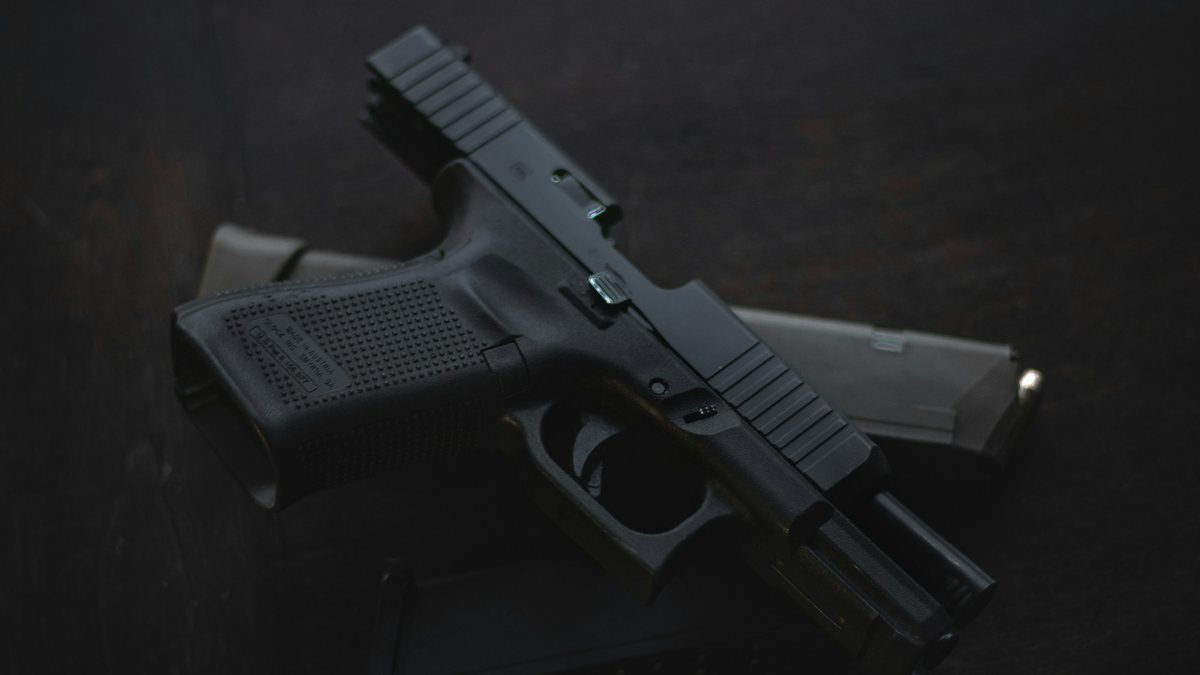
Picture your brother-in-law at a family dinner, phone out, asking for advice. He carries a pistol most days and wants to practice at home over the winter. He has narrowed it down to two products from the same company. One is the MantisX, a small sensor that clips onto his own gun. The other is the TitanX, a laser training pistol shaped like a Glock with the same sensor built inside.
The MantisX and the TitanX measure the same thing, but they are built for different kinds of practice. Practicing with your own gun builds the most faithful habits, while a trainer that can never be loaded makes fast, repeated practice safer and easier. The right choice depends on what gun you shoot, what you want to practice and how you want to practice it.
By the end you should be able to choose the MantisX, the TitanX or both, and explain why that choice fits your gun and your goals.
Two ways to get the same coaching
A MantisX is a motion sensor that clamps to the accessory rail of your own handgun or rifle. While you press the trigger, it records how the muzzle moves and sends a score, a trace of the movement and coaching tips to an app on your phone. Our guide to choosing a MantisX model explains the three versions, which range from $99.99 for dry fire only to $249.99 for the X10 Elite with holster draw and recoil analysis.
The TitanX is a complete training pistol, not an accessory. It is inert, meaning it has no barrel that can fire anything, and it is built in the shape of a Glock 17, 19 or 45. Mantis lists it at $199. Inside is the same sensor as the X10 Elite, so it uses the same app, drills and courses. It adds two things a sensor on your own gun cannot: A trigger that resets by itself after every press, and a red laser that flashes where the gun was pointed when the shot broke.
Think of it like learning to drive. The MantisX is a driving coach riding along in your own car. The TitanX is a driving simulator built to feel like one popular car. The simulator lets you practice things you would not try in your own car, and practice them over and over, but it only feels exactly right if your car is the one it was modeled on.
Both give you the same coaching on how the gun moves. The difference is whether that coaching happens on your own gun or on a dedicated trainer.
The trigger reset: Why it changes your practice
This is the difference most buyers do not think about until the first night of practice. On most modern semi-automatic pistols, including every striker-fired gun like a Glock, the trigger does not reset after you dry fire it. Press it once and it goes dead. To press again, you have to rack the slide, at least partway, which means taking your grip apart, re-gripping and re-aiming for every single shot.
For slow, careful trigger work, that is fine, and some instructors like the pause because it forces you to rebuild your grip each time. But it makes some practice impossible. You cannot fire a pair of shots, practice a follow-up shot, or shoot a string at several targets, because the gun gives you only one press at a time. A double-action revolver or a double-action-only pistol resets on its own, so owners of those guns are less affected.
The TitanX trigger resets itself every time. You can press, reset and press again as fast as you can do it well, and you can run timed strings, transitions between targets and reloads with the included weighted magazines. Reviewers describe the trigger as feeling like a factory Glock, with a pull of about five to six pounds.
Key idea: With a MantisX on a striker-fired pistol, every dry-fire shot is a single shot. With a TitanX, you can practice the multiple-shot skills, follow-ups, transitions and reloads, that a self-defense encounter or a match actually demands.
If your practice is slow, single, careful presses, the reset does not matter much. If you want to practice strings of shots, it matters a great deal.
Your gun versus a Glock-shaped trainer
Here is where the neighbor's advice carries real weight. Every gun has its own grip angle, trigger shape, take-up, break and reset. A thousand presses on the trigger you actually carry build a habit you will use on the day it counts. A thousand presses on a different trigger build a slightly different habit.
That makes the TitanX an easy choice for someone who carries or competes with a Glock 17, 19 or 45, because the trainer matches the grip, the controls and the feel closely, and it fits most holsters made for that Glock. It is still a reasonable choice for someone who shoots another striker-fired pistol with a similar trigger and grip, because the core skills of grip, sight alignment and a smooth press carry over well. It is a weaker choice for someone who carries a double-action revolver, a double-action/single-action pistol or a 1911, because the trigger the trainer teaches is not the one they will use.
The MantisX goes on the gun you already own, as long as that gun has a rail or can take one of Mantis's adapters. It also moves from gun to gun, so a family with a carry pistol, a range pistol and a deer rifle can train on all three with one sensor.
If your carry gun is a Glock or close to it, the TitanX teaches nearly the same habits. If it is not, the MantisX on your own gun is the more faithful practice.
Live fire: Only one of them goes to the range
The TitanX is a home training tool. It cannot shoot, so it cannot tell you anything about recoil, muzzle rise or the flinch that shows up only when a real gun is about to fire. The MantisX X3 and X10 can ride on your gun at the range and analyze real shots. That lets you compare your living-room trigger press with your range trigger press, which is the best way to discover whether a problem is the press itself or anticipation of the blast. Our article on fixing a flinch explains why that difference matters.
The X2, the least expensive MantisX, is dry fire only, so on this point it is no different from the TitanX.
If you want feedback on live fire at the range, buy a MantisX X3 or X10. The TitanX cannot give it.
Safety: Why a trainer that can't be loaded matters
The single most important rule of dry fire is that no live ammunition is anywhere near the practice. One of the most common ways dry-fire accidents happen is simple: Someone finishes a session, reloads the carry gun, then decides to do one more repetition. Our guide to dry-fire practice lays out the routine that prevents it.
A TitanX removes that risk entirely, because it cannot be loaded. Many families find that worth a great deal, especially with children in the house or when two people practice together. It also lets you practice draws and movement in rooms where you would not point a real gun, even an unloaded one.
A MantisX on your own gun asks you to follow the dry-fire safety routine every single time. That routine works, and millions of shooters dry fire safely, but it depends on you.
If you or someone in your household will be practicing often and casually, the TitanX's built-in safety is worth weighing heavily. If you already have a disciplined dry-fire routine, the MantisX on your own gun is just as safe in practice.
What each one shows you
A MantisX shows how the gun moved and coaches you on why. It does not show where the shot would have hit, because it has no laser and does not know where your sights were pointed. A shooter can earn a high score with still hands and a poor sight picture.
The TitanX shows both. The sensor shows how the gun moved, and the laser shows where it was pointed when the shot broke. You can adjust the laser with two small screws so it matches your sights or a red dot. The slide is cut for common red dot footprints, so you can practice with the same type of optic you carry. On its own, the laser flash is brief, so you see a quick dot on the wall. Add a phone running Mantis's Laser Academy app and printed targets, and every hit is scored and timed. Our article on pairing Laser Academy with MantisX or TitanX explains how.
You can add a laser to a MantisX setup too, by putting a laser training cartridge in your own gun's chamber. It still needs the slide racked for each shot on a striker-fired pistol.
If seeing your hits matters to you from the first night, the TitanX includes the laser. With a MantisX, plan on adding a laser cartridge.
Comparing the two
| Question | MantisX on your gun | TitanX |
|---|---|---|
| Which gun do you train with? | Your own, any gun with a rail or adapter | A Glock 17, 19 or 45 replica |
| Trigger reset in dry fire | Rack the slide each shot on most semi-autos | Resets itself |
| Strings, transitions and reloads | Limited in dry fire | Yes, with two weighted magazines |
| Live fire analysis | X3 and X10 only | No |
| Shows where the shot hit | Only with an added laser cartridge | Yes, built-in laser |
| Holster draw analysis | X10 only, needs a holster that fits the sensor | Yes, in most Glock holsters |
| Can it ever be loaded? | It rides on a real gun | No, it is inert |
| Mantis list price (November 2026) | $99.99 to $249.99, plus any adapter | $199 |
The table shows two different strengths. The MantisX column is about faithfulness: Your gun, your trigger, at home and at the range. The TitanX column is about volume and variety: Fast repetitions, multi-shot drills, draws and reloads, with no chance of a live round. Notice that the TitanX compares best against the X10, since it includes the same sensor and the laser for $50 less, but only if a Glock-shaped trainer suits you.
Decide which column describes the practice you actually need more of, then let your gun break the tie.
When owning both makes sense
Many serious shooters end up with both, and the reason is not excess. The two tools cover each other's gaps. The TitanX gives you fast, safe repetitions of draws, strings and reloads at home. A MantisX on your own gun keeps your habits tied to the trigger you actually carry and follows you to the range for live fire. A common pattern is to do most weeknight practice on the TitanX and a few sessions a week, plus range days, with the MantisX on the real gun.
If the budget allows only one, start with whichever covers your biggest gap. If you have never practiced a draw or a follow-up shot, start with the TitanX if you shoot a Glock. If your problem shows up at the range, start with a MantisX X3.
Good practice: If most of your practice is on a TitanX, finish each week with a few careful dry presses on the gun you actually carry, so your hands stay familiar with its trigger, grip and controls.
Buy both only when you will use both kinds of practice every month. Otherwise, start with the one that fixes your biggest weakness.
Putting it together
For the brother-in-law at dinner, each product answers part of what he wants. Practicing with his own gun builds the most faithful habits, and the MantisX is the only one of the two that comes along to the range. The TitanX can never be loaded and makes fast, multi-shot practice possible. It isn't a fake gun so much as a safer, faster practice tool, and it is worth buying only if it fits the gun he carries.
So ask four questions in order. Is your gun a Glock 17, 19 or 45 or close to it? Do you want to practice strings, draws and reloads, or slow single presses? Do you want feedback at the range? How much does a gun that can never be loaded matter in your house? A Glock shooter who wants draws and strings and values safety buys the TitanX. Anyone who shoots a different kind of gun, or wants live-fire feedback, buys a MantisX. A shooter who wants all of it buys both.
Check your understanding
Try answering these before you open the answer. If you can decide what to do and explain why, you have it.
1. You carry a Sig P365 and want to dry fire at home and check yourself at the range. Which do you buy?
A MantisX X3, with a rail adapter for the P365 if your model has no rail. The TitanX is a Glock replica and cannot go to the range, while the X3 works on your own gun for both dry and live fire.
2. You carry a Glock 19, have young children at home and want to practice draws and pairs. Which fits best?
The TitanX 701, the Glock 19 replica. It fits your holster, resets its own trigger for pairs, includes draw analysis, and can never be loaded.
3. With a MantisX on your Glock 43X, you try to practice a fast pair at home, and after the first press the trigger goes dead. Why, and what are your options?
A striker-fired trigger doesn't reset after a dry press, so you have to rack the slide before each shot; every dry-fire press is a single shot. For slow, careful presses that's fine. To practice pairs, strings and reloads, you'd need a trainer with a self-resetting trigger, like the TitanX, or live fire at the range.
4. Your scores on the TitanX are excellent, but your range groups with your own gun are poor. What might explain it?
Either a flinch that appears only with live ammunition, or differences between the trainer and your real gun's trigger and grip. A MantisX X3 or X10 on your own gun at the range would show which.
5. You shoot a double-action revolver. Is the TitanX a good choice?
Usually not. Its trigger teaches a Glock-style press, not a long double-action pull. A MantisX on your revolver, which resets on its own in dry fire, is the more faithful practice.
Where to go next
You can find holsters on our website, including light-bearing holsters that fit a gun with a small weapon light, and anything listed there can be ordered if it isn't in stock.
When you are ready to buy, see current MantisX and TitanX models and prices at Mantis.
If you are leaning toward a MantisX, choosing between the X2, X3 and X10 Elite shows which level fits your practice. To add scored targets and timed drills to either one, read pairing Laser Academy with MantisX or TitanX. For the safe routine that every session depends on, see dry-fire practice.
If this article helped you, we invite you to sign up for email notifications of new blog articles.