
When a Gun Is Stolen from Your Vehicle: Storage Laws and Your Responsibility
Joseph McLain Nov 10, 2026
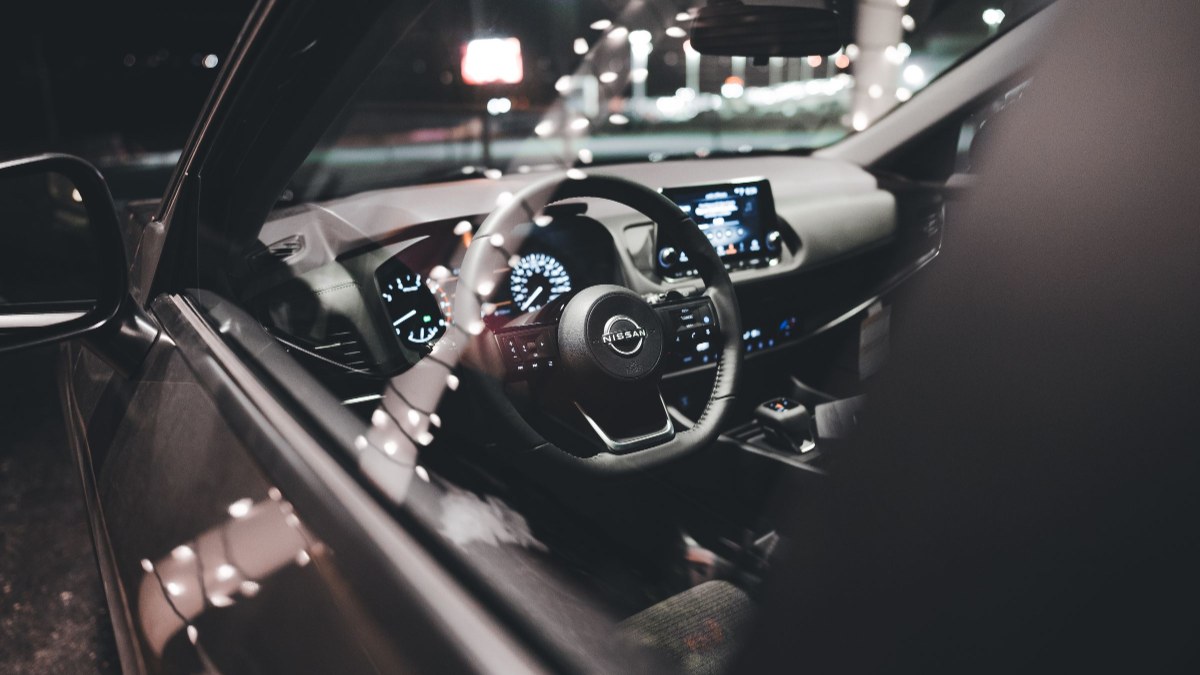
You are meeting friends for dinner at a restaurant that does not allow guns. You are carrying lawfully, so before you go in, you slide your pistol under the driver's seat and lock the doors. An hour and a half later you come back to a shattered rear window and an empty space under the seat. A week after that, a detective calls. Your gun was recovered after an armed robbery two towns over.
You were the victim of a crime, so you might expect that to be the end of your part in it. In Iowa, a locked car is not a crime. But some states make the way you stored the gun a crime even if nobody ever steals it, and in some situations a stolen gun can lead to a lawsuit against its owner.
The truth is more specific than "your gun, your responsibility," and more useful. By the end you should be able to explain the difference between locking a car and securing a gun, recognize why the same storage method is legal in one state and illegal in the next, understand when an owner can face civil liability after a theft, and set up your vehicle so that a broken window does not hand a stranger your gun.
This is education, not legal advice. Storage laws differ widely and change often.
Three events, three different questions
Break the opening story into three events. You left the gun in the car. Someone stole it. Someone used it to rob a store. Different laws can attach to each of those events, and they ask different questions.
A storage law looks at the first event and asks whether the way you left the gun met a legal standard. It can be broken before anyone steals anything. A child-access law usually asks about the second and third events, and whether a particular kind of person got the gun and misused it. A civil lawsuit asks whether you failed to use reasonable care and whether that failure legally caused someone's injury. A reporting law, where one exists, asks what you did after you found out the gun was gone.
Those are not the same question with different names. A prosecutor charging unsafe storage is not claiming you helped with a robbery. A family suing for damages is not prosecuting you. And a detective calling you is not accusing you of anything; your gun is evidence, and you are a witness and a victim.
Whenever someone says you could be "in trouble" for a stolen gun, ask in trouble for what, under which law, and based on what you did.
A locked car is not a locked container
Locking the doors keeps people from opening them. It does almost nothing once someone breaks a window, which takes a second or two with a cheap tool. A separate locked container solves a different problem. It keeps the gun out of reach even after someone is inside the car.
That difference is not just practical. It is written into law in a growing number of states. Massachusetts' highest court, in Commonwealth v. Reyes (2013), considered a correctional officer who left a personal handgun in a glove compartment and locked the car. The court held that a locked vehicle by itself is not a "securely locked container" under the state's storage law. Whether a locked glove box was good enough depended on the facts. Permission to carry a gun and compliance with a storage law, the court made clear, are separate questions.
The problem is getting worse. An analysis of FBI data by Everytown, a gun-safety advocacy group, found that the rate of gun thefts from cars in 337 U.S. cities roughly tripled between 2013 and 2022, from about 21 to 63 per 100,000 people. A decade ago about a quarter of reported gun thefts in those cities came from cars. By 2022, more than half did. You do not have to share the group's policy goals to take that trend seriously. Thieves know where guns are.
Never treat locked doors as storage for a gun. If the gun stays in the car, it goes into a locked container that is out of sight.
The same glove box, legal in one state and a crime in another
Consider a handgun in a locked glove box. It sounds like a reasonable precaution, and in many states it is perfectly legal. Across a state line, it can be a crime.
New York Penal Law 265.45 requires a gun left in a vehicle outside your immediate control to be unloaded, locked in a safe storage depository that is fire, impact and tamper resistant, and kept out of sight. It expressly says a glove compartment does not qualify. A violation is a class A misdemeanor. Colorado, since January 1, 2025, requires an unattended handgun to be in a locked, hard-sided container, out of plain view, inside a locked vehicle, and treats a violation as a civil infraction. California has its own list of approved locations that excludes the glove box and utility compartment.
Closer to home, Illinois' Safe Gun Storage Act took effect January 1, 2026. It requires a gun to be in a locked container when the owner knows or reasonably should know that a minor, an at-risk person or a person prohibited from having guns is likely to gain access. Its definition of premises expressly includes vehicles. Penalties are civil, up to $500 for the storage itself, up to $1,000 if such a person gets the gun, and up to $10,000 if they use it to hurt someone or commit a crime. It also has an exception for a gun obtained through an unlawful entry.
Iowa takes a much narrower approach. It has no general law that requires a locked container for a gun left in a vehicle. Its child-access law, Iowa Code 724.22(6), applies only when an unsecured loaded firearm is left where a child under 14 is likely to get it, the child does get it, and the child either unlawfully displays it in public or uses it to injure or kill someone. It does not apply when the child got the gun through an unlawful entry by anyone. A burglar breaking your car window does not fit that law at all.
Key idea: "I locked it in the glove box" describes something you did, not a legal conclusion. Whether it was lawful depends on where you parked. If you travel, you need to know the storage rule of every state where you might leave the gun in the car.
A storage habit that is fine at home can become a crime on a road trip. Set up your vehicle storage to meet the strictest standard you are likely to encounter, a locked, hard-sided container, out of sight, in a locked car, and you will be compliant almost everywhere.
When a theft leads back to the owner
Here is how storage usually comes to the attention of police. A gun is recovered after a crime. Investigators trace it through the original sale to you. They ask how it was stolen. Your answer, "under the seat of my locked car," is fine in Iowa. In a state with a vehicle storage law, that same answer may describe a violation that happened before the theft ever occurred. The robbery is why they asked; the storage is what the charge would be about.
That is also why reporting a theft can feel risky to some owners in strict states, since the report describes how the gun was kept. It is still the right thing to do, and hiding a theft or giving a false account would turn a storage question into something far more serious.
Some laws go further and tie the owner's liability to what happens after someone gets the gun. Washington, for example, makes it a crime to leave a gun where you know or reasonably should know a prohibited person may get it, with penalties depending on what that person does, and an exception if the gun was taken in an unlawful entry and the owner reports the theft within five days. Read the exceptions of any such law as carefully as the penalties, because the exceptions are often where a theft victim's situation is addressed.
Never assume a theft makes you guilty, and never assume it makes you immune; find the specific law, and read both its requirements and its exceptions.
A lawsuit asks a different question
Criminal law asks whether the government can prove an offense. A civil lawsuit asks whether you owed a duty of reasonable care, failed to meet it, and thereby caused someone's injury. The hardest part of a stolen-gun case is usually that last word, caused.
Two cases show the range. In Steinle v. United States (2021), a federal ranger left a loaded service pistol in a backpack in the family car, which was locked, in San Francisco, without the trigger lock the agency had issued. Thieves smashed a window and took it. Four days later it was used in the shooting that killed Kathryn Steinle. Her parents sued. The Ninth Circuit ruled for the government, holding that the chain of events, with criminal acts by at least two other people over several days, was too remote for the storage to be the legal cause of her death. The court did not decide whether the ranger owed her a duty of care.
Compare Estate of Heck v. Stoffer (Indiana, 2003). There, parents kept a loaded handgun hidden but accessible in their home. Their adult son was a fugitive felon with a long record who had stolen from them and still had keys to the house. He took the gun and killed a police officer. The Indiana Supreme Court held that gun owners owe a duty of reasonable care in storing firearms, that the son's crime did not break the causal chain because that kind of misuse was exactly the risk the duty protects against, and that a jury should decide whether the parents acted reasonably.
Common mistake: Concluding from Steinle that stolen-gun owners can never be sued. The difference in Heck was foreseeability. A known dangerous person with continuing access to your gun is a very different risk from an unknown thief, and courts treat it that way.
The more foreseeable it is that a dangerous person could get your gun, whether a troubled relative with your car keys or a gun visible on the seat of a car parked overnight downtown, the more care the law expects of you.
What to do in the first hours after a theft
When you find the window broken and the gun gone, call the police right away. Iowa does not require private owners to report a lost or stolen gun, according to the Giffords Law Center's July 2026 survey, but report it anyway. A report gets the serial number into law enforcement's stolen-property records, creates a dated record that the gun left your control before any later crime, and supports an insurance claim.
The ATF does not take theft reports from private citizens. Its 48-hour reporting rule applies to licensed dealers' inventory, not to an ordinary owner's personal gun, so your report goes to the local police department or sheriff where the theft happened.
Give the officer the make, model, caliber and serial number, and describe what happened accurately. If you discovered the theft at 9:30 but it could have happened any time after 8:00, say so. Do not guess, and do not shade the story about how the gun was stored. Keep the report number. If you are traveling in a state with a strict storage law and are worried about your own exposure, it is reasonable to talk to a lawyer, but do not let that delay the report.
Report every stolen gun promptly and truthfully, and keep a record of its serial number somewhere other than the gun case, because the thief took the case too.
Plan where carry ends before you leave the house
Most guns stolen from cars are left there on impulse. You arrive at a courthouse, a school event or a business that does not allow guns, and the only plan in the moment is under the seat. The better approach is to decide in advance where carrying will end on today's errands and how the gun will be stored when it does.
If your gun will ever stay in the car, buy a vehicle safe or lockbox made for the purpose. Choose a hard-sided one, and anchor it with its steel cable or bolt it to the seat frame or floor, so a thief cannot simply carry off the whole box. A steel lockbox that comes with a security cable, such as the SnapSafe lockboxes, is an inexpensive way to do this in any vehicle; a safe bolted under the seat or into the console is stronger if you leave a gun in the car often. Put it where it cannot be seen from outside. Then use it every time, not only when you think the neighborhood looks bad.
Safety: Practice moving your gun from holster to vehicle safe while seated, with the doors closed, before you need to do it in a parking lot. Keep the muzzle pointed safely, take the holster off with the gun in it if your holster allows, and do it out of view. Fumbling with a gun in a parking lot draws attention and invites mistakes.
Hiding and securing solve different problems. Hiding keeps a thief from finding the gun. Locking keeps them from using it once they find it. A trigger lock may stop the gun from firing but does nothing to stop it from being stolen. An unanchored lockbox stops a quick grab but can be carried away. The best setup does all of it: Hidden, locked and anchored.
And do not leave a gun in a vehicle longer than you have to, especially overnight. A car in the driveway at 2 a.m. is not a gun safe.
If a gun will ever be left in your vehicle, it goes into a hidden, locked, anchored, hard-sided container, and it comes back inside with you when you get home.
Putting it together
Go back to the restaurant parking lot. Now imagine it differently. Before you left home, you knew the restaurant did not allow guns. When you parked, you took your holstered pistol off and placed it in the steel lockbox cabled to the seat frame under the driver's seat, out of sight. You locked the box and the car. If a thief still broke the window, they would find a locked steel box anchored to the car, and most would move on. If one did defeat it, you would call the police immediately with the serial number from the inventory on your phone, and tell them exactly what happened.
The thief remains responsible for the theft and for any crime they commit. Your own responsibility depends on your own choices: How you stored the gun, what risks you knew about and what you did when you discovered it was gone. Those are choices you can make well, in advance.
Check your understanding
Try answering these before you open the answer. If you can decide what to do and explain why, you have it.
1. A friend leaves his pistol under the driver's seat whenever he stops at the gym, because the car is locked. What would you tell him?
That locked doors don't secure a gun once a window is broken, which takes a thief a second or two, and guns are the thing many car thieves are looking for. He should put it in a hidden, hard-sided lockbox cabled or bolted to the car, or better, plan his day so it doesn't sit in the car at all. In some states, under the seat would also break the law.
2. Your pistol is in a locked glove box. Is that lawful in New York?
No. New York requires a gun left in a vehicle to be unloaded and locked in a fire, impact and tamper resistant safe storage depository out of sight, and it expressly excludes the glove compartment. The same glove box may be perfectly lawful in Iowa, which is why you need to know the rule wherever you park.
3. Does Iowa's child-access law apply when a burglar steals a gun from your car?
No. Iowa Code 724.22(6) applies only when a child under 14 gets an unsecured loaded firearm and either unlawfully displays it in public or uses it to injure or kill someone, and it does not apply when the gun was obtained through an unlawful entry. Iowa has no general vehicle gun-storage law.
4. Your adult nephew, who has a felony record and a bad temper, still has a key to the truck where you sometimes leave a pistol. How is that different from a stranger breaking in?
It's far more foreseeable. In Steinle, a court found a theft by an unknown thief and crimes days later too remote to blame the owner's storage. In Heck, parents who left a gun where their known-dangerous son with keys could get it faced a jury on whether they'd used reasonable care. Get the key back, and keep the gun locked where he can't reach it.
5. Your truck is broken into in Ames and your pistol is gone. One friend says to report it to the ATF; another says Iowa doesn't require a report, so why bother. What do you do?
Call the local police right away and give them the serial number and an accurate account. The ATF doesn't take reports from private owners; its 48-hour rule is for dealers' inventory. Iowa doesn't require a report, but making one gets the gun into stolen-property records, shows it left your control before any crime and supports an insurance claim.
Where to go next
You can find SnapSafe lockboxes on our website, in key and combination models that cable to a seat frame or bolt in place, and anything listed there can be ordered if it isn't in stock.
For what to do when a gun goes missing from home, and how to document and insure your guns, read lost and stolen firearms. For storing guns safely in the house, see hiding is not storage. If you travel through states with strict laws, read traveling across state lines with a firearm. And for Iowa's child-access law in detail, see child access prevention laws.
If this article helped you, we invite you to sign up for email notifications of new blog articles.