
Glock Gen 6 vs. Gen 5 and the V Series: What Changed and Should You Upgrade?
Joseph McLain Nov 07, 2026
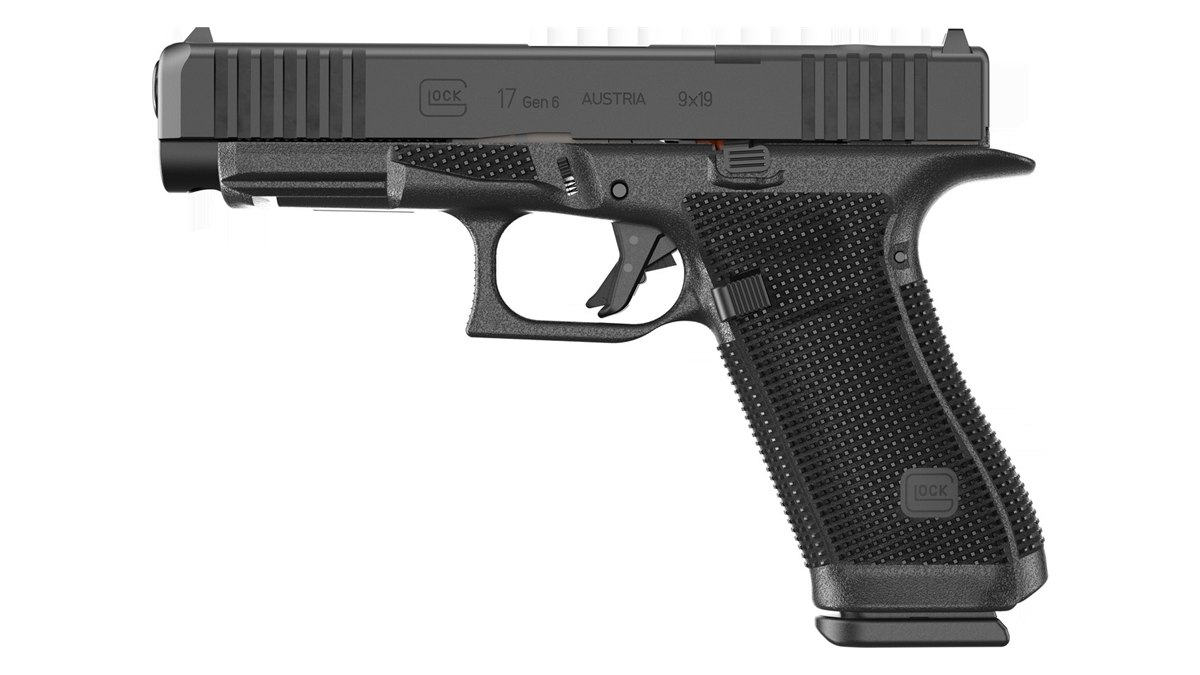
Picture yourself comparing pistols this fall. Two Glock 19s sit side by side. One has a small V on the slide, and the other is labeled Gen 6. At home you already own a Gen 5, a few spare magazines, and a holster you trust. Three questions come to mind. What actually changed? Will your gear still work? Is the new pistol worth trading for? By the end you'll have answers, and a method for judging any new Glock generation yourself, in your hand, on the range, and in your holster.
Here are the facts as of October 17, 2026. The Gen 6 Glock is real. Glock announced it on December 6, 2025, and its January 20, 2026, press release says the pistols had begun arriving at authorized U.S. dealers. The V Series is real too, and it is a different thing. Below, each detail is credited to its source. Some come from Glock, and others come from reviewers and accessory makers who tested the pistols. That difference matters when you buy parts.
Gen 6 and the V Series are two different changes
Start with the word "generation." A Glock generation is not a quality grade. It is a bundle of design changes released together, and the number tells you which bundle you are holding. Glock's own history timeline dates Gen 3 to 1998, Gen 4 to 2009, Gen 5 to 2017, and Gen 6 to 2026. The V Series does not appear on that timeline as a generation.
The V Series began as a catalog decision. In October 2025, Glock announced that it was reducing its commercial lineup, and many Gen 3, Gen 4, and Gen 5 models were discontinued. In their place came V models, marked with a V on the slide and frame. Glock described them as a baseline set of products meant to simplify its processes, and it said their outside look and performance would stay the same. The commercial V models Glock listed are the G17 V, G19 V, G19X V, G26 V, and G45 V in 9mm, the G23 V and G23 V MOS in .40 S&W, the G21 V MOS in .45 Auto, the G20 V MOS in 10mm Auto, and the G44 V in .22 LR. Glock also said it will keep servicing all generations of its pistols, including discontinued models.
Gen 6, by contrast, is a real design change, focused on the places where your hand touches the pistol and on how the pistol mounts an optic. Glock launched it with three 9mm pistols, the G17 Gen 6, G19 Gen 6, and G45 Gen 6. As of mid-October 2026, those three are still the only Gen 6 models named in Glock's U.S. press releases, including one from April 2026. Glock's European website also shows a G49 Gen 6, a model Glock has not announced for the United States.
Because Glock discontinued most of its Gen 3, Gen 4, and Gen 5 commercial models, many pistols you compare in a store today will be V or Gen 6 models. A Gen 5 will often be a used or older-stock pistol. Glock's Slimline models, such as the G43X and G48, carry neither label.
| Generation | When | What changed | Why it mattered to shooters |
|---|---|---|---|
| Gen 3 | 1998 | Accessory rail; finger grooves and thumb rests on the grip | Lights and lasers could mount on the frame |
| Gen 4 | 2009 | Interchangeable backstraps; larger, reversible magazine catch; new frame texture; dual recoil spring assembly | Grip size became adjustable, and left-handed shooters could move the catch |
| Gen 5 | 2017 | Finger grooves removed; Marksman barrel; flared magazine well (not on the G26); ambidextrous slide stop; nDLC finish | A grip for more hand sizes, easier reloads, and controls for either hand |
| V Series | Announced October 2025; on shelves December 2025 | A smaller lineup marked with a V; Glock says the outside is unchanged and has not detailed the internal changes | Familiar outside, so check before swapping internal parts |
| Gen 6 | Announced December 2025; on shelves January 2026 | Palm swell, larger beavertail, extended thumb rest, RTF6 texture, flat-faced trigger, undercut trigger guard, shorter reach, deeper serrations, and an optic-ready slide with three plates | A higher grip, an easier reach, and a red dot mount on every standard-frame model |
The table is a series of answers to shooters' problems. Gen 3 gave lights and lasers a place to mount. Gen 4 let you resize the grip and move the magazine catch for the left hand. Gen 5 removed the finger grooves so the grip suited more hands, and it added a funnel-shaped magazine well for faster reloads. Gen 6 keeps working on the hand and makes an optic mount standard. The V row looks different because it is different. It is a lineup reset, not a new set of features. For a closer look at the earlier generations on Glock's two best-known pistols, see Glock 17 vs Glock 19.
What Gen 6 changes in your hand
Most of the Gen 6 story is about contact points, the places where your hand meets the pistol. Glock added a palm swell, a gentle bulge in the grip shaped to fit the curve of your palm. It enlarged the beavertail, the shelf at the top rear of the frame that sits over the web of your hand (the skin between your thumb and index finger). It also extended and textured the thumb rest, which Glock says adds control during recoil, and it undercut the trigger guard where your middle finger rides. According to Glock, the larger beavertail encourages a higher grip while still letting the slide cycle freely, and the undercut trigger guard supports that higher grip.
Why does a higher grip matter? Every pistol has a bore axis, the imaginary line down the center of the barrel. Recoil pushes straight back along that line, but your hand holds the pistol below it. The gap acts like a lever that tips the muzzle up with each shot. The closer your hand sits to the bore axis, the shorter the lever and the less the muzzle rises. A generous beavertail makes a high grip comfortable. If the beavertail is too small, the slide can nip the web of your hand as it cycles, a painful result shooters call slide bite. Some shooters respond by gripping lower than they should.
Texture works on the same contact idea. Glock's RTF6 texture combines two textures into one surface and covers more of the frame, including the thumb rest. More texture gives more friction when your hands are cold, wet, or sweaty. It can also mean more rubbing on skin and clothing if you carry the pistol close to your body, so judge it by how you will use the pistol.
Reach is the next contact point. It is the distance from the back of the grip to the trigger. Glock's U.S. product pages list a trigger distance of 68 mm for the G19 Gen 6 and 70 mm for the G19 V, and the same pair of numbers for the G17 Gen 6 and G17 V. Two millimeters is about the thickness of a U.S. nickel. That sounds tiny, but if your finger barely reaches the trigger now, you may feel the difference at once. Glock notes that its technical data are rounded, so treat these figures as a direction rather than a precise measurement.
You can also adjust reach yourself. Glock says each Gen 6 comes with backstraps in two sizes, medium and large, each held on with a single pin. With no backstrap installed, the frame is at its smallest. A larger backstrap moves your hand farther from the trigger, and that can help shooters with long fingers. Reviewers note that the Gen 6 beavertail is part of the frame rather than the backstraps, so it stays in place when you swap them.
Two smaller changes round out the fit. Glock cut the slide serrations deeper and at an angle, giving your fingers more to grab when you rack the slide. It also enlarged the border around the slide stop lever to prevent accidental activation. That matters because a high thumb can rest on the lever and keep the slide from locking back on an empty magazine. One thing Glock did not mention changing is the grip angle, and a reviewer at Outdoor Life reported that Gen 6 keeps the traditional Glock angle. If that angle has never felt natural to you, Gen 6 will not fix it.
Key idea: Compare contact points, not generation numbers. Nearly every Gen 6 change sits where your hand or trigger finger meets the pistol. If your current Glock already fits you, these changes are refinements. If it does not, they may be exactly what you were missing.
A five-minute fit check
Fit is the first thing a new generation changes, and five minutes tells you whether it suits your hand. With each pistol shown unloaded and checked yourself, chamber and magazine well, the muzzle in a safe direction and your finger off the trigger (our guide to firearm safety for beginners covers the habits), take your normal firing grip and slide your hand as high on the frame as it will go: the web of your hand should tuck under the beavertail without being pinched. With permission, and the pistol still confirmed unloaded and pointed safely, rest your finger on the trigger and notice where the pad of your fingertip lands without shifting your grip. Compared across pistols, those two points show which one lets you grip highest and puts the trigger under your finger most naturally.
The flat-faced trigger: What changed and what did not
Every Gen 6 comes with a flat-faced trigger. Glock says it keeps the Safe Action System, the set of three passive mechanical safeties that release in sequence as you press the trigger and re-engage when you let it go. Glock gives one purpose for the flat face, consistent finger placement and trigger pull. On a curved trigger, your finger can settle a little higher or lower from shot to shot, and each spot changes the leverage slightly. A flat face invites the same contact every time, so pressing straight back without nudging the sights becomes easier to repeat. Our guide to trigger control explains the technique that puts that consistency to use.
Now look at what stayed the same. Glock lists the trigger pull as 26 newtons, about 5.8 pounds, on both the G19 Gen 6 page and the G19 V page. The shape changed, but the published weight did not. Reviewers who shot Gen 6 describe the trigger differently. One called the break crisp. Another described a few millimeters of take-up before a defined wall, with the break coming just past it. Those three terms are worth learning because they apply to any trigger. Take-up is the light slack at the start of the press. The wall is where resistance builds. The break is the moment the shot fires. Two honest reviewers can disagree because their hands, fingers, and expectations differ.
Common mistake: Assuming a flat-faced trigger is a lighter trigger. Glock lists the same pull weight for the Gen 6 and V versions of the G19, so judge the difference by feel and by your targets, not by the shape.
Reading the spec sheets side by side
A spec sheet cannot tell you how a pistol feels, but it can tell you what did not change. The table below compares the G19 Gen 6 and the G19 V using the figures on Glock's U.S. product pages.
| Specification | G19 Gen 6 | G19 V |
|---|---|---|
| Caliber | 9x19 mm | 9x19 mm |
| Standard magazine | 15 rounds | 15 rounds |
| Barrel length | 4.02 in | 4.02 in |
| Overall length | 7.28 in | 7.28 in |
| Height with magazine | 5.04 in | 5.04 in |
| Overall width | 1.35 in | 1.34 in |
| Trigger pull | 26 N | 26 N |
| Trigger distance | 2.68 in (68 mm) | 2.76 in (70 mm) |
| Optic mounting | Optic-ready, three plates included | No optic cut (no G19 V MOS on Glock's commercial V list) |
Notice how much is identical. Caliber, capacity, barrel length, overall length, and height all match, and that shared outside shape helps explain why magazines and many holsters can carry over. The real differences sit in two rows, trigger distance and optic mounting. Just as important is what the sheet leaves out. A palm swell, a bigger beavertail, and a new texture never appear as numbers, so you can only judge them with the pistol in your hand.
Optics: From a special model to standard equipment
For red dot shooters, the biggest practical change in Gen 6 is how the pistol accepts an optic. A red dot sight is a small electronic sight that shows an aiming dot on a lens. Each optic has a footprint, the pattern of screw holes and recoil bosses on its base, and the slide must match that footprint directly or through an adapter plate. Before Gen 6, an optic-ready Glock was a separate model with MOS in its name, short for Glock's Modular Optic System. Glock says its MOS pistols now ship with a single adapter plate that fits Trijicon, Ameriglo, and Holosun optics, except the Holosun 509, and that other plates are sold separately. In the V Series, the commercial MOS models are the G20 V MOS, G21 V MOS, and G23 V MOS.
Gen 6 makes the optic mount standard. Glock says every standard-frame Gen 6 is optic-ready and ships with three plates, and the optic screws directly into the slide. Glock's mounting chart assigns optics to the three plates as follows.
- Plate 02: Trijicon RMR, RMR HD, RCR, and SRO; Holosun 407C, 507C, 507 Comp, and 508T
- Plate 03: C-More optics
- Plate 04: Vortex Defender-ST and Defender-XL, EOTech EFLX, and Leupold DeltaPoint Pro
Notice that the chart lists exact models, not just brands. Holosun appears on plate 02 for four specific optics, not for every Holosun model, and Glock's MOS plate excludes one Holosun model by name. The lesson applies to any optic on any pistol. Match the exact optic model to a plate before you buy it. If your optic is not on Glock's chart, you will need a plate from another maker, and some aftermarket makers state that their Gen 6 plates do not fit the Gen 5 optic cut. Gen 6 plates and Gen 5 MOS plates are separate systems, so do not expect your old plate to move over.
Reviewers describe the factory plates as thin polymer pieces that sit between the optic and the slide. They locate the optic and act a bit like a crush washer, a part that compresses slightly to seat everything firmly. Safariland, a holster maker, says the plates let the optic sit lower, and that helps it clear the hoods on some holsters. Some shooters distrust a polymer plate under a metal optic, although one reviewer who used them reported no problems. If you are still choosing an optic, start with Choosing the Right Optics for Pistols. Once you own one, Mounting and Sighting in Pistol Optics walks you through installation and zeroing.
Iron sights changed less than you might expect. Reviewers report that Gen 6 ships with standard-height sights and that those sights sit too low to co-witness with the red dots they tested. Co-witness means you can see the iron sights through the optic's window, so you have a backup if the dot fails. If you want that backup, plan on taller, suppressor-height sights.
Glock has also shown Gen 6 pistols with an Aimpoint COA red dot installed at the factory in a different slide cut, called the A-CUT. In April 2026, press reports said Glock had begun listing COA versions of the G17 and G45 Gen 6. If you buy one and might change optics later, ask your dealer which optics that slide accepts.
What the V Series changed inside
From the outside, a V pistol looks like the Gen 5 it replaced, and Glock said that was intentional. Its V product pages list familiar Gen 5 features, such as a grip without finger grooves, interchangeable backstraps, an ambidextrous slide stop, and the Marksman barrel. What Glock has not published is a detailed list of the internal changes. Firearms press reports described changes to internal slide and trigger parts, and many outlets connected them to making the pistols harder to convert illegally to automatic fire. Glock's own statement did not give that reason, so treat it as reported rather than confirmed.
For owners, the practical issue is parts. Combat Handguns relayed reports that some performance triggers and aftermarket parts may not work with V internals, so look for a statement from the part's maker that names your exact V model before you buy. Glock says the outside is unchanged, which suggests Gen 5 holsters should fit V pistols, but check your own holster anyway. If you already own a Gen 5, none of this changes your pistol.
What carries over from Gen 5 and the V Series
Compatibility is where a wrong guess costs real money, so it deserves care. Glock's Gen 6 pages say little about it, and Glock's European Gen 6 page tells buyers to ask a dealer about compatibility. Most of what follows therefore comes from reviewers, armorers, and accessory makers. Treat their reports as a starting point and confirm each one with your own pistol.
| Item | What has been reported | How to confirm |
|---|---|---|
| Magazines | Reviewers report that Gen 6 accepts earlier Glock 9mm magazines, including Gen 5 magazines. Glock's Gen 6 pages do not address it. | Insert each magazine into the unloaded pistol and tug to confirm it locked. Check that it drops free and that the slide locks back on it when empty. |
| Holsters | Reports conflict. Safariland says its listed holsters work as well on Gen 6 as on Gen 5, and it notes that Glock kept the trigger guard's width and lower contours. One reviewer's Gen 5 holsters fit. A custom holster maker recommends Gen 6-specific holsters, and an armorer found that some Kydex holsters did not fit. | With the pistol unloaded, check full seating, secure retention, complete trigger guard coverage, and optic clearance. |
| Slides and barrels | Reviewers report that Gen 6 slides do not interchange with Gen 5 slides and that the Gen 6 barrel is new and not compatible with earlier generations. | Match parts by exact model and generation, never by appearance. |
| Recoil spring assembly | Reviewers report that Gen 6 uses a single captive spring instead of the dual-spring assembly of Gen 4 and Gen 5. One armorer says late Gen 5 springs match Gen 6. Glock's Gen 6 pages do not address it. | Buy by exact model and generation, or ask an armorer. |
| Optic plates | Gen 6 plates and Gen 5 MOS plates are separate systems. | Check your exact optic against Glock's Gen 6 plate chart. |
| Backstraps | Gen 6 ships with its own medium and large backstraps. Glock does not say whether Gen 4 or Gen 5 backstraps fit. | Ask Glock or your dealer. |
| Trigger and other internal parts | Reports say some aftermarket triggers do not work in V pistols. Armorers report that most trigger parts do not cross between Gen 5 and Gen 6 reliably. Glock has not published a compatibility list. | Ask the part's maker to name your exact model and series. |
A pattern runs through the table. Parts inside the slide and the trigger group tend to be generation-specific, while magazines and the outside shape tend to carry over. The pattern is not perfect. Backstraps sit on the outside and may still be specific to one generation, and holsters split the reviewers. The holster disagreement makes sense once you know how holsters hold a pistol. Some lock onto the trigger guard, others lock onto the ejection port, and a molded holster may touch many surfaces at once. A change to the grip or beavertail can matter to one design and not to another. The safe rule is to verify each part by exact model and generation and never trust appearance.
One older magazine rule still applies. When Glock introduced the reversible magazine catch on Gen 4, it said older magazines would keep working only with the catch on its original side, because the newer magazines have a notch on both sides. Gen 6 also has a reversible catch, so a left-handed shooter who moves it should use Gen 4 or later magazines.
Holsters also carry a safety duty. A holster must cover the trigger completely, and nothing inside it should be able to reach the trigger. Because Gen 6 changed the trigger shape and the trigger guard, check with the unloaded pistol that it seats fully, locks in place, and leaves the trigger guard covered. If you add an optic, confirm that the holster clears it too.
Safety: A part that fits is not the same as a part that works. After any change, test the unloaded pistol's basic functions, then fire a full range session with the ammunition you plan to rely on before you trust it. If you are unsure about an internal part, have a qualified gunsmith or Glock-certified armorer install it.
Judging a new generation on the range
Handling tells you about fit. The range tells you about function, and that is where a generation change either shows up on paper or does not. The key to a fair test is to change only one thing, the pistol. Use the same ammunition, the same distance, the same kind of target, and the same day, so any difference you see comes from the gun rather than from conditions. If you do not own both pistols, some ranges rent them, or a friend may let you compare. Wear eye and ear protection, and follow the range's rules and the range officer's commands.
A side-by-side range comparison
A fair comparison changes only the pistol. With a fresh target for each at 7 yards and the same ammunition in both, a slow five-shot group from each shows size and placement; a group that strings low often means you're anticipating the shot. Five controlled pairs from each, at a pace where you still see the sights or dot settle, show how far the muzzle rises, and the web of your hand will show any slide bite afterward. Then the controls: rack each slide by the rear serrations, see whether the slide locks back on an empty magazine (a thumb riding the slide stop can prevent it), and see whether the empty magazine drops free with your grip, since one reviewer found the heel of his hand sometimes held a Gen 6 magazine in. Written down before you leave, those notes point to real differences or show there aren't any, which is a real answer too. Because fatigue, light and the excitement of a new pistol all affect one session, repeat it on another day if the result matters to your decision.
How to decide whether to upgrade
Begin by naming the problem you want a new pistol to solve. A generation change is easiest to judge when you tie it to something you notice at the range, in the holster, or on the trigger.
- Your Gen 5 fits you and runs well. Nothing Glock has published gives a mechanical reason to switch. On Glock's pages, the G19 Gen 6 and G19 V share caliber, standard capacity, barrel length, and listed trigger pull. One reviewer advised that owners with a Gen 5 that runs well have no real need to upgrade, though he recommended Gen 6 to anyone with grip complaints.
- Your Gen 5 has a problem Gen 6 targets. The Gen 6 changes aim directly at slide bite, a stretch to reach the trigger, and the wish for a red dot without hunting for a MOS model.
- You want a model Gen 6 does not offer. In the United States, Gen 6 currently means a G17, G19, or G45 in 9mm. A subcompact G26, a G19X, or a .40 S&W pistol means choosing a V model or an older used pistol.
- You are buying a used Gen 3, Gen 4, or Gen 5. Judge it by the generation table above, and ask whether the parts and holsters you want exist for that generation. Glock says it will keep servicing discontinued models.
The first two items are about you, and the last two are about availability. Check availability first, because it can settle the question before ergonomics ever comes up. Then let the personal questions decide.
Consider two shooters. Maria carries a Gen 5 G19 MOS with a red dot, in a holster molded around the optic. Her hand fits the pistol well, and she has never had slide bite. Switching would mean checking her optic against the Gen 6 plate chart, possibly buying a new plate or holster, and retesting her magazines, all for grip changes she may not notice. Tom has smaller hands. His Gen 5 G19 nips the web of his hand, he stretches to reach the trigger, and he wants a red dot without searching for a MOS model. Gen 6 aims directly at all three of his complaints, although he should still run the fit check, the range comparison, and the gear checks before he buys. They own the same pistol, yet they reach different answers because their problems differ.
Reading the next announcement
Glock's lineup will keep changing, and news about it often arrives before the facts do. When the V Series was announced, a retailer not affiliated with Glock made claims before Glock spoke, and Glock called those statements premature. Early Gen 6 coverage also disagreed about which models would come to the United States, while Glock's own U.S. releases named only three. When news arrives, ask three questions. Did Glock itself say it? Which exact models does it cover? What does it say about compatibility? Then confirm current models and specifications on Glock's website or with your dealer before you buy.
Check your understanding
Try answering these before you open the answer. If you can decide what to do and explain why, you have it.
1. A friend says the V Series is just Gen 6 with a different name. How would you correct him?
Gen 6 is a numbered generation that Glock announced on December 6, 2025, with a new grip shape, a flat-faced trigger, and a standard optic-ready slide. The V Series is a lineup reset that Glock announced in October 2025, and Glock says V pistols look the same outside as the models they replaced. Glock's history timeline lists Gen 6 but not the V Series.
2. Does a flat-faced trigger make the pull lighter? What evidence would you use?
Glock's own pages are the best evidence, and they list 26 newtons for both the G19 Gen 6 and the G19 V. The flat face changes where your finger sits, not the published weight. Judge the difference by feel and by your targets.
3. You own a Gen 5 G19 MOS with a Holosun 509T and are thinking about a G19 Gen 6. What should you check first?
The 509T is not on Glock's Gen 6 plate chart, so you would need a Gen 6 plate from another maker that names that optic. You should also confirm that your holster seats fully, covers the trigger guard, and clears the optic, and that your magazines lock, drop free, and hold the slide open when empty.
4. In your range comparison, both pistols shoot the same size groups, but only your Gen 5 leaves slide-bite marks on your hand. What does that tell you?
Accuracy is not the difference for you, but comfort and grip height are. If slide bite pushes you to grip lower, the larger Gen 6 beavertail addresses a real problem. Repeat the test on another day to make sure the result holds before you decide.
5. You want a compact pistol in .40 S&W. Does Gen 6 offer one?
Not as of mid-October 2026. Glock's U.S. Gen 6 announcements cover three 9mm pistols. Glock's commercial V list includes the G23 V and G23 V MOS in .40 S&W.
Where to go next
Most of the Gen 6 changes reward a good grip, so How to Master Pistol Shooting Fundamentals is a natural next read. If you are weighing a Glock against other makers, Exploring Popular 9mm Semi-Auto Pistols shows what else is on the shelf.
If this article helped you, we invite you to sign up for email notifications of new blog articles.