
The FN High Power: How the Classic 9mm Works and Why It Still Matters
Joseph McLain Nov 06, 2026
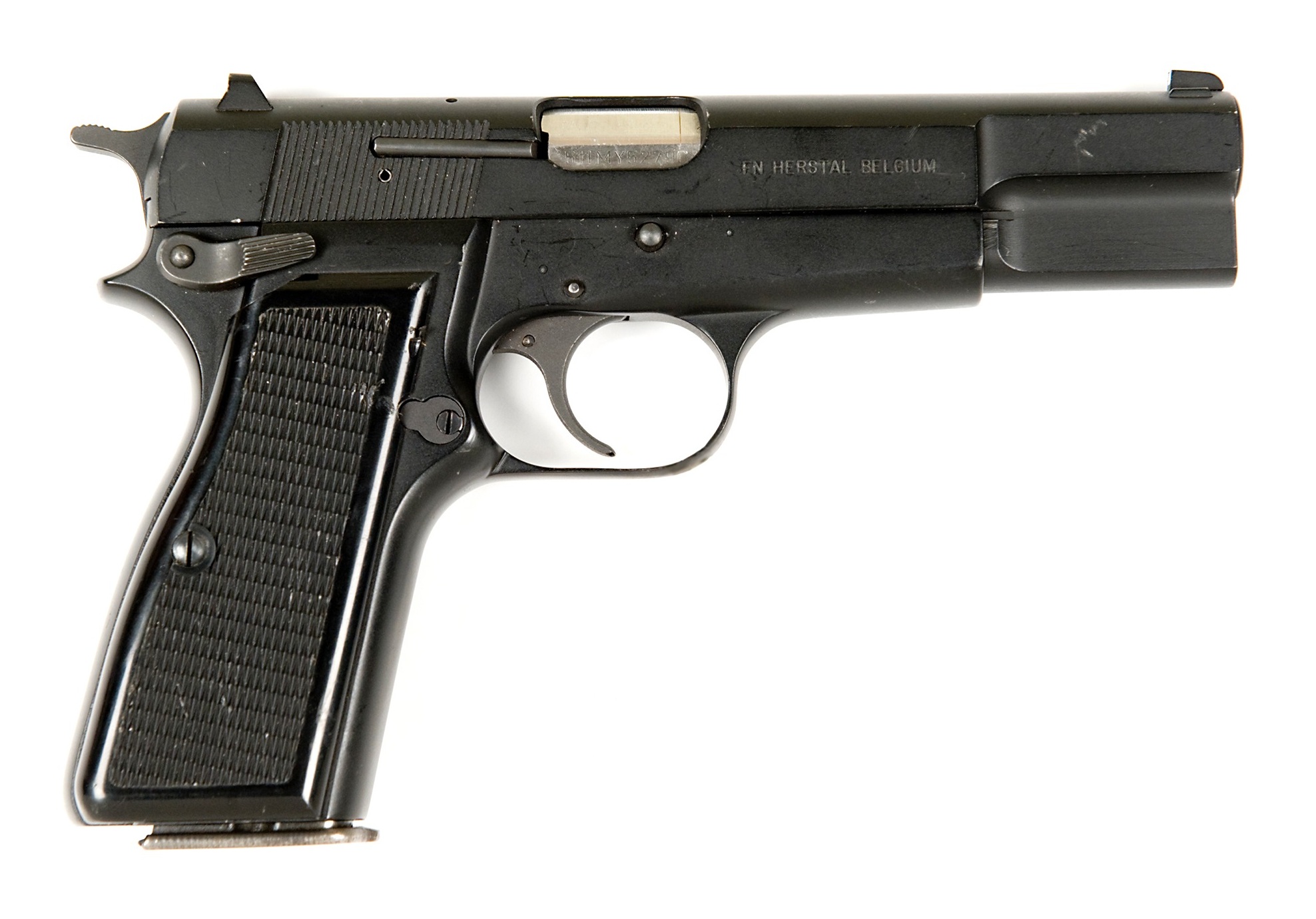
Maybe you spotted it in a used-gun case, or maybe it came out of a grandfather's dresser drawer. It is a slim, all-steel 9mm with a long, tapered slide, and the markings say Browning or FN Herstal. One person calls it a Hi-Power, another says FN makes a new one, and a third tells you it set the pattern for the modern 9mm. Each of them is at least partly right. This article explains where the High Power came from, how its action works, and why so many later pistols follow its lead. By the end you should be able to explain what happens inside the slide when the pistol fires, tell an original from FN's modern version, and handle the features that most often surprise new owners.
Where the High Power came from
A French request and two designers
The High Power started with a customer. In the early 1920s, the French military asked for a new service pistol. Accounts of the request describe a compact pistol, effective out to 50 meters, that held at least 10 rounds and had a magazine disconnect, a safety that blocks firing when the magazine is out. Fabrique Nationale, the Belgian arms maker known as FN, took on the project. FN had built John Browning's pistols since before World War I, so it turned to Browning, the American designer of the Colt 1911. He worked alongside Dieudonné Saive, an FN engineer often described as Browning's protégé.
Browning faced an unusual obstacle. He had sold his 1911 rights to Colt, so his new design had to work around Colt's patents. The design kept the 1911's basic idea of a barrel that locks to the slide and then drops free, but it replaced the swinging link with a cam. Browning's U.S. patent for it was granted in 1927, but he did not live to see it. He died in Belgium in 1926, years before the pistol was finished.
Saive carried the project the rest of the way, and his best-known contribution is the magazine. He began by modifying an earlier Browning-designed FN pistol, the Model 1903, to accept a magazine with its cartridges staggered in two columns. Browning's patented design fired with an internal striker, but the finished pistol uses an external hammer. His prototype held 16 rounds, but the production magazine was shortened to 13.
France never adopted the design. Its trials dragged on, and it eventually chose a different pistol. Belgium went the other way. After a Belgian army order, FN began production in 1935, and that year has been part of the pistol's identity ever since.
What "Grande Puissance" means
FN named the pistol the Grande Puissance, French for "high power." The name puzzles people because the pistol fires the ordinary 9mm Luger cartridge rather than a special high-powered round. Most accounts explain it by firepower instead. Its 13-round magazine held nearly twice as many cartridges as the Colt 1911 and similar pistols of the time. Before settling on that name, FN had planned to sell it as the Grand Rendement, roughly "high efficiency."
Over the decades the pistol collected many names. You will see it called the GP, GP35, P35, Model 1935, and HP. Browning sold it in North America as the Hi-Power, and FN spells its current version High Power. All of these belong to one family, and the name on a pistol or its box is a clue to who made or sold it.
A pistol on both sides of a world war
When Germany occupied Belgium in 1940, it took over the FN factory and kept the pistol in production for its own forces as the Pistole 640(b). The plans had also reached Canada. There, John Inglis and Company of Toronto built High Powers for the Allies, including Canadian, British, and Chinese forces. For part of the war, the same design was being made for both sides at once.
Decades in uniform
After the war, the High Power settled into a long military career. Reference works commonly credit it with service in the armed forces of more than 50 countries. Two examples show how long that career could last.
Britain's forces carried the Browning for more than 40 years, until the Ministry of Defence announced in 2013 that the Glock 17 would replace it. The ministry said the old pistol had become increasingly expensive to maintain. Canada began using its Inglis pistols in 1944 and did not award a contract for their replacement until 2022. Some of those pistols were about 80 years old by the time they were retired.
The end of the original and the return of the name
The original's commercial run ended quietly. In February 2018, Browning announced that its Hi-Power pistols were no longer in production. Sources disagree on exactly when the last ones were built. Reports at the time pointed to rising production costs and slow sales in a market that had moved toward lighter polymer pistols.
In January 2022, FN America, FN's U.S. arm, introduced the FN High Power. FN describes it as a reimagined pistol based on the 1935 design, not a clone. It keeps the original's look while changing the magazine, controls, trigger, and barrel lockup. We compare the two later because those changes make more sense once you know how the original works.
How the High Power works
Every semi-automatic pistol has to solve the same problem. When a cartridge fires, gas pressure drives the bullet forward and pushes the empty case back against the slide. The pistol must keep the breech (the rear end of the barrel, where the cartridge sits) from opening too early, while pressure is still high. Once pressure drops, it can open, throw out the empty case, and load the next round.
A .22 rimfire pistol, such as the one in our Browning Buck Mark guide, can manage this with blowback. In a blowback pistol, only the weight of the slide and the force of a spring hold the breech shut. A 9mm cartridge is far more powerful, and a blowback 9mm would need a heavy slide and a stiff spring. Most 9mm pistols instead lock the barrel and slide together for the first instant of recoil. The High Power's design rests on four ideas.
- Short recoil: The barrel and slide stay locked together for the first part of the recoil stroke.
- Cam unlocking: An angled slot under the chamber tips the barrel down and free of the slide, with no swinging link.
- Single-action trigger: The trigger does nothing but release a hammer that is already cocked.
- Double-stack magazine: Two offset columns of cartridges fit 13 rounds into a grip of reasonable height.
Short recoil: The barrel and slide move together
On top of the High Power's barrel, just ahead of the chamber, are raised ribs called locking lugs. When the pistol is closed, they sit in matching recesses cut inside the slide, so the barrel and slide act as one piece. Fire a shot, and they recoil together for a short distance while the bullet leaves the barrel and pressure falls. That short shared trip gives the system its name. Then the barrel stops, the slide keeps going, and the cycle of ejecting and reloading begins.
The cam slot: Unlocking without a link
The clever part is how the barrel gets free of the slide. Under the chamber, the barrel has a lug with an angled slot cut into it. A hardened cross-piece fixed in the frame works against that slot. During the first part of the rearward trip, the slot lets the barrel travel straight back, still locked to the slide. Farther back, the slot's angle forces the rear of the barrel down.
That drop pulls the locking lugs out of the slide's recesses, and the barrel comes to a stop. The slide is now free to continue rearward, pulling out the empty case, throwing it clear, and cocking the hammer. On the return trip, the recoil spring drives the slide forward, the slide pushes a fresh round into the chamber, and the same angled slot lifts the barrel back into the slide.
Picture a block of wood with a slot cut through it, sliding past a peg that fits in the slot. Where the slot runs straight, the block slides level. Where the slot bends at an angle, the peg forces that end of the block up or down as it passes. Engineers call this kind of shaped surface a cam because it turns one motion into another. Here it turns the barrel's rearward motion into a downward tilt.
Compare that with the 1911, where a small swinging link connects the barrel to a pin in the frame. As the barrel moves back, the link swings on that pin and pulls the rear of the barrel down. The High Power gets the same result from a shaped slot instead of a separate hinged part.
Key idea: The High Power stays locked while pressure is high and unlocks only after the barrel and slide have moved back together. The angled slot under the chamber decides when that happens, without a separate link.
A single-action trigger
A single-action trigger has one job. It releases a hammer that is already cocked. On the High Power, you cock the hammer when you rack the slide to load the first round, and the moving slide cocks it again on every shot after that. Because the trigger never has to cock the hammer, its pull is short and stays the same from the first shot to the last. On a double-action pistol, the trigger both cocks and releases the hammer on at least the first shot, so that pull is longer and heavier.
To keep a cocked hammer safe until you are ready to fire, the High Power uses a manual thumb safety, a lever on the frame that you push up to engage and down to fire. Carrying a single-action pistol with a round chambered, the hammer cocked, and the safety engaged is often called "cocked and locked." It is a long-established way to carry these pistols, and it demands training. A safety is a mechanical device, never a substitute for keeping your finger off the trigger and the muzzle pointed in a safe direction.
Inside, the original High Power's trigger works through more parts than you might expect. When you press it, the trigger lifts a small part that pushes on a lever riding in the slide. That lever presses down on the sear, the catch that holds the hammer back. Because the lever rides in the slide, the trigger can reach the sear only when the slide is fully closed. Even so, original High Power triggers have a reputation for feeling heavy.
One reason is the magazine safety the French had asked for, also called a magazine disconnect. Most original High Powers have one. With the magazine removed, the trigger cannot release the hammer. Critics say the device adds weight and grit to the trigger pull, and some owners have had it removed over the years.
Common mistake: Treating a magazine safety as a way to unload the pistol. Removing the magazine does not remove the round in the chamber. Some High Powers have the device, some have had it removed, and FN's new High Power is built without one. Always lock the slide open and look and feel to confirm that the chamber is empty.
The double-stack magazine
Saive's magazine solved a simple geometry problem. In a single-stack magazine, cartridges sit one directly on top of another, so capacity depends on how tall the grip is. Saive staggered the cartridges in two offset columns, so a grip of the same height holds many more rounds. The trade-off is a grip that is somewhat thicker from side to side.
Think of soup cans packed in a box. Lined up in single file, they need a long box. Packed in two offset rows that nest together, the same cans fit in a box about half as long. The box gets wider, but not twice as wide. Grip fit is personal, though, and the only way to know whether a double-stack grip suits your hand is to hold one.
Try this: Watch a barrel unlock
- Use any centerfire pistol with a tilting barrel. A High Power is ideal, and many modern 9mm pistols work on the same basic idea. Point it in a safe direction, remove the magazine, lock the slide open, and look and feel to confirm that the chamber and magazine well are empty. Move all ammunition to another room. Our guide to firearm safety for beginners covers these habits.
- Ease the slide forward. If your pistol has a thumb safety, make sure it is off, because on some pistols the safety locks the slide. Then grip the slide and draw it back very slowly.
- Watch the top of the barrel through the ejection port, the opening on the right side of the slide. For the first short distance, the barrel moves back with the slide. Then its rear end drops away from the slide. Let the slide forward gently and watch the barrel rise back into place.
- If you field strip the pistol according to its manual, turn the barrel over and find the lug under the chamber. On a High Power, look for the angled slot. On many modern pistols, an angled cam surface does the same job.
You will know it worked when you can point to the moment the barrel unlocks and explain, in your own words, what made it drop.
Why the High Power shaped the pistols that followed
The High Power's influence is easiest to see in what it made normal. Many service pistols of its day held seven or eight rounds in a single column. The High Power showed that a practical military pistol could carry 13 rounds of 9mm. Today, a full-size 9mm with a double-stack magazine is a common choice for armies and police, and one firearms writer credits Saive's magazine with setting that standard.
Look at what replaced the High Power, and you can see which parts of the idea survived. Britain chose the Glock 17, another full-size 9mm with a double-stack magazine. Canada chose the SIG Sauer P320, known in Canadian service as the C22. The Canadian government said the new pistol uses the same ammunition as the Browning while offering more magazine capacity, lighter weight, and improved ergonomics. The cartridge and the double-stack magazine stayed. The all-steel frame and the external hammer did not.
Browning's unlocking idea traveled too. The Czech CZ 75, introduced decades later, unlocks its barrel with a linkless cam, and Gun Digest reports that its designer counted the High Power among his inspirations. Most modern centerfire pistols use some form of Browning's tilting barrel, and many of them pull the barrel down with an angled cam surface rather than a swinging link. Field strip a typical modern 9mm and you will find ideas the High Power helped bring together.
Later designers also changed what did not suit them. Beginning in the 1970s, a wave of 9mm pistols kept the double-stack magazine but added double-action triggers, so the first shot could be fired without carrying a cocked hammer. After that came polymer frames and striker firing, in which a spring-driven firing pin does the job of the hammer. When Britain and Canada explained their replacements, they pointed to the cost of upkeep, weight, and ergonomics, the same areas where newer designs changed course. For a tour of today's descendants, see our look at popular 9mm semi-automatic pistols.
Original, clone, or new FN: Know which High Power you are holding
Because the name has lasted so long, "High Power" can mean several different pistols. Even the original changed over time. In the 1980s, FN introduced the Mark II and Mark III versions, with improvements such as an ambidextrous safety, better sights, and, on the Mark III, a firing pin safety. The bigger differences, though, are between the original and FN's 2022 pistol. They matter most for magazines, parts, and what the pistol does when the magazine is out.
| Feature | Original High Power or Hi-Power | FN High Power (2022) |
|---|---|---|
| Standard magazine | 13 rounds as originally designed | 17 rounds, with 10-round versions available |
| Magazine safety | Built into most; some removed by owners | None |
| Thumb safety and slide stop | Left side on early pistols; later versions added an ambidextrous safety | Both ambidextrous |
| Takedown | Push out the slide stop with the slide partly retracted | Captive takedown lever |
| Barrel lockup | Lugs on top of the barrel lock into recesses in the slide | Reported to lock into the enlarged ejection port |
| Magazines and parts | Original pattern | New magazines that an FN representative said do not fit originals; reported to share no parts |
Read the table as a checklist for any High Power you handle. The top two rows change how the pistol behaves, including whether it can fire with the magazine removed. The middle two rows change how you operate and maintain it. The bottom two rows explain why you should never assume that a magazine, barrel, or other part from one High Power will fit another.
FN presents its changes as fixes for the original's shortcomings. The company says its new barrel lockup and internals let the pistol cycle reliably with most modern 9mm loads. It also dropped the magazine safety, made the controls ambidextrous, and added a takedown lever and an extended beavertail. In Guns & Ammo's testing, the trigger broke at about 5 pounds, close to FN's listed figure.
Clones add a third category. After the original went out of production, several companies began building pistols patterned on it, including Girsan, Tisas, and Springfield Armory with its SA-35. Their details vary. The SA-35, for example, omits the magazine safety. Treat each one as its own model, and read its manual before you assume anything about its magazines or safety features.
If you shoot an original, pay attention to your grip. As the slide cycles, the spur hammer can pinch the web of your hand, the skin between your thumb and index finger. Shooters call this hammer bite. Later factory models and aftermarket parts address it, and FN's new version uses a raised hammer and an extended beavertail for the same reason. Whichever High Power you shoot, a single-action trigger rewards a smooth, straight-back press, and our guide to trigger control shows how to build one.
Safety: A wartime or military-surplus High Power may carry decades of wear you cannot see. Before you shoot one, have a qualified gunsmith inspect it and confirm that it is safe to fire.
Check your understanding
Try answering these before you open the answer. If you can explain it in your own words, you understand it.
1. Why does a 9mm pistol like the High Power need a locked breech when a .22 pistol can use blowback?
A 9mm cartridge is far more powerful. A blowback 9mm would need a heavy slide and a stiff spring to keep the breech closed long enough. Locking the barrel to the slide holds the breech shut until the bullet is gone and pressure has dropped, so the pistol can stay a manageable size.
2. In your own words, what makes the High Power's barrel unlock?
The barrel and slide recoil together while the locking lugs are engaged. An angled slot under the chamber works against a fixed cross-piece in the frame. Once the barrel has traveled far enough, the angle pulls its rear end down and frees the lugs from the slide. The same slot lifts the barrel back into place as the slide closes.
3. A friend pulls the magazine from his original Hi-Power and says the pistol is now safe because the magazine safety blocks the trigger. What would you tell him?
Removing the magazine does not unload the chamber. His pistol's magazine safety may have been removed, and any mechanical safety can fail. He should keep the muzzle in a safe direction, lock the slide open, and look and feel to confirm that the chamber is empty.
4. Which High Power ideas did Britain and Canada keep when they replaced their pistols, and what did they leave behind?
They kept the 9mm cartridge and the double-stack magazine. They left behind the all-steel frame and the external hammer for lighter pistols that their governments said would cost less to maintain or fit the hand better.
5. You find a magazine labeled for a Browning Hi-Power. Should you expect it to work in a new FN High Power?
No. FN designed new magazines for the 2022 pistol, and an FN representative said at launch that original magazines are not compatible. Use magazines made for the exact model you own.
Where to go next
If you want to see how a modern double-stack 9mm has evolved, Glock 17 vs Glock 19 follows the pistol Britain chose to replace its Brownings. If handling an all-steel single-action pistol made you want to sharpen your basics, How to Master Pistol Shooting Fundamentals covers stance, grip, aiming, and trigger control.
If you found this informative, we invite you to sign up for email notifications of new blog articles.