
Dry Firing: When It Is Safe for Your Gun and When It Is Not
Joseph McLain Nov 07, 2026
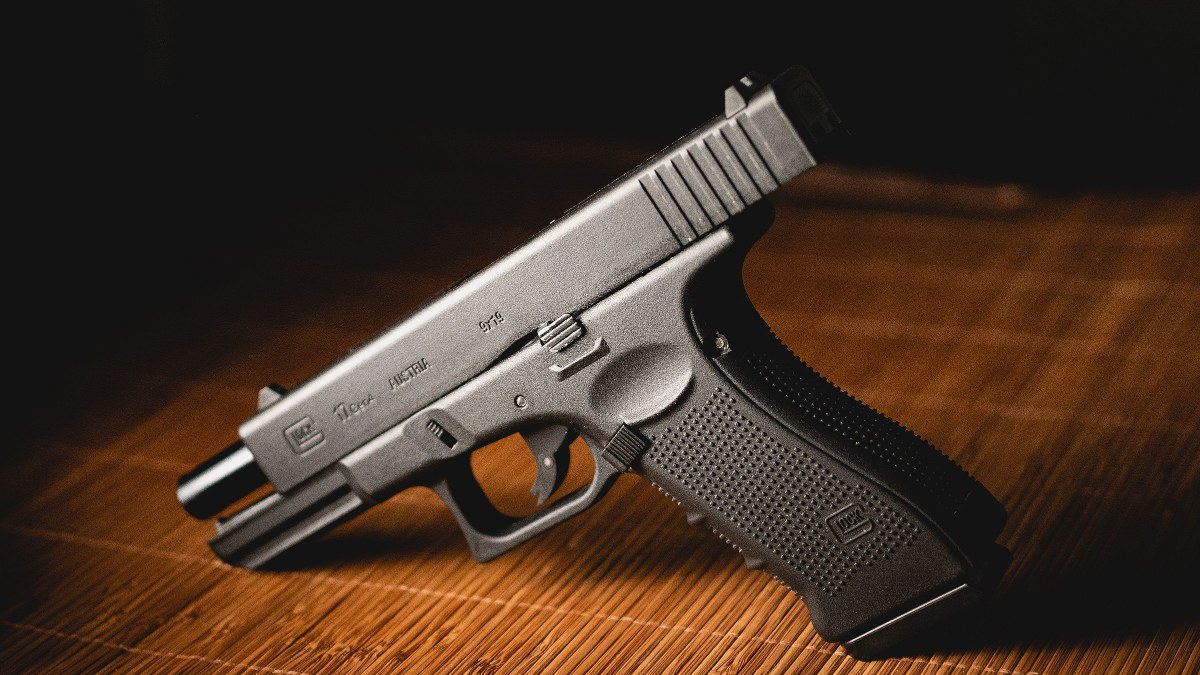
You want to practice trigger control at home, and you are not sure it's safe for your gun. Will pulling the trigger on an empty chamber ruin the firing pin? Can a modern gun be dry-fired all day? Is a centerfire fine but a .22 not? The answer is different for different guns.
The good news is that you don't have to memorize a rule for every gun. Once you understand what moves inside the gun when the trigger breaks, and what has to stop it when there is no cartridge there, the warnings make sense, and you can tell when a rule applies to your gun and when it doesn't.
By the end you should be able to explain why most centerfire guns handle an empty chamber well, why rimfires are different, why one modern .22 pistol allows dry firing and another forbids it and what a snap cap actually does, so you can choose the right training cartridge and set up a practice routine that can't turn into a real shot.
What moves when you pull the trigger
Think of a firing pin as a tiny steel punch. To fire a centerfire cartridge, it dents the primer in the center of the case head. To fire a rimfire cartridge, it crushes a small section of the cartridge's rim. Either way, the punch needs energy, and that energy comes from a compressed spring.
In a hammer-fired gun, a spring drives the hammer, and the hammer strikes a firing pin. In a striker-fired gun, the spring drives the striker directly, and its tip hits the primer. Many bolt-action rifles use spring-driven strikers too. The details differ, but the event is the same: Stored spring energy becomes motion, and that motion has to stop somewhere.
When a cartridge is in the chamber, the primer or rim takes part of that blow as it dents. But a well-designed gun does not rely on the cartridge alone. It also has built-in stops, such as a shoulder on the firing pin, a retaining pin or a return spring, that limit how far the pin can travel. When the chamber is empty, those internal stops take the whole load.
Key idea: Dry firing is not really about the click. It is about what stops the firing pin after the click, how abruptly it stops and which parts absorb the blow.
A single hard stop rarely breaks anything. The concern is repetition. A part that is stressed the same way thousands of times can eventually deform or crack, the same way bending a paper clip back and forth eventually snaps it. A mechanism with plenty of clearance and a sturdy stop handles that well. A slender pin hitting a small stop may not. There is no universal number of clicks at which damage begins, which is why "it depends on the gun" is the honest answer.
One vocabulary note. A firing-pin block is a safety device that keeps the pin from moving forward until you press the trigger. It is not necessarily the part designed to catch the pin's full force. Knowing your gun has a firing-pin safety does not tell you whether unlimited dry firing is harmless.
Why most centerfire guns handle an empty chamber well
"Centerfire" means the primer sits in the center of the case head. In most centerfire guns, the firing pin pokes through a hole in the middle of the breech face. With no cartridge present, its tip moves into empty space. It still has to stop, but it stops on parts inside the action that were designed for that, not on the edge of the chamber.
That does not mean the pin feels nothing. The load just moves to internal parts, and how well those parts handle it depends on the design. Manufacturer guidance shows the range. Glock says dry firing is fine but recommends a snap cap for extended practice. Beretta's manual for its hammer-fired 92X Performance warns that long-term dry firing may damage the firing pin and recommends snap caps. Smith and Wesson generally permits dry firing its centerfire handguns. If every modern centerfire gun were immune to wear, Beretta would not need that warning.
Notice the pattern in that advice. An occasional function check is one thing. Hundreds of trigger presses a week is another. The gun did not become fragile after the first click; the total number of repetitions changed the amount of stress.
Old guns, new guns and hammers versus strikers
It is tempting to divide guns into fragile old ones and tough new ones, but that is too simple. Some classic centerfire actions are very robust. Others have slender firing pins, decades of wear or replacement parts nobody can vouch for. An old revolver with the firing pin mounted on the hammer deserves a closer look, but that design alone does not prove it will break. And an 80-year-old rifle's original design and the condition of the specific rifle in your hands are two separate questions. For antique, collectible, modified or unfamiliar guns, read the manual if one exists and ask a gunsmith before doing a lot of dry practice. Age is a clue about what to investigate, not the answer.
The same goes for hammer versus striker. Some people assume strikers must handle dry firing better because there is no hammer slamming into a pin. Others assume strikers are more delicate because one part does two jobs. Neither is a rule. Both designs have to decelerate a moving part, and both can be built tough or built light. The right unit of analysis is the individual model, not its category.
Why rimfire is different
Now move the firing pin from the center of the cartridge to its edge. A .22 Long Rifle cartridge holds its priming compound inside a hollow rim. To fire it, the firing pin has to crush the rim against the edge of the chamber, because that is where the rim sits.
Picture a small punch striking a thin brass shim laid on a steel block. The brass cushions the blow. Now take the shim away. If nothing else stops the punch, it hits the steel block directly. That is what can happen when a rimfire is dry-fired without a stop: The firing pin can strike the edge of the chamber itself.
Two things can be damaged. The firing pin tip can chip, deform or break, which eventually causes light strikes and misfires. And the chamber edge can be peened, meaning a small amount of steel is pushed up into a burr. You may never see it from across the bench, but a tiny raised lip can make cartridges hard to chamber or extract. On a .22 revolver, the same thing can happen at the mouths of the cylinder chambers.
But not every rimfire reaches the chamber edge
A manufacturer can add a stop that keeps the firing pin from reaching the chamber edge. With that stop working as designed, occasional dry firing may be fine, though the stop itself now absorbs the impact. That is why manufacturers disagree, and why their disagreement makes sense.
| Rimfire model | Manufacturer's dry-fire guidance |
|---|---|
| Ruger Mark IV pistol | Moderate dry firing for function checks is permitted; use a snap cap for extensive practice. |
| Ruger 10/22 rifle | Moderate dry firing is permitted; use a snap cap for repetitive practice. |
| Browning Buck Mark pistol | Do not dry fire. Dry firing may damage components and make the pistol inoperable. |
| CZ 457 rifle | Avoid excessive dry firing; use purpose-made training cartridges. |
| FN 502 pistol | Occasional dry firing is permitted; regular dry firing could damage the firing pin or the barrel. |
The table proves that "rimfire" alone doesn't decide the question. Two modern .22 pistols, the Mark IV and the Buck Mark, get opposite instructions because they are built differently. Smith and Wesson also lists specific .22 pistols and revolvers that should not be dry-fired. Your gun's manual is the authority. If it is silent or unclear, ask the manufacturer or a gunsmith before experimenting on your chamber.
Common mistake: Assuming that because one .22 can be dry-fired, yours can too. Two rimfire guns can share a cartridge and still have completely different firing-pin designs. Follow the manual for your exact model.
What a snap cap does, and what it does not
A snap cap is an inert training cartridge designed to give the firing pin something to hit. That last part is the important one. Not every cartridge-shaped object with no powder is a snap cap.
A centerfire snap cap usually has a spring-loaded or resilient insert where the primer would be. The firing pin strikes that insert, which absorbs some energy and slows the pin less abruptly. It does not reduce the stress on every part to zero, but it manages the specific load that matters most.
A rimfire snap cap has to put sacrificial material under the firing pin at the rim, since that is where the pin strikes. Its job is to take the blow and keep the pin off the chamber edge. That material wears out quickly. Lyman, for example, says its .22 snap caps last roughly 10 to 20 strikes, far fewer than its centerfire versions, so rotate them and replace them when the rim is chewed up.
With most semi-automatic pistols you have to rack the slide to reset the trigger between presses, and a regular snap cap gets ejected every time. Some products are designed to stay in the chamber through repeated resets; check that any such product is made for your gun.
A dummy round is not necessarily a snap cap
This is the easiest mistake to make when buying training gear. A dummy round may be built to match the size of real ammunition so you can practice loading magazines, feeding, clearing malfunctions or teaching safe handling. Nothing about that means it was designed to take firing-pin strikes. Beretta says plainly that dummy cartridges with empty primer pockets do not protect the firing pin during dry firing. An empty hole cannot cushion anything.
Some dummy rounds even look like snap caps from the same brand. Lyman's .22 Action Proving Dummy Rounds, for example, are made for function testing and the company warns that dry firing can deform them after only a few strikes. And a spent .22 case is not a substitute either. Its rim is already crushed in one spot, it is not designed for repeated hits and FN warns that fired cases can stick in the chamber of its 502.
So when you shop, do not just ask whether a training cartridge is inert. Ask whether its maker says it is meant for repeated dry-fire strikes in your caliber. Inertness keeps you safe; the striking surface protects the gun. You need both.
Three examples that put it together
Consider a modern centerfire carry pistol. The owner checks that it is empty and presses the trigger once to feel the break. The manufacturer permits that. If the same owner wants to practice hundreds of presses a week, the manufacturer's suggestion to use a snap cap becomes relevant, not because the gun is weak, but because the number of repetitions changed.
Now consider a Ruger Mark IV. Its owner hears "never dry-fire a .22" and assumes the chamber will be ruined. The manual fills in the missing information: Moderate dry firing is fine, and a snap cap is recommended for extensive practice. The right conclusion is neither "never" nor "always," but the manufacturer's narrower guidance.
Finally, consider a Browning Buck Mark. Its owner reasons that it is also a modern .22, so Ruger's advice should apply. This is where understanding the mechanism matters most. Both guns fire rimfire cartridges, but they are different actions, and Browning says not to dry-fire the Buck Mark. Do not assume a snap cap overrides that instruction unless Browning says so for that gun. Understand the mechanism so the warning makes sense, then let the model-specific warning decide what you do.
A gun-safe session is not the same as a safe session
Dry practice is valuable. Without recoil and noise in the way, you can see whether your trigger press disturbs the sights. A rifle shooter can work on position, sight picture and breathing. A pistol shooter can build a consistent grip and a smooth draw. Those repetitions make your live-fire time far more productive.
But protecting the firing pin is the smaller safety issue. A snap cap does nothing if a live round ends up in the chamber. Dry-fire accidents almost always happen the same way: Someone brings ammunition or a loaded magazine back into the practice area, or decides on "just one more" press after reloading. The safety of the session depends on keeping live ammunition completely out of it.
- Choose a safe direction. Pick a spot where an unexpected discharge would hit something that would stop it. An interior wall or a couch will not.
- Remove all ammunition from the room. Not just from the gun. Every round, every loaded magazine, out of the room.
- Verify empty, twice. Unload per the manual, then look at and feel the chamber and magazine well, and check any magazine you will use.
- Make training rounds obvious. Use brightly colored snap caps that cannot be confused with live ammunition, and inspect each one.
- End deliberately. Put the target away, say out loud that practice is over and do not touch the trigger again after you reload.
Of these, removing every round from the room does the most work, because it makes the most common accident physically impossible. And if you are interrupted, by a phone call, a knock or a child, start the entire verification over before you resume.
Safety: When the session ends, say out loud, "Dry practice is over." It sounds silly, but it creates a clear break between practice mode and the moment the gun is loaded again, which is exactly when the habit of pressing the trigger is most dangerous.
Setting up a safe dry-fire station
A good dry-fire station protects you first and the gun second. It starts with your owner's manual, most of which are online, and exactly what it says about dry firing and snap caps. The spot needs a safe direction, such as a basement corner with concrete or a full bookcase behind a small target. The gun is unloaded, the action locked open, every round and loaded magazine out of the room, and the chamber and magazine well verified empty by sight and by feel. If the manual recommends one, a brightly colored snap cap made for your caliber goes in for ten slow, deliberate presses while you watch the front sight. Ending the session out loud, and removing the snap cap before any ammunition comes back into the room, closes it cleanly.
Putting it together
There is no honest promise that every modern centerfire gun can be dry-fired forever, and no universal ban on every rimfire. What decides it is what stops the firing pin when there is no cartridge to hit, and your owner's manual is the best guide to that for your specific gun. Centerfire firing pins usually stop inside the action; rimfire pins can reach the chamber edge unless the design prevents it. Snap caps help, but only if they are built for repeated strikes at the right spot, and a dummy round is not a snap cap.
For a centerfire gun whose maker permits it, occasional dry firing is straightforward, and a quality snap cap is cheap insurance for heavy practice. For a rimfire, start cautious and follow the manual exactly. For any gun, if you notice light strikes, a damaged firing pin or new trouble chambering or extracting, stop and have it inspected. And above all, the most important part of dry practice is not the snap cap. It is making sure no live ammunition is anywhere near the session.
Check your understanding
Try answering these before you open the answer. If you can decide what to do and explain why, you have it.
1. You can dry-fire your 9mm pistol freely, but your .22 rifle's manual warns against it. What's the mechanical difference?
A centerfire firing pin strikes the center of the case head, so with no cartridge it moves into empty space and stops on internal parts. A rimfire pin strikes at the chamber edge, so without a stop it can hit the steel of the chamber itself and damage the pin or chamber.
2. Your friend's Ruger Mark IV manual allows moderate dry firing. You own a Browning Buck Mark. Can you follow his manual?
No. Both are .22 pistols, but they use different actions, and Browning says not to dry-fire the Buck Mark. Follow the manual for your exact model.
3. You bought a pack of dummy rounds with empty primer pockets. Will they protect your firing pin during dry practice?
No. An empty primer pocket gives the firing pin nothing to strike. Dummy rounds are for loading and handling practice. You need snap caps designed for repeated strikes.
4. Your .22 snap caps have been struck about 25 times each. What should you do?
Inspect and probably replace them. Rimfire snap caps wear out quickly, often within 10 to 20 strikes, and a chewed-up rim no longer protects the chamber edge.
5. Your snap cap is perfect and your gun allows dry firing. What is still the biggest safety risk in the session?
A live round getting into the gun. That is why all ammunition leaves the room, you verify empty twice, you restart the checks after any interruption and you never press the trigger again after reloading.
Where to go next
You can find A-Zoom snap caps in several calibers on our website, and anything listed there can be ordered if it isn't in stock.
If you are new to the basics behind trigger control, start with firearm safety for beginners. To build a safe home routine around your carry gun, including draw practice, read everyday concealed carry. If .22s are your favorite training guns, the .22 caliber round explains the cartridge behind the rimfire rule. And for range practice once your dry work is paying off, see shooting range etiquette for new shooters.
If this article helped you, we invite you to sign up for email notifications of new blog articles.