
Why Dragging Someone Inside After a Defensive Shooting Is a Dangerous Myth
Joseph McLain Nov 10, 2026
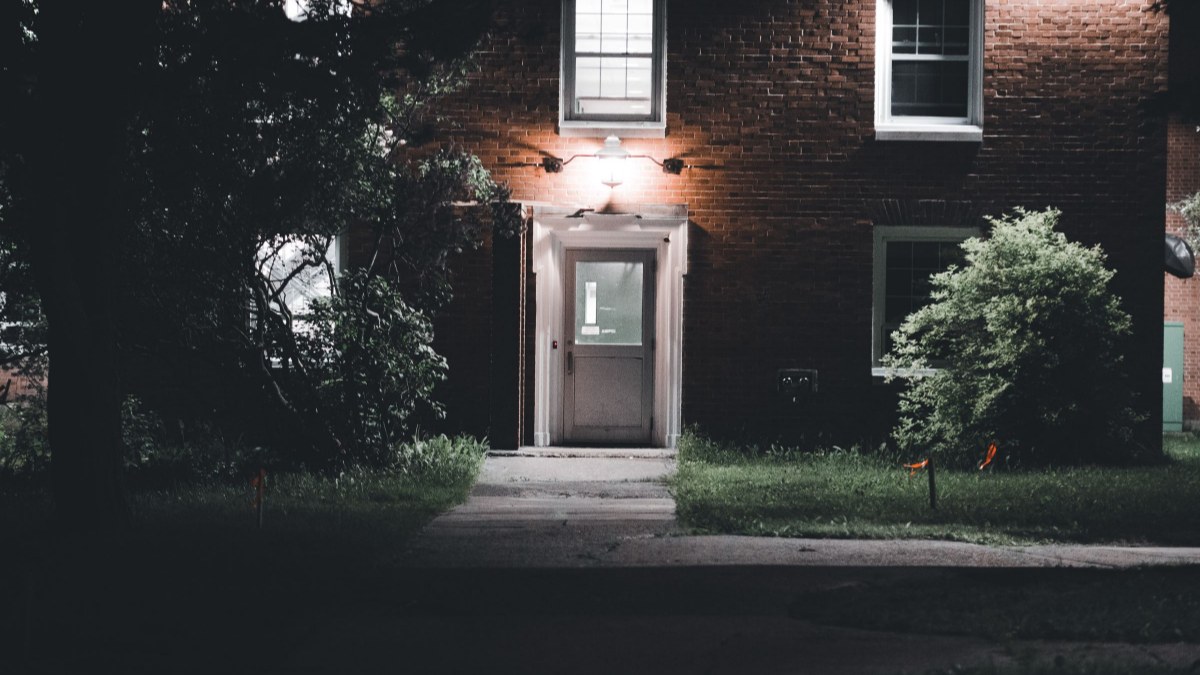
It comes up sooner or later whenever people talk about home defense. Someone leans in and says, "If you ever have to shoot somebody in the yard, make sure you drag him inside before the cops show up." Usually it is said half as a joke. Sometimes it is passed along as hard-won wisdom from an uncle who knew how the system really works.
It sounds plausible because Iowa does give special treatment to intruders who break into your home. But the myth gets the law backward. Staging a scene can turn a defensible shooting into a criminal case, and there are rare times when moving an injured person is the right thing to do for a reason that has nothing to do with the law.
The myth fails because it rests on a misunderstanding of what the law looks at. By the end you should be able to explain why the place a person is found does not decide whether a shooting was justified, what Iowa law says about evidence after you use deadly force, why fabricating a scene damages even a strong self-defense case, and how to tell a necessary rescue from a cover-up.
This is education, not legal advice. It uses Iowa law as its main example.
The doorway is not a switch
Picture two scenes at the same address. In the first, a man stands in the yard firing a gun through the front window at the family inside. In the second, a homeowner shoots an unarmed relative who lives in the house and poses no danger. The first shooting happened outside and is very likely justified. The second happened inside and very likely is not. Inside or outside cannot answer the question in either case.
Iowa's general self-defense rule, in Iowa Code 704.3, asks whether you reasonably believed force was necessary to defend yourself or someone else from actual or imminent unlawful force. Its definition of reasonable force, in 704.1, limits the response to what a reasonable person in the same situation would judge necessary. Those rules are about the danger and your response, not the ground under the attacker's feet.
Iowa does have a home-defense presumption. Under Iowa Code 704.2A, you are presumed to reasonably believe deadly force is necessary if, at the time you use it, the person is unlawfully entering, or has unlawfully entered and remains in, your dwelling, place of business or occupied vehicle by force or stealth, and you know or have reason to believe that is happening. It does not apply to people who have a right to be there or live there, to officers lawfully entering, or to someone who is themselves committing a crime. Our article on the castle doctrine explains it in detail.
Notice the words "at the time." The presumption depends on what was happening when you fired, and someone breaking in through the door can qualify before they are fully inside. Finding a person inside afterward does not prove that a qualifying break-in happened before the shot. Moving someone after a shooting cannot change what they were doing when it happened. It can only change what investigators see.
Judge any use of force by the threat at the moment you acted, because that is how the law will judge it.
Where someone ends up is not where they were shot
The myth hides a second mistake. It assumes a wounded person stays exactly where they were when hit. People who are shot often keep moving. An intruder shot in the kitchen may stumble out the back door and collapse in the yard. That final location does not mean the homeowner shot someone standing outside.
Investigators know this. Their job is to reconstruct what happened from blood trails, bullet paths, shell casings, damage, witness statements, recordings and the timeline, not to treat the final scene as a snapshot of the moment the trigger was pressed. Where a person is found is one piece of evidence to interpret alongside everything else.
The same reasoning applies to a person who was retreating or had stopped being a threat. The law follows the situation as it changes. A home-defense claim cannot be built by rearranging the aftermath, and a real one does not depend on where the person fell.
Let the evidence show what actually happened, because investigators are trained to read it, and the truth is the only version that holds together.
The shooting and the cover-up are separate acts
It helps to separate three questions. Was the shooting itself justified? Did what happened afterward cause additional harm? Did anyone deliberately falsify evidence or lie to investigators? Each can have its own answer.
A homeowner might have a strong self-defense claim for the shooting and still commit crimes afterward. An unjustified shooting does not become justified because the homeowner arranges a better-looking scene. Being the person who was attacked does not give you continuing authority over the injured person, the evidence or the investigation.
Iowa's immunity law shows how narrow the protection is. Iowa Code 704.13 protects a person who uses justified reasonable force from liability for the aggressor's damages caused by that force. It says nothing about protecting deception afterward.
It is not accurate to say that moving someone automatically turns a lawful shooting into murder. A homicide charge still requires proof of each element, and the court still applies the justification rules. The accurate warning is serious enough: Staging a scene can create new crimes and hand the prosecution evidence against the shooting itself.
Once the threat has stopped, treat everything you do next as a separate decision that will be judged on its own.
Iowa law expressly protects deadly-force evidence
Iowa has a statute written for exactly this situation. Under Iowa Code 704.2B, a person who uses deadly force must notify law enforcement, or have someone else notify them, within a reasonable time if anyone is able to. The same section says the person "shall not intentionally destroy, alter, conceal, or disguise physical evidence" related to the deadly force, and may not intimidate witnesses or persuade anyone to change their testimony. Dragging someone across a doorway to make an outdoor shooting look like an indoor one is altering and disguising physical evidence.
This statute has real teeth in court. In State v. Ellison (2023), a man shot and killed another man during a fistfight on a Dubuque street, left, and was arrested weeks later in Michigan. The gun was never found. The jury was instructed about the duty not to destroy, alter or conceal evidence, and told it could consider whether the defendant complied when deciding whether his use of force was justified. The Iowa Supreme Court upheld that instruction against a Fifth Amendment challenge, explaining that a duty not to tamper with evidence does not force anyone to say anything. The jury convicted him of voluntary manslaughter.
Key idea: In Iowa, a jury may be told it can consider whether you altered or concealed evidence when deciding whether your use of force was justified. A staged scene does not just risk a separate charge. It can be used to argue that the shooting itself was not self-defense.
The right to remain silent and the duty not to fabricate are entirely compatible. You can decline to answer questions until you have a lawyer, and leave the scene exactly as it is. What you cannot do is build a false physical story. Our article on the Fifth Amendment after a shooting explains how to protect your rights without lying.
After you use deadly force, call 911, do not move, clean, hide or rearrange anything except what safety or lifesaving care truly requires, and never ask anyone to change what they saw.
Fabrication changes the question investigators ask about you
Many self-defense cases depend on details no camera recorded. What did you see? What did the other person say? Why did you believe someone was about to be killed or seriously hurt? Your credibility is often the heart of the case.
Now add a staged scene. Investigators will ask why you wanted them to believe something that did not happen. A prosecutor will argue that you changed the scene because you knew the real one would not support you. Lawyers call this consciousness of guilt. It is an argument, not proof of what you were thinking, and panic can make innocent people do strange things. But you will have given the prosecution a concrete act of deception to point to.
The damage spreads. Once you have deliberately faked one important fact, everything else you say becomes harder to believe, including the parts that are true and that would have cleared you. Your lawyer now has to explain both the attack and your attempt to misrepresent it.
Protect your credibility as carefully as you protect your family, because in a self-defense case it may be the most important evidence you have.
Evidence protects the defender, too
People often think of evidence as something the government collects against them. That is only half true. Physical evidence can prove a truthful account when there are no witnesses or when witnesses are confused.
The National Institute of Justice's crime scene guidance for police stresses careful documentation, preventing contamination and preserving evidence, then weighing physical findings together with witness statements. The attacker's weapon where it fell, the forced door, the casings, the blood trail showing where the attacker came from, all of it can support your account. Dragging a body disturbs exactly that evidence, and adds new marks that investigators then have to explain.
Forensic science has limits, and nobody can reconstruct every detail perfectly. That is an argument for leaving the scene alone, not for changing it. And a staged body is never the only evidence. Neighbors, doorbell cameras, phone records and the 911 call may tell a different story, and the staging itself becomes a new event to investigate.
You may not know which evidence helps you. Assume the untouched scene is your best witness, and leave it untouched.
One lie demands several more
A staged scene needs a story to go with it. What will you tell the 911 dispatcher? The first officer? The detective the next morning? What happens when a neighbor describes seeing you drag someone across the lawn?
Each answer is another decision to lie or tell the truth. Someone who moved a body in a moment of panic may then make a deliberately false report to protect what they created. Under Iowa Code 718.6, knowingly giving false information to police or reporting a crime that did not happen is a crime in itself. A false report about a felony is at least a serious misdemeanor, and a false report of certain serious crimes, including first-degree burglary, can be a felony. Repeating the story under oath adds the risk of perjury.
The people around you can be pulled in too. A spouse who helps move the body or agrees to tell the same story can face obstruction charges of their own, and asking them to do it may violate 704.2B's ban on persuading others to alter their testimony.
Say nothing rather than say something false, and never ask a family member to help you change what happened.
The person you are dragging may still be alive
Calling someone "the body" hides a medical reality. A person who has stopped moving may be badly hurt but alive. Some people shot in self-defense survive, especially when help arrives quickly.
Dragging a seriously injured person for appearances serves no medical purpose and can make injuries worse. The American Red Cross teaches that a person with a possible head, neck or spine injury should not be moved unless necessary, such as for CPR, bleeding control or to escape immediate danger. Every minute spent staging a scene is a minute not spent calling 911 or controlling bleeding. Our article on medical preparedness covers bleeding control and CPR.
Dragging someone also means walking up to them, touching them and focusing on the task. A person who is wounded is not necessarily harmless, and pulling them into your house brings whatever danger they still pose closer to your family.
Common mistake: Rushing up to an attacker who has fallen to check on them or move them. Keep your distance and your attention on them, stay behind cover if you can, call 911 and tell the dispatcher what you see. Provide care only if the scene is safe and you are trained.
Once the threat has stopped, your priorities are safety and human life, which means calling for help, not arranging the scene.
A necessary rescue is not a cover-up
The opposite lesson can become dangerous if it is taught too rigidly. "Preserve the scene" must never become "never move an injured person, even to save a life."
Imagine a wounded attacker lying beside a car that is starting to burn, or face-down in water. Moving them away from that danger is a rescue, not a cover-up. Rolling someone over to perform CPR or to reach a wound to stop bleeding is lifesaving care. First-aid guidance has always recognized movement for safety and lifesaving care.
The difference is the real purpose and necessity of the movement. If you move someone to save their life, tell the dispatcher and the officers exactly what you moved and why. Do not invent a medical reason later for movement that was really about appearances. Follow the dispatcher's instructions, and give only the care you are trained for and can give safely.
Move an injured person only when their life or safety requires it, and report every movement truthfully.
A bad joke can become evidence
The person repeating the "drag him inside" line may say they were only kidding. A joke alone does not prove anything about a later shooting. But if that person ever does shoot someone and the scene shows signs of movement, a witness may remember the joke. A prosecutor may argue it shows the movement was a plan, not panic or an attempt to help.
That is why the right response, when someone repeats the line at the range or in class, is to correct it. Repeating it without comment teaches a false rule and makes deception sound like part of home defense.
When you hear the myth, explain why it is wrong, because the person telling it may someday be in the situation it describes.
Putting it together
Suppose it is 2 a.m. and someone smashes through your back door. You fire, and the intruder stumbles back out onto the deck and falls. The myth says to drag him inside. Instead, you stay inside, behind cover, gun ready, and call 911. You tell the dispatcher your address, that you shot an intruder who broke in through the back door, that he is lying on the deck, and that you need police and an ambulance. You do not go out to him unless it is safe and needed. When officers arrive, you follow their commands, identify yourself as the homeowner, point out the broken door and say you will cooperate fully after you speak with your lawyer.
The broken glass, the forced door, the blood trail leading back out and the casings tell the true story: Someone broke in by force, and you defended your family. Nothing about that story needs improving.
Check your understanding
Try answering these before you open the answer. If you can decide what to do and explain why, you have it.
1. At 1 a.m. you shoot a man who comes at you across your yard with a knife, and he falls by the porch steps. Your brother-in-law, on the phone, says to pull him inside before the police come. What do you do, and why?
Leave him where he is, stay behind cover and call 911. Whether the shooting was justified depends on the threat when you fired, a man charging with a knife, not on where he ends up. Moving him can't change what happened; it can only alter the evidence, which Iowa law forbids, and it would bring a possibly still-dangerous man closer to your family.
2. After a justified shooting in your driveway, you pick up your spent casings and wipe blood off the porch rail before police arrive, so it "doesn't look bad." What have you done?
You've broken Iowa Code 704.2B, which forbids intentionally destroying, altering or concealing physical evidence after using deadly force. Worse, in State v. Ellison (2023) the Iowa Supreme Court upheld telling a jury it may consider whether you tampered with evidence when deciding whether your force was justified. The casings and blood were evidence that could have supported you.
3. Your wife wants to help and offers to tell police she saw the intruder break the window, though she was asleep at the time. What do you tell her?
No. Asking or letting her change what she saw violates 704.2B's ban on persuading anyone to alter testimony, and a knowingly false report to police is a crime under Iowa Code 718.6. She should tell the truth about what she actually saw and heard, or say nothing until you've both talked with a lawyer.
4. A friend says staging a scene only matters if the shooting was bad. If it was a good shoot, he says, there's no harm in making it look better. Why is he wrong?
Because the staging becomes its own evidence. A prosecutor will argue you changed the scene because you knew the real one wouldn't support you. Your credibility on every other fact, including the true ones that would clear you, takes the damage, and the evidence that supported your account gets disturbed. It can also bring separate charges, like false reporting or obstruction, for you and anyone who helped.
5. The intruder you shot has collapsed beside your car, which has started to burn. Can you move him?
Yes, if it's safe for you. Move someone only when their life or safety requires it, such as moving them away from fire or positioning them for CPR or bleeding control, and only when it is safe for you. Tell the dispatcher and officers exactly what you moved and why.
Where to go next
For what to do and say in the hours after a defensive shooting, read the Fifth Amendment after a shooting and leaving an unsafe scene after defensive force. To understand when force in your home is presumed reasonable, see the castle doctrine at home. And for the skills that could save a life afterward, including the attacker's, read medical preparedness.
If this article helped you, we invite you to sign up for email notifications of new blog articles.