
Defending a Congregation: Must You Wait for the First Shot?
Joseph McLain Nov 10, 2026
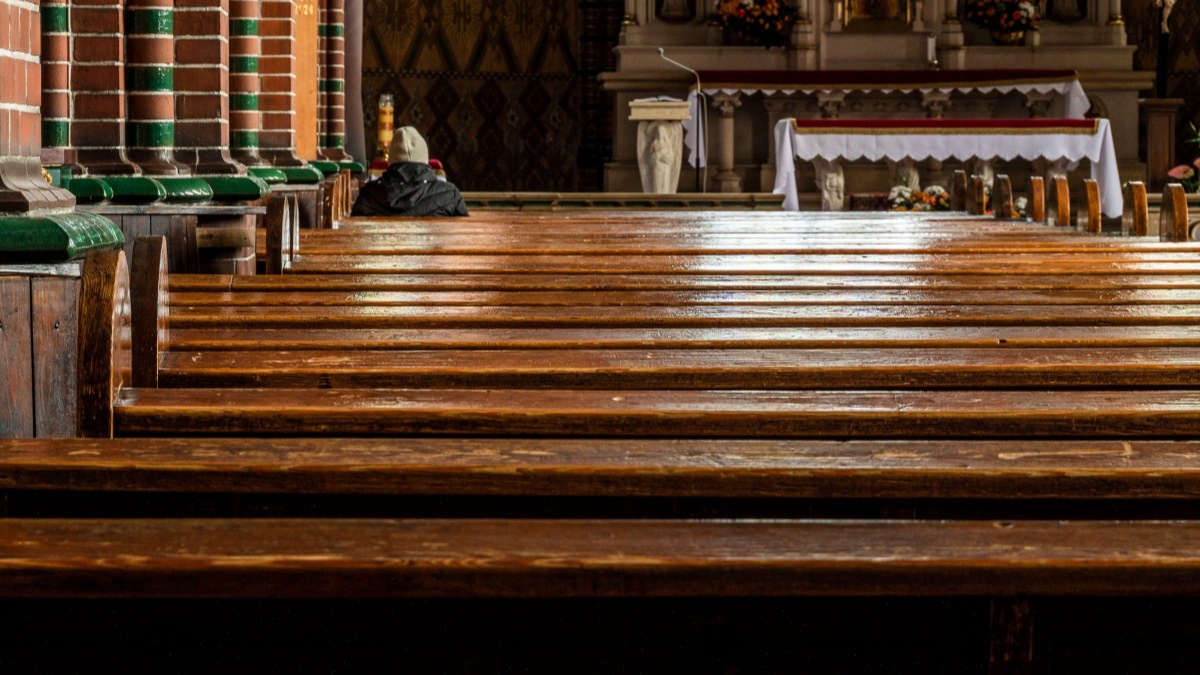
It is Sunday morning. The opening hymn is ending when a man you do not recognize walks in the side door. You are on your church's safety team, and you notice the pistol in his hand. He has not fired. Nobody is hurt. Then his gun hand starts to rise.
Many safety teams train to a slogan, either "never shoot until he shoots" or "an armed stranger in church is a threat." Neither is the law. Iowa doesn't make you wait for a shot, and it doesn't let you shoot someone just because he has a gun in a church. A rising hand can mean an attack, or a man about to hand over his gun. What decides it is whether the facts show an imminent threat.
By the end you should be able to explain why neither "wait for the first shot" nor "shoot any armed stranger" is the rule, describe what changes a situation from alarming to imminent, and help your safety team train decisions instead of slogans.
Why the first shot is the wrong place to start
Imagine a man walking toward the pulpit, shouting that he is going to kill the pastor, and bringing a pistol up toward him. A rule requiring you to wait for the trigger pull would require you to let the very harm happen that defense is meant to prevent. That is why the law protects against danger that is about to happen, not just harm already underway.
Now change the picture. A visitor walks in calmly with a holstered handgun. Someone in the pews is frightened because he is a stranger and he is armed. His ability to hurt someone is real, but nothing he has done shows an attack is about to begin. A rule that allowed shooting every armed stranger would get lawful carriers, off-duty police and other defenders killed.
Iowa Code section 704.3 allows reasonable force when a person reasonably believes it is necessary to defend themselves or another from "any actual or imminent use of unlawful force." The word "imminent" is what lets you act before someone is hurt. The words "reasonably" and "necessary" are what keep that permission from becoming a license to shoot over danger that might happen later.
This is general education about Iowa law, not legal advice about a particular situation or your church's security arrangement. Have an Iowa attorney review your team's policies and training scenarios.
Acting before the first shot protects lives, and acting too early can take an innocent one. You do not have to wait to be shot at, but you do have to be able to say what the person did that made an attack imminent.
What imminent means without a stopwatch
Imminent is not a fixed number of seconds, a set distance, or a requirement that someone is already bleeding. It describes danger that demands a response now rather than later.
Consider two threats against your pastor. In the first, a man sends a message promising violence next month. That is serious, and it calls for reporting, a call to police and real protective planning. It does not justify shooting him when he shows up at a potluck next week with no weapon in sight. In the second, a man confronts the pastor in the sanctuary with a weapon and starts doing things that show the violence is beginning. Now the need may be immediate.
What changed is not the man's feelings, which were hostile both times. What changed is conduct and timing. Three kinds of facts usually show the difference: The person's ability to cause serious harm, such as a weapon in hand or within reach; the opportunity to use it, meaning they are close enough or have a clear line to someone; and actions or words showing they are about to use it. A weapon alone gives ability. It takes the other two to make danger imminent.
Key idea: "He had a gun" and "he was close" each describe one fact. Neither is a full explanation. Justification comes from connecting what the person had, where they were, and what they were doing to the need for force at that moment.
Ask whether the person has the means, the opportunity and is showing the intent, right now, and act only when all three are present.
What real church incidents show, and what they do not
Real incidents make these ideas concrete, but only if they are described accurately. "Stopped before anyone died," "stopped before anyone was hurt" and "stopped before the attacker did anything violent" are three very different stories.
West Freeway Church of Christ, Texas, 2019
On December 29, 2019, during a service at West Freeway Church of Christ in White Settlement, Texas, a gunman shot and killed two members, Richard White and Tony Wallace. Within seconds, Jack Wilson, who led the church's volunteer safety team, shot and killed the attacker. In September 2020, a Tarrant County grand jury declined to indict Wilson.
This incident shows a justified defense against an attack already underway. It does not show that Wilson was legally required to wait for the first shots. The attacker fired first because that is what happened, not because the law required it. And a grand jury's decision resolves one case, not a rule for every future one.
Scientology Celebrity Centre, Los Angeles, 2008
In November 2008, a man armed with two swords confronted security guards at the Scientology Celebrity Centre in Hollywood. According to reporting on the prosecutor's findings, he threatened the guards, appeared to back off, then charged toward them with a sword. A security guard, a retired police officer, shot and killed him. Prosecutors declined to file charges, and investigators said surveillance video supported the guard's account.
Nobody was cut before the guard fired. This is an example of justified force before a weapon caused any injury at a religious building. It is not an example of shooting someone for holding a sword. The threats and the charge were what made the danger imminent.
City of God Church, Detroit, 2015
On October 18, 2015, a man forced his way into City of God Church in Detroit carrying a brick and pushed the pastor's mother to the ground after being told he was not welcome. He was separated from the pastor and agreed to leave, then broke free and rushed at Pastor Keon Allison. Allison fired, hitting him in the shoulder. The man kept coming, and Allison kept firing. The man died. The Wayne County prosecutor declined to charge the pastor, finding he acted in self-defense.
The lesson here is about change. An agreement to leave seemed to end the danger, and then the man's conduct restarted it. The outcome does not mean that anyone who brings a brick into a church or argues with the pastor can be shot. It means renewed violent action renewed the threat.
Notice what these three cases have in common. In each, the person shot had done something: Fired, charged, or attacked and then charged again. None of them involved shooting someone merely for being armed. That pattern matches the law.
Headlines simplify, and simplified stories train bad instincts. When your team studies real incidents, ask exactly what the attacker did before force was used, and learn from that, not from the headline.
The rising pistol: Working through the hardest version
Go back to the man in the side door. His pistol begins moving upward. You do not know whether it will end in a shot, a threat or an attempt to give it up. There is no honest universal rule that upward movement always justifies firing, and none that you must wait until the muzzle is aligned and a finger is on the trigger. Here is how the facts change the answer.
Start with a visitor holding a pistol pointed at the floor, saying nothing threatening, and looking confused. The gun is a serious concern, and your team should be moving to cover, getting people away and calling 911. But if your entire explanation is that he might eventually shoot someone, you have not explained why deadly force was necessary at that moment.
Add an explicit threat against the pastor and a movement bringing the gun toward him. Now the weapon is connected to a specific person and an apparently immediate attack. Depending on the full situation, firing before he fires could be justified. You do not need to read his mind with certainty, only to reasonably believe the attack was beginning.
Change it again. He clearly says he is giving up and starts setting the gun down. His earlier threats still matter, but you have to account for what he is doing now. Shooting a person in the act of surrendering is very hard to justify.
Finally, imagine you can see a hand moving but cannot clearly see the object or where it is pointed. Your uncertainty does not give you permission to fire. Iowa's section 704.1 protects a reasonable mistake about danger, but a mistake is reasonable only when the facts you could see supported it. A blocked view may explain an error. It does not make every error reasonable.
Common mistake: Training your team on a single trigger, such as "if the gun comes up, you fire." Real people raise guns to surrender, to show they are police, or because they are confused. Teach the team to read the whole picture, including words, direction and what the person was doing a moment ago.
Reading the whole picture takes a fraction of a second longer than reacting to one movement. The gun rising toward a person combined with threatening words or actions can justify force; the gun rising alone, with no other sign of attack, usually calls for cover and commands instead.
Protecting others when you are not the one in danger
A safety team member may be completely safe while someone else in the sanctuary is in immediate danger. Iowa's section 704.3 expressly covers defense of another. Your own ability to step out the back door says nothing about whether the person at the front can escape. Our article on defense of others covers this in detail.
The hardest part is knowing who the attacker is. Picture walking in from the foyer and seeing one person holding another at gunpoint near the altar. That person might be the attacker. He might also be an off-duty officer or another member who has just stopped one. Acting on who currently holds a gun, without knowing how the scene began, risks shooting the wrong person.
That is one of the strongest reasons churches with armed members should know who is carrying. A team that knows its own people, uses a recognizable signal or communication plan, and coordinates with local police is far less likely to mistake a defender for an attacker.
Know who else in your building is armed before you ever need to know.
Showing a gun versus firing it
"Brandishing" gets used loosely for any visible weapon. Iowa law draws sharper lines. Under section 704.2, firing a gun toward a known person is deadly force, whether or not you meant to cause serious injury. But producing or displaying a weapon as a threat is not deadly force, as long as your conduct goes no further than creating an expectation that you may use deadly force to defend yourself or another, or as otherwise allowed by law.
That distinction matters in a church. A team member who draws and gives a loud command to an armed man advancing on the pastor is using a display that may be justified even if firing would not yet be. But the display itself still has to be justified. Pointing a gun at an unwanted visitor to make him leave is not defense, and it can be assault under Iowa law.
A display can sometimes end a threat without a shot, and it can also escalate a situation that did not need a gun at all. Draw when the situation calls for being ready to defend a life, not to win an argument or move someone along.
A church is not a home, and a team member is not a police officer
Three separate questions often get mixed up: May this person carry here, may this person provide security, and was this particular use of force justified? Each can have a different answer.
Iowa allows most adults 18 and older who are not prohibited to carry without a permit, and private property owners, including churches, can generally set their own rules about guns on their property. A carry permit, a safety team badge or a pastor's blessing does not lower the bar for justified force. A team member is judged by the same law as anyone else. Iowa's presumptions in section 704.2A, which help defenders facing forcible or stealthy unlawful entry into certain places, are written for dwellings, places of business or employment and occupied vehicles. Whether a church fits depends on the specific facts, and someone walking into an open worship service is not the same as someone breaking into a home.
Stand your ground does not settle the question either. Section 704.1(3) removes the duty to retreat for someone lawfully present and not engaged in illegal activity, but it does not turn suspicion into imminence. If your church runs a school, Iowa's section 724.4B on firearms on school grounds raises separate questions. Organized teams should also ask an attorney whether Iowa's private security licensing rules apply to their arrangement, and ask their insurer what coverage actually exists. Our article on building a church safety plan beyond armed security covers those planning questions.
Good practice: Ask your team to describe their role in one sentence without using the word "security." If the answer is "I watch the side door and call 911," that is clear. If the answer is "I take out threats," it is time for a conversation about what the law actually authorizes.
A church role gives you responsibilities, not extra legal permission to use force.
Every shot in a sanctuary has people behind it
Even when stopping an attacker is justified, everyone around the attacker still matters. In a sanctuary, people stand, duck, run and cross into what was a clear line a second ago. Iowa's section 724.30 makes reckless discharge of a firearm a crime, ranging from a simple misdemeanor up to a class C felony when serious injury results. A justified reason to shoot the attacker does not answer whether a particular shot was reckless toward the family in the next pew.
This is why readiness cannot be measured by group size on a paper target. It includes recognizing the actual threat, knowing who the other defenders are, and having the judgment, and sometimes the patience, to move for a better angle before firing.
In a full sanctuary, if you are not certain of what is behind your target, move or wait rather than shoot.
A tabletop drill for your team
The way to build that judgment is to practice decisions, not slogans, around a table. Here is how to run it.
- Gather your team around a table with a simple floor plan of your sanctuary. No firearms, real or training, are needed for this exercise.
- Describe a starting scene: A stranger enters with a visible handgun and says nothing. Have each person say what they would do and why.
- Add one fact at a time: A threat against the pastor, the gun moving toward someone, a shout of "I give up," a member stepping into the line of fire. After each, ask what changed and whether the answer changed.
- For each step, have someone explain the decision in plain words a juror would understand, naming what the person did, not just what they had.
- End by writing down any disagreements and taking them to an Iowa attorney or a qualified instructor for review.
The team has it when every member can explain, in their own words, the exact fact that would move them from cover and commands to deadly force, and those explanations match.
Putting it together
Return to the side door one last time. A man with a pistol walks in. That alone calls for alerting the team, moving people, taking cover and calling 911, not for firing. If he states a threat and brings the gun toward someone, an attack may be imminent, and Iowa law does not make you wait for the first shot. If he surrenders, your response has to change. If you cannot see clearly, your uncertainty is a reason for caution, not permission. And after any use of force, Iowa's section 704.2B requires notifying law enforcement within a reasonable time and forbids altering evidence.
The goal of armed church protection is preserving life. Sometimes that means acting before anyone is hurt. It always means being honest about whether the facts have actually shown an imminent threat, and about when a threat that once justified force has ended.
Check your understanding
Try answering these before you open the answer. If you can decide what to do and explain why, you have it.
1. A deacon says the safety team must never fire until the attacker fires first. Is that what Iowa law requires?
No. Iowa Code 704.3 allows force against actual or imminent unlawful force. If an attacker shows the means, opportunity and intent to kill someone right now, such as threatening the pastor while bringing a gun toward him, deadly force may be justified before he fires.
2. A visitor walks in with a holstered handgun and sits down quietly. A member wants the team to draw on him. What is the right response?
Watch, communicate and, if your church does not allow guns, have someone politely and calmly address it. A holstered gun alone gives ability but not opportunity or intent. Drawing on him, or pointing a gun at him, could itself be assault and is not justified by his mere presence.
3. A team member cites the 2008 Celebrity Centre shooting as proof that the team may shoot anyone who walks into church carrying a blade. What is the real lesson of that case?
Because, according to reporting on the prosecutor's findings, the man threatened the guards and then charged at them with the sword. It was the threats and the charge that made the danger imminent, not the possession of the weapon.
4. You walk into the sanctuary and see a man holding another man at gunpoint near the altar. Should you fire?
Not until you know who the attacker is. The man with the gun may be an off-duty officer or a member who just stopped an attack. Get to cover, communicate with your team, and gather information. This is exactly why teams should know who in the building is armed.
5. A team member says being on the official safety team gives him more legal authority to use force than an ordinary member. Is that right?
No. A church role creates responsibilities, not extra legal permission. Team members are judged by the same justification law as anyone else. The role may explain why they were watching a door or responding, but it does not make an insufficient threat sufficient.
Where to go next
For the planning, communication and medical side of church safety, read building a church safety plan beyond armed security. To understand the hard questions that come with protecting someone else, see defense of others. For how a jury decides whether your belief was reasonable, read the reasonable person test. And for what happens when an attacker stops, read when self-defense ends.
If this article helped you, we invite you to sign up for email notifications of new blog articles.