
Constitutional Carry in Iowa: What No Permit Required Really Means
Joseph McLain Nov 06, 2026
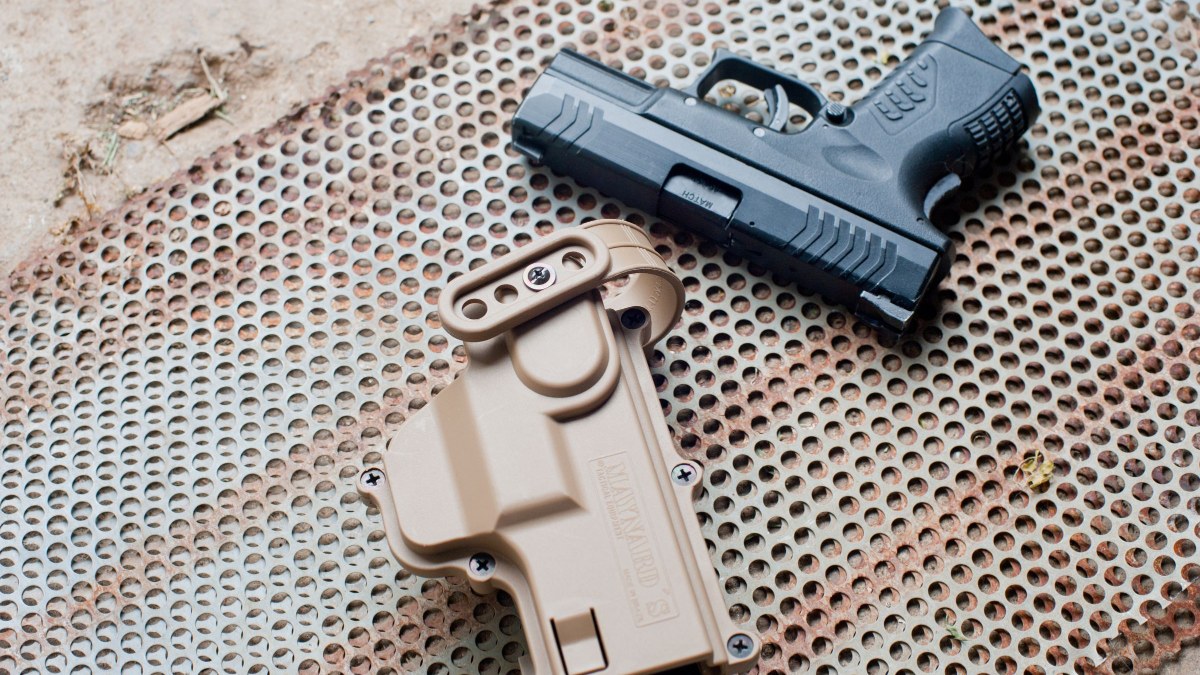
A young man stops by the counter on his nineteenth birthday. He has heard Iowa is a constitutional carry state and wants to know which holster to buy, since he figures he can carry anywhere now. A few minutes later, a retired farmer asks why anyone would still bother getting a permit when the law no longer requires one. Then a woman planning a trip to see her daughter in Minneapolis asks whether Minnesota is "the same as Iowa."
The answers people get from friends are all over the place. One says constitutional carry means no rules at all. Another says it only matters if you never leave the house. A third says a permit is a waste of money now.
Each of them is right about something. Iowa really did remove the permit requirement for most adults. The rules really do change the moment you leave Iowa. And for some people a permit really does not add much. But "no permit required" answers only one question out of several. This article explains who can carry without a permit in Iowa, where carrying is still off limits, what changes during a police encounter, why permits still matter, and how Iowa compares with its neighbors. By the end you should be able to explain what Iowa's permitless carry law does and does not change, decide whether a permit is worth it for you, and check the rules before carrying somewhere new.
What permitless carry actually changed
Iowa's permitless carry law, House File 756, took effect July 1, 2021. Before then, carrying a loaded handgun in public generally required a permit. Since then, a person who is not prohibited may carry a handgun, openly or concealed, without one. On July 1, 2025, House File 924 lowered the minimum age from 21 to 18, so eligible 18- to 20-year-olds may now carry too, and may also apply for a permit to carry.
That is a big change, but it is a change to one thing: The requirement to get permission from the sheriff first. It did not change who is prohibited from having guns, where guns are banned, what happens if you carry while drunk, or when you may use force. Those rules are all still on the books.
Think about three separate questions every time you carry. First, may this person carry at all? Second, may they carry in this place? Third, what must they do while carrying? Permitless carry answers part of the first question. The other two are untouched.
A few practical limits are worth knowing right away. Federal law still bars licensed dealers from selling handguns to anyone under 21, and Iowa's permit to acquire handguns still requires applicants to be 21. So an 18-year-old may lawfully carry a handgun in Iowa but cannot buy one from a gun store. Those are different laws answering different questions.
This article is general education, not legal advice. Laws change, so check the current Iowa Code before relying on any detail.
The trade-off is that dropping the permit requirement made carrying simpler for the law-abiding, and it also removed the class where many people used to learn the rules. The rule: No permit required means you are now responsible for knowing what the permit class would have taught you.
Who may carry without a permit
Iowa's permitless carry depends on not being prohibited. Under Iowa Code section 724.8B, a person may not carry a dangerous weapon if they would be ineligible for a permit under several parts of section 724.8, if they are illegally possessing a controlled substance, or while committing an indictable offense. Violating it is a serious misdemeanor.
The disqualifications from section 724.8 include being addicted to alcohol, having documented recent actions that give probable cause to believe you would use a weapon unlawfully or dangerously, having certain recent assault-related convictions, and being prohibited from possessing firearms under federal law. That last one is broad: It includes felony convictions, domestic violence misdemeanor convictions, certain protective orders and unlawful drug use, among other categories.
Notice what this means. Permitless carry did not lower the bar for who may carry. It removed the step where a sheriff checked whether you meet it. You are now the one responsible for knowing whether something in your past disqualifies you. If you are not sure, find out before you carry, not after.
Key idea: Permitless does not mean unchecked. The same people who could not get a permit generally cannot carry without one. The difference is that no one checks for you in advance.
The trade-off is that self-checking saves time and money, and a mistake can turn ordinary carry into a crime. The rule: If anything in your history might disqualify you, settle it with an attorney or the sheriff's office before you carry.
Places that are still off limits
Being allowed to carry in Iowa does not mean being allowed to carry everywhere in Iowa. A few of the most important limits:
- School grounds. Under section 724.4B, carrying a firearm on the grounds of a public or nonpublic school is a class D felony, with narrow exceptions such as an unloaded gun in a closed case or locked away in a vehicle.
- Federal property. Federal law, not Iowa law, governs places like post offices and federal buildings, and permitless carry does not change that.
- Private property where the owner says no. Under Iowa's trespass law, an owner can tell you to leave or post a notice forbidding entry, and staying anyway can be trespass.
- Anywhere while intoxicated. Under section 724.4C, carrying a dangerous weapon on your body or within immediate reach in a vehicle while intoxicated is a serious misdemeanor, with exceptions for your own home, business or land.
Of these, the school rule carries the heaviest penalty and catches the most people off guard, often parents picking up children. A felony for driving into a school lot with a loaded gun in the console is a life-changing mistake. The federal school-zone law, which covers a 1,000-foot area around schools, adds another layer, discussed below.
For more on stores, rideshares and buses, read our article on carrying where you are not welcome. For the alcohol rule in detail, see alcohol, drugs and concealed carry in Iowa.
The trade-off is that carrying everywhere you legally can is convenient, and every off-limits stop requires a plan. The rule: Before you carry somewhere unfamiliar, ask whether it is a school, a federal building, private property with a no-guns rule, or a place where you will be drinking.
Carrying is not the same as intending trouble
One worry people have is that carrying a gun, especially concealed, might itself be treated as suspicious. Iowa addresses this directly. Under section 708.8, going armed with a dangerous weapon with the intent to use it unjustifiably against someone is a class D felony. But the same statute says that intent may not be presumed just because someone carries or conceals a weapon, including a loaded firearm on their body or in a vehicle.
That protection matters. Simply carrying lawfully is not evidence that you planned to hurt anyone. What can become evidence is what you say and do: Threats, seeking out a confrontation, or showing the gun to intimidate. Our article on provocation and self-defense explains how conduct like that can change your legal position.
The trade-off is that the law protects lawful carry, and it gives no protection to the behavior that sometimes comes with carrying a gun while angry. The rule: Carry quietly, and let nothing you say or do suggest the gun is for anything but defense.
What changes during a police encounter
Iowa does not require you to volunteer that you are armed during a traffic stop or other police contact. The one related duty is in section 724.4D: A person carrying a dangerous weapon whose behavior creates reasonable suspicion that they are a danger to themselves or others must cooperate with an investigating officer.
Even so, national law enforcement organizations recommend calmly telling an officer that you are armed and where the gun is, before you reach for anything. That advice has nothing to do with permits. It is about making sure the officer is never surprised by your movements. Our article on carrying concealed during a traffic stop walks through exactly what to say and do.
Neighboring states are different. Nebraska requires anyone carrying a concealed handgun to tell an officer immediately when contacted, and Minnesota and Illinois require you to answer if asked. Our article on reciprocity and traffic stops lays those rules out side by side.
The trade-off is that Iowa gives you a choice, and the choice comes with responsibility for making the encounter easy to read. The rule: Know the rule in every state you carry in, and in Iowa, decide ahead of time how you will handle a stop.
Why a permit can still be worth it
If the law does not require a permit, why do so many people still get one? Because a permit still does things permitless carry cannot.
- Travel. Many states honor an Iowa permit, but a state that requires a permit will not let you carry on Iowa's permitless law. Illinois, for example, lets nonresidents carry in a vehicle only if they have their home state's permit when that state issues one.
- Federal school zones. The federal Gun-Free School Zones Act, 18 U.S.C. 922(q), restricts guns within 1,000 feet of a school, but exempts people licensed by the state where the school is located. Without an Iowa permit, simply driving past a school with a loaded gun can raise a federal problem.
- Buying guns. The ATF recognizes Iowa's permit to carry as an alternative to the background check when buying from a dealer, and a permit can make private sales easier.
- Training. To get a permit, you must complete an approved firearm safety course, which for many people is the only formal training they ever take.
Of these, the federal school-zone exception matters most for everyday Iowans. Schools are everywhere, and most people drive within 1,000 feet of one without noticing. The Iowa Firearms Coalition and many sheriffs recommend a permit for exactly this reason. For more on what a permit does and does not do in court, see our article on carry permits and training.
Common mistake: Thinking a permit is pointless if you never leave Iowa. The federal school-zone law applies in your own town, and an Iowa permit is what exempts you from it. Driving your kids to practice past an elementary school is an Iowa trip, not a travel issue.
The trade-off is that a permit costs money and a few hours of your time, and in return it removes problems you may not even know you have. The rule: If you carry in a vehicle, travel out of state or live near schools, a permit is very likely worth it.
How Iowa compares with its neighbors
"Constitutional carry state" sounds like one category, but states that use the label have different rules, and some of Iowa's neighbors do not allow permitless carry at all.
| State | Permitless carry for eligible adults? | One thing Iowans should know |
|---|---|---|
| Iowa | Yes, age 18 and up since July 1, 2025. | No duty to volunteer that you are armed during a stop. |
| Nebraska | Yes, concealed handguns. | Must tell an officer immediately when contacted, and carry and show ID on request. |
| South Dakota | Yes. | No general duty to inform. |
| Missouri | Yes. | Permit holders must show the permit and ID on request. |
| Minnesota | No, a permit is required. Since 2025, after the federal courts struck down Minnesota's age-21 limit, eligible adults 18 and older can apply. | Permit holders must disclose whether they are carrying if asked. |
| Wisconsin | No, a license is required for concealed carry. | Licensees must show the license and ID on request. |
| Illinois | No. | Nonresidents may carry only in a vehicle, and only with a home-state permit if their state issues one. |
Even among the states that allow permitless carry, ages, restricted places and police-contact rules differ. Nebraska, for example, lists places of worship among its restricted locations unless the congregation authorizes security, and has its own parking-lot rule. When you cross a line, you carry under that state's law, not Iowa's.
The trade-off is that a simple map is easy to read, and it hides the differences that get people in trouble. The rule: Treat every state as its own set of rules, even when the map shows the same color.
Carrying a gun and using it are separate legal questions
Permitless carry is about whether you may carry. It says nothing about when you may draw, point or fire. Those questions are governed by Iowa's justification law in chapter 704, which applies the same way whether you carry with a permit or without one.
Under section 704.3, force is justified only when you reasonably believe it is necessary to defend yourself or another from actual or imminent unlawful force. Deadly force requires much more. A lawfully carried gun gives you a tool. It gives you no extra authority to use it. Our article on when a defensive shooting is legally justified explains those standards in depth.
Good practice: If you carry without a permit and never took a permit class, give yourself the class anyway. A good permit course or a basic legal-and-safety class covers exactly the rules this article describes, and it is far cheaper to learn them in a classroom than in a courtroom.
The trade-off is that permitless carry removed a requirement to learn, and it did not remove the need to know. The rule: Whether or not you have a permit, learn Iowa's self-defense law before you carry.
Putting it together
Return to the counter. The nineteen-year-old may carry in Iowa if he is not prohibited, but not on school grounds, not in federal buildings, not where an owner tells him no and not while drunk, and he cannot buy a handgun from a dealer until he turns 21. The retired farmer may not need a permit for most of his trips, but if he drives past schools with a loaded gun, a permit protects him from a federal problem. And the woman heading to Minneapolis needs a permit Minnesota honors, because Minnesota does not allow permitless carry at all.
Constitutional carry removed one requirement. Everything else about carrying responsibly is still your job: Knowing whether you are eligible, knowing where you may go, knowing what to do when police approach, and knowing when force is justified.
Try this: Run your own eligibility and location check
- Read Iowa Code sections 724.8 and 724.8B and the federal prohibited-person categories, and honestly ask whether anything in your past applies. If you are unsure about anything, call an attorney or your sheriff's office.
- Write down every place you go in a normal week and mark any that are schools, federal property or private property with a no-guns policy.
- Pull up a map and note every school within 1,000 feet of your regular driving routes. Decide whether that makes an Iowa permit worthwhile for you.
- List any states you might visit in the next year and check each one's official site for whether it allows permitless carry and whether it honors an Iowa permit.
- If you have never taken a firearms safety or legal class, put one on your calendar.
You will know it worked when you can explain, for any place you regularly go, whether you may carry there and why, and you have a clear answer about whether a permit makes sense for you.
Check your understanding
Try answering these before you open the answer. If you can explain it in your own words, you understand it.
1. A 19-year-old says Iowa's constitutional carry law means he can carry and buy a handgun now. Is he right?
Partly. Since July 1, 2025, eligible 18- to 20-year-olds may carry a handgun in Iowa without a permit and may apply for a permit to carry. But federal law still bars licensed dealers from selling handguns to anyone under 21, and Iowa's permit to acquire still requires age 21.
2. Your neighbor says permitless carry means anyone can carry now. What is wrong with that?
Under Iowa Code 724.8B, people who would be ineligible for a permit, including those prohibited under federal law, those illegally possessing controlled substances and those committing an indictable offense, may not carry. Permitless carry removed the application, not the eligibility rules.
3. You carry without a permit and pick up your child from an Iowa elementary school with a loaded gun in your console. What laws are involved?
Iowa Code 724.4B makes carrying a firearm on school grounds a class D felony, with narrow exceptions such as an unloaded gun in a closed case. Federal law also restricts guns within 1,000 feet of a school, and an Iowa permit is what provides the federal exemption. Without one, you may have both state and federal problems.
4. Does carrying a concealed loaded gun in Iowa, by itself, show that you intended to hurt someone?
No. Iowa Code 708.8 says intent to use a weapon unjustifiably may not be presumed from the mere fact that a person carries or conceals a weapon, including a loaded firearm. What you say and do, not the act of carrying, is what can become evidence of intent.
5. You are driving to Minnesota and carry without an Iowa permit. Can you carry there?
No. Minnesota does not allow permitless carry. You would need a permit Minnesota recognizes or a Minnesota permit. Until then, you would need to transport the gun lawfully rather than carry it.
Where to go next
To see what a permit does and does not do if you ever end up in court, read carry permits and training. For the rules in Iowa's neighboring states during a traffic stop, see concealed carry reciprocity and traffic stops. To decide how to carry, read open carry or concealed carry. And for your first steps as a new carrier, read building an everyday carry routine.
Whether you are new to carrying or adding a permit, we are glad to help with holsters, carry guns and safety-course recommendations, and if we do not have what you need, we will order it. Text or call us anytime.
If you found this informative, we invite you to sign up for email notifications of new blog articles.