
Choosing Firearms Training and Measuring What You Actually Learned
Joseph McLain Nov 10, 2026
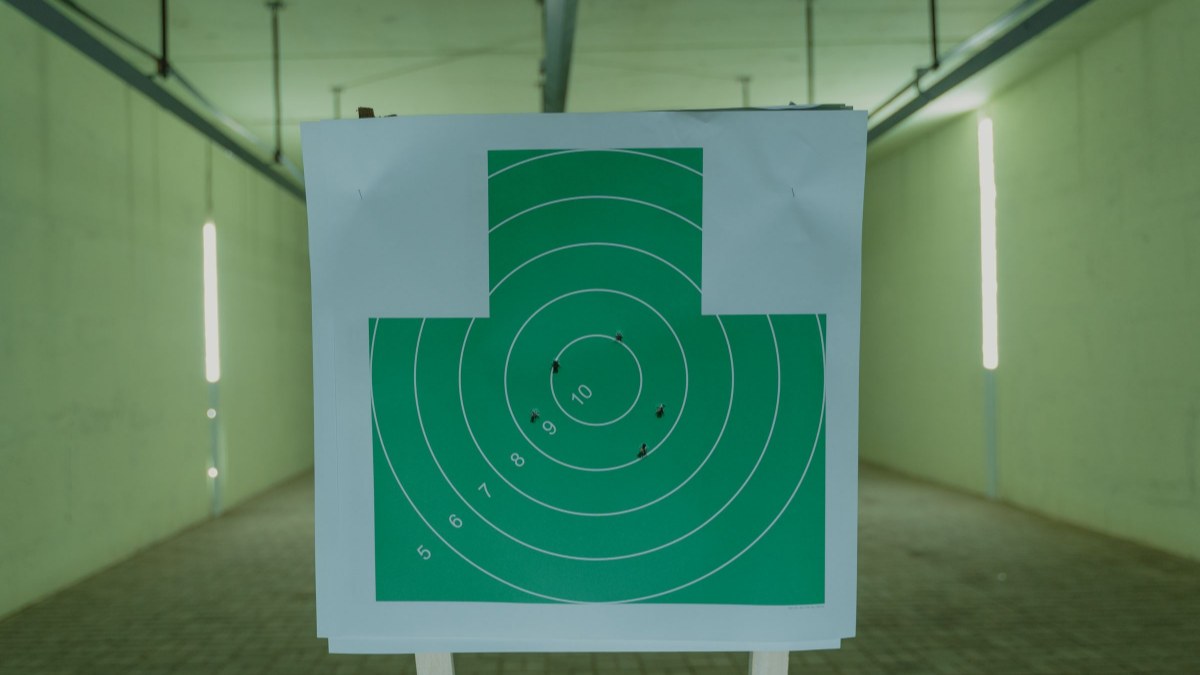
You finally signed up for that defensive pistol class everyone at the range talks about. The instructor was funny, the drills were exciting, and you went home tired and happy with a certificate in your hand. A week later, a friend asks what you learned. You start to answer and realize you are not quite sure what you can do now that you could not do before.
That gap is common, because "training" covers very different products. Practice builds skill you already have, a permit class teaches law and basics, and a good course teaches something specific you can show afterward. Finishing one doesn't mean you got the others.
By the end you should be able to describe your own training needs in plain words, evaluate a course before you pay for it, and check, weeks later, whether the skills actually stuck.
Start with the problem, not the class
"I want to get better" is a good goal and a bad shopping list. Better at what? Under what conditions? Starting from where?
Someone who is not sure how to store a gun safely around grandchildren has a different need from someone who shoots well but does not understand when deadly force is justified. Someone coming back after shoulder surgery may need help with grip, equipment and physical limits. Someone who hits every target on a familiar drill may still struggle to recognize when not to draw.
The CDC's Quality Training Standards, written for public health education, begin with a needs assessment and say plainly that "training is not always the solution." That idea applies perfectly to firearms. If your problem is a holster that does not fit, another lecture on awareness will not fix it. If you misunderstand a legal concept, a case of ammunition will not explain it. If a physical skill is new to you, a good explanation alone will not make you safe at it.
Before you look at course listings, write your need in one ordinary sentence. "I need to learn to draw safely from concealment with my own holster and gun." "I need to understand Iowa's self-defense law well enough to explain it to my spouse." A sentence like that is easy to match to a course. A course title like "Advanced Defensive Pistol" tells you what the seller calls it, not whether it fits.
Name the specific problem you want to solve before you pick a class.
Know which kind of training you are buying
Several very different things are sold under the word "training." It helps to keep them apart:
- Permit or qualification courses. These satisfy a legal requirement, such as the safety course Iowa Code section 724.9 requires for an Iowa permit to carry, and they cover basics rather than building deep skill.
- Safe-handling and fundamentals classes. These teach how to load, unload, store and shoot a firearm safely, which every gun owner needs.
- Legal and decision-making classes. These teach when force is and is not justified and how to make choices under uncertainty.
- Skill-building practice sessions. These develop physical skills like drawing, shooting accurately and handling malfunctions, through repetition with feedback.
- Medical training. Courses like Stop the Bleed teach you to treat serious injuries, which is the skill you are most likely to use in a real emergency.
Of these, the legal and decision-making classes are the ones most carriers skip and most need. Shooting skill matters, but the hardest part of a real encounter is usually deciding whether to act at all. A balanced program includes some of each type over time, chosen to fill the gaps you identified.
For every skill class you take, look for one that trains judgment or medical response.
Look for outcomes you can see, not topics covered
"We cover firearm safety" describes content. "Students demonstrate safe loading, unloading and clearing under an instructor's direct observation" describes a result. The second tells you what you will be able to do when you leave, and how the instructor will know.
That does not mean explanations are unimportant. Good instruction connects a rule to the reason for it, then gives you a way to use it. If you can recite "keep guns away from unauthorized people" but cannot see why an unlocked nightstand drawer fails that goal, the lesson has not turned into real understanding yet.
When you read a course description, look for a clear line from the stated purpose to what students spend time doing to how learning is checked. A legal class might have students work through scenarios and explain which facts change the answer. A storage class might have you evaluate your own home setup. A handling class must include supervised hands-on practice, because no written test can show that you can safely control a gun.
Key idea: A good course tells you what you will be able to do when you leave and how the instructor will check it. If a description lists only topics, ask the instructor what students actually demonstrate.
Choose classes that make you show what you learned, not just hear it.
What credentials do and do not tell you
An instructor's certificate tells you that an organization recognized certain qualifications at a certain time. Real-world experience adds perspective. Neither automatically means the instructor is current on Iowa law, good at teaching beginners, or expert in every topic the class covers.
Look for a match between the credential and the job. A former soldier may have tremendous experience but little practice teaching nervous first-timers. A patient instructor may be excellent at fundamentals without claiming to be a legal expert. A good instructor will tell you plainly what the class covers and when you should see someone else, such as an attorney for legal specifics.
Your own certificate deserves the same scrutiny. It might show attendance, completion of a written test, a passed shooting standard or a permit requirement. Those are different things. Completing Iowa's permit course shows you met the legal training requirement. It does not prove ongoing skill, competence with a different gun or knowledge of other states' laws.
Credentials are easy to compare, and teaching ability is not. Ask what an instructor's credentials prepare them to teach, and watch how they actually teach before you rely on them.
How will the instructor catch your mistakes?
Training becomes personal when someone watches what you actually do, notices errors and helps you fix them. Without that feedback, an instructor can deliver accurate information while a student quietly builds a bad habit.
Class size alone does not answer this. What matters is how many qualified instructors are watching, how complex the activity is, how experienced the students are, and how many people are shooting at once. There is no magic ratio. But there should be a clear answer to two questions: Who is watching me, and how will unsafe handling be stopped immediately?
Good feedback names a specific behavior and lets you try again. "Be more careful" describes an attitude. "Your finger moved to the trigger before your sights were on target; try that draw again" teaches something you can act on. Praise works the same way: "Your grip stayed consistent through all five shots" is far more useful than "you're a natural."
Good practice: Before you sign up, ask the instructor how they will give you individual feedback and what happens if a student is struggling. A good instructor will have a clear answer and will be willing to slow down, simplify or recommend more practice. One who must stay on schedule no matter what is moving people through, not teaching them.
Small classes with lots of feedback often cost more, and big classes are cheaper but may leave your errors uncorrected. Pay for a class where someone will actually watch you and correct you.
Check the safety structure first
Before you get excited about the drills, look at how the class keeps people safe. A practical class should have explicit handling rules, clear control of live ammunition, defined boundaries for each exercise, a plan for injuries, and a clear way for anyone to call a stop.
Scenario training deserves extra care. Any exercise using training guns, simunitions or role players must completely separate live firearms and ammunition from the training area, with checks every time. The value of realism never justifies a loose safety setup. You should never be pressured into an exercise you cannot do safely.
Physical and sensory needs matter too. Hearing protection can make it hard to understand commands. A bad knee or shoulder may make some positions unsafe. Telling the instructor about a limitation before class lets them adjust and tells you whether the class can teach you safely. Our guides to range etiquette and eye and ear protection cover what you should expect at any range.
Careful safety procedures slow a class down, and skipping them puts everyone at risk. If a class cannot clearly explain its safety plan, find another class.
Enjoyment is not the same as learning
An engaging instructor makes hard material easier, and a friendly atmosphere makes it easier to ask questions. Those matter. But feeling good after class does not prove you learned what you came for.
The CDC's guidance on measuring training effectiveness says plainly that learner satisfaction does not determine whether training worked. It recommends testing before and after a class to measure real change, and checking again later to see what was retained and actually used.
Think about what a single end-of-class test can and cannot tell you. If you pass a shooting standard at the end of the day, you showed you could meet it under those conditions. Without a test at the start, you do not know whether the class helped or whether you could already do it. A beginner, on the other hand, might improve a great deal and still not be ready. Both progress and the final standard matter.
Common mistake: Judging a class by how you felt walking out. A great day at the range and real improvement are not the same thing. Measure where you started and where you ended, then measure again a few weeks later.
Test yourself before and after every skill class, on the same standard, and write down both results.
Keep knowledge, decisions and skill separate
A useful training record describes what you actually showed, not just "passed." Three kinds of learning work together, but one does not prove the others.
Knowledge is what you can explain, such as the elements of justified force under Iowa law. Decision-making is whether you can recognize which principle applies in a situation and choose well. Physical skill is whether you can perform an action safely and consistently. A person can explain safe storage perfectly and still have a gun sitting in an unlocked closet. Another can draw smoothly and misunderstand where carrying is allowed. Their next steps should be different.
After each class, write a short note: The class's goal, what you demonstrated on your own, what you still needed help with, and the instructor's suggestion for what to work on next. Include the conditions when they matter, such as distance, time limit or whether you drew from concealment. A score without its conditions can suggest more than it shows. Our article on carry permits and training explains why accurate records like these also matter if your training ever comes up in court.
After every class, write down what you can now explain, decide and do, and what still needs work.
Check again weeks later
What you can do right after repeated coaching depends partly on fresh memory and the instructor's reminders. The more meaningful question is what you can still do after a few weeks of normal life.
Schedule your own follow-up check. For knowledge, explain a concept out loud without notes, then compare your explanation with a reliable source. For storage, see whether your plan actually works with your household's routine. For physical skills, repeat the same standard you used in class, under the same conditions, at a range or in a supervised setting. Dry practice at home, done with a verified unloaded gun and no ammunition in the room, can keep skills fresh between range trips; our guide to dry firing explains how to do it safely.
Never create surprise "tests" at home or ask friends to stage confrontations. Testing should reveal what you learned in a controlled, safe setting, not create danger. Our article on what training can and cannot do under threat explains what the research says about performance under pressure.
Retest every important skill a few weeks after class, and let the results decide your next step.
Putting it together
Go back to that defensive pistol class. If you had written your goal beforehand, such as "draw from concealment and hit a 6-inch circle at 7 yards within a set time," you could have tested it at the start of class, again at the end, and again three weeks later. You would know exactly what improved and what still needs work. And you could answer your friend's question in one sentence.
Good training makes its purpose, method and limits clear. Afterward, judge it by whether you can explain what changed, show it under realistic conditions, and say what you will work on next. That is how a collection of certificates turns into a real education.
Check your understanding
Try answering these before you open the answer. If you can decide what to do and explain why, you have it.
1. Your holster keeps shifting and slows your draw. A friend suggests taking an advanced shooting class. Is that the best fix?
Probably not. The problem is equipment, not instruction. As the CDC's training standards put it, training is not always the solution. A better holster and belt, and perhaps a short session with someone who can check your setup, will likely solve it faster and cheaper.
2. A course description says "We cover concealed carry, drawing, and self-defense law." What should you ask before signing up?
Ask what students will actually demonstrate and how the instructor will check it. Topics covered tell you what will be discussed, not what you will be able to do. Look for clear outcomes, hands-on practice with feedback and a way of assessing what you learned.
3. You passed the shooting standard at the end of class. Why is that not enough to know the class helped you?
Without a test at the start, you do not know whether you improved or could already do it. And without a check weeks later, you do not know whether the skill stuck. A before, after and later test on the same standard tells you much more.
4. Your Iowa permit course certificate is ten years old. Does it show you are still skilled?
No. It shows you met Iowa's legal training requirement at that time. It does not prove current skill, competence with a different gun or up-to-date legal knowledge. Skills fade without practice, and laws change, as Iowa's carry age did in 2025.
5. A friend wants to test your reactions by surprising you at home. Why is that a bad idea?
Surprise confrontations at home create real danger, especially if a firearm is present, and they are not a valid way to measure learning. Testing should happen in a controlled, supervised setting with clear safety rules.
Where to go next
To understand what training can realistically do when you are under stress, read what training can and cannot do under threat. For why your training records matter if you ever end up in court, see carry permits and training. To keep skills sharp between classes, read our guide to dry firing. And to build daily habits around carrying, read building an everyday carry routine.
If this article helped you, we invite you to sign up for email notifications of new blog articles.