
Choosing a Concealed Carry Handgun: Matching the Gun to Your Body and Your Day
Joseph McLain Nov 06, 2026
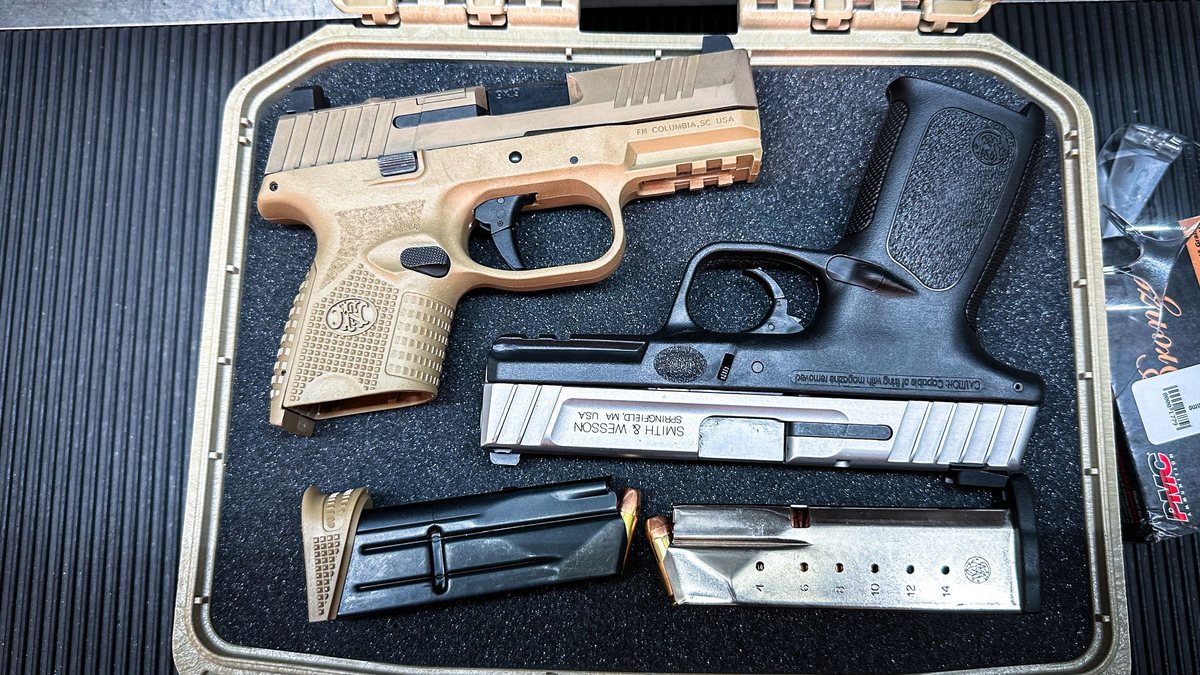
You have finally decided to carry, and now you have to choose a handgun. The small ones disappear under a T-shirt but feel snappy and hard to shoot. The full-size ones shoot beautifully but print through everything you own. And a revolver looks simple enough that it might settle the question.
Size decides whether a gun gets carried, shootability decides whether you can hit anything with it, and simplicity matters when your hands are shaking. Those goals pull against each other, and no single handgun wins all of them. Choosing well means deciding which trade-offs fit your body, your clothes and your day.
Here are those trade-offs in the order they usually matter: Concealment against shootability, the controls you can run under stress, capacity, sights, reliability and the holster that has to come with the gun. By the end you should be able to describe the handgun that fits you and explain why.
The central trade-off: Easy to carry or easy to shoot
Every carry handgun sits somewhere on a line between two goals. At one end is the gun that disappears under a T-shirt. At the other end is the gun that is easy to shoot fast and accurately. Moving toward one end almost always moves you away from the other.
The reason is physics, not marketing. A heavier gun soaks up more recoil, so it moves less in your hand. A longer slide puts the sights farther apart, so small aiming errors show up more clearly. A longer grip gives every finger a place to hold on. Shrink the gun and you lose some of each. Small pistols are not bad guns, but they are harder to shoot well, and they punish a weak grip.
Think of it like choosing between a pickup and a compact car. The compact is easy to park anywhere, and the pickup hauls more and rides more steadily. Neither is the "right" vehicle until you know what your days look like. Our article on handgun sizes and actions explains the size classes in detail. For carry, the useful question is simpler: What is the largest gun you will actually carry every day, all day?
Key idea: The best carry gun is the most shootable gun you will actually carry. A larger gun that stays in the safe protects nobody, and a tiny gun you cannot control is a poor bargain too.
Start with how you dress and live, find the size you will truly carry, and then choose the most shootable gun in that size.
Your body and your wardrobe make the first cut
Before you look at a single model, look in your closet. A person who works in loose work shirts and carries in a truck has very different options from a person in fitted office clothes who spends the day at a desk. Your build matters too. On some bodies a compact pistol vanishes. On others even a small one prints, meaning its outline shows through clothing.
The part of the gun that is hardest to hide is usually the grip, not the barrel. The grip sticks up above the belt where a shirt has to drape over it, and it is what prints when you bend or reach. That is why many carriers choose a pistol with a slightly shorter grip and a full-length slide: The hidden part stays long enough to shoot well, while the exposed part gets smaller.
- Your daily clothing. Fitted shirts and dress pants hide less than untucked shirts, jackets and sturdy work pants.
- Your daily movement. Long hours sitting, driving, bending or lifting change which positions and sizes stay comfortable.
- Your build. Torso length, waist and hand size all affect where a gun rides and how much of it shows.
- Your seasons. Iowa winters hide a lot under a coat, and Iowa summers hide very little under a T-shirt.
Of these, the summer wardrobe usually settles the question, because it is the hardest case. A gun that only conceals in January will spend half the year at home. If you are honest about July, you will choose a gun you can carry all year. Our guide to carry positions explains how where you wear the gun changes what size works. Choose for your hardest month, not your easiest one.
Recoil, grip and hand size: Can you control it?
Recoil is not just about comfort. A gun that jumps hard makes your second shot slower, and in a defensive situation the second shot matters. It also matters during practice. A gun that hurts to shoot is a gun you will practice with less, and skill you do not practice fades.
Hand size plays a big part. A pistol whose grip is too large forces your trigger finger to stretch, which tends to pull shots to one side. A grip that is too small leaves your little finger hanging and gives recoil less to push against. When you hold a pistol, you should be able to get a high, firm grip with the web of your hand up under the tang, the back of the frame, and still put the pad of your trigger finger on the trigger without shifting your hand.
Caliber enters here as well. Within common defensive calibers, a 9mm in a reasonably sized pistol is controllable for most adults, which is one reason it is so popular. Smaller calibers such as .380 ACP can be easier to manage in very small guns, and larger ones kick harder. Our caliber comparison walks through those differences, and our guide to defensive ammunition explains why the specific load you carry matters as much as the number on the box.
Common mistake: Choosing the smallest, lightest pistol for a new shooter because it "will be easier to handle." Light guns kick more, small grips are harder to hold, and tiny slides are harder to rack. For many beginners, a slightly larger gun is the easier gun.
If you cannot hold the gun firmly, reach the trigger naturally and fire several quick, controlled shots, it is the wrong gun for you no matter how well it conceals.
Controls you can run under stress
Every handgun asks you to do certain things to make it work: Rack the slide, release the magazine, perhaps disengage a safety, clear a problem. Under stress, fine motor skill drops and your hands do whatever you have practiced most. That makes simple, consistent controls valuable.
Racking the slide
Some people, especially those with smaller or arthritic hands, struggle to pull back the slide on a compact pistol. Strong recoil springs on small guns make it worse. If you cannot rack a slide reliably, you cannot load the gun, check it or clear many malfunctions. Some pistols are built with easier-to-rack slides, and technique helps a great deal, but test this honestly before you buy. A revolver avoids the problem entirely, at the cost of lower capacity and a heavier trigger, and our article on revolvers explains that trade-off.
Manual safeties
Some carry pistols have a manual safety lever and some do not. Neither is wrong. A manual safety adds a layer of protection during holstering and handling, but it also adds a step you must perform every time you shoot, and under stress an unpracticed step can be forgotten. A pistol without one depends entirely on a holster that covers the trigger and on your trigger-finger discipline. If you choose a safety, practice disengaging it as part of every draw until it is automatic. If you do not, be uncompromising about your holster.
Consistency between guns
If you own several handguns, the one you practice with most will shape your habits. Carrying a gun with a safety while practicing on one without, or the reverse, builds conflicting habits. Many carriers keep their carry gun and practice gun the same model, or at least the same type, for exactly this reason.
Choose the controls you will practice until they are automatic, and keep them the same across the guns you train with.
Capacity: How much is enough?
Modern compact 9mm pistols often hold ten to fifteen rounds or more, while small pocket pistols and revolvers commonly hold five to seven. People argue about capacity endlessly, and the honest answer is that nobody can tell you how many rounds your emergency will take.
What we can say is that capacity is a form of margin. Under stress, shooters miss, and an attacker may not stop with the first hit. More rounds mean more room for those realities without needing to reload. On the other hand, capacity usually adds width and grip length, which makes the gun harder to conceal. A gun you carry with six rounds is better than a gun at home with fifteen.
Picture two people. One carries a slim pistol with a modest magazine every single day. The other owns a high-capacity compact that only gets carried when the outfit allows, which is about half the time. The first person is armed every day. When you compare capacity, compare it between guns you would really carry, not between a pocket gun and a duty pistol. Within the size you will carry, take the capacity you can get without giving up reliability or control.
Sights and optics: Seeing what you are aiming at
Many small pistols come with tiny, low-contrast sights that are hard to see in good light and nearly invisible in poor light. Since much defensive shooting happens in dim conditions, sights deserve attention. Larger, high-contrast front sights and night sights help many shooters, and our guide to iron sights, night sights and lasers explains how each works.
More carry pistols now accept small red-dot optics. A dot can help you keep both eyes focused on the threat and can be easier for older eyes that struggle to focus on a front sight. It also adds a battery, a learning curve and some size, and it changes which holsters fit. If you are considering one, our guide to choosing a pistol optic covers the details.
If you cannot see your sights clearly and quickly, fix that before you worry about anything else on the gun, because a gun you cannot aim is a gun you cannot use responsibly.
Reliability and the gun you will maintain
A carry gun has to work the first time, every time, often after riding against your body for weeks. Sweat, lint and dust find their way into everything. That is why reliability counts for more in a carry gun than in a range gun, and why it is wise to choose a model with a long record of dependable service and readily available parts, holsters and magazines.
Reliability is partly the gun and partly you. A new pistol should be fired enough, with the exact defensive ammunition you plan to carry, to show you that it feeds and functions with that ammunition. Our article on breaking in a pistol explains what to look for. After that, it needs periodic cleaning, fresh carry ammunition and magazine checks. If a gun shows a pattern of problems, take it seriously rather than hoping it goes away. Our guide to gun malfunctions explains the common types and their causes.
No gun earns a place on your belt until it has run reliably with your carry ammunition, in your hands.
The holster is part of the purchase
A carry gun is never a single purchase. It is a gun, a holster, a sturdy belt and probably a lockbox for the times it comes off. Popular models have dozens of good holster choices. Uncommon models may have very few, and a great gun with a poor holster is a poor carry system.
Before you buy, check that quality holsters exist for the exact model you want, in the position you plan to carry, with any light or optic you plan to add. The holster must cover the trigger guard completely and hold the gun securely. Our guides to holster retention levels and holster cant and ride height explain what to look for, and our article on everyday carry routines shows how all the pieces fit together.
Good practice: Budget for the holster and belt when you budget for the gun. Many carriers spend months going through cheap holsters before buying the good one they needed from the start.
Only buy a carry gun you can holster well in the way you plan to carry it.
Where most carriers end up
For most adults who carry every day, the sweet spot today is a slim "micro-compact" 9mm that holds 10 to 15 rounds: the SIG P365 family, the Springfield Hellcat, the Smith & Wesson M&P9 Shield Plus, or the Glock 43X and 48. They hide under a summer shirt and are far easier to shoot than the tiny pocket pistols of a decade ago, and every one of them has a wide choice of good holsters. If you will mostly carry under looser clothing, a compact such as the Glock 19 or the M&P9 M2.0 Compact is easier still to shoot well.
Two other answers fit particular people. If racking a slide is hard for you, the Smith & Wesson M&P Shield EZ, in 9mm or .380, was built with an easy slide and a grip safety. If you want the simplest gun possible, a lightweight five-shot revolver such as the Ruger LCR or a Smith & Wesson J-frame has no slide to rack and no malfunctions to clear, at the cost of capacity and a heavy trigger that takes real practice to master.
Treat those as starting points, not a verdict for your hand. Before you buy, hold the gun unloaded and check that you can grip it high and reach the trigger without shifting, rack the slide and work every control the way you would under stress, and if you can, rent the same model and fire a few quick strings at seven yards. Then confirm a quality holster exists for that exact model in the position you plan to carry.
Putting it together
Choosing a carry handgun is a series of honest answers. What will you really wear, and in what season? How large a gun will you really carry? Within that size, which gun can you grip firmly, rack reliably and shoot quickly and accurately? Which controls will you practice until they are automatic? Can you see the sights? Does it run with your ammunition, and can you holster it well?
Notice that none of those questions is "What does everyone else carry?" Popular guns are popular for good reasons, especially reliability and holster support, but the right gun for someone else may be wrong for you. Your hands, your body, your clothes and your willingness to practice decide it. If you choose with those in mind, you will end up with a gun you carry, shoot and trust.
Check your understanding
Try answering these before you open the answer. If you can decide what to do and explain why, you have it.
1. A friend wants to buy the smallest, lightest pistol available because she has small hands and is new to shooting. What would you point out?
Small, light pistols usually kick more, have shorter grips and stiffer slides, and are harder to shoot well. A slightly larger gun may actually be easier for her to control and rack. She should handle and, ideally, shoot several sizes before deciding.
2. Your compact pistol shoots well, but its grip prints through your shirt every time you bend over. A friend suggests swapping to a model with the same slide length and a shorter grip. Why might that solve it?
The grip is the part that sits above the belt and prints through clothing. A shorter grip makes the gun easier to hide, while the longer slide, which is hidden inside the waistband, keeps the sight radius and some of the weight that makes the gun easier to shoot.
3. You are torn between a 15-round compact you would carry only in winter and a 7-round slim pistol you would carry all year. How should you think about it?
Capacity only helps when the gun is with you. A gun carried every day with fewer rounds generally serves better than a higher-capacity gun that stays home half the year. Compare guns you would actually carry, and then choose the most capacity you can carry consistently.
4. Your carry pistol has a manual safety, but your range pistol does not. Why could that matter?
Under stress you do what you have practiced most. If most of your practice is on a gun without a safety, you may forget to disengage the safety on your carry gun when it matters. Keep your controls consistent, or practice deliberately with the carry gun.
5. You found a gun you love, but you cannot find a quality holster for it in your chosen carry position. What should you do?
Treat that as a real problem with the choice. The gun, holster and belt work as one system, and a good gun in a poor holster is a poor carry setup. Choose a different model or a different carry position that has proper holster support.
Where to go next
You can find concealed carry holsters on our website, including models for the SIG P365, Springfield Hellcat, Glock 43X and Smith & Wesson Shield, and anything listed there can be ordered if it isn't in stock.
To decide where on your body the gun will ride, read our guide to concealed carry positions. For help choosing the cartridge, compare options in our defensive caliber comparison. Once you have a gun, our article on practicing your draw from concealment shows how to build safe, repeatable skill at home. And to see how the gun, holster and storage fit into your day, read everyday concealed carry.
If this article helped you, we invite you to sign up for email notifications of new blog articles.