
The Castle Doctrine at Home: What Iowa Law Really Allows
Joseph McLain Nov 10, 2026
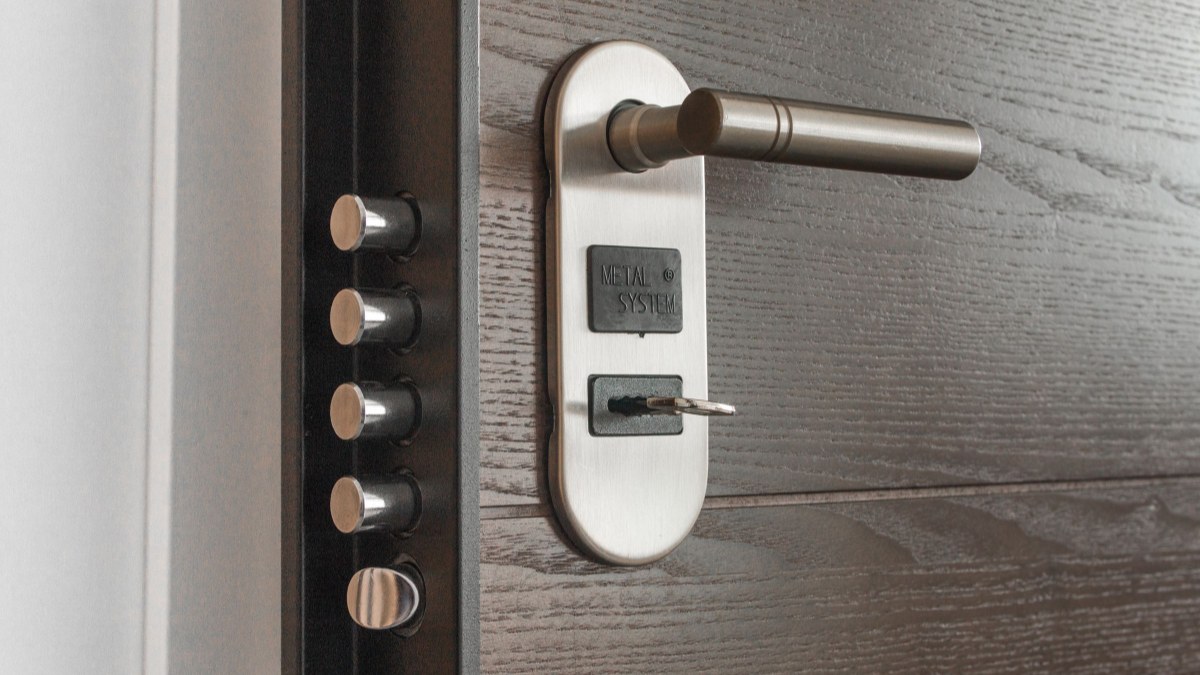
You pull into the driveway after work and notice the back door standing open. Inside, a window is broken, the television is unplugged, and a stranger is in your living room getting ready to carry it out. You have a handgun. Can you use it? Now change one fact. The stranger is on your front porch instead of in your living room. Or he has already made it out to the lawn with the TV. Or he is not stealing anything at all, but forcing his way through your bedroom door at two in the morning.
It is tempting to think anyone who breaks into your house is fair game, or that you can defend anything on your property. Iowa does give homeowners strong legal protection against break-ins, but those four versions at the same house can lead to very different legal answers, because where the person is and what they are doing matter as much as the fact that they don't belong there.
This is education, not legal advice; for your own situation, talk with an Iowa attorney. By the end you should be able to walk through a home intrusion one fact at a time and explain why a property line is not a deadly-force line.
Owning the property is not the same as authority to use deadly force
As a homeowner you have real rights. You can tell an unwanted visitor to leave, keep trespassers out, and call the sheriff. Those rights are substantial. But they do not automatically give you permission to use every level of force.
Think about some everyday examples. A delivery driver wanders onto your back patio by mistake. A neighbor kid cuts across your lawn. Someone walks into your open garage thinking it belongs to a friend. Each of them is somewhere they should not be, yet none of those facts alone makes deadly force reasonable.
Iowa law treats the right to protect property and the right to protect people as separate questions, each with its own rules. Iowa Code section 704.4 allows reasonable force to prevent or stop criminal interference with your property. Section 704.3 allows reasonable force to protect yourself or another person from actual or imminent unlawful force. And section 704.2A creates a special presumption about deadly force when someone unlawfully enters your home in particular ways. "He was trespassing," "he was stealing" and "he was breaking into my house" are three different legal statements.
The law protects your home strongly, but it protects people more strongly than things. Before you think about force, ask whether the situation involves your property, your home's interior, or a threat to a person, because each has different rules.
What the castle doctrine presumption does
Iowa's castle doctrine is section 704.2A. Under it, you are presumed to reasonably believe that deadly force is necessary to avoid injury or risk to your life or safety, or someone else's, when the person you use force against is unlawfully entering your dwelling by force or stealth, or has entered that way and remains inside, and you know or have reason to believe that is happening. The same presumption covers your place of business or employment and your occupied vehicle, and it also covers someone unlawfully trying to remove another person from one of those places against their will.
That is a powerful protection, and its wording matters. It does not require you to be struck, stabbed or even threatened before the presumption applies. If someone is forcing open your door to get in, the intrusion itself can be enough. And it does not vanish the moment the intruder is through the door, because it expressly covers someone who entered by force or stealth and remains inside.
But a presumption is a legal head start, not a verdict handed down in advance. Normally a jury weighs all the evidence to decide whether your belief was reasonable. With the presumption, the law starts from the position that it was. Whether the conditions were met can still be disputed: Did the person really enter by force or stealth, did you know or have reason to believe it, does an exception apply? Those questions get answered by evidence.
The words "force or stealth" carry real weight. Breaking a window or forcing a locked door is plainly force. Sneaking in quietly through an unlocked door may be stealth. But someone you let in, like a contractor who later steals something, did not enter unlawfully by force or stealth, even if what they did afterward was a crime. The same goes for someone who walks into the wrong house by mistake.
The presumption gives you an enormous advantage against a genuine break-in, but it is tied to how the person got in. Ask how the person entered, whether they had any right to be there, and what you knew at the time.
Key idea: Iowa does not make you wait to be attacked by someone breaking into your home. But the protection comes from the unlawful forcible or stealthy entry into your dwelling, not from the fact that someone is on your property.
The house, the porch and the yard are not the same place
People often talk about "my property" as if the whole lot is one self-defense zone. Iowa's castle doctrine uses the word "dwelling," and section 702.10 defines that as a building or structure, or a vehicle, adapted for overnight accommodation and actually used as sleeping quarters. The inside of your house is the clearest example. Your lawn is not a dwelling.
Inside the house
A stranger who breaks through the back door and is standing in your living room is the clearest case for the presumption, as long as you know or have reason to believe how they got in and no exception applies. But who the person is still matters. A former partner who still lives there, a teenager coming home late through a window, or a guest another family member invited in is a very different situation from a stranger breaking in.
The porch
An enclosed porch with walls, windows and its own exterior door may be part of the dwelling, depending on how it is built and used. No Iowa case we know of has decided that question for the castle doctrine, so do not assume either way. An open front porch, deck or patio is much less likely to count. Someone walking up to knock on your door is doing what every visitor does. Someone standing on your open porch without permission is a trespasser, not necessarily a home invader. If someone attacks you on your porch, though, your ordinary right to defend yourself applies regardless of whether the porch counts as the dwelling.
The yard and driveway
A fence makes it obvious someone is trespassing and supports your right to keep people out, but a fenced backyard does not become a dwelling. Neither does a driveway because it is inside your property line. You have no duty to retreat when you are lawfully present under section 704.1(3), but that does not replace the need for a real threat before using force.
Picture someone standing in your backyard holding a shovel. Where they are standing does not give you a right to shoot. If they start toward you threatening to cave your head in, the question changes from location to threat. The further you get from the inside of your house, the less the castle doctrine helps and the more everything depends on the threat. The castle doctrine protects the inside of your home. Outside, it is the threat to people that matters.
Common mistake: Believing your property line is a deadly-force line. A trespasser in your yard, on your driveway or in your barn is not covered by the castle doctrine presumption. Only a real threat to a person can justify deadly force there.
The burglar and your television: Two separate questions
Go back to the living room. You find someone unplugging your TV. Your first thought may be "defense of property," but that is only one of the legal questions in play, and it is the weaker one.
If the only reason for force is to stop a theft, Iowa's property rule, section 704.4, allows reasonable force, not deadly force. A television is not worth a life under Iowa law, no matter how expensive it is. That is not minimizing the crime. Burglary is serious and frightening. It just means the justification for deadly force cannot come from the value of the property.
Now add the broken window. The person unlawfully entered your dwelling by force and is still inside. Those facts may trigger the castle doctrine presumption, and the statute does not say the presumption disappears because the intruder is carrying a TV instead of a weapon. So the same scene can involve both a theft and a qualifying home intrusion. The possible justification for deadly force is not "I may shoot to save my TV." It is the separate legal rule for someone who has broken into your home and remains inside.
Now suppose the burglar sees you, drops the TV and runs out the door. Or carries it down the driveway without threatening anyone. The presumption covers entering and remaining within the dwelling. It does not follow the person out into the yard. Force used against someone who is leaving would need a separate justification, like an actual threat at that moment. Our article on when self-defense ends explains why timing matters so much.
The castle doctrine is about a person inside your home, not about protecting the stuff they are carrying.
Burglary is not automatically a forcible felony
You may hear, "Burglary is a felony, so Iowa lets you use deadly force to stop it." Iowa law is more specific than that.
Section 704.7 allows reasonable force, including deadly force, when you reasonably believe a forcible felony is happening or about to happen. Section 702.11 lists which crimes are forcible felonies, and for burglary it includes only first-degree burglary. Under section 713.3, first-degree burglary means a burglary of an occupied structure with one or more people present, where the burglar has a dangerous weapon or an explosive or incendiary device, intentionally or recklessly causes bodily injury, or commits sexual abuse. Second- and third-degree burglary are not on the forcible felony list.
That means you cannot reason backward from "the police will call this a burglary" to "the forcible felony rule lets me shoot." You would need to reasonably believe the facts that make it first-degree. The castle doctrine presumption may still apply on its own terms when someone unlawfully enters your home by force or stealth, but the two rules are separate. Stringing several rules together into a broad permission the legislature never wrote is a dangerous habit.
Know which rule you would be relying on, and do not merge them.
Who the intruder is can change everything
The hard cases are often not a stranger in a ski mask. They are a roommate coming back after an argument, an estranged spouse, a family member with disputed permission to live there, or a contractor accused of theft. Section 704.2A lists exceptions where the presumption does not apply:
- A person with a right to be there. If the person has a right to be in the dwelling or is a lawful resident, and no protective or no-contact order is in effect against them, the presumption does not apply.
- A child in someone's custody. If the person being removed is the other person's child or grandchild, or in their lawful custody or guardianship, the presumption does not apply.
- A peace officer. If the person entering is a peace officer lawfully performing official duties, the presumption does not apply.
- Your own crime. If you are committing a crime, escaping from one, or using the home to further one, the presumption does not apply.
The first exception matters most in real homes. An angry spouse who still lives there is not a stranger breaking in, even if you told them to leave. If there is a protective order, the analysis changes. Ordering someone out does not instantly turn a resident or guest into a home invader. This does not take away your right to defend yourself if a resident attacks you; ordinary self-defense under section 704.3 still applies. It just means the presumption is not the right tool.
The exceptions protect against tragedies inside families and with police, at the cost of making the castle doctrine less simple. Before you think "castle doctrine," ask whether the person has any right to be in your home.
Safety: The most heartbreaking home-defense shootings involve family members: A teenager sneaking in, an adult child home early, a relative who let themselves in. Identify your target every time, and know who has keys to your house.
After an incident, the legal process still runs
Saying "castle doctrine" does not close a case. Police will want to know whether the person really entered unlawfully, whether it was by force or stealth, what you knew, and whether an exception applies. A prosecutor may see it differently than you do.
Iowa's section 704.13 grants a justified defender immunity from criminal or civil liability for harm to the aggressor, but the Iowa Supreme Court held in State v. Wilson (2020) that this is immunity from liability, not from prosecution, and that there is no right to a pretrial immunity hearing. Iowa also requires you, under section 704.2B, to notify law enforcement within a reasonable time if you or someone else is able, and forbids destroying, altering or concealing evidence or pressuring witnesses. Do not move anything, tidy up, or get your family to agree on a story. Call 911, care for anyone hurt when it is safe, and talk with an attorney before giving a detailed statement.
Even a justified home defense can mean investigation, legal costs and emotional strain. The castle doctrine helps you in court; it does not keep you out of the process.
Putting it together
Iowa gives strong protection to people inside their homes. When someone unlawfully enters your dwelling by force or stealth, or remains inside after doing so, the law presumes you reasonably believed deadly force was necessary, and you do not have to wait to be attacked. That is a meaningful protection, and it should not be watered down.
The opposite exaggeration is just as dangerous. A property line is not a deadly-force line. A trespasser is not a home invader. Stealing is not the same as threatening life. A porch is not automatically part of the dwelling. A break-in does not give permanent authority to shoot someone who is leaving. And a resident or guest is not an intruder just because you want them gone. Ask: Where were they? How did they get in? Did they have any right to be there? What did I know? What were they doing at the moment I acted?
Check your understanding
Try answering these before you open the answer. If you can decide what to do and explain why, you have it.
1. A stranger smashes your back door window at night and climbs into your kitchen while you are home. Does Iowa require you to wait until he attacks you?
No. Under section 704.2A, an unlawful entry into your dwelling by force, when you know or have reason to believe it is happening, creates a presumption that you reasonably believed deadly force was necessary, unless an exception applies. The statute does not require an attack first.
2. Someone is walking off your fenced lawn carrying your chainsaw. He is not threatening anyone. Can you shoot to stop him?
No. The lawn is not a dwelling, so the castle doctrine presumption does not apply, and section 704.4 allows only reasonable force to protect property, not deadly force. Call the sheriff, note his description and direction, and let the law handle the theft.
3. Your friend says any burglary is a forcible felony in Iowa, so you can always use deadly force against a burglar. Is that right?
No. Iowa's forcible felony list includes only first-degree burglary, which requires people present plus a dangerous weapon, an explosive, bodily injury or sexual abuse. The castle doctrine presumption may apply separately to an unlawful forcible or stealthy entry, but "it was a burglary" is not enough by itself.
4. A burglar who broke in sees you, drops your TV and runs out the front door. Does the castle doctrine presumption still apply as he runs across the yard?
No. The presumption covers someone entering or remaining within the dwelling. Once he is outside and running away, force against him would need a separate justification, like an actual threat at that moment. Shooting a fleeing burglar who is no threat is very likely not justified.
5. Your estranged husband, who still lives in the house and has no protective order against him, comes in yelling after you told him to leave. Does the castle doctrine presumption apply?
No. The presumption does not apply when the person has a right to be there or is a lawful resident and no protective or no-contact order is in effect. If he actually attacks you, ordinary self-defense under section 704.3 still applies, but the presumption does not.
Where to go next
To put this law to work in a real plan for your family, read planning home defense before an emergency. For how the same presumption works in your car, see the castle doctrine and your vehicle. For what changes when you are in a rental or a relative's home, read the castle doctrine away from home. And for the law that removes your duty to retreat outside the home, see stand your ground is not a license to kill.
If this article helped you, we invite you to sign up for email notifications of new blog articles.