
The Browning Buck Mark Line of Pistols
Joseph McLain Nov 07, 2026
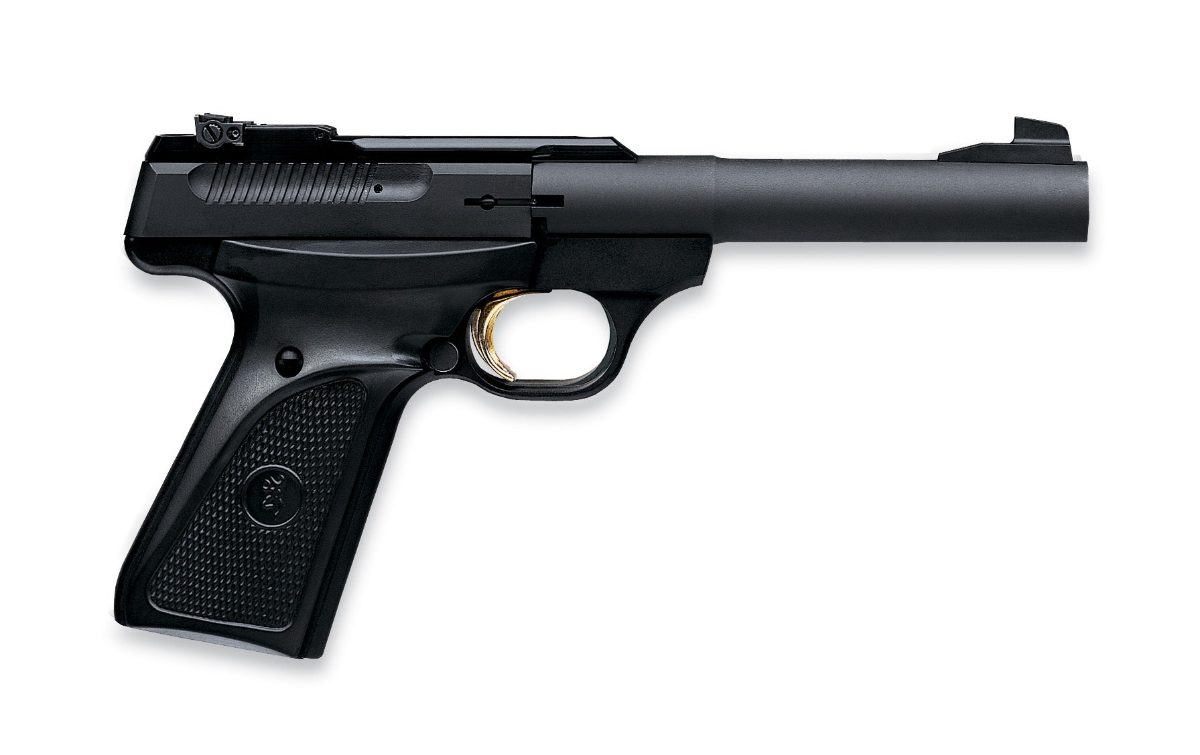
You want a .22 pistol that shoots small groups, and the Browning Buck Mark is on your short list. Its trigger is well regarded on the bullseye line, the Ruger Mark IV beside it comes apart more easily for cleaning, and the ammunition you feed either one can matter as much as the pistol. All of that touches on why the Buck Mark shoots the way it does.
By the end you should be able to choose the right Buck Mark version for your goals, find the ammunition your own pistol likes and set it up to shoot its best.
Why shooters keep coming back to the Buck Mark
Browning introduced the Buck Mark in the mid-1980s, and it has been a go-to rimfire pistol for plinkers, target shooters and small-game hunters ever since. Its reputation does not come from one flashy feature. It comes from three design choices that work together, and each one does something specific for you at the range.
The first is the blowback action. In a blowback pistol the slide is held shut by spring pressure and its own weight instead of a locking mechanism. That keeps the design simple and dependable with good ammunition, with fewer parts to wear or fail. The second is the fixed barrel. The barrel is attached to the frame and does not move with the slide, so the barrel sits in the same position for every shot. Consistency is what accuracy is made of. The third is the single-action trigger, whose only job is to release the hammer. Without a long first pull to work through, the trigger can be light and break cleanly, a bit like snapping a thin glass rod instead of bending a green stick. A clean break is easier to repeat without disturbing the sights.
Key idea: Accurate shooting is mostly about repeating the same thing every time. The Buck Mark's fixed barrel and crisp trigger remove two common sources of variation, which leaves the rest up to you and your ammunition.
A few smaller details add to the experience. The frame is usually an alloy or aluminum, so the pistol stays light and still holds up to years of shooting. Many models come with contoured grips, some with rubber overmolding and some with wood panels, which helps shooters take the same grip every time. How small a Buck Mark groups depends on the pistol, the ammunition and the shooter, so measure your own rather than relying on anyone's claim.
In short, the Buck Mark rewards a shooter who wants precision; if you only want a casual plinker, its accuracy is a bonus rather than a reason to choose it.
Choosing a model: Start with what you want to do
Browning sells dozens of Buck Mark variants, and most differences are barrel length, sights, rails and grip materials. The core action is the same across the family. That is good news, because it means you can ignore the model names at first and ask one question: What will you mostly do with this pistol?
| Your main goal | What to look for | Models to start with |
|---|---|---|
| Casual plinking and teaching new shooters | Simple sights, shorter barrel, lower price | Camper, Standard |
| Target shooting and competition | Longer, heavier barrel and adjustable sights | Hunter, Target, Contour URX |
| Suppressor or red dot use | Threaded barrel and a rail for an optic | Plus UDX / Suppressor Ready, Lite |
| A special pistol you want to show off | Premium wood, finishes and details | Medallion, Rosewood, Vision series |
Start with the goal in the left column, then look for the features in the middle column; the model names are only starting points, because Browning's lineup changes and the same name can come in several configurations. Check the current Browning catalog for barrel lengths, sights and rails. Entry-level models such as the Camper keep the price down with simpler sights and grips, which suit relaxed range days and new shooters. Models aimed at scores carry longer, heavier barrels and adjustable target sights.
Why does barrel length matter so much? It sets your sight radius, the distance between the front and rear sights. A small mistake in lining up the sights moves the bullet less when the sights are farther apart, so a longer sight radius makes the same effort give you tighter groups. A heavier barrel also adds mass out front, which many shooters find steadier during aiming.
If you plan to add a suppressor or a red dot, look for a model with a threaded barrel and an optic rail; lighter barrel designs save weight if you will carry the pistol. Suppressed shooting changes which ammunition works best, and we cover that in Choosing the Right Ammunition for Suppressors. Premium versions add wood grips, special finishes, gold-colored triggers or fluted barrels. They are lovely, but they do not change how the pistol shoots as much as the barrel and sights do. Pay first for the barrel and sights your goal needs, and treat finish as a bonus.
Finding the ammunition your pistol likes
.22 LR is famously particular. Two pistols of the same model can prefer different ammunition, and the same pistol can group beautifully with one box and poorly with another. That is why the question is not "what is the best .22 ammo?" but "what does my Buck Mark like?" Knowing the three velocity classes gives you a map to start with.
| Velocity class | Approximate rifle-barrel speed | Typical use |
|---|---|---|
| Standard velocity | About 1,050 to 1,100 fps | Target shooting; gentle and quiet |
| High velocity | About 1,200 to 1,300 fps | Everyday plinking and small game; cycles reliably |
| Hyper velocity | Over 1,400 fps | Small game at short range; louder, more muzzle flip |
Box velocities are measured from rifle barrels, so they run slower from a pistol. Standard velocity often groups best in a precise pistol, high velocity is the safe default for reliable cycling, and hyper velocity is a specialty load.
Speed matters in a blowback pistol because the slide has to cycle on the energy of the cartridge itself. Cartridges that are too weak or too dirty can cause feeding or ejection trouble, and heavy carbon buildup is one more reason some shooters pick cleaner-burning loads for long sessions. Long-barrel and competition models reward match-grade or standard velocity loads from brands such as Eley, SK, Wolf Match or Federal Gold Medal Rimfire, because the pistol is steady enough for you to see the difference. Short-barrel plinking models usually run fine on bulk high-velocity ammunition like Federal American Eagle 38 to 40 grain or CCI Blazer. If you hunt rabbits or squirrels, a high-velocity hollow point gives better expansion; check Iowa DNR rules for small-game seasons and legal methods. Buck Marks are chambered for .22 LR, so never try .22 Magnum or other rimfire cartridges in them.
Finding the load your pistol likes
A short session answers the ammunition question. With eye and ear protection on and the muzzle downrange, shoot a five-shot group at 25 yards from a rest with three or four loads: one match or standard velocity, one bulk high velocity and, if you hunt, one hollow point. Any load that jams more than once is out. Of the rest, the one with the smallest groups is your precision load, and the cheapest one that runs reliably is your practice load.
How the Buck Mark compares with other .22 pistols
Comparing pistols is really about deciding what you are willing to trade. The Buck Mark's ergonomics and crisp trigger are the reasons many people choose it over its closest rivals, and each competitor has a different strength.
The Ruger Mark IV is the Buck Mark's closest rival. Both are fixed-barrel target pistols; the Mark IV's one-button takedown makes it easier to clean, and many shooters find the Buck Mark's grip and trigger more comfortable out of the box. Our article on the Ruger Mark IV takes a closer look. The Smith & Wesson SW22 Victory is another fixed-barrel target pistol, with a modular design that makes barrel changes simple; see our SW22 Victory guide. Slide-operated compacts such as the Walther P22 and the S&W M&P 22 Compact are built for a different job: They handle like a centerfire carry pistol and are fun for plinking, but they generally lack a target pistol's sight radius.
Decide first whether you want a target pistol or a centerfire trainer. If you want a target pistol, handle the Buck Mark, Mark IV and Victory side by side and choose the one whose grip and trigger feel best in your hand, since all three are proven.
Keeping it running
The Buck Mark is not quite as simple to field strip as some pistols, but owners find it straightforward once they have done it a few times. The best way to learn is at home: Remove the magazine, lock the slide open, confirm by sight and touch that the chamber is empty, and keep ammunition out of the room. Then take it apart once with the manual open, take a photo at each step, and then repeat the process twice more from memory. The line is known for thousands of trouble-free rounds with little wear, and the large aftermarket for sights, grips, triggers and rails means you can customize it as your skills grow. If you like to follow a break-in routine on a new pistol, see Breaking in a Pistol.
Common mistake: Blaming the pistol for the ammunition. If a Buck Mark jams or groups poorly, clean it and test another load before deciding something is wrong with the gun.
Putting it together
The Buck Mark is accurate because of a fixed barrel and a clean single-action trigger, and it is dependable because of a simple blowback action. Choose a version by goal: Simple sights and a lower price for plinking and teaching, a longer, heavier barrel and adjustable sights for scores, threads and a rail for a suppressor or red dot, and premium finishes only if they matter to you. Then let your pistol choose its ammunition through a simple group test, keep it clean, and work on fundamentals, because an accurate pistol only shoots small groups when you do your part. Our guide to pistol shooting fundamentals covers stance, grip, aiming and trigger control.
Check your understanding
Try answering these before you open the answer. If you can decide what to do and explain why, you have it.
1. Your friend's slide-operated .22 shoots wider groups than your Buck Mark with the same ammunition. What design difference could explain it?
The Buck Mark's barrel is fixed to the frame and doesn't move with the slide, so it sits in the same place for every shot. Less movement means less variation, and its clean single-action trigger removes another source of it.
2. You want a pistol for bullseye-style competition. What features should you look for?
A longer, heavier barrel and adjustable target sights. A longer sight radius makes alignment errors count for less.
3. Your Buck Mark jams with one brand of ammo but runs fine with another. What should you do?
Treat it as normal for .22 LR. Run the ammo test again, keep the loads that cycle and group well, and drop the ones that do not.
4. You're shooting a bullseye match at 50 feet, and your Buck Mark cycles both standard- and high-velocity loads. Which would you start with, and why?
Standard velocity. In an accurate pistol it often groups best, and it is quieter and gentler. Since your pistol cycles it reliably, the faster load's extra speed buys you nothing on a paper target.
5. You want a .22 that feels like your carry pistol. Is the Buck Mark the best fit?
Probably not. A slide-operated compact .22 mimics a carry pistol more closely; the Buck Mark is a target pistol.
Where to go next
You can find the Browning Buck Mark on our website, including Camper, Black Label and suppressor-ready models, and anything listed there can be ordered if it isn't in stock.
If you are just getting started, begin with why the .22 LR is such a good rifle and pistol for building skills. If the ammunition conversation interested you, General Considerations for .22 LR Ammunition Selection and our guide to CCI's .22 ammunition go deeper. And if you are drawn to red dots, see Choosing the Right Optics for Pistols.
If this article helped you, we invite you to sign up for email notifications of new blog articles.