
Alcohol, Cannabis and Carrying a Gun: What Iowa Law Actually Says
Joseph McLain Nov 07, 2026
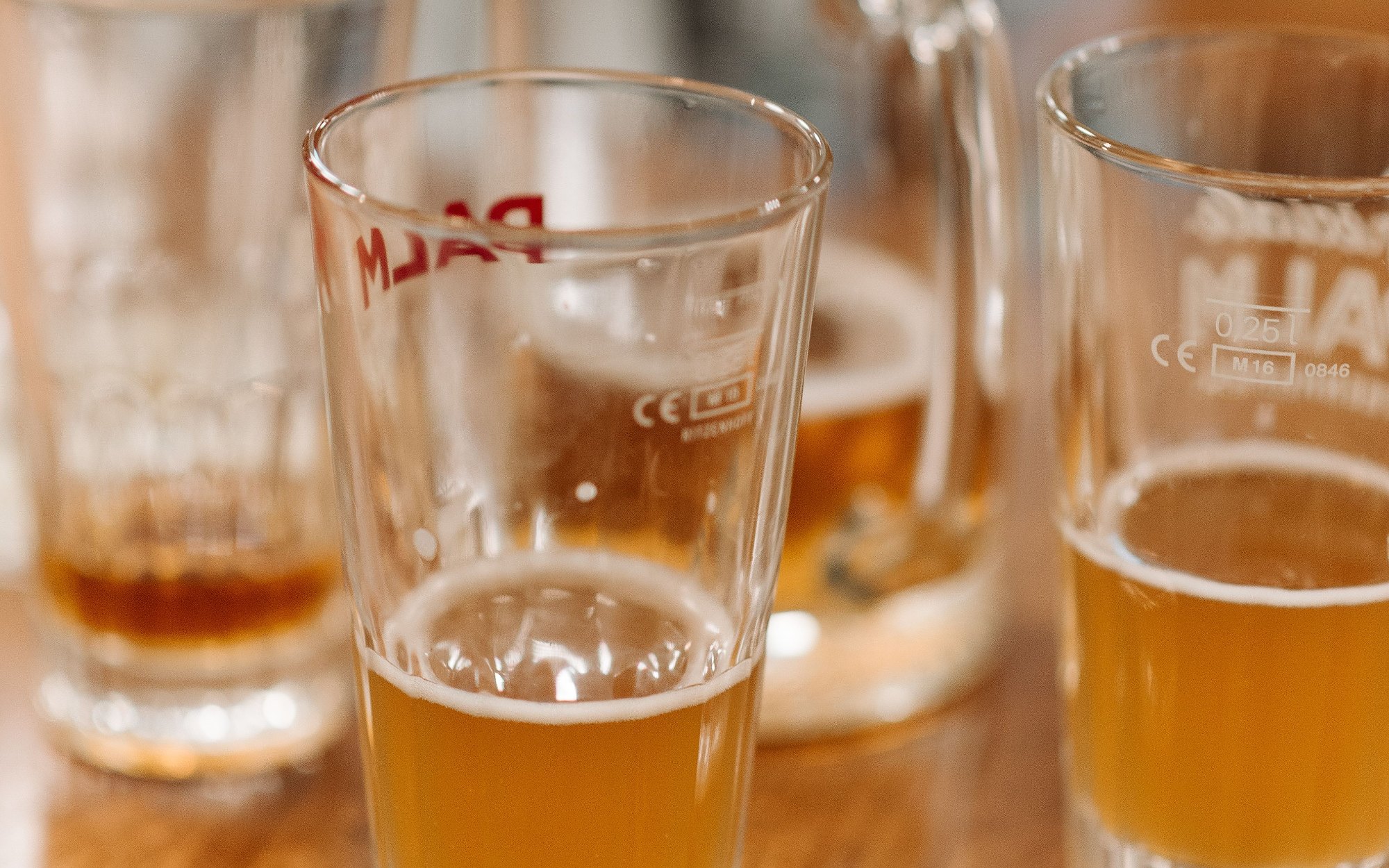
Picture three Iowans on an ordinary Friday. One stops at a restaurant on the way home and has a beer with his burger, his pistol in its holster. Another sits on her own back deck with a glass of wine, still wearing the handgun she carried all day. A third is a medical cannabidiol patient who took a low-dose THC product last night, slept eight hours and put on his pistol the next morning feeling completely normal. Which of them is breaking the law?
You have probably heard confident answers: that one beer is fine as long as you stay under 0.08, that any marijuana use means you can never own a gun, or that a medical card protects you from everything. Each contains a piece of the truth, and each could get a person in real trouble, because it answers different questions as if they were the same one.
Untangling them means looking at what Iowa's law on carrying while intoxicated actually covers, why your own property is treated differently, how neighboring states differ, what changed for cannabis users in 2026, and how prescriptions and CBD fit in. By the end you should be able to sort any "can I carry after..." question into the right legal box, explain why a legal minimum is not the same as a good decision, and set a personal standard you can defend.
This is education, not legal advice. Laws change, and if a specific situation applies to you, talk to an Iowa attorney.
Four questions that must stay separate
Most confusion about guns and intoxicants comes from blending four questions together. Each one is answered by a different law, and a good answer to one says nothing about the others.
- Possession. Are you legally allowed to own or have a firearm at all, under federal and state law?
- Carry. Are you allowed to carry it in this particular place, right now?
- Impairment. Does what you consumed meet a legal definition of intoxication, even if you feel fine?
- Use of force. If you actually had to use the gun, would that specific act be justified?
Think of it like driving. Having a valid license, being allowed to park in a certain lot, being under the legal alcohol limit and avoiding a crash are four separate things. A valid license does not let you park in a fire lane, and being under the limit does not excuse running a red light. Firearms work the same way. Keep these four questions in mind, because every situation in this article comes back to them.
The beer with dinner: Drinking is not automatically intoxication
Iowa's key law here is Iowa Code section 724.4C. It makes it a serious misdemeanor to carry a dangerous weapon on your person, or within immediate reach in a vehicle, while intoxicated. Rather than writing its own definition, it borrows the three tests from Iowa's drunk-driving law, section 321J.2.
- Under the influence. Alcohol, a drug or a combination has affected you, regardless of any number.
- 0.08 or higher. Your blood alcohol concentration is at or above 0.08.
- Any amount of a controlled substance. A controlled substance is present in your blood or urine, in any amount.
These are alternatives. The state only has to prove one of them. That has two important consequences. First, staying under 0.08 does not guarantee you are legal, because a person can be "under the influence" below that number. Second, someone who feels completely sober can still run into trouble under the controlled-substance test, which we will come back to.
So what about the man with one beer and a burger? Iowa does not make swallowing a beer while armed a crime by itself. One ordinary beer with a meal may well leave a person outside all three tests. But there is no law that says "one beer is safe." Serving size, timing, body weight, food, medications and individual response all matter. If anything happened later, police and prosecutors would look at witnesses, receipts, video, your own statements and possibly a chemical test. The real legal question is not how many drinks you bought; it is whether the state can prove one of those three conditions.
Key idea: Iowa's carrying-while-intoxicated law has three separate tests, and the state needs to prove only one. "I was under 0.08" does not answer "Were you under the influence?"
There is also a separate question of whether you may carry into that restaurant at all. Iowa does not have a general ban on carrying in places that serve alcohol, but a business can post that firearms are not allowed, and other states do restrict bars. That is a carry question, not an impairment question, and you have to answer it first. Our article on carrying where you are not welcome covers posted businesses.
The glass of wine at home: Iowa treats your own property differently
The woman on her own deck is in a different position, because section 724.4C has a specific exception. The law does not apply to possessing or carrying a weapon in your own dwelling, your place of business or on land you own or lawfully possess. Notice that the exception does not say "as long as you are under 0.08." On qualifying property, this particular offense simply does not apply.
The limits of that exception matter as much as the permission. It covers your home and your land, not a friend's house where you are a guest. It covers only this one statute. It does not excuse careless handling, threats, reckless shooting or an unjustified use of force, all of which are crimes regardless of where you are. And once you leave your property with the gun within reach, the exception is gone.
The same law has one more narrow exception: Brief possession or use of a weapon during justified self-defense or defense of another, lasting no longer than the emergency requires. This recognizes that grabbing a weapon in a sudden, legitimate emergency is different from choosing to carry around while intoxicated. It is not permission to walk around armed and drunk in case an emergency happens.
Keep in mind: The law gives you room at home, but your judgment does not get the same exemption. A legal exception is a floor, not a recommendation.
Crossing the border: Iowa's rule is not everyone's rule
If you carry when you travel, Iowa's standard does not travel with you. Your permit may be recognized in another state, but you must follow that state's rules on alcohol, and some are far stricter.
| State | Alcohol rule for carrying a handgun |
|---|---|
| Iowa | No carrying while intoxicated: Under the influence, 0.08 or higher, or any controlled substance present. Exceptions for your own home, business and land. |
| Minnesota | No carrying in public under the influence or at 0.10 or higher. Carrying above 0.04 but under 0.10 is also a misdemeanor and suspends carry authority for 180 days. |
| Nebraska | No carrying a concealed handgun while drinking or with any previously consumed alcohol still in your blood, breath or urine. In practice, zero tolerance. |
| Michigan | No carrying a concealed pistol under the influence or at 0.02 or higher. Between 0.02 and 0.08 brings a fine and a one-year license suspension. |
The table is a warning against assuming. The same beer that might be legal in Iowa could be a violation in Nebraska, and Minnesota draws its line at half the drunk-driving limit. Some states, such as Texas, also ban carrying in businesses that earn most of their money from on-site alcohol sales, even if you never take a sip. Check the official sources for any state you plan to visit, and see our article on reciprocity and traffic stops for how permit recognition works. When you cross a state line, you follow that state's alcohol rule, not Iowa's.
Cannabis: A second, federal question
Alcohol cases are usually about impairment or location. Cannabis adds something else: Whether you can legally have a gun at all. Federal law, 18 U.S.C. section 922(g)(3), prohibits firearm possession by an "unlawful user of or addicted to" a controlled substance. That is a possession rule. It applies whether or not you are ever caught carrying in public, and it applies whether or not you were high at the time.
That law shifted significantly in 2026.
- January 2026. The ATF revised its definition of "unlawful user" to focus on regular unlawful use over an extended period that continues into the present, rather than a single use or use long in the past.
- April 2026. A federal rule moved FDA-approved marijuana products and products covered by qualifying state medical marijuana licenses to Schedule III. It did not legalize recreational marijuana, and Schedule III drugs are still controlled substances.
- June 2026. In United States v. Hemani, the Supreme Court ruled that the government could not prosecute a man under section 922(g)(3) simply for having a gun at home while being a regular marijuana user. The Court called its decision narrow.
Notice what those changes did not do. None of them made it legal to carry while high. Hemani did not erase the federal law, did not cover people who are addicted or presently intoxicated, and was about a gun at home, not public carry. Recreational marijuana is still illegal in Iowa. Anyone who tells you that "any marijuana use means you can never have a gun" is out of date, and anyone who says "the Supreme Court made guns and weed legal together" is badly wrong.
Common mistake: Reading a headline about Hemani and concluding that marijuana and firearms are now fine together. The ruling was narrow, it concerned possession at home, and it did nothing to Iowa's law against carrying while intoxicated.
The medical patient who feels fine the next morning
Go back to the Iowa medical cannabidiol patient who took a low-dose THC product at night and felt alert the next morning. He can drive to work feeling normal. Can he legally carry in public?
Not necessarily, and the reason is that third test in section 724.4C: Any amount of a controlled substance present in blood or urine. THC and its byproducts can remain detectable long after a person stops feeling any effect. Whether a particular test result actually proves the substance the law covers can be a disputed scientific question, but "I don't feel high anymore" is not a legal answer to a law written around presence rather than impairment.
Iowa's Medical Cannabidiol Act gives registered patients certain defenses against marijuana possession charges. It does not say that a registration card exempts the holder from the carrying-while-intoxicated law. Iowa's drunk-driving statute has a separate provision for properly prescribed drugs in driving cases, but it would be careless to assume that every driving defense carries over to a weapons charge. We were not able to find an Iowa appellate decision that settles exactly how these laws interact for medical patients. That is an honest gap, and it means a patient who wants to carry should get individual advice from an Iowa attorney who knows both firearms and medical cannabis law. No one should stop a needed treatment because of an article like this one; talk with your doctor and a lawyer together.
CBD is not THC, and a label is not a lab result
CBD (cannabidiol) and THC (tetrahydrocannabinol) are different compounds. Genuine CBD with no controlled THC does not raise the same legal issue as a THC product. The catch is the word "genuine." The FDA has warned that many CBD products are not what their labels claim, sometimes containing unexpected THC or not containing the CBD advertised. The FDA also notes that CBD itself can cause drowsiness and can interact with alcohol and other medications.
What about a gummy advertised as having "only two milligrams" of THC? There is no federal or Iowa firearms rule that creates a safe two-milligram allowance. Your personal tolerance is not the legal standard. The practical lesson is that a CBD product may raise no legal issue, a mild legal issue or a real one depending on what is actually in it, and it may still affect your alertness. Treat it with the same caution you would any other substance before carrying.
Prescriptions: Lawful treatment versus ability to carry
The same careful thinking applies to pain medication, anti-anxiety medicine, sleep aids and other drugs that can affect your thinking. If you take a lawfully prescribed controlled medication as directed, you are not an "unlawful user" under federal law. The ATF's 2026 definition specifically separates prescribed treatment from unlawful use.
But being allowed to take a medicine does not mean its effects leave you fit to carry. Imagine two people taking the same prescribed sedative. One feels no meaningful effect at the time; the other is foggy and slow. Treating both as criminals because the drug is controlled would be wrong. Treating both as safe to carry because the prescription is legitimate would also be wrong. Under Iowa's "under the influence" test, your actual condition can matter even when the medicine was legally prescribed. Ask your pharmacist specifically whether your medication affects alertness, coordination or judgment, and for how long. Our article on when to leave your gun at home walks through that conversation.
If the gun is used, the alcohol question does not go away
Now imagine the worst case. Two people, in two separate incidents, each face an armed robber threatening a bystander outside a restaurant, and each shoots to stop the threat. One had a beer but was not intoxicated. The other was clearly impaired. Does the second person automatically lose the right to claim self-defense? No. Does the alcohol become irrelevant because the threat was real? Also no.
Whether deadly force was justified is decided under Iowa's self-defense law, which looks at whether the danger was imminent and whether your beliefs and actions were reasonable. Evidence that you were drinking will be used to ask whether you perceived the situation accurately, whether you made it worse and whether you kept shooting after the danger ended. Witnesses, video, toxicology and experts all come into play. Separately, a prosecutor can charge the carrying-while-intoxicated offense even when the shooting itself was justified. A strong position on the use of force does not erase a weak position on the carry, and the reverse is true too. Our guide to when a defensive shooting is legally justified explains how that analysis works.
Good practice: Your defense attorney would much rather explain why you shot than explain why you had been drinking first. The simplest way to protect yourself is to never give a prosecutor the second question.
Planning ahead for real situations
The time to decide is before the drink is poured or the pill is taken. A wedding reception, a fishing trip with friends, a new prescription and a weekend trip to Minnesota each raise the same four questions in a different order: possession, carry, impairment and, if the worst happens, use of force. For each, the plan that works is made in advance: where the gun will be secured, how you will get home and who will drive. Wherever the law is unclear, the official statute or an attorney gives the answer, not a guess. A plan made sober, and stricter than the law requires, is one you can follow when the moment comes.
Putting it together
The beer drinker at the restaurant, the woman on her deck, the traveler crossing into Nebraska and the medical patient who feels fine are not in the same legal situation, and the difference is not simply how much each consumed. Their cases involve different laws, different places, different tests, different exceptions and, for cannabis, a federal possession question that alcohol never raises.
When a "can I carry after..." question comes up, walk it through in order. Where am I, and what does that state's law say? Whose property is this? What exactly did I take, and what is its legal status? And finally, setting the law aside, is carrying right now a wise decision? The law sets the minimum. For anyone who carries regularly, the sensible personal standard is stricter: Do not carry in public after drinking, after using cannabis or while a medication is affecting you. That is not because one beer is always illegal in Iowa. It is because the legal minimum is not the same thing as good judgment, and you are the one who lives with the difference.
Check your understanding
Try answering these before you open the answer. If you can decide what to do and explain why, you have it.
1. A friend says he is legal to carry as long as he stays under 0.08. What is he missing?
Iowa's law has three separate tests: Under the influence, 0.08 or higher, or any controlled substance present. The state needs to prove only one. A person can be under the influence below 0.08, and other states draw the line much lower.
2. You have a glass of wine on your own Iowa property while carrying. Then you decide to drive to the store with the gun in the console. What changed?
The own-property exception in section 724.4C applies only on your home, business or land. Once you leave with the gun within reach in the vehicle, the exception no longer applies, and you may also be committing OWI.
3. Your Iowa permit is recognized in Nebraska. You had one beer at lunch. Can you carry there that afternoon?
Very likely not. Nebraska prohibits carrying a concealed handgun with any previously consumed alcohol remaining in your body. Permit recognition does not bring Iowa's rule with you.
4. Someone says the Supreme Court's 2026 Hemani decision made it legal to carry after using marijuana. Why is that wrong?
Hemani was narrow. It held that the federal government could not prosecute one regular user for possessing a gun at home. It did not address carrying while intoxicated, did not cover addiction, and did nothing to Iowa's law, which still includes a controlled-substance presence test.
5. After a justified defensive shooting outside a bar, the police learn you'd had three drinks. Why could you still be charged?
Justification for using force and the legality of carrying are separate questions. A prosecutor can accept that the shooting was justified and still charge carrying while intoxicated, and evidence of drinking will be used to question your perception and judgment.
Where to go next
You can find SnapSafe lockboxes for the days the gun should stay home on our website, and anything listed there can be ordered if it isn't in stock.
For the everyday side of this topic, including medication, fatigue and anger, read should you carry today? If you travel, reciprocity and traffic stops explains which state's rules apply when you cross a border. To understand how a shooting is judged, see when a defensive shooting is legally justified. And for posted businesses and private property, read carrying where you are not welcome.
If this article helped you, we invite you to sign up for email notifications of new blog articles.