
Exploring Popular 9mm Semi-Auto Pistols
Joseph McLain Nov 06, 2026
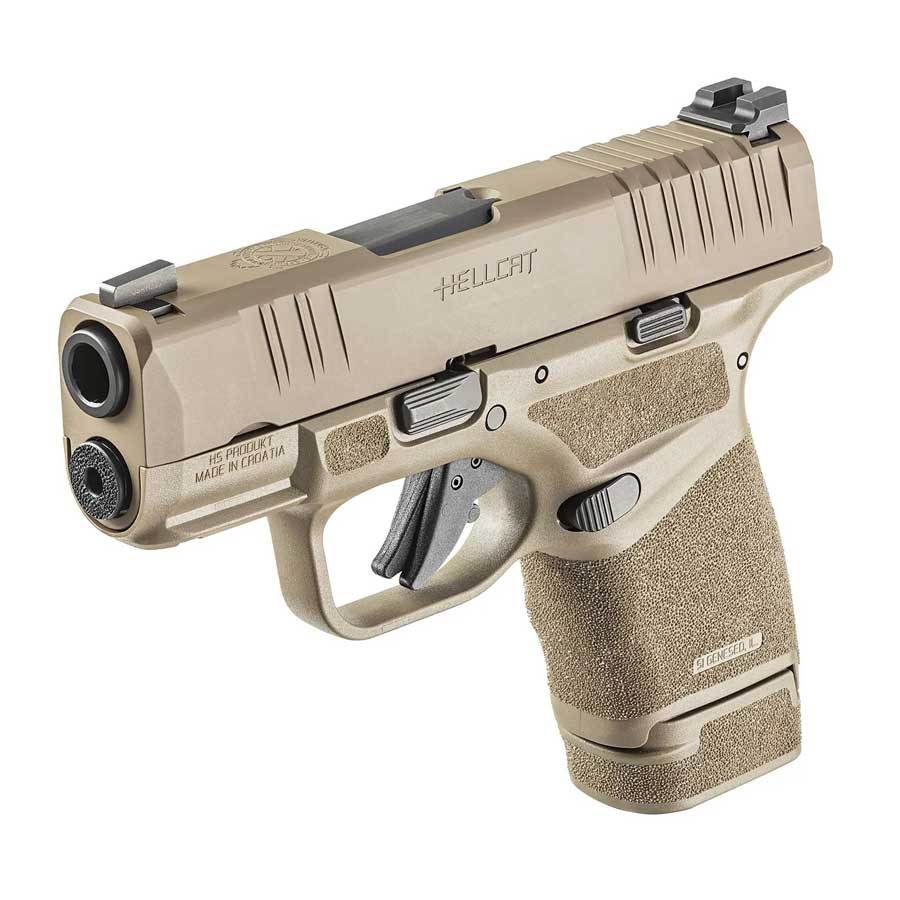
You're shopping for your first 9mm, and the same names keep coming up: SIG P365, Springfield Hellcat, Glock 19, Smith & Wesson Shield, Taurus G3C, maybe a used Ruger SR9. They range from pocket-sized to duty-sized, and each one has loyal owners.
The right one depends on what you need most: something small enough to carry every day, something large enough to shoot well, or something that simply fits your hand. Once you know which of those comes first for you, the list gets short. By the end you should be able to decide which size of 9mm fits how you'll use it, narrow the field to two or three pistols, and check in person which one you'll actually shoot well.
Size is the first decision
Most popular 9mm pistols fall into three sizes, and the size decides more about your experience than the brand does.
Micro-compacts, such as the SIG P365 family, Springfield Hellcat, Smith & Wesson Shield Plus and Glock 43X, have barrels around 3 to 3.7 inches, weigh about 18 to 20 ounces and hold 10 to 15 rounds. They hide under a T-shirt, which is why people actually carry them. The cost is shootability: a small, light gun moves more when it fires, the short grip gives your hand less to hold, and the short distance between the sights makes small aiming errors matter more.
Compacts, the size of the Glock 19, have barrels around 4 inches, weigh about 23 to 25 ounces and hold about 15 rounds. They're big enough to shoot well and small enough to carry with a good holster and belt, which is why so many people choose one gun of this size for both the nightstand and carry.
Full-size pistols, the size of the Glock 17, have barrels around 4.5 inches and hold 17 or more rounds. They're the easiest to shoot well and the hardest to hide, so they suit the nightstand, the range and competition.
Weight and size work against each other in a simple way. A light pistol is easy to carry all day and harder to shoot; a heavier, longer pistol is the reverse. Every choice is deciding how much of each you want.
Key idea: Choose the largest pistol you will actually carry, or, if you won't carry, the one you shoot best. The best gun left at home does nothing for you.
- If you'll carry every day in ordinary clothes, choose a micro-compact. The best value in the class is the Springfield Hellcat Pro; the SIG P365 family is the most popular and comes in more sizes.
- If you want one pistol for carry and the nightstand, choose a compact. The Glock 19 is the proven standard; the Springfield Echelon 4.0C shoots as well as any of them and comes ready for a red dot.
- If you won't carry it, choose a full-size pistol such as the Echelon 4.5F or Glock 17, because the extra size makes hitting easier, especially in the dark with shaking hands.
- If your budget is $250 to $400, the Taurus GX4 for carry or the Canik METE SFT for home and range have strong independent test records. The G3C you've heard about is a sound budget compact too.
If you're not sure, start with a compact. It's the size most people shoot well and can still carry.
A word on the older names
Some of the pistols friends recommend have changed. Ruger stopped making the SR9 around 2017, so it's a used-market gun now: a sound pistol, but check its condition and that magazines and holsters are still easy to find. Smith & Wesson's Shield 2.0 has been joined by the Shield Plus, which holds more rounds in a similar size. And the original P365 is now one of a family of P365 sizes with different grips and slides. When a friend recommends a model, ask which version.
Fit decides between finalists
Two pistols with nearly identical numbers can feel completely different in your hand, and the clerk's advice is the one that settles it. A pistol fits you when four things are true, and you can check all four in a few minutes before you buy.
Ask to see the pistol unloaded, check the chamber yourself, and keep the muzzle in a safe direction and your finger off the trigger. Then:
- Grip. Hold it high on the back of the grip. Your hand should wrap it without your fingers overlapping awkwardly or falling off the bottom.
- Trigger reach. The pad of your index finger should reach the trigger without shifting your grip. If you have to rotate your hand to reach, the gun is too big for you.
- Pointing. Pick a spot on the far wall, close your eyes, raise the pistol and open them. If the sights land close to the spot, the grip angle suits you.
- Controls and slide. Reach the magazine release without changing your grip, and rack the slide. If racking is hard, our guide to easy-to-rack pistols covers technique and models that help.
Then, if you can, rent or borrow your top two for a range session. The one you shoot best for the job you named is the one to buy.
Common mistake: Choosing the smallest pistol because it's easiest to carry, then rarely practicing because it's unpleasant to shoot. A slightly bigger gun you practice with often will serve you better than a tiny one you don't.
Budget for more than the pistol
The pistol is only part of the cost. A defensive pistol needs a good holster that covers the trigger, practice ammunition, a box or two of the defensive load you'll prove in it, and for a home pistol, a weapon light. Plan for those before you stretch for a more expensive gun. If you'll carry, note that Iowa allows adults who can legally possess a handgun to carry without a permit, from age 18 since July 1, 2025, but a permit still matters for carrying in other states that recognize it, and federal law still bars dealers from selling handguns to anyone under 21.
Check your understanding
Try answering these before you open the answer. If you can decide what to do and explain why, you have it.
1. You'll carry every day in jeans and a T-shirt, and you've never owned a pistol. Which size, and why?
A micro-compact, such as a Hellcat Pro or P365. It hides in ordinary clothes, so you'll actually carry it. Expect to practice more, because a small gun is harder to shoot well.
2. You want one pistol for the nightstand that you might carry occasionally. What size?
A compact like the Glock 19 or Echelon 4.0C. It's big enough to shoot well at home and small enough to carry with a good holster.
3. Handling the pistols before you buy, you find your finger reaches the Glock 19's trigger only if you rotate your hand around the grip. What does that tell you?
The grip is too big for your hand. Look for a pistol with interchangeable backstraps set small, or a smaller frame, so you can reach the trigger with a proper grip.
4. A friend offers you his used Ruger SR9 for a good price. What do you check?
Its condition, that it functions correctly, and that you can still find magazines and holsters for it, since Ruger no longer makes it. If those check out, it's a sound full-size pistol for home and range.
5. Your spouse has small hands and finds racking slides hard. Does the "largest gun you'll carry" advice still apply?
The principle does, but fit and operation come first. A gun they can't rack or reach is the wrong gun at any size. Look at pistols designed to rack easily and with small grips, then choose the largest of those they'll carry and shoot well.
Where to go next
You can find 9mm pistols on our website, and anything listed there can be ordered if it isn't in stock.
Once you know the size, compare the leading pistols in that class: micro-compact 9mm pistols, compact 9mm pistols or full-size 9mm pistols. If price is the deciding factor, read budget 9mm pistols.
If this article helped you, we invite you to sign up for email notifications of new blog articles.