
Trigger and Other Upgrades for Target Shooting: What Helps, What Doesn't and What to Leave Alone
Joseph McLain Oct 27, 2026
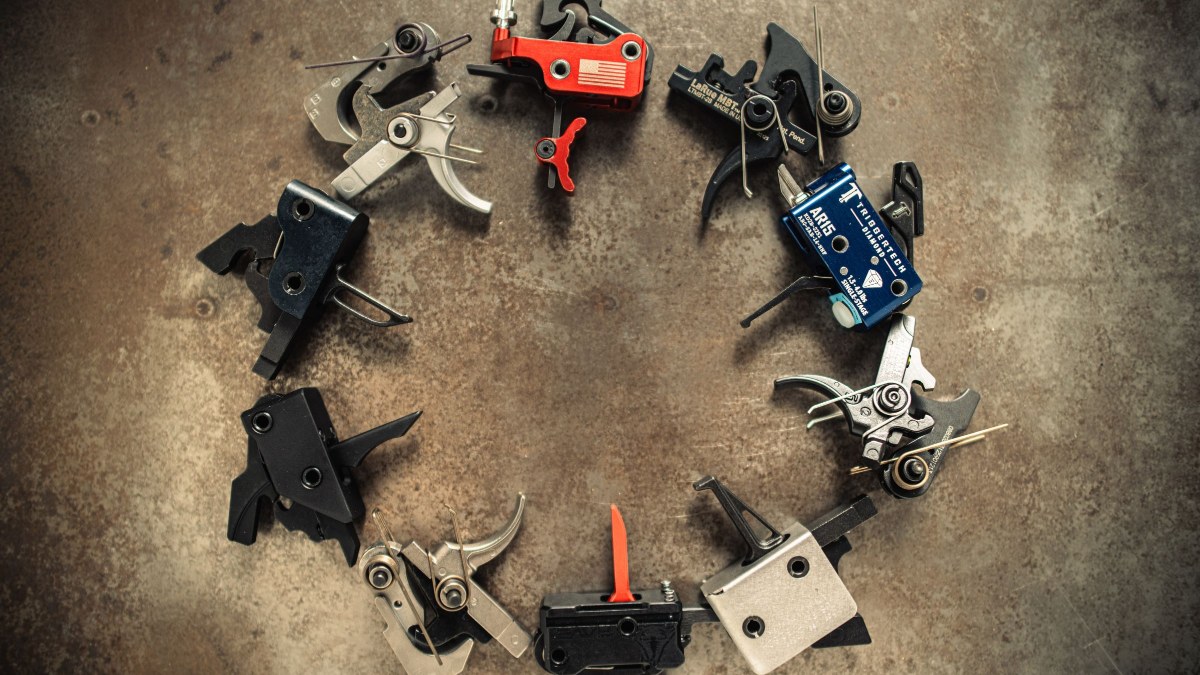
Your groups have stalled, and the internet has an answer: A new trigger. Or a new stock. Or a heavier barrel, a muzzle brake, a better optic. One friend swears a two-stage trigger took an inch off his groups. Another says upgrades are mostly a way to spend money instead of practicing. A third warns you never to touch the trigger on a gun you carry. Each of them is describing a real effect, a real temptation and a real risk.
This article explains what a trigger actually does to accuracy, the difference between single-stage and two-stage triggers and between factory and aftermarket units, and which other upgrades, stocks, barrels, handguards, optics and muzzle devices, solve which problems. It also explains where upgrades create safety and legal concerns. By the end you should be able to decide whether an upgrade addresses a problem you actually have, choose the right kind, and know when installation belongs to a gunsmith.
Start with the problem, not the part
Every upgrade should answer a specific question: What is limiting my shooting right now? If the answer is fundamentals, no part will fix it. If the answer is a gritty, heavy or inconsistent trigger that disturbs your aim, a better trigger may help. If it is a stock that does not fit you, a better-fitting stock will. If it is an optic you cannot see through well, an optic upgrade will. A good test is to have an experienced shooter fire your gun. If they shoot it much better than you do, practice first. If they struggle with the same feature you do, the feature may be worth changing. Our guide to diagnosing loose rifle groups explains how to separate shooter, rifle and ammunition causes.
Key idea: Buy upgrades to solve a problem you have measured, not to solve a problem you hope you have. Practice is the cheapest upgrade there is.
What a trigger does to accuracy
The trigger is where your hand meets the shot. The goal is to release the shot without moving the gun. A trigger that has a long, gritty or inconsistent pull, called creep, makes it hard to know when the shot will break, and a very heavy pull takes more finger force, both of which make it easier to disturb the sights. A good target trigger has a predictable pull, a clean break, little movement after the break, called overtravel, and a reset you can feel. Trigger technique matters as much as the trigger itself; our article on trigger control covers the press.
Single-stage and two-stage triggers
A single-stage trigger has one movement: You press, the weight builds, and the shot breaks. It is simple and fast, which suits many hunting rifles, practical shooting and most pistols.
A two-stage trigger has a light first stage that takes up slack until you feel a distinct wall, then a second stage that breaks the shot with a little more pressure. Precision shooters often like two-stage triggers because the wall tells you exactly when the shot is about to break, letting you prepare the shot deliberately. They can feel slower for rapid shooting.
Flat and curved trigger shoes
The trigger shoe is the part your finger touches. Curved shoes guide the finger to the same spot each time. Flat shoes give a consistent leverage point along more of the face and are popular in competition. Neither is inherently better; the right one is the one that lets your finger press straight back consistently.
Factory adjustments and aftermarket triggers
Many modern rifles have factory triggers that the owner can adjust within limits set by the manufacturer, and some are quite good. Before replacing a trigger, read the manual to see whether the existing one can be adjusted, and stay within the stated range. Aftermarket triggers, including drop-in units for AR-15 rifles and replacement triggers for many bolt-action rifles, can offer lighter, cleaner pulls and more adjustment.
| Use | What usually works | Why |
|---|---|---|
| Precision rifle and benchrest | Light, clean single-stage or two-stage target trigger | Deliberate shots from a steady rest reward a predictable break |
| Hunting rifle | Clean single-stage trigger at a moderate weight, often around 2.5 to 3.5 pounds | Cold or gloved fingers and the stress of a shot at game make very light triggers risky |
| AR-15 for general use | Quality drop-in single-stage or two-stage unit | Improves feel while keeping reliable ignition |
| Competition pistol | Improved trigger components from reputable makers | Shorter reset and cleaner break help fast, accurate shots |
| Carry or home-defense pistol | Usually the factory trigger, or a conservative, reputable improvement | Reliability and a deliberate pull matter more than minimal weight |
Read the table by noticing how the right trigger weight rises with the stakes and the stress of the situation. A two-pound trigger can be wonderful on a bench and a liability in the field or in a defensive encounter, where adrenaline and gloves make fine control harder. Our article on hunting rifle quality at different price points discusses reasonable hunting trigger weights.
Installing and testing triggers safely
Triggers are part of what keeps a firearm from firing when it should not. A poorly installed or over-adjusted trigger can fail to hold, double, or fire when the gun is bumped. Install only triggers designed for your exact firearm, follow the maker's instructions exactly, and leave anything beyond simple drop-in installation, or any adjustment the maker does not provide for owners, to a qualified gunsmith. After any trigger work, function-check the gun with it unloaded and all ammunition out of the room: Confirm the safety blocks the trigger, the trigger resets, and on semi-automatics that the hammer or striker does not follow the bolt or slide when it closes. If anything is wrong, do not shoot it until it is fixed. Our guide to when a firearm needs a gunsmith explains the warning signs.
Common mistake: Lightening a carry or hunting trigger as far as it will go. A trigger that is perfect for slow bench shooting can be unsafe under stress, with cold hands or gloves. Match trigger weight to the situation, not to the lightest setting available.
Other upgrades and what each one solves
Stocks and chassis
A stock that fits you puts your eye behind the sights without straining and lets you hold the rifle steadily. Adjustable stocks let you change length of pull and cheek height, which helps when you add a scope or share a rifle with someone of a different size. Rigid stocks and chassis systems also give the action a stiffer, more consistent platform. If your current stock fits and holds the action firmly, a new one may change little. Our guide to rifle stocks covers materials and designs.
Barrels and free-float handguards
A heavier or higher-quality barrel can improve consistency, especially over long strings where a thin barrel heats up. A free-float handguard on an AR-15 keeps pressure from a sling, bipod or your hand off the barrel, which helps accuracy. Barrel replacement on most rifles requires proper headspacing and is a gunsmith's job. Our article on rifle barrel design explains the trade-offs.
Optics and sights
For many shooters, the optic is the upgrade that matters most, because you cannot hit what you cannot see clearly. Red dots help speed at close range; magnified scopes help precision at distance. Our guide to matching a scope to your rifle explains how to choose.
Muzzle devices
Muzzle brakes redirect propellant gas to reduce recoil and muzzle rise, which helps you see your hits and shoot faster follow-up shots. The trade-off is that they are much louder for the shooter and anyone beside them, which matters at the range and in a blind. Compensators work similarly on handguns and some carbines. Flash hiders reduce visible flash. Choose a device for the problem you have, and remember that on some rifles the muzzle device is permanently attached to meet legal barrel-length requirements.
Grips
A grip that fits your hand improves control and consistency, especially on pistols and AR-15s. It is often one of the least expensive changes and one of the most noticeable.
Legal and practical considerations
Some modifications are regulated, such as anything that changes a rifle's barrel length below legal minimums or alters how a firearm fires, and the law differs from place to place. Some modifications can also affect a manufacturer's warranty. For defensive firearms, some instructors recommend keeping triggers and safety-related parts at or near factory specifications, so the firearm's condition cannot be questioned later. Check the laws that apply to you and the manufacturer's guidance before changing safety-related parts.
Try this: Decide whether an upgrade is worth it
- Write down the specific problem, such as "groups open when I press the trigger" or "I can't see the reticle clearly."
- Have an experienced shooter fire your gun. If they shoot it well, focus on practice first.
- Check whether the factory part can be adjusted within the maker's limits before buying a replacement.
- If you buy a part, choose one made for your exact firearm and use. Install it yourself only if it is a true drop-in and the instructions are clear; otherwise, use a gunsmith.
- Function-check the firearm, then shoot it and compare results with your notes from before the change.
You will know it worked when your notes show that the upgrade measurably improved the problem you wrote down, and the firearm passes every function check.
Putting it together
All three friends were right about something. A better trigger really can help if your trigger is disturbing your aim. Upgrades really can become a substitute for practice. And changes to the trigger of a carry gun really do deserve caution. Start with a measured problem, try practice and factory adjustments first, choose upgrades that match the job and the stakes, have safety-related work done properly, and confirm with a function check and a range session that the change actually helped.
Check your understanding
Try answering these before you open the answer. If you can explain it in your own words, you understand it.
1. What is the difference between a single-stage and a two-stage trigger?
A single-stage trigger has one movement to the break. A two-stage trigger has a light first stage up to a distinct wall, then a second stage that breaks the shot.
2. Why are very light triggers risky on hunting and defensive firearms?
Cold or gloved fingers and stress make fine control harder, increasing the chance of an unintended shot.
3. What should you check after installing a trigger?
With the gun unloaded and ammunition out of the room, confirm the safety blocks the trigger, the trigger resets, and the hammer or striker does not follow when the action closes.
4. What is the main trade-off of a muzzle brake?
It reduces recoil and muzzle rise but is much louder for the shooter and people nearby.
5. How can you tell whether an upgrade or practice will help more?
Have an experienced shooter fire your gun. If they shoot it well, practice is likely the bigger need.
Where to go next
For trigger technique, read trigger control tips. For the optic side, see matching a scope to your rifle. For how bolt-action triggers and safeties fit into the action, read how bolt actions work. And if something does not feel right after a change, see when a firearm needs a gunsmith.
We can order triggers, stocks, grips and optics for most popular firearms, and we're glad to talk through whether an upgrade makes sense for your goals. Explore our inventory here and text us with questions.
If you found this informative, we invite you to sign up for email notifications of new blog articles.