
Traditional Pocket Knife Patterns: Trapper, Stockman, Barlow and More
Joseph McLain Oct 31, 2026
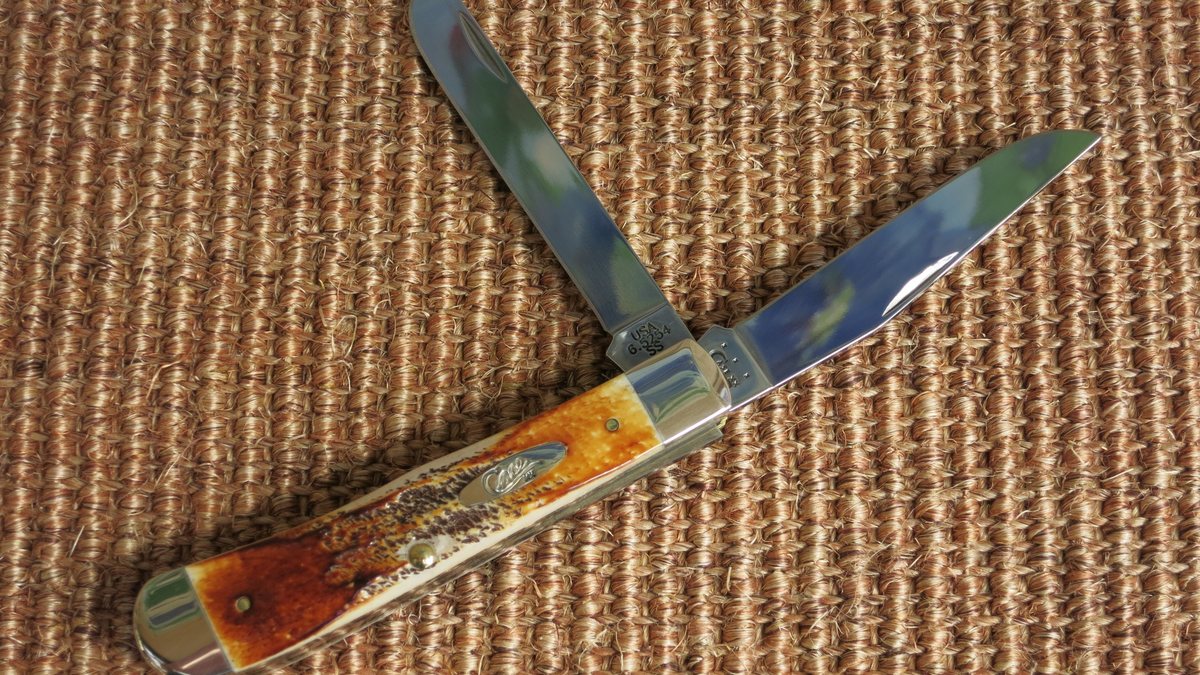
Picture your grandfather's pocket knife on the kitchen table after a long day. It has worn bone handles, two or three blades and a little brass at each end. He used it to cut baling twine, peel an apple and clean his fingernails, sometimes all in the same afternoon. Now you are shopping for one like it, and the names are a puzzle: Trapper, stockman, Barlow, peanut, canoe, sodbuster.
Ask around, and the opinions come quickly. Your dad says a stockman is the only knife a farmer needs. A friend who collects knives says the trapper is the classic. A younger coworker says old-style knives are pretty but outdated, because they do not lock and you cannot open them with one hand. Each of them is right about something. These patterns were each built for a kind of work, they are still very good at it, and they really do behave differently from a modern locking folder.
This article explains how a traditional slipjoint knife works, what the most common patterns are and what each blade was made for, the materials and steels you will see, and how to use and care for a knife with no lock safely. By the end you should be able to name a pattern on sight and choose one that fits the way you would actually use it.
How a slipjoint works: Spring tension instead of a lock
Most traditional pocket knives are slipjoints. Inside the handle, a flat steel bar called the backspring presses against the base of each blade. When the blade is fully open or fully closed, the spring holds it there by tension. To open it, you pull against that tension with a thumbnail in the nail nick; to close it, you push it back past the spring.
Many slipjoints also have a half-stop, a point halfway through the opening or closing where the spring catches the blade briefly. It slows the blade down if it starts to fall closed, so it is less likely to snap shut on a finger.
Think of a screen door with a strong spring. It stays open while you hold it and stays closed when you let it go, but it does not lock. Push hard enough in the wrong direction and it will swing. A slipjoint blade behaves the same way, and that is the single most important thing to understand about these knives.
Key idea: A slipjoint is held open by spring tension, not a lock. Pressure on the spine, or a twist, can close it. Use it for cutting and slicing, and keep your fingers out of the path of the edge as it would close.
The rule: Treat a slipjoint as a cutting tool that can close, and never put force on its spine.
The trapper: Two long blades for detail and skinning
A trapper has a long, slim handle that curves slightly at one end and two long blades that open from the same end. One is a clip-point blade for general cutting and detail work. The other is a spey blade, a rounded blade with a short, blunt point that was originally used for livestock work and is excellent for skinning because it is hard to poke through a hide by accident.
Because both blades are long, the trapper is one of the larger traditional patterns, and it suits people who want reach and a long cutting edge. It is a good choice for hunters and trappers who like a traditional knife, and for anyone who wants one main blade plus a safer second one. Case's trappers, including several bone and G-10 versions in our catalog, are among the best-known examples.
The rule: Choose a trapper if you want long blades and a rounded spey blade for skinning or careful cuts.
The stockman: Three blades for farm and ranch work
A stockman usually has three blades, two at one end and one at the other. The classic set is a clip blade for general work, a sheepsfoot blade with a straight edge and no sharp point, and a spey blade. Between them, a stockman can slice, make straight controlled cuts and do careful work where a sharp point would be risky.
The stockman was built for people who work with livestock and around a farm, and it shows. It is one of the most versatile pocket knives ever made, and it is the pattern many Iowa farm families have carried for generations. Medium and small sizes are easy to carry in a jeans pocket.
The trade-off is that three blades mean more width and weight, and more nail nicks to learn. If you only ever use one blade, a simpler pattern will carry more comfortably.
The rule: Choose a stockman if you want one knife that handles many different small jobs, especially around a farm.
Other classic patterns: Barlow, peanut, canoe, sodbuster and more
- Barlow. One or two blades and a long bolster, the metal cap at the pivot end, which makes it rugged and recognizable. It has been a working person's knife for a very long time.
- Peanut. A very small two-blade knife that disappears into a pocket, ideal for light chores and for people who want something discreet.
- Canoe. A two-blade knife shaped like a canoe, with blades at each end, mainly a pleasing, comfortable design for light work.
- Congress and whittler. Several blades in a slim, curved handle; the whittler has a heavier main blade and is built for carving wood.
- Sodbuster. One big, simple blade in a plain handle, a no-frills working knife made to be used hard.
- Toothpick. A long, slender single blade, good for slicing and detail.
Of these, the Barlow and the sodbuster are the most practical first knives because they are simple and sturdy. The peanut is best as a light, always-there pocket knife. The others are partly about tradition and style, which is a perfectly good reason to carry a knife, as long as you understand what each one does well. A slipjoint is also one of the best first knives for a young person, as our guide to a child's first pocket knife explains.
The rule: Pick the pattern that matches the size of your pocket and the size of your jobs.
Handles and steel: Bone, synthetics, stainless and carbon
Traditional knives are known for their handle materials. Jigged bone, which has been carved with a pattern for grip and then dyed, is the classic, and you will see names such as red bone or amber bone. Wood and stag are traditional too. Modern synthetics, such as Kirinite and colored G-10, offer bright looks and better resistance to water and cracking. Our guide to knife handle materials compares them in more detail.
Blade steel in traditional knives usually comes in two families. Stainless steel resists rust and needs little care, so it is the easy choice for a knife that will see water, sweat or food. Carbon steel, such as Case's chrome vanadium, takes a very keen edge and is easy to sharpen, but it will discolor and rust if it is not kept clean and dry. Over time it develops a gray patina, which many owners like and which actually helps protect the steel. Our guide to choosing knife blade steel explains the trade-off.
The rule: Choose stainless for low-maintenance work and carbon steel if you like an edge that is easy to sharpen and you will wipe the blade after use.
Using a knife with no lock: Habits that keep fingers safe
Because a slipjoint can close, safe use depends on how you hold and use it.
- Cut, do not stab or pry. Pressure on the point or a twist can force the blade toward closing.
- Keep your fingers off the spine's closing path. Hold the handle so that if the blade began to close, it would not close on your fingers.
- Open and close deliberately. Use the nail nick, keep your fingers clear of the edge and let the blade pass the half-stop under control.
- Use one blade at a time. Close each blade before opening another on a multi-blade knife.
Of these, cutting rather than stabbing does the most work, because nearly every slipjoint injury starts with a blade being pushed by its point. If your work regularly involves stabbing, prying or heavy pressure, a locking knife is the better tool. Our knife safety tips go further on blade path and grip.
Common mistake: Closing a slipjoint by pressing the blade down against your leg or a table with your palm over the edge. The spring snaps the blade shut fast. Close it with your fingers on the sides of the blade, away from the edge, and guide it the whole way.
The rule: Use a slipjoint for slicing and cutting, and use a locking knife for anything that pushes on the tip.
Caring for a traditional knife
Traditional knives last generations with simple care. Lint and dirt collect in the space between the handle sides where the blades sit, so blow it out or clean it with a cotton swab now and then. Put a drop of light oil on each joint where the blade pivots, work the blade a few times and wipe off the excess. Keep carbon blades dry and lightly oiled, and wash food off right away. Bone and wood handles do not like soaking, so wipe them clean instead of submerging them.
Many traditional knives become heirlooms. Some makers, Case among them, mark the tang stamp on the blade in a way that shows when the knife was made, which collectors use to date older knives. If you inherit one, a gentle cleaning and oiling is usually all it needs; avoid aggressive polishing that removes old markings. Our guide to knife care and rust prevention covers cleaning and storage in detail.
The rule: Clean out lint, oil the joints and keep the blades dry, and the knife will outlast you.
Putting it together
Traditional pocket knives are not outdated; they are specialized for the cutting most people do every day. A slipjoint holds its blade by spring tension, so it rewards slicing and punishes prying. The pattern decides the blades: A trapper for long cuts and skinning, a stockman for many different small jobs, a Barlow or sodbuster for simple hard work and a peanut for light, discreet carry. Then choose the handle and steel for your conditions, and care for the knife with a little oil and a dry cloth.
If you are unsure where to start, a medium stockman or a Barlow is a forgiving first traditional knife, and it will show you quickly whether you want more blades or fewer.
Try this: Get to know a traditional knife
- Sit at a table in good light with the knife closed, and identify its pattern and each of its blades.
- Open one blade slowly using the nail nick, with the edge pointed away from you, and feel for the half-stop on the way.
- With the blade fully open, notice how the spring holds it, and decide where your fingers would be if the blade started to close.
- Close the blade deliberately with your fingers on the flat sides, guiding it the whole way.
- Repeat for each blade, then put one drop of light oil on each pivot and wipe away the excess.
You will know it worked when you can name each blade, say what it is for and open and close every blade without your fingers ever being in the edge's path.
Check your understanding
Try answering these before you open the answer. If you can explain it in your own words, you understand it.
1. A coworker says slipjoints are unsafe because they do not lock. Is he right?
Partly. A slipjoint can close under pressure on the spine or a twist, so it is unsafe for stabbing or prying. Used for slicing and cutting, with your fingers out of the blade's closing path, it is a safe and very capable tool.
2. Why does a stockman often include a sheepsfoot blade and a spey blade along with its clip blade?
Each does a different job. The clip blade handles general cutting and points, the sheepsfoot gives straight controlled cuts with no sharp tip, and the spey's rounded, blunt point is good for skinning and careful work where a sharp point would be risky.
3. You want a traditional knife for skinning small game. Which pattern fits best, and why?
A trapper, because it has a long spey blade with a rounded point that is good for skinning and unlikely to puncture the hide, plus a long clip blade for other cuts.
4. Your inherited carbon-steel knife has a gray color on the blade. Should you polish it off?
No, unless it is red rust. A gray patina is normal on carbon steel and helps protect it. Clean the knife, oil it lightly and avoid aggressive polishing that could remove old markings.
5. What is the half-stop for?
It catches the blade partway through opening or closing so that it does not snap shut all at once, which gives your fingers more time and makes the knife safer to close.
Where to go next
If you are buying a traditional knife for a young person, our guide to a child's first pocket knife covers what to choose and how to teach it. To understand bone, wood and synthetic handles, read knife handle materials. Carbon or stainless steel makes a big difference in a traditional knife, and choosing the right knife blade steel explains how. And for the long history behind these patterns, see the history and evolution of EDC knives.
Explore our traditional and modern pocket knives. Anything on our website can be ordered if it isn't in stock.
Photo: "Case BoneStag Trapper" by James Case, via Wikimedia Commons, licensed CC BY 2.0; cropped.

If you found this informative, we invite you to sign up for email notifications of new blog articles.