
Shooting Targets: Paper, Reactive, and More
Joseph McLain Nov 06, 2026
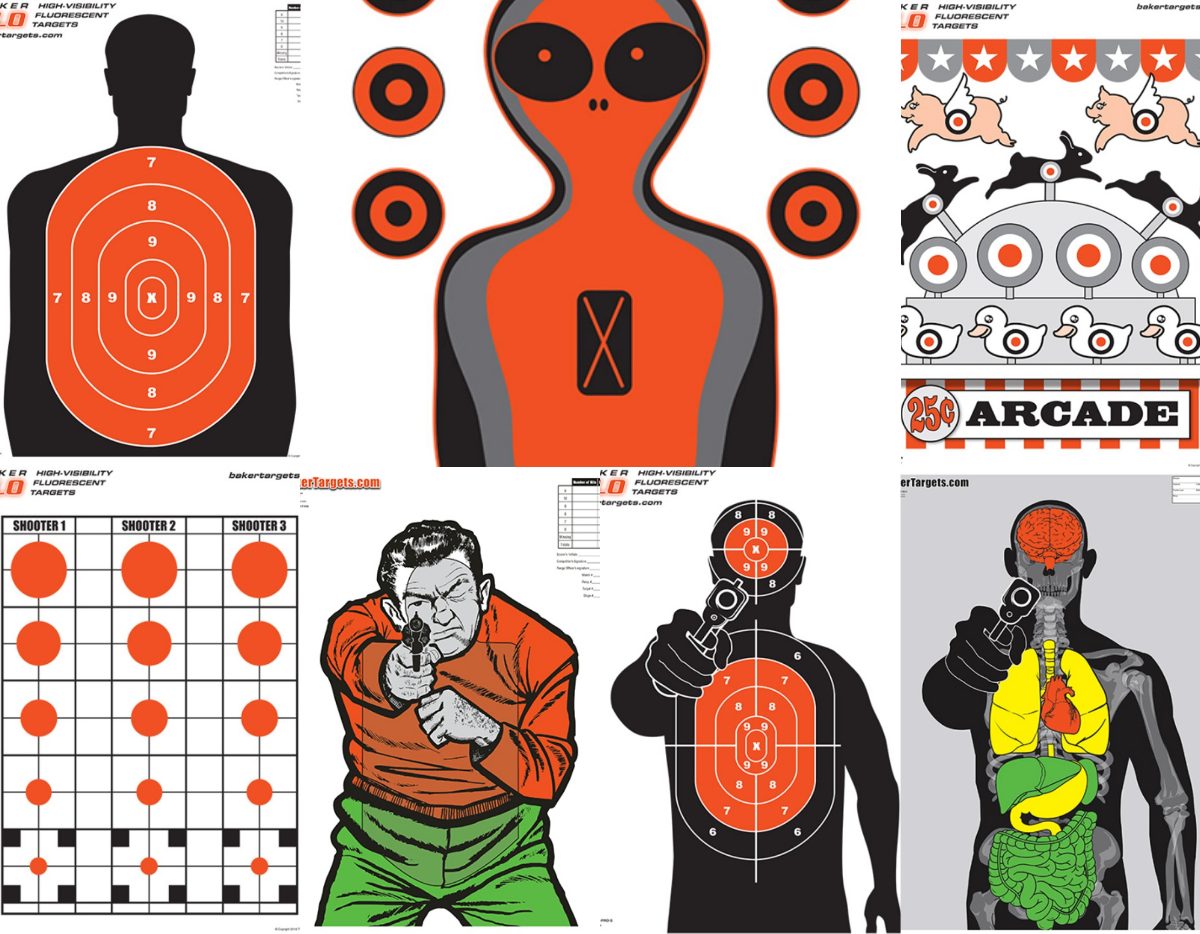
You are planning a range day and standing at the target shelf. There are paper bullseyes, color-changing sheets, steel plates, rubber targets, clay birds and even exploding targets. One shooter tells you paper is all a serious shooter needs; another says steel is the only way to train. They all look like fun, but they do different jobs, and a few come with safety rules the others do not. This article shows you what each kind of target is good for, so you can match the target to your firearm, your distance and what you want to learn, and use it safely.
Start with what you want the target to tell you
A target is a feedback tool. Every shot asks a question, such as where it went or whether it hit, and the target is how you get the answer. Targets differ in two ways that matter, which are how much detail they give you and how fast they give it. Paper gives a detailed, permanent record. Reactive targets answer right away with a color change, a sound or a movement.
If you are sighting in a rifle, you want detail, so a grid target that shows small errors is the better tool. If you are practicing quick hits with a handgun, you want speed, so a steel or color-changing target serves you better. The target you choose shapes your accuracy and helps you understand your shot placement in real time.
Key idea: Choose the target by the question you want answered. Paper tells you exactly where your shots landed, reactive targets tell you right away whether you hit, and specialty targets add timing, challenge and fun.
Paper targets, the simplest and most versatile choice
Paper targets have been a staple for generations. They are widely available and inexpensive, and they come in designs for almost every discipline, from traditional bullseyes to detailed grid patterns. You can shoot them with rifles and pistols at both short and long range, and some are designed for shotgun training drills, although that is less common.
Their real strength is that nothing distracts you from the fundamentals. Paper lets you focus on sight alignment, trigger control and breathing, and it gives clear visual cues for grouping and accuracy, which suits beginners and competitive shooters alike. The low cost per sheet also makes paper ideal for high-volume practice. For precision work, grid targets help you see minute deviations in your aim, which makes them ideal for sighting in a rifle (see sighting in rifles at different distances). Bullseye or silhouette designs are excellent for general practice with handguns and rifles alike.
The limits come from the same simplicity. Paper gives no immediate feedback, so at longer ranges, or without a spotting scope (a small telescope for viewing your hits from the firing line), it can be hard to see where your shots went. It can also be affected by wind, moisture and repeated hits, sometimes requiring frequent replacement. The rule of thumb is simple. If you need to know exactly where your shots land, start with paper.
Reactive targets, for when you want the answer right away
Reactive targets change or move when they are hit, giving immediate visual or auditory feedback that is invaluable during practice. Three kinds are common, and each answers the question in a different way.
Color-changing paper targets
These take the basic paper target a step further with a special coating that visibly changes color where a bullet strikes. That contrast lets you see your hits without walking up to the target, so you can evaluate shot placement and adjust in real time. They work with rifles and pistols and are excellent for mid-range rifle practice, between 100 and 200 yards, and for handgun training at indoor or outdoor ranges, where rapid feedback is needed. They cost slightly more than standard paper, but they remain an affordable option for many shooters.
Steel targets
Steel targets are popular with tactical shooters and competitive marksmen for their durability and the unmistakable ping that signals a hit. They are made from hardened steel, often AR500 grade, built to withstand repeated impacts from handgun and rifle rounds. They come in models for pistols, rifles and shotguns, but each plate is rated for certain calibers and velocities. A plate built for handguns can be cratered by a fast rifle round, and steel-core or armor-piercing bullets damage almost any plate, so match the plate's rating to what you shoot. The sound is immediate sensory feedback, and it can help sharpen your reaction time and target acquisition. Steel used within its rating can take thousands of rounds, and although it typically costs more than paper, that longevity can justify the initial investment.
How the steel is hung matters too. A plate that is angled slightly downward or allowed to swing sends bullet fragments toward the ground instead of back toward the line. Steel is best for tactical training drills that need quick target acquisition, and large steel plates are particularly effective at 300 yards and beyond, where visual feedback is essential. It also asks more of you. Over time steel can develop pitting or deformation, so inspect it regularly, and replace or retire a plate that is damaged.
Safety: Distance is your safety margin with steel. Keep at least 10 to 15 yards for handguns and 100 yards for rifles to minimize ricochet risk, wear eye and ear protection (see why eye and ear protection matter), and follow the target maker's guidance and your range's rules.
Rubber reactive targets
Rubber reactive targets are made from durable rubber and often move or bounce when struck. That movement forces you to adjust your aim and timing. It mimics real-life scenarios in which targets might move unexpectedly, and that improves adaptability. They are especially useful with handguns and shotguns at close range, where the target's motion tests your reaction and accuracy. They are engineered to withstand hundreds of hits without significant wear or loss of shape, and they are best for close-range practice against multiple moving targets and for dynamic drills that simulate defensive scenarios or rapid target transitions.
Specialty targets, clay birds and exploding targets
Specialty targets add variety for specific shooting sports or an extra thrill. Clay targets are synonymous with shotgun sports like trap, skeet and sporting clays. They are designed to break apart when hit, which gives you immediate visual confirmation, and they simulate the flight of game birds, so they teach timing and accuracy. Sporting clays offers a realistic and challenging experience, and trap and skeet are essential training for those disciplines. Our guide to trap versus skeet will help you choose where to begin, and skeet shooting tips on leading the target shows how to put the timing into practice.
Exploding or binary targets, such as Tannerite, create a small, controlled explosion when struck by a high-velocity round. They are best suited to rifles and high-velocity rounds that can reliably trigger the reaction, and they provide both visual and auditory confirmation of a hit. People use them for long-range rifle practice and at shooting events, where the extra feedback can help you fine-tune your precision.
Common mistake: Treating an exploding target like any other target. Exploding targets are prohibited on many public lands and at many ranges, and they have started wildfires. Before you use one, check your range's rules, local regulations and fire conditions, and follow the manufacturer's instructions. If you are not sure it is allowed where you shoot, do not use it.
Matching the target to your firearm and distance
Different targets are optimized for the characteristics and distances of different firearms. The table puts the options side by side.
| Target | Fire it with | Feedback you get | Best use | Watch for |
|---|---|---|---|---|
| Paper | Rifles, pistols, some shotgun drills | A detailed record, seen up close or with a spotting scope | Precision work, sighting in, general practice | Wind, moisture and repeated hits wear it out |
| Color-changing paper | Rifles and pistols | Color contrast, visible from a distance | Rifles at 100 to 200 yards, handgun training indoors or outdoors | Costs slightly more than plain paper |
| Steel (often AR500) | Rifles, pistols, shotguns | An audible ping | Tactical drills, large plates at 300+ yards | Safe distances, pitting and deformation, higher cost |
| Rubber reactive | Handguns, shotguns | Movement when hit | Close-range, dynamic drills | Best kept at close range |
| Clay | Shotguns | Breaks apart | Trap, skeet, sporting clays | Shotgun sports only |
| Exploding (binary) | Rifles, high-velocity rounds | Small controlled explosion | Long-range rifle practice, events | Range rules, local regulations, fire conditions |
Read across a row to see a target's full profile. Then use the "Watch for" column as your safety checklist, because it is where each target's hidden cost shows up.
For rifles, precision grids and small bullseyes fine-tune long-range accuracy and sight alignment, and steel gives excellent feedback for high-velocity rounds at 100 yards or more. That makes them a good fit for sighting in, competitive long-range shooting and tactical drills that emphasize rapid target acquisition. For pistols, large silhouettes and color-changing targets give clear feedback for short-range engagements, typically 7 to 25 yards, and steel can be used safely at closer distances, around 10 to 15 yards. Those suit handgun training for self-defense and competition, and tactical drills where quick shooting and repositioning are critical. Our guide to silhouette shooting with pistols shows one way to use a silhouette target well.
Some targets work for both. Color-changing paper, and certain steel or rubber reactive targets, can be used across disciplines and give consistent feedback whatever firearm you shoot. Two considerations apply to every choice. Always place targets at distances appropriate for the firearm and caliber in use, and if you plan on high-volume drills, choose targets that can withstand repeated hits.
Here is how the logic works in practice. Suppose you have a rifle to sight in and a 100-yard range. Distance and goal point to paper with a grid or a small bullseye. Now suppose you are practicing handgun drills at close range. A color-changing target or a rubber reactive target gives you the fast feedback you want, with steel as an option if you can keep the right distance.
Why the fun factor is part of good training
Precision and fundamentals come first, but enjoyment is what keeps shooters engaged and motivated, and a shooter who keeps practicing improves. A target that reacts in a unique way, such as a moving rubber target or an exploding one, makes every shot feel part of a game. Switching among target types keeps sessions fresh and prevents monotony, and adapting to a reactive or specialty target can build both skill and enthusiasm.
Instant feedback, like the satisfying ping of steel or the colorful change on a reactive sheet, is rewarding and encourages continuous improvement. Fun targets also suit group events, competitions or a casual day at the range with friends, building camaraderie and healthy competition. The excitement is real, but it never replaces the basics. Keep your safe-handling habits exactly the same on the most exciting target as on a plain bullseye, and review our firearm safety rules for beginners if you need a refresher.
Try this: Two targets, one goal
- Choose your firearm, the distance you will shoot at and one goal for the session, such as tighter groups or faster hits.
- Using the sections above, pick a target type that fits all three. Confirm the distance is safe for it and that your range allows it.
- Shoot a short, careful session and write down what the target told you. Could you see your hits? How soon? Did it show what you wanted to know?
- Next session, change one thing, either the target type or the distance, and compare your notes.
You will know it worked when you can explain in a sentence why one target taught you more than the other for that goal.
Putting it together
Both shooters at the shelf have a point. Paper is the best teacher of fundamentals, because it shows exactly where every shot went. Steel and other reactive targets are the best teachers of speed, because they answer instantly. Start with the question you want answered, choose the target that answers it, and then check the "Watch for" column for that target's safety rules: Plate rating and distance for steel, and permission and fire conditions for exploding targets.
Check your understanding
Try answering these before you open the answer. If you can explain it in your own words, you understand it.
1. You are sighting in a rifle and want to see small errors in your aim. Which target fits, and why?
A paper grid target. Grids help you see minute deviations in your aim, which is ideal for sighting in. The trade-off is that you may need a spotting scope or a walk downrange to see your hits.
2. Why does a steel target need a minimum distance, and what are the distances in this article?
To minimize ricochet and fragment risk. The article advises at least 10 to 15 yards for handguns and 100 yards for rifles, a plate rated for your caliber, and following the target maker's guidance and range rules.
3. A new handgun shooter wants fast feedback at a range with limited space. What would you suggest?
A color-changing target, which shows hits clearly through color contrast and works at indoor or outdoor ranges, or a large silhouette for short-range engagements of roughly 7 to 25 yards.
4. Why might you choose plain paper over steel when you are working on fundamentals?
Paper lets you focus on sight alignment, trigger control and breathing without distractions, gives clear cues for grouping and costs little per sheet, which suits high-volume practice.
5. What should you check before shooting an exploding target?
That it is permitted where you shoot, by checking range rules and local regulations, that fire conditions are safe and that you are following the manufacturer's instructions. These targets suit rifles and high-velocity rounds.
Where to go next
Now that you can choose a target, learn what to do with the feedback it gives you. How to master pistol shooting fundamentals covers the stance, grip, aiming and trigger control that your target will be grading. If you shoot paper, understanding MOA teaches you to describe and compare group sizes at different distances. Before your next trip, shooting range etiquette for new shooters will help you feel at home at the line.
Looking for the right targets for your next range session? Browse our selection of paper, reactive, and specialty targets to fit your shooting needs. Explore our inventory here.
If you found this informative, we invite you to sign up for email notifications of new blog articles.