
Matching a Scope to Your Rifle and the Shooting You Actually Do
Joseph McLain Nov 07, 2026
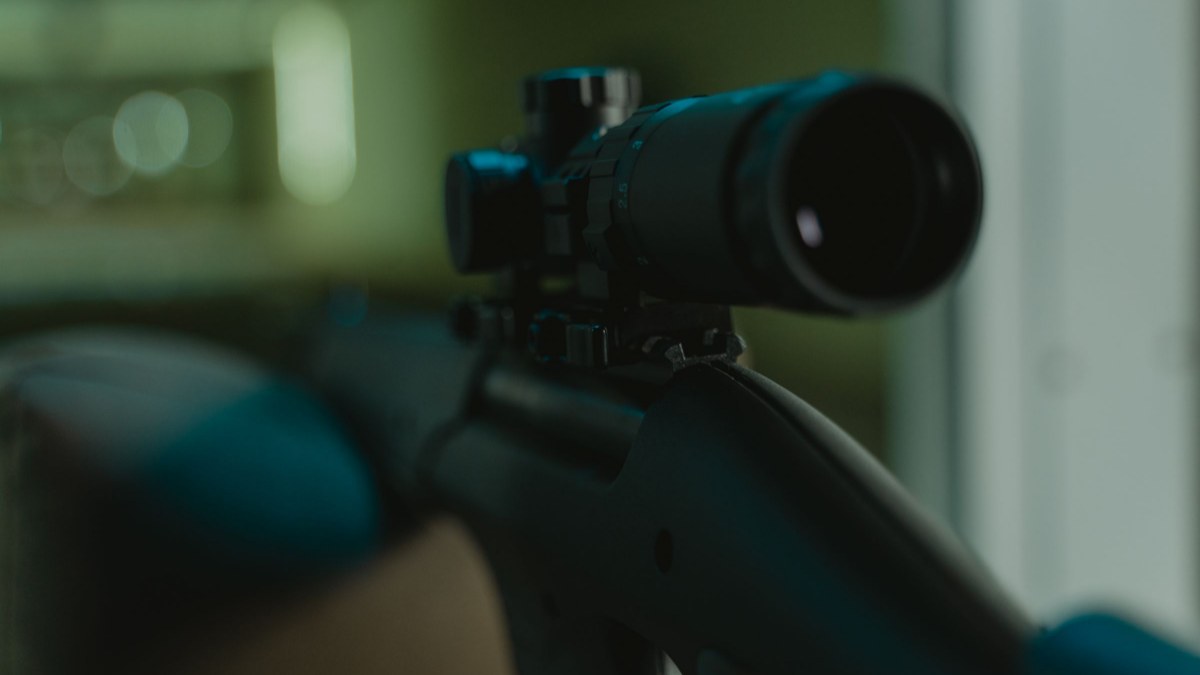
You have a rifle and a budget, and scope listings read like code: 3-9x40, 1-6x24, 4-16x44, 5-25x56. Should you buy the most magnification you can afford, a simple 3-9x for hunting, or a low-power variable for everything? Each of those suits someone's shooting, not necessarily yours.
Choosing a scope starts with the job, not the spec sheet. By the end you should understand what magnification, objective size, reticle, parallax, eye relief and durability do for you, and how they fit deer rifles in the woods and fields, straight-wall rifles in shotgun country, AR-15s, .22s and target rifles, so you can describe the scope your rifle needs in a sentence and avoid paying for features that work against you.
Start with distance, light and speed
Every scope decision follows from three questions. How far will you shoot? In what light? And how fast will you need to find the target? A whitetail stepping out of a creek bottom at 60 yards at last light asks for a wide field of view and a bright image at low power. A prairie dog at 300 yards on a clear afternoon asks for magnification and a fine aiming point. A steel plate at 600 yards asks for repeatable adjustments and a reticle you can hold over with. Write down your honest answers before you look at any scope. Most disappointment with scopes comes from buying for the shot people imagine instead of the shot they actually take.
Key idea: Choose the scope for your most common shot, in your most common light, and make sure it still works for the hardest shot you will honestly take.
Magnification: More is not automatically better
The first number pair on a scope, such as 3-9x, is its magnification range. At 3x, the target looks three times closer than with your eye; at 9x, nine times closer. What you give up is field of view, the width of the scene you can see. As magnification goes up, the field of view shrinks, the image gets dimmer, and every wobble of your hold looks larger. Think of looking at a deer through a paper towel tube versus through a soda straw. Through the tube you can see the deer, the brush around it and where it is going; through the straw you see a patch of hair that might be shoulder or might be hip.
For most hunting inside 200 yards, magnification between about 2x and 9x covers everything you need, and many experienced hunters shoot most of their deer at the bottom half of that range. Longer shots in open country and varmint shooting benefit from more magnification, often 12x to 16x or more. Long-range target shooting is where very high magnification earns its keep, because the targets are small, the shooting is deliberate and there is time to settle. A practical rule: Leave the scope set low while you hunt, and turn it up only once you have found the animal and have time.
Objective size, brightness and weight
The second number, as in 3-9x40, is the objective lens diameter in millimeters. A larger objective can gather more light and give a brighter image, especially at higher magnification, which helps at dawn and dusk. It also makes the scope heavier and usually requires taller mounting rings, which raises the scope above the bore and can make it harder to get a solid cheek weld. A 40mm to 44mm objective is a comfortable middle ground for most hunting rifles. A 50mm objective can help hunters who sit in low light, at the cost of weight and height. Glass quality and lens coatings matter as much as size; a well-made 40mm scope can look brighter than a poor 50mm one.
Tube diameter, commonly 1 inch, 30mm or 34mm, affects how much internal adjustment range the scope has and which rings fit it. Hunting scopes are often 1-inch or 30mm. Long-range scopes are often 30mm or 34mm because they need more elevation adjustment. Match the rings to the tube, and see our guide to mounting a rifle scope for ring height and torque.
Reticles, focal planes and turrets
The reticle is the aiming pattern. A plain duplex reticle, thick outer posts that taper to a fine center, is quick and uncluttered for most hunting. Bullet-drop-compensating reticles add hash marks below the center for holding over at longer distances, but they only match your bullet at certain distances and magnifications, so they need to be checked against your actual load. Mil and MOA reticles mark precise angular units for shooters who measure, hold and adjust deliberately. Our guide to rifle scope reticles explains each type in detail.
Where the reticle sits inside the scope matters too. In a second focal plane scope, the reticle stays the same size as you change magnification, so it is easy to see at low power, but any holdover marks are correct only at one magnification, usually the highest. In a first focal plane scope, the reticle grows and shrinks with the image, so holdover marks are correct at every magnification, but the reticle can look very fine at low power. Most hunters are well served by second focal plane; many long-range shooters prefer first focal plane.
Turrets are the knobs that adjust where the reticle points. Capped turrets are set once when you zero and then protected from bumps, which suits most hunting. Exposed, tactical-style turrets are made to be dialed for each shot distance and often include a zero stop that returns you to your zero, which suits long-range work. Make sure the turret units match the reticle units, MOA with MOA or mils with mils, so the numbers you read in the reticle agree with the clicks you dial. Our article on understanding MOA explains the units.
Parallax and eye relief: Two quiet specifications that matter
Parallax is an apparent shift of the reticle against the target when your eye is not perfectly centered behind the scope. It comes from the target image and the reticle not lying in exactly the same plane. Most hunting scopes are set at the factory to be parallax-free at about 100 or 150 yards, and at ordinary hunting distances the error is small enough to ignore. At long range and high magnification, or on a .22 scope used at 25 or 50 yards, it matters more, which is why target scopes and many rimfire scopes have an adjustable parallax or side-focus knob.
Eye relief is the distance between your eye and the rear of the scope at which you see a full picture. Too little eye relief on a hard-kicking rifle invites the scope to hit your eyebrow. Most hunting scopes offer around 3 to 4 inches, and many give less eye relief at higher magnification. Mount the scope so you get a full picture at the magnification you shoot most, in the positions you actually shoot from, including on a slope or in a tree stand.
Durability: What the hunting field asks of a scope
A scope that is clear and repeatable on a warm range day has to stay that way in rain, snow and cold, after being bumped in a truck or a blind. Look for a scope that is sealed and purged with an inert gas such as nitrogen or argon, so it is waterproof and resists internal fogging when you carry it from a warm house into the cold. Look for a reputable warranty, because it says something about what the maker expects the scope to survive. Exterior lens coatings that shed water help in the rain. None of these features shows up in a photograph, but they decide whether the scope works on the morning that matters.
Matching the scope to the rifle and the job
| Rifle and use | Typical distances | A sensible starting point | Why |
|---|---|---|---|
| Deer rifle in woods and field edges (.308, .30-06, .270 and similar) | 50 to 250 yards | 3-9x40 or 2-10x42, duplex or simple holdover reticle, second focal plane | Wide view at low power for close shots, enough magnification for the field edge |
| Straight-wall deer rifle in shotgun-season country (.350 Legend, .450 Bushmaster) | 50 to 200 yards | 2-7x or 3-9x, 33mm to 50mm objective, rugged and fog-proof | Short shots in brush and low light; cartridge range rarely calls for more power |
| Open-country hunting and longer shots | 200 to 400+ yards | 4-16x or similar, reticle with holdover marks or a dialing turret | Magnification and a confirmed way to hold or dial for drop and wind |
| AR-15 for general use, classes and home | Indoors to 300 yards | Red dot, or a 1-6x or 1-8x low-power variable | Fast at close range with both eyes open; magnification available when needed |
| AR-15 or small-caliber varmint rifle | 100 to 400 yards | 3-9x, 4-12x or 4-16x with fine reticle and adjustable parallax | Small targets reward magnification and a precise aiming point |
| .22 LR rifle for plinking, small game and training | 25 to 100 yards | 2-7x or 3-9x, rimfire parallax setting or adjustable parallax | Close distances make parallax setting more important than power |
| Long-range target rifle | 300 to 1,000+ yards | High-magnification, first focal plane, matching mil or MOA turrets with zero stop | Repeatable dialing and a reticle usable at every magnification |
These are starting points, not prescriptions. The deer-rifle row and the straight-wall row look similar on purpose: Most whitetail hunting in our part of the country happens at distances where a modest variable is all you need, and money spent on better glass and a reliable, sealed tube does more than money spent on magnification. The rows diverge only when the distances or the targets change. Specific models change often, so use the row to define what you need and then compare current scopes that meet it. If you are setting up a straight-wall rifle, our guide to straight-walled cartridges for deer hunting covers the cartridges and current rules.
Common mistake: Hunting with the scope turned all the way up. At high power the field of view is so narrow that you may not find a close deer at all, and every tremor looks like a crisis. Hunt at low to middle power and turn up only when you need to.
Budget: Where the money matters
A good general rule is to plan to spend a meaningful share of the rifle's cost on its scope and mounts, because a rifle can only hit what you can see and aim at consistently. Within a budget, prioritize in this order: Reliability (it holds zero and survives weather), glass quality at the magnifications you will use, adjustments that move the point of impact predictably, then features. A scope with fewer features that keeps its zero is worth more than a feature-rich scope that wanders.
Writing your scope specification before you shop
A one-sentence specification keeps you from overbuying. Your most common shot, its distance, light and how fast you must find the target, sets the low end of the magnification range, and your longest honest shot sets the high end. The reticle follows: plain for most hunting, holdover marks if you'll shoot past about 250 yards with a confirmed load, or a mil or MOA reticle with matching turrets if you'll dial. Special needs, such as adjustable parallax for a .22 or long range, a larger objective for low light and ring height for your rifle, complete it. Looking through candidates at their lowest power, with the rifle unloaded and pointed safely, shows the field of view. A specification like "a sealed 3-9x40 with a plain duplex for deer inside 200 yards" gives every feature a reason.
Putting it together
Each common recommendation fits someone's rifle. More magnification really is useful for long, deliberate shots. A simple 3-9x really is all many hunters ever need. And a low-power variable really is an excellent, fast choice on an AR-15 and for close, quick shots. The way to choose is to start with your distances, light and speed, choose a magnification range whose low end serves your most common shot, pick a reticle and turret system you will actually use, insist on reliability and sealed construction, and then spend what remains on the best glass you can afford. After you mount it, confirm your zero at the distance you will hunt or compete.
Check your understanding
Try answering these before you open the answer. If you can decide what to do and explain why, you have it.
1. A buck steps out at 40 yards, and your scope is still set at 14x from target practice. Why is that a problem?
High magnification narrows the field of view and exaggerates movement, so a close deer may fill the view or be hard to find, and your hold looks unsteady. Keep a hunting scope on low power until you need more.
2. What does the "40" in a 3-9x40 scope describe, and what do you give up with a larger one?
The objective lens diameter in millimeters. A larger objective can give a brighter image at higher magnification but adds weight and usually requires taller rings.
3. Why are holdover marks in a second focal plane scope only correct at one magnification?
The reticle stays the same size while the target image changes size with magnification, so the angular value of each mark changes unless you are at the magnification the maker specifies.
4. Your deer scope gives a shifting aim point when you shoot your .22 at 30 yards. Why do rimfire scopes often have a different parallax setting?
Rimfire shooting is usually done at 25 to 100 yards, so a scope set to be parallax-free at about 50 yards, or with adjustable parallax, gives a steadier aiming point at those distances than one set for 100 yards or more.
5. You hunt whitetail in mixed woods and fields, mostly inside 150 yards. What scope characteristics would you prioritize?
A modest variable such as 2-7x or 3-9x, a plain or simple reticle, a sealed and fog-proof tube and good low-light glass, rather than high magnification.
Where to go next
To understand every number on a scope's box, read understanding rifle scopes. To choose an aiming pattern, see rifle scope reticles. Once you have chosen, our guide to mounting a rifle scope covers rings, bases and torque, and our guide to sighting in a rifle scope walks you through your first zero.
If this article helped you, we invite you to sign up for email notifications of new blog articles.