
Choosing the Right Rifle Stock: Wood, Synthetic, and Modern Variations
Joseph McLain Nov 07, 2026
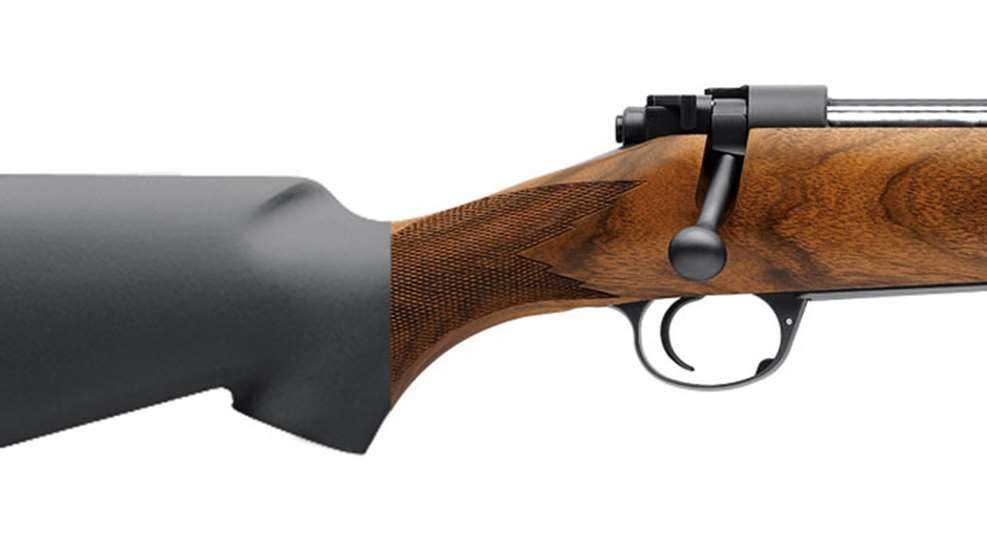
Two rifles of the same model can look completely different: one with a deep walnut stock, the other with a plain gray synthetic stock that's noticeably lighter. Is the choice only about looks and weight?
It isn't. A stock does a job that matters more than either. By the end you should be able to explain what a stock does for accuracy, choose among wood, laminate, synthetic, carbon fiber and chassis stocks for your climate and how far you carry, and know why fit matters more than material.
What a stock actually does
A stock has two jobs. The one you notice is fit: it's what you shoulder, grip and rest your cheek on, so its shape decides whether your eye lands behind the scope without moving your head. The one you don't notice is support: it holds the barreled action, and it has to hold it exactly the same way on every shot.
That second job is where materials differ. If the stock changes shape, swelling with damp weather, flexing under your hand on a rest, or bending when you lean on a sling, the pressure on the action or barrel changes, and where the bullet lands can change with it. A rifle that shoots to one spot in August and four inches away in a wet November often has a stock problem, not a barrel problem.
How the action sits in the stock is called bedding. A stock with a solid aluminum bedding block, or an action glass-bedded (set in a hardened epoxy molded to fit it), holds the action the same way every time, whatever the stock itself is made of.
Key idea: A good stock fits you and holds the action the same way every shot in any weather. Material matters because it decides how well the stock does that, and how much it weighs.
The materials, and what each one trades
Walnut and other hardwoods are beautiful, warm in the hand and easy to reshape or re-bed. Wood is also heavier, and it takes on and gives off moisture, so a wood stock can swell or warp enough to shift your zero when the weather changes, especially if its finish is worn. Well-sealed and well-bedded wood is stable enough for most hunting, but it needs care.
Laminate is thin layers of wood glued together under pressure. The glue layers block moisture and the crossing grains resist warping, so laminate is far more stable than solid wood and looks like wood. Its cost is weight: laminate is usually the heaviest stock option.
Injection-molded polymer, the plastic stock on most budget rifles such as the Ruger American and Savage Axis, is light, inexpensive and unaffected by rain. The better ones have built-in bedding blocks. Cheaper ones can flex, and if the forend bends under a bipod or a firm hold and touches the barrel, the shot moves. They suit most hunting at ordinary distances just fine.
Fiberglass and composite stocks, from makers such as McMillan and Bell & Carlson, are stiff, weatherproof and usually bedded to aluminum. They're the durable all-rounder for hard use and precision work, and they cost more than polymer.
Carbon fiber is the lightest and stiffest, which is why mountain rifles such as the Christensen Ridgeline use it. It's also the most expensive, and a very light rifle kicks harder.
Aluminum chassis stocks are rigid, highly adjustable and built for long-range precision shooting. They're heavy, which helps steadiness on a bench or prone and hurts on a long walk.
- If you hunt Iowa's December gun seasons in rain, sleet and snow, choose synthetic or laminate, because they won't shift your zero as the weather changes.
- If you walk a long way to hunt in the mountains, choose carbon fiber or a light composite, because every pound counts by the third ridge.
- If you want a classic rifle you'll enjoy for decades and you'll care for it, choose walnut, sealed and bedded, and check your zero before each season.
- If you shoot long-range precision from a bench or prone, choose a chassis or a fiberglass precision stock, because stiffness and adjustability matter more than weight there.
If you're not sure, choose a quality synthetic stock with a bedding block. It's light, stable in any weather and affordable.
Fit matters more than material
A stock that doesn't fit you costs more accuracy than any material difference. Two measurements matter most. Length of pull, from the trigger to the end of the stock, should let you mount the rifle without stretching or cramming your face against your thumb. Comb height, the height of the cheek rest, should put your eye in line with the scope when your cheek rests naturally; a scope mounted higher than the iron sights the stock was designed for often needs a taller comb. Many modern stocks have spacers and risers to adjust both.
To check fit before you buy, ask to handle the rifle with the action open and confirm it's empty, then mount it with your eyes closed and open them. If you're looking straight through the scope with a full picture, it fits. If you have to lift or press your head to find the picture, it doesn't, and an adjustable stock or a different rifle is the answer.
Common mistake: Buying a carbon or chassis stock to fix poor groups when the real problem is fit or technique. If your eye isn't landing behind the scope the same way every time, no stock material will tighten your groups.
Check your understanding
Try answering these before you open the answer. If you can decide what to do and explain why, you have it.
1. Your walnut-stocked rifle shot perfectly in September but hits three inches high after a week of rain in November. What's the likely cause, and what do you do?
The wood took on moisture and changed shape, putting different pressure on the action or barrel. Re-check your zero before hunting in changed weather, have the stock sealed and bedded, or move to a synthetic or laminate stock if you often hunt wet.
2. Your budget rifle's groups open up when you shoot off a bipod. What might be happening?
The polymer forend may be flexing under the bipod and touching the barrel. Shoot from a bag under the action area to test it; if groups tighten, a stiffer stock or bedding work will help.
3. You're buying your first deer rifle for Iowa's late-season hunts and your budget is tight. Which stock?
A synthetic stock with a bedding block. It's light, affordable and unaffected by rain and snow, which matters more than looks in December.
4. You mounted a tall scope on your grandfather's walnut rifle and now strain your neck to see through it. What's the fix?
The comb is too low for the scope. Add a cheek riser or comb pad, or use lower rings if the scope clears the barrel. The goal is your eye in line with the scope when your cheek rests naturally.
5. A friend wants a chassis stock for his elk rifle because it's "the most accurate." What should he weigh?
Chassis stocks are stiff and adjustable, but heavy. On a long elk hunt the weight wears him down, and fatigue costs more accuracy than the stock adds. A light composite or carbon stock suits carrying far better.
Where to go next
For how barrels and bedding work together, read rifle barrel design. To see what each price level buys in a hunting rifle, see out-of-the-box hunting rifle quality. And for a lightweight carbon rifle in detail, read the Christensen Arms Ridgeline.
If this article helped you, we invite you to sign up for email notifications of new blog articles.