
The Evolution of Rifle Scopes: From Rudimentary Optics to Cutting‑Edge Precision
Joseph McLain Nov 07, 2026
Rifle scope boxes read like a secret code. One says 3-9x, another says 1-6x, another says 5-25x. Some mention first focal plane, illuminated reticles, zero stop and argon-purged tubes. It is easy to feel that you are being asked to memorize a vocabulary list.
There is a better way to shop. Every one of those features began as a fix for a real problem that shooters had, and once you know the problem, the feature makes sense. Learn the problem behind each feature, and you can tell which ones matter for your own hunting or shooting and which ones you would be paying for and never use.
The first rifle scopes and the three problems they had
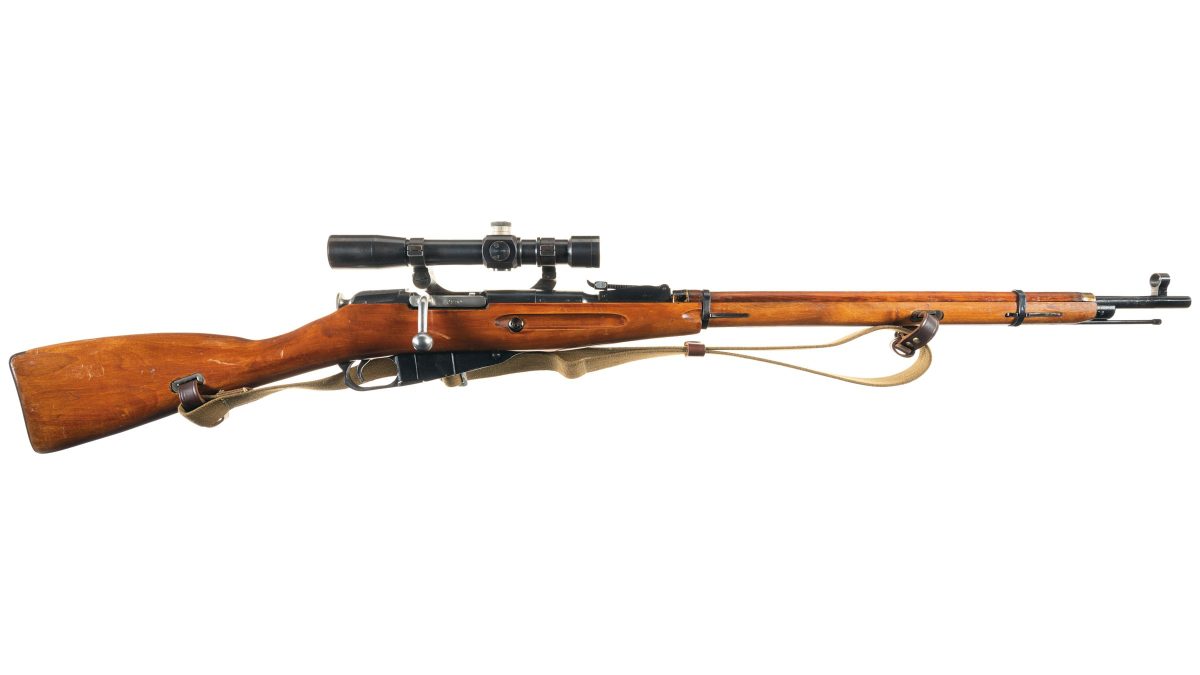
The idea of mounting a "telescopic sight" on a rifle took shape in the mid-19th century, driven by the need for better accuracy at longer distances. Innovators such as John R. Chapman and Morgan James in the United States built rudimentary scopes with basic crosshairs, and that work laid the groundwork for everything that followed. During the American Civil War, a primitive design known as the "Malcolm Scope" significantly helped sharpshooters engage distant targets.
Those early scopes were a real step forward, but they had three weaknesses worth remembering, because modern scopes are still graded on the same three things.
- Optical quality. Uncoated glass lenses produced significant glare and distortion. Think of looking through a dirty, wavy window and trying to pick out one small object.
- Adjustability. Most early scopes had fixed magnification and rudimentary crosshairs, so they offered almost no help in compensating for bullet drop or wind.
- Fragility. The delicate construction made them prone to damage in rugged field conditions.
| Old problem | What the shooter saw | The modern answer |
|---|---|---|
| Uncoated glass | Glare and distortion | High-quality glass and multicoated lenses |
| Fixed magnification | The same view at every distance | Variable-power scopes |
| Rudimentary crosshairs | Little help with drop or wind | Precision turrets and modern reticles |
| Delicate construction | Damage in the field | Strong aluminum bodies that are sealed and gas-filled |
The table reads from left to right as a story. Each row starts with something that frustrated a shooter and ends with the feature that now fixes it. When you meet an unfamiliar feature on a box, ask which row it belongs to. That one question sorts most of the marketing language into a handful of ideas.
What the 20th century added: Clearer glass, variable power and tougher bodies
Military needs drove a great deal of the progress. The demand for precise sniping and long-range engagements pushed scope makers toward better-quality glass, and they began experimenting with lens coatings. Variable-power scopes, which let the shooter change magnification, started to rise in this era and dramatically improved versatility. Military demands for shock resistance also led to stronger scope bodies and improved internal mechanisms.
After the war, those advances reached hunters and competitive shooters. Variable-power scopes meant one scope could serve at several ranges. Think of a camera with a zoom lens instead of a single fixed lens. You can use a low setting for a quick look at a close target and a higher setting for a careful long shot. Traditional crosshairs also evolved into mil-dot, BDC (Bullet Drop Compensator) and illuminated designs, which aided range estimation and low-light shooting.
The introduction of anti-reflective coatings may have mattered most. Every glass surface reflects a little of the light that hits it, and a scope has many of them. Light that bounces away never reaches your eye, and some of it scatters inside the tube as glare. Anti-reflective coatings cut those reflections, so more light gets through and glare drops. That is why a well-coated scope looks brighter at dawn and dusk, when many hunters are in the field.
Key idea: A scope is a bundle of solutions. Coatings answer glare, variable power answers distance, turrets and reticles answer drop and wind, and sealing and tough bodies answer weather and recoil. The best scope for you is the one that solves the problems you actually have.
Optical quality you can judge with your own eyes
Modern scopes use high-quality glass to minimize distortion and color aberrations, which appear as colored fringes around bright edges, so the image looks clearer and sharper. Multicoated lenses stack several kinds of coatings. Anti-reflective layers improve light transmission, hydrophobic layers repel moisture so water beads and runs off, and anti-scratch layers protect the lens. High-end scopes with excellent coatings also reduce glare and eye fatigue, which matters over a long day of shooting or glassing.
The nice thing about optics is that you can test them yourself in a few minutes.
How to compare two scopes side by side
- Set two scopes to the same magnification. If a scope is on a rifle, make sure the rifle is unloaded, keep the muzzle in a safe direction, and keep your finger off the trigger.
- Look at the same distant object in the same light. Choose something dark against a bright background, such as a roofline or tree branch against the sky. Never point a scope at the sun.
- Check the edges of the object for colored fringes, then compare overall brightness and how sharp the edges of the image look.
- Spend a minute or two with each and notice which one tires your eye faster.
Differences you can see this way come from glass quality and coatings, and they matter far more on a gray November dawn than any line on the box. Sometimes the less expensive scope wins, which is worth knowing before you pay for the other one.
Turrets, zero stops and reticles: How a scope answers bullet drop and wind
The knobs on top and on the side of a scope are called turrets. They move the scope's aim point so you can adjust elevation (up and down) and windage (left and right). Modern turrets have tactile and often audible clicks, typically in 1/4-MOA or 1/10-MRAD increments, so each click moves the bullet's impact by a small, known amount. A 1/4-MOA click moves the point of impact about a quarter inch at 100 yards. If your group lands about 2 inches low at 100 yards, that is roughly eight clicks up. Our guide to understanding MOA explains how to work with these numbers.
A zero stop lets you return to your original zero quickly. Suppose you dial up several clicks for a long shot on a distant target. Without a zero stop you have to count those clicks back down and hope you got it right. With a zero stop you turn the knob until it stops, and you are back at your zero. That is especially handy for shooters who make multiple elevation changes.
The reticle is the aiming pattern you see inside the scope. It started as a basic crosshair and has grown into several kinds. Mil-dot reticles carry marks that help you estimate range and hold over. BDC reticles have marks meant to correspond to bullet drop at different distances. Illuminated reticles use an LED to light the pattern so it keeps its contrast in low light. Together with first or second focal plane designs, they give shooters aiming solutions for different ranges and conditions. If you want to see how each pattern looks and when each one shines, our article on rifle scope reticles goes deeper.
Common mistake: Trusting the marks on a BDC reticle with any ammunition. Those marks are built around a particular bullet and zero distance. Confirm where your own load actually lands before you rely on them.
First focal plane or second focal plane
This is the feature that confuses people most, and the idea is simple. In a first focal plane (FFP) scope the reticle sits in front of the magnifying lenses, so it grows and shrinks along with the image when you change magnification. Imagine drawing marks on a photograph and then enlarging the photograph. The marks stay the same size compared to the picture. That keeps the reticle's measurements (its subtensions) accurate at any magnification, which is invaluable for long-range precision and ideal when you make constant range adjustments.
In a second focal plane (SFP) scope the reticle stays the same apparent size while the image changes. That is typically simpler to use at low power, but the reticle's subtensions only match at one magnification setting. Check the scope's manual for which setting that is.
A simple way to decide: if you change magnification often and use the reticle marks to hold for different distances, choose first focal plane. If you want a simple crosshair or a basic BDC and you mostly shoot at one power, second focal plane is a fine and often simpler choice.
Magnification and field of view: Why more is not always better
Variable-power scopes often range from 1-10x up to 6-24x or higher, which gives shooters flexibility for both close-quarters work and long-range engagements. The cost is field of view, the width of the scene you can see through the scope. Higher magnification shows a narrower slice of the world, a bit like looking through a drinking straw. A wide field of view enhances situational awareness and eases target acquisition, which is critical for both hunting and tactical scenarios.
So the right magnification depends on how far your shots really are. For close-quarters to mid-range work, 1-4x, 1-6x or 1-8x variable scopes excel in dynamic environments, where you need to find a target fast. For extended distances, 4-16x, 5-25x or even higher magnifications suit precision shooting beyond 600 yards.
Common mistake: Buying the highest magnification on the shelf. A scope that tops out at 25x is a poor fit for a rifle you carry through timber, where a wide, low-power view will serve you far better. Our article on what the numbers on a rifle scope mean shows how to read a magnification range and an objective lens size.
Toughness you cannot see: Sealing, recoil rating and mounts
Modern scope bodies are often machined from aircraft-grade aluminum, a lighter and stronger housing that withstands recoil and rough handling without excessive weight. Reinforced internal components are designed so that the scope remains zeroed under heavy recoil. Most modern scopes are built to withstand severe recoil while maintaining zero under stress.
Weather is the other enemy. Air inside a scope carries moisture, and when temperatures swing, say from a warm truck cab to a damp morning, that moisture can fog the inside of the lenses. O-ring seals keep outside moisture from getting in, and nitrogen or argon purges replace the air inside with dry gas, which prevents internal fogging. When you shop, look for O-ring sealing and a nitrogen or argon purge for dependable performance in all weather. Also make sure the scope is rated for the recoil of your firearm, especially with magnum calibers.
The scope is only half of the system. Modern mounting systems and robust scope bodies keep zero shifts to a minimum, but only when the rings and bases hold the scope firmly. Think of a good camera on a wobbly tripod. The camera is not the problem, yet your pictures will still blur. High-quality rings and bases are essential to maintaining zero, and skimping here can undermine an otherwise excellent scope. Budget for them from the start, along with lens caps and sunshades that protect the glass from dust, moisture and glare when you are not shooting. Our beginner's guide to mounting a rifle scope walks you through the process.
Smart optics, thermal and what may come next
Illuminated reticles are the electronic feature most shooters will use first. Beyond them, some advanced scopes incorporate rangefinders, ballistic calculators and even AR (augmented reality) overlays to offer real-time data. Thermal and infrared capabilities allow shooters to engage targets in total darkness or through obstructive conditions like fog. Those are specialized tools, so ask whether your hunting or shooting really needs them before you pay for them.
Looking ahead, the industry is exploring several directions.
- Onboard ballistic calculators with sensors for wind speed, range and trajectory
- AR displays that show ballistic and environmental information in the shooter's view
- Composite materials and refined metals for lighter, more durable high-magnification scopes
- Adaptive optics, nanocoatings and AI-driven lens calibration for sharper images
Future scopes might also integrate cameras, rangefinders and overlays that highlight targets or measure wind drift automatically, and they may connect with wearable tech or squad-based communication systems in tactical settings. Treat that list as a direction, not a promise. Notice that every item is a better answer to an old problem, such as wind, weight or clarity, which is the same pattern you saw in the first table.
What a good scope does for your accuracy, and what it does not
Precision turrets, quality lenses and advanced reticles make consistent sub-MOA groupings possible, especially for disciplined shooters. Sub-MOA means groups smaller than about an inch at 100 yards. A scope does not make a rifle shoot tighter on its own. What it does is let you see the target clearly, aim precisely and adjust accurately, so the rifle, the ammunition and your technique can show what they can really do. Our article on how ammunition affects your accuracy explains the other half of that picture.
The same strengths widen what you can do in the field. Variable magnification and advanced reticles support ethical shots on game out to extended distances for long-range hunting and competition. Rugged housings, shock resistance and advanced reticle designs make scopes useful in high-stress tactical and law enforcement settings.
Choosing a rifle scope: Start with what you do, then work outward
Begin with your primary use, then let it point you to the features that matter most.
| Main use | What to look for | Reticle and features |
|---|---|---|
| Hunting | Low-light performance and durability | BDC or a simple crosshair |
| Long-range competition | High magnification range and match-grade turrets | First focal plane reticle and a zero stop |
| Tactical or defensive | Durability, ease of use and reliable zero retention | Illuminated reticle |
The pattern in the table is that hunters value a bright, tough, simple scope, competitors value precise adjustments and reticles that keep their measurements at any power, and defensive users value ruggedness and fast, easy use. Once you know your row, match the magnification range to your usual shooting distance, check the recoil rating and sealing, and set aside budget for good rings and bases.
Putting it together
A simple, clear scope in the right magnification range covers most hunting, and many features on the expensive boxes solve problems you may never have. Features earn their price when they fix a problem you actually face, such as low light, long range or fast close shots. Name your distances and conditions first, choose the magnification range and reticle that fit them, spend on glass and reliable adjustments before extras, and confirm your zero after mounting.
Check your understanding
Try answering these before you open the answer. If you can decide what to do and explain why, you have it.
1. A friend says a more expensive scope looks brighter and less glary at dusk. Which features probably explain that?
High-quality glass and multicoated lenses. Anti-reflective coatings reduce light lost to reflections and cut glare, so more light reaches your eye.
2. You change magnification often and use the reticle marks to hold for different distances. Should you choose a first or second focal plane scope, and why?
First focal plane. The reticle scales with the image, so its subtensions stay accurate at any magnification. In a second focal plane scope they only match at one setting.
3. You bought a well-reviewed scope but saved money with bargain rings, and now your zero wanders between range trips. Is the scope the problem?
Probably not. A scope holds zero only if it is mounted firmly, and cheap or poorly fitted rings and bases let it shift under recoil. Good rings and bases, installed to the right torque, are part of the scope system, not an extra.
4. Your deer rifle is a magnum caliber and you hunt in damp weather. Which two durability features do you check?
That the scope is rated for the recoil of your firearm, and that it has O-ring sealing with a nitrogen or argon purge to keep moisture out and prevent internal fogging.
5. You hunt deer in timber where most shots come inside 100 yards, and a friend urges you to buy a 6-24x scope for the reach. What would you tell him?
Higher magnification narrows the field of view, which makes a moving deer in close cover hard to find in the scope. A low-power variable such as a 2-7x or 3-9x, turned down for close shots, is faster and easier to use where most of your shots will happen.
Where to go next
You can find rifle scopes on our website, including Burris Fullfield hunting scopes, Burris Veracity first focal plane scopes and Trijicon AccuPoint illuminated scopes, and anything listed there can be ordered if it isn't in stock.
If the numbers on the box still feel fuzzy, read understanding rifle scopes, which explains what each number means for your shooting. Once your scope is mounted, the guide to sighting in a rifle scope shows you how to use those turrets to bring your zero into line. And if red dots and handgun optics interest you, the evolution of pistol optics tells a similar story of problems and fixes.
If this article helped you, we invite you to sign up for email notifications of new blog articles.