
Understanding Rifle Scopes: What the Numbers Mean and How They Affect Shooting
Joseph McLain Nov 07, 2026
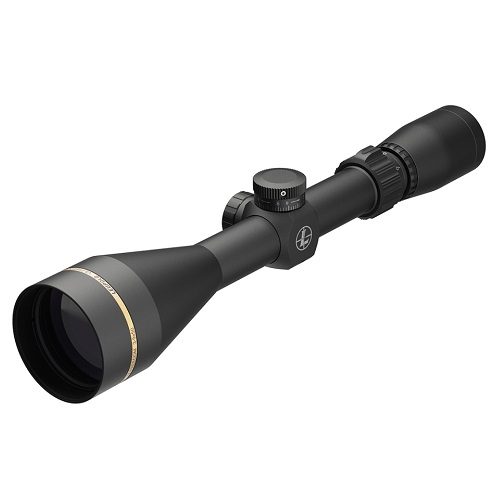
Two scopes, one marked "3-9x35" and the other "4-12x50." Both are glass in a tube, both will fit a rifle, and nothing on the box tells you what those numbers promise. Is the bigger objective always better, or does it just make the scope heavier?
By the end you should be able to read any scope's specifications, know what each feature does for you in the field or at the bench, match them to the way you hunt or shoot, and avoid the mistakes that cost shooters their zero.
Reading the numbers: What "3-9x35" tells you
A rifle scope is a small telescope with an aiming pattern built into it. The numbers on the side describe its two most important traits. In "3-9x35," the part before the "x" (3-9) is the magnification range, and the number after it (35) is the diameter of the large front lens, called the objective lens, in millimeters. Nearly everything else about how a scope behaves grows out of those two.
Magnification: How close the target looks, and what you give up for it
Magnification tells you how many times closer the target appears. A 3-9x scope can be set anywhere from 3x (zoomed out) to 9x (zoomed in). At 3x you get a wide field of view, which is how much of the scene fits in the picture, so a close or moving target is quick to find. At 9x you can see fine detail on a distant target and place the shot more precisely, but the field of view narrows. Zooming a phone camera works the same way. The more you zoom, the more detail you see and the easier it is to lose your subject.
Picture a deer stepping out of brush at close range. At 3x you see the whole animal and can settle the sights on it. At 9x you might be looking at a patch of hair and hunting for the rest of the deer. The same scope is the better tool at the other end of a field, where you need the detail.
Common mistake: Leaving a variable scope on its highest power all the time. Higher magnification narrows your view and makes every small movement of the rifle look larger, so use the lowest setting that still lets you see the target clearly.
Scopes come in two kinds, and the choice is mostly about how much your shooting distance changes.
| Scope type | Strengths | Trade-offs |
|---|---|---|
| Fixed power (for example, 4x32) | Generally more rugged and less complex, with excellent durability and easy maintenance | Limited versatility when shooting conditions vary |
| Variable power (for example, 3-9x35 or 4-12x50) | You can tailor magnification to target distance and lighting, from close-range defense to long-range precision shooting | Can be slightly heavier and more complex, which may affect the rifle's overall balance |
Ask whether you shoot at about the same distance every time. If you do, the simplicity of a fixed-power scope is hard to beat. If you meet targets at close range one day and farther away the next, a variable scope lets one optic cover both.
Objective lens size: The second number and the light it gathers
The objective lens is the big lens at the front, and its diameter sets how much light the scope can collect. A larger objective gathers more light and gives a brighter image, which matters most at dawn, at dusk and in fog, the times when game tends to move. The cost is weight. Larger lenses add mass to the front of the scope, which can change how the rifle balances in your hands.
Here is a quick way to compare. Divide the objective size by the magnification and you get the exit pupil, the width of the beam of light that leaves the eyepiece and enters your eye. A 4-12x50 set to 12x gives 50 divided by 12, or about 4.2 mm. A 3-9x35 set to 9x gives about 3.9 mm. Larger numbers generally mean a brighter image to your eye, and notice that zooming in lowers the number, which is one reason a scope can look dimmer at full power.
Eye relief is the distance between your eye and the rear lens where you get the full picture. Check the stated eye relief for the scope you are considering, and make sure you have enough of it. A scope mounted too close can strike your brow when the rifle recoils, so adequate eye relief is a matter of comfort and safety, especially on higher-recoil rifles.
If you hunt in low light, lean toward a larger objective and accept the extra weight. If you carry the rifle all day, ask whether that weight is worth it.
Reticles: The aiming pattern you actually see
The reticle is the pattern you see when you look through the scope, the crosshair or marks you place on the target. Different designs are built for different jobs, and the three most common are easy to tell apart.
| Reticle | What it looks like | Best for | Why it works |
|---|---|---|---|
| Duplex | Thick outer lines that taper to thin crosshairs in the center | General hunting and target shooting | A clear, easily visible aiming point for fast target acquisition |
| Mil-dot | A series of dots along the crosshairs | Long-range shooting and precision competitions | The dots are reference points for range estimation and windage adjustments, allowing rapid on-the-fly corrections |
| Bullet Drop Compensation (BDC) | Marks or dots that correspond to specific distances | Hunters and competitive shooters engaging targets at varying ranges | Pre-calculated holdover points simplify adjusting for bullet drop |
The table runs from simple to complex. The duplex is the easy default, because the thick outer lines draw your eye to the center and the thin crosshairs give you a precise point to aim with. The mil-dot and BDC designs add marks you can use as a measuring tool or a distance guide.
Bullet drop is how far gravity pulls the bullet below your line of sight as the distance grows. A BDC reticle gives you extra marks below the center, one for each distance, so you place the matching mark on the target instead of turning a dial. Those marks are calculated for particular ammunition, so confirm them at the range with the load you plan to shoot. Our article on sighting in rifles at different distances explains drop and holdover, and how ammunition affects your accuracy shows why one load can differ from another. For a closer look at each design, read rifle scope reticles.
Parallax: Why your head position should not move your shot
Hold a finger out at arm's length and line it up with something on the far wall. Close one eye, then move your head side to side. The finger appears to slide across the wall. Parallax in a scope is the same effect, an apparent shift of the reticle against the target when your head moves. If it is not addressed, your aim point shifts with it and you can get point-of-impact errors.
The effect depends on magnification and distance. At lower magnifications parallax is less noticeable, and many scopes are set to be parallax-free at around 100 yards. At higher magnifications small shifts of your head can cause significant errors in point-of-impact, especially in long-range shooting. Scopes handle it in two ways.
- Adjustable objective (AO). A ring near the front of the scope that lets you fine-tune to reduce parallax at various distances.
- Side focus knob. A knob on the side that lets you dial in a precise correction based on the target's range.
As a guide, if you shoot mostly at moderate range and lower magnification, the factory setting near 100 yards may serve you well. If you shoot long range at high magnification, a scope with adjustable parallax is essential, because your head will never sit in exactly the same spot twice.
A parallax check
You can see parallax for yourself in a minute. With the rifle unloaded, the action open, the muzzle in a safe direction and the line cold, rest it on a bench or bags, set the scope to its highest magnification and hold the crosshair on a small mark as far away as you can safely use. Without moving the rifle, shift your head slightly up, down and side to side. If the crosshair seems to slide off the mark, parallax is at work; setting the AO ring or side focus knob, if your scope has one, to the target's distance should make the crosshair stay put. If your scope has no adjustment, you've just seen why a consistent cheek position on the stock matters.
Coatings: More light and less glare
Every glass surface inside a scope bounces a little light back instead of passing it through. Lens coatings are thin layers applied to the glass to reduce that loss, and the labels tell you how much of the job was done. Two questions sort them out. How many layers are there, and how many glass surfaces got them?
| Label | Layers | Where applied |
|---|---|---|
| Coated | A single layer | One surface of each lens |
| Fully coated | A single layer | All external glass surfaces |
| Multicoated | Multiple layers | At least one surface |
| Fully multicoated | Multiple layers | All external surfaces, for maximum light transmission and minimal glare |
"Fully" answers the second question (all external surfaces) and "multi" answers the first (multiple layers). A scope labeled fully multicoated gets both. That pays off in three ways. Fully multicoated lenses give the best brightness and clarity, especially in low light. They also reduce glare from bright light sources, which keeps the reticle from washing out when you look toward the sun. And the coatings add scratch resistance, which extends the life of the lenses.
If you hunt at dawn and dusk, treat "fully multicoated" as a priority. Pair it with a larger objective and you have put the two main light-gathering features to work together.
First or second focal plane: Does the reticle grow when you zoom?
This question only applies to variable-power scopes. Picture a drawing on a balloon. As you inflate it, the drawing gets bigger along with the balloon. That is a first focal plane (FFP) reticle, which enlarges proportionally with the image as you change magnification. Now picture a sticker on a window. The scene behind the glass changes size, but the sticker does not. That is a second focal plane (SFP) reticle, which stays the same size regardless of magnification.
| Feature | First focal plane (FFP) | Second focal plane (SFP) |
|---|---|---|
| Reticle size | Grows and shrinks with the image | Stays the same at every magnification |
| Range estimation | Markings stay true to scale at any zoom level, which gives consistent range estimation | Less effective, because the reticle does not scale with zoom |
| Best for | Long-range shooting, preferred by competitive and tactical shooters who need precision at various distances | Hunting and general shooting where simplicity and a consistent aiming point at lower magnifications matter |
| Trade-offs | Generally more expensive and complex, and the reticle may become overly large at high magnifications | Simpler and easier for beginners, but not the tool for measuring with the reticle |
The practical difference shows up when you use the marks to measure. On an FFP scope with a mil-dot reticle, the dots cover the same amount of target at low power and at high power, so the reticle works as a ruler at any zoom. On an SFP scope the marks match their stated values only at one magnification setting, which the scope's manual identifies, so you give up that flexibility in exchange for a reticle that always looks the same.
If you need scalable reticle marks for long-range precision, choose FFP. If you want simplicity and consistency for hunting and general shooting, choose SFP.
Durability and mounting: Keeping your zero
Your zero is the sight setting that makes the bullet land where the crosshair points. A scope with excellent glass is no help if it will not hold that zero through recoil, weather and wear. Three qualities protect it.
- Recoil resistance. Rifle scopes take significant recoil forces, especially on high-powered rifles, so look for robust materials and proven shock resistance.
- Weatherproofing. A good scope is waterproof, fog-proof and able to handle temperature extremes, so it performs in humid forests and in arid, dusty country alike.
- Construction quality. High-quality scopes often use aircraft-grade aluminum or other durable materials, and they are designed to hold zero even after repeated exposure to harsh conditions.
Which of these matters most depends on where you shoot. A big-recoiling hunting rifle puts recoil resistance at the top of the list, while a rifle that rides in a truck through rain and cold makes weatherproofing the priority.
Mounting rings: The bridge between scope and rifle
A scope is only as steady as the rings that hold it, and any movement between scope and rifle can change the point of impact. Rings need to be correctly installed and torqued to the manufacturer's specifications, because improper installation can shift the scope's alignment and cause a loss of zero. Quality rings are typically made of steel or aluminum and are designed to handle recoil without passing undue stress to the scope, with a good balance of strength and light weight.
Match the rings to your rifle's rail or base. Some shooters choose rings with adjustable cant, which means a tilt adjustment to fine-tune the scope's alignment relative to the rifle's rail. Our guide to rail systems explains Picatinny, Weaver and M-LOK, and the beginner's guide to mounting a rifle scope walks through the installation.
Safety: Make sure the rifle is unloaded before you touch any mounting hardware, and tighten the rings to the manufacturer's specification rather than by feel.
Scopes for different jobs, and what to notice in each
Here are scopes we recommend for different applications. As you read, match each one to the features above, since that habit will serve you when you compare any two optics.
Tactical and defensive use (low to medium magnification)
Low magnification keeps the field of view wide, which suits fast target acquisition at close to mid range.
- Trijicon ACOG. Fixed power, rugged construction and excellent light transmission. Its simplicity and durability make it a strong fit for high-intensity tactical applications.
- Aimpoint Micro T-2. A red dot optic, mounted on rifles for rapid target acquisition at close to mid-range distances. It is known for long battery life and ruggedness.
Notice that the ACOG makes the fixed-power trade-off in its favor, giving up zoom for toughness. The Micro T-2 is a red dot, so it is a different kind of aiming tool from a magnified scope.
Competitive and long-range precision shooting
This job rewards the features from earlier sections, namely variable magnification, fully multicoated glass and a reticle that can measure.
- Leupold VX-3i. Variable magnification, fully multicoated lenses and exceptional optical clarity. It offers precise adjustments and outstanding light transmission, which suits competitive shooters.
- Vortex Viper PST Gen II. Variable magnification (for example, 3-15x), a robust build and a fully multicoated lens system. It delivers excellent performance at long ranges in a durable design.
- Schmidt & Bender PM II. Available in both FFP and SFP versions, with exceptional clarity and precision. It is a top choice for professional long-range shooters who demand the highest performance.
The Schmidt & Bender PM II is a good example of the focal plane choice in practice. The maker offers both versions, so you can match the reticle behavior to your own use.
Hunting and general field use
- Leupold VX-Freedom. Variable magnification, lightweight design and excellent low-light performance. It balances performance with durability, which makes it ideal for field hunting.
- Burris Veracity. Robust construction, multiple reticle options and reliable performance under varying conditions. Its durability and clarity make it a solid choice for diverse field environments.
- Sig Sauer Romeo Zero Gen II (with magnification upgrade option). Compact, lightweight and designed for rapid target acquisition, with an option for added magnification. It offers versatility for both close-quarter engagements and longer-range shooting.
Weight and low-light performance matter most in the field, because you carry the rifle and you hunt when the light is poor. That is why lightweight design and low-light performance lead the descriptions here. Which of these suits you depends on how far your typical shot is and when you hunt, and that is a good place to start the next exercise.
Choosing a scope for your own rifle
Start with distance and light, because they decide magnification, objective size and coatings. Rail fit, weight and eye relief then narrow the field. Work through the steps below on paper before you shop.
Matching a scope to your rifle
Four facts about your shooting choose the scope. Your nearest and farthest realistic distances set fixed or variable power, the magnification range and whether you need adjustable parallax. The light you shoot in sets the objective size and coatings; dawn, dusk and dense cover call for a larger objective and fully multicoated optics. Your rifle's rail or base decides the rings, with quick-release mounts if you swap optics often. And the rifle's weight and recoil decide how heavy a scope it can balance and how much eye relief it needs. For a red dot or reflex sight, battery life, auto-brightness and shockproof, waterproof construction matter most. When you can name the power, objective, coatings, reticle and rail your rifle needs, any scope's specifications will make sense.
Putting it together
A larger objective can gather more light at high magnification, but it adds weight and often needs taller rings, and for most hunting a moderate magnification range matters more. Read the numbers for magnification and objective size, choose the range that fits your distances, decide whether you need first or second focal plane and parallax adjustment, mount it with proper ring height and torque, and confirm your zero.
Check your understanding
Try answering these before you open the answer. If you can decide what to do and explain why, you have it.
1. You hunt deer from a stand at dawn and dusk, with most shots under 100 yards. Which scope numbers and features would you favor, and why?
A variable scope that includes a low magnification setting for a wide field of view, a larger objective to gather more light, and fully multicoated lenses for brightness, clarity and less glare. A simple duplex reticle and SFP design suit hunting, and the factory parallax setting near 100 yards is likely to work well.
2. You hold the crosshair on a target, shift your head slightly, and the crosshair seems to move on the target. What is happening, and what can you do about it?
That is parallax, an apparent shift of the reticle against the target when your head moves. You can reduce it by adjusting the AO ring or side focus knob to the target's distance, lowering the magnification, and keeping a consistent head position.
3. Why might a long-range competitor choose a first focal plane scope while a deer hunter chooses a second focal plane scope?
An FFP reticle scales with the image, so its marks stay true for range estimation at any zoom level, which helps at various distances. An SFP reticle stays the same size, which is simpler and gives a consistent aiming point at lower magnifications for hunting.
4. Two scopes look identical, but one box says "multicoated" and the other "fully multicoated." What's the difference you'd notice at dusk?
Multicoated means multiple layers on at least one lens surface; fully multicoated means multiple layers on every external glass surface. The fully multicoated scope transmits the most light with the least glare, so it stays brighter as the light fades.
5. A scope that held its zero last season now shoots to a different spot after a hard season of use. What would you check first?
Check the mounting. Loose or improperly torqued rings can shift the scope's alignment and cause a loss of zero, so confirm the rings are installed correctly and tightened to the manufacturer's specifications (with the rifle unloaded).
Where to go next
Once you have chosen a scope, our guide to sighting in a rifle scope shows how to turn it into a working zero. To understand the adjustments and reticle marks you read about here, read understanding MOA, since minute of angle is the unit many scopes use to measure them. And if you are curious why today's optics have the features they do, the evolution of rifle scopes tells that story.
If this article helped you, we invite you to sign up for email notifications of new blog articles.