
Red Dots, Holographic and Prism Sights: Choosing a Fast Optic for Your Rifle
Joseph McLain Nov 07, 2026
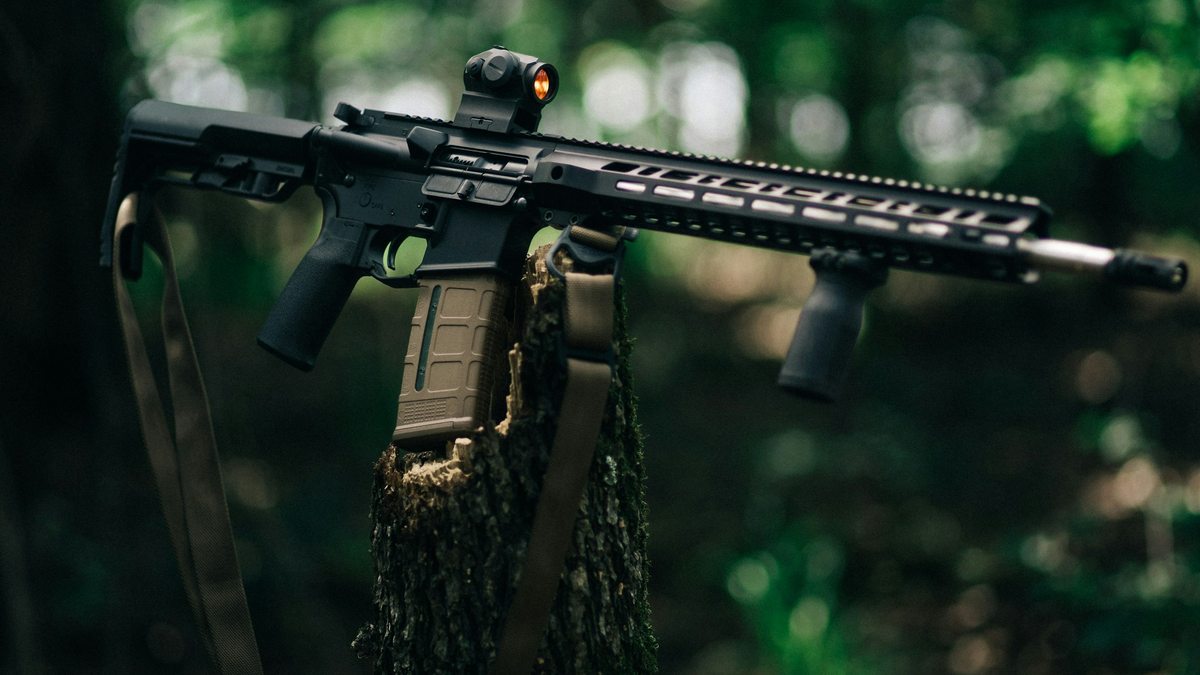
You finally bought a rifle, maybe an AR-15, a pistol-caliber carbine or a lever gun with a rail, and now you want a sight that is faster than the iron sights it came with. Red dots, holographic sights and prism sights all promise speed, and each has fans who swear it is the only choice, especially if you have astigmatism.
These sights solve the same problem in different ways, and the right one depends on your eyes, your rifle and what you use it for. The way each one makes its aiming point decides how the reticle looks to your eye, how long the battery lasts and how carefully you must place your head, and those are the things that matter when you choose.
Why a non-magnified optic is fast
Iron sights ask your eye to do something it cannot do: Keep the rear sight, the front sight and the target all in focus at once. Your eye can only focus on one distance at a time, so you shift your focus back and forth, and that takes time and attention. A red dot or holographic sight puts the aiming point on the same focal plane as the target. You look at the target, the dot appears on it, and you shoot.
Think of it like the difference between reading a road sign with sunglasses that keep fogging up and reading it through a clean windshield. The windshield does not make the sign bigger. It just stops getting in the way. Non-magnified optics are the same: They do not help you see farther, they help you aim faster with both eyes open and your attention on the target.
What you give up is magnification. At typical rifle distances in Iowa, from across a room to a couple hundred yards, a dot is fast and plenty precise for most uses. Past that, a small target gets covered by the dot and you start to want magnification. That makes a non-magnified optic the right choice when speed at close to moderate distance matters more than precision far away.
Three ways to put a dot on the target
All three sights give you a lighted aiming point, but they make it in different ways, and that difference explains most of their strengths and weaknesses.
Reflex red dot sights
A red dot sight shines a small LED onto a specially coated lens that reflects that one color of light back to your eye. Because of how the lens is shaped, the dot appears to sit out on the target. Red dots are small, light and often extremely efficient with batteries. Some are rated to run continuously for years on one battery. They come in tube styles, which look like a short scope, and open styles, which look like a small window.
Holographic sights
A holographic sight uses a laser diode to light a hologram of the reticle recorded inside the window. The usual reticle is a dot with a large ring around it. The reticle can look crisper to some people, especially those with astigmatism, and the ring is fast to pick up at close range. The cost is power. Holographic sights draw more power than LED red dots, so they run hundreds or a couple thousand hours on a battery instead of years, and they are usually larger and heavier.
Prism sights
A prism sight is really a short, compact scope. It uses a glass prism to flip the image, and its reticle is etched into the glass, so the reticle is visible even if the battery dies. Many prism sights have a small fixed magnification, such as 1x, 2.5x or 3x, and they often have an illuminated reticle. Because the reticle is etched rather than projected, many people with astigmatism see it more clearly. The catch is that prisms have a more limited eye box, meaning your eye must be more precisely positioned behind them, much like a scope.
| Sight type | How the reticle is made | Main strength | Main trade-off |
|---|---|---|---|
| Red dot (reflex) | LED reflected off a coated lens | Light, compact, very long battery life | Dot can look blurry or star-shaped to people with astigmatism |
| Holographic | Laser-lit hologram in the window | Crisp reticle and fast ring at close range | Shorter battery life, larger and heavier |
| Prism | Etched into glass, often illuminated | Works without a battery and often clear for astigmatism | Less forgiving head position, closer to a scope |
The table reads from left to right as a chain of cause and effect. The way the reticle is made determines how it looks to your eye and how much power it uses, and that determines what it is good at. If you do not know whether your eyes favor one type, look through all three before you buy. Our article on astigmatism, eye dominance and red dots explains why some people see a crisp dot and others see a comet or a cluster of grapes.
Key idea: Red dot, holographic and prism sights all put an aiming point on the target, but they create it differently. That difference decides how the reticle looks to your eye, how long the battery lasts and how precisely your head must be placed.
Dot size and reticle choice
Dot size is usually given in MOA, or minutes of angle, which is a unit of angle that covers about one inch at 100 yards. A 2 MOA dot covers about two inches of the target at 100 yards and about four inches at 200. A larger dot, such as 6 MOA, covers six inches at 100 yards. Our article on understanding MOA explains the measurement in more depth.
A smaller dot lets you aim more precisely at distance because it covers less of the target. A larger dot is easier to find quickly, especially at close range, but covers more. Think of a felt-tip marker versus a fine pen. The marker is easier to see and quicker to use, the fine pen gives more precise lines. Many rifle dots land in the 2 to 3 MOA range as a compromise.
Some sights offer a choice of reticles, such as a dot alone, a dot with a large circle, or a circle with a dot that can be turned off. The circle draws your eye quickly at close range, and the center dot handles precision. So a larger dot or circle-dot is quicker for close work like home defense or fast target practice, and a smaller dot serves you better if you want to stretch out to 200 yards.
Co-witnessing: Seeing your iron sights through the optic
Co-witnessing means mounting your optic at a height where your iron sights line up somewhere in the optic's window. If the optic fails, you can still aim through it using your iron sights. There are two common heights on an AR-style rifle.
- Absolute co-witness. The iron sights line up exactly with the dot in the center of the window, so the irons and dot share the same aiming point.
- Lower one-third co-witness. The iron sights appear in the bottom third of the window, below the dot, so the irons clutter less of your view.
Of these, lower one-third is the more popular choice today because it keeps the center of the window clear while still letting you use irons if needed. Absolute co-witness feels more natural to some people because everything lines up in one place. Mount height also affects comfort. A higher mount lets you keep your head more upright, which many people find easier with a plate carrier or a heavy coat, while a lower mount puts your cheek more firmly on the stock.
Many modern rifles have folding iron sights or no iron sights at all. If your optic has a long battery life and a solid record, you may decide backup irons are not worth the weight. For a defensive rifle, though, keep some way to aim if the optic fails, whether that is co-witnessed irons, offset irons or a sight with an etched reticle.
Common mistake: Buying a mount by price alone and discovering the optic sits at an awkward height. The mount height decides how your head rests on the stock and whether your irons are usable, so choose the mount and the optic together.
Magnifiers: Adding reach when you need it
A magnifier is a small, separate optic, often 3x, that mounts behind a red dot or holographic sight. When flipped into place, it magnifies the image and the dot together. When flipped to the side, you have your fast, non-magnified sight again.
Picture checking your hits at 150 yards with a bare dot. The dot works, but you cannot tell exactly where you hit. With a magnifier flipped up, the target is three times larger, and it is easier to aim at a small spot or identify what you are looking at. That is a real benefit, but the dot also appears three times larger, so a 2 MOA dot covers as much as a 6 MOA dot would. Magnifiers also add weight, cost and another piece of equipment to mount.
A magnifier makes sense if you sometimes need to see more detail at distance and want to keep a fast non-magnified sight. If most of your shooting is at distance, a low-power variable scope may serve you better, which our article on red dot, LPVO or scope for an AR explains.
Battery life, durability and what you pay for
An optic you depend on must be on when you need it. Long battery life and features like motion activation, which turns the optic on when the rifle moves, make that easier. Some sights are designed to be left on constantly, and the maker lists a runtime of years at a middle brightness setting. Others shut off automatically after a few hours. Read the specifications for the setting you actually use, because battery life drops sharply at high brightness.
Durability matters too. A good optic holds zero after drops and recoil, is waterproof and fog-proof, and comes from a company that will repair it. Cheap optics often look identical on the shelf. The difference shows up after a few hundred rounds, a drop on the range bench or a cold night in the truck. Think of it as buying a work boot: Two boots look alike in the store, but one keeps your feet dry after a year and the other does not.
Buy the best optic you can afford for the job you are asking it to do. A range plinker can use a budget sight. A rifle you keep for defense deserves a proven, durable optic and a solid mount.
How to choose by your own eyes
Because the eye is the most important part of the system, the best test is looking through each type side by side. Check that any rifle you handle is unloaded, with the action open and the muzzle pointed in a safe direction. Then look at a distant object through a red dot, a holographic sight and a prism sight with both eyes open. Set each to a low brightness, then a medium one, and notice whether the reticle looks crisp, smeared or star-shaped. Finally, move your head slightly left, right, up and down to feel how forgiving each sight is about head position.
Most people find that one type looks clearly sharper to their eyes. That sight is usually the right choice, whatever the videos say.
Putting it together
Red dot, holographic and prism sights all make a rifle faster to aim than iron sights, because they let you keep your focus on the target. Red dots are the lightest and most efficient. Holographic sights offer a crisp, fast reticle at the cost of battery life and size. Prism sights add an etched reticle that works without a battery and often looks clearer to people with astigmatism, but they ask for more careful head position.
Choose dot size by how far you shoot, choose a mount height that fits your body and your iron-sight plan, and add a magnifier only if you need more reach without giving up speed. Above all, look through several sights before you buy, because the most important part of the system is your eye.
Check your understanding
Try answering these before you open the answer. If you can decide what to do and explain why, you have it.
1. A friend with astigmatism says every red dot looks like a smeared comet. What should he try?
A prism sight with an etched reticle or a holographic sight, both of which many people with astigmatism see more clearly. He should also try lowering the brightness and looking through his corrective lenses.
2. Your 2 MOA dot works well at 50 yards, but after you add a 3x magnifier for 150-yard targets, the dot seems to cover a lot of the target. Is something wrong?
No. The magnifier enlarges the dot along with the image, so at 3x a 2 MOA dot covers as much of the target as a 6 MOA dot would without magnification. Aim at the center of the target and let the dot's size guide how precisely you can hold.
3. You'd like to keep folding iron sights on your AR, but you don't want them cluttering the middle of the red dot's window. Which mount height should you choose?
A lower one-third co-witness mount. The irons appear in the bottom third of the window, below the dot, so the center stays clear, and you can still aim with them if the optic fails. An absolute co-witness puts the irons right behind the dot in the center.
4. You want a sight for a home-defense carbine that you might grab in a hurry. What features matter most?
A proven, durable optic that will be on when you need it, such as one designed to stay on for long periods or one with motion activation, a larger or circle-dot reticle for speed at close range, and some way to aim if the optic fails.
5. At a winter match your holographic sight's battery dies on the second stage, and you have no spare. How would a prism sight have changed things?
A prism sight's reticle is etched into the glass, so you could keep aiming with it when the battery dies, just without illumination. With a holographic or red dot sight, you need a spare battery or backup irons.
Where to go next
You can find Sig Sauer Romeo5 red dots with Juliet3 magnifiers, EOTech holographic sights and Primary Arms prism sights on our website, and anything listed there can be ordered if it isn't in stock.
If you are deciding between a dot, a low-power variable and a traditional scope for an AR-style rifle, read red dot, LPVO or scope for an AR. If dots never look sharp to you, astigmatism, eye dominance and red dots explains why and what to do. For mounting standards and why your optic must match your rail, see choosing a rail system. And if you are putting a dot on a handgun, choosing optics for pistols covers the differences.
If this article helped you, we invite you to sign up for email notifications of new blog articles.