
Choosing the Right Rail System: Picatinny, Weaver, and M-LOK – A Comprehensive Guide to Accessory Mounting Systems
Joseph McLain Nov 07, 2026
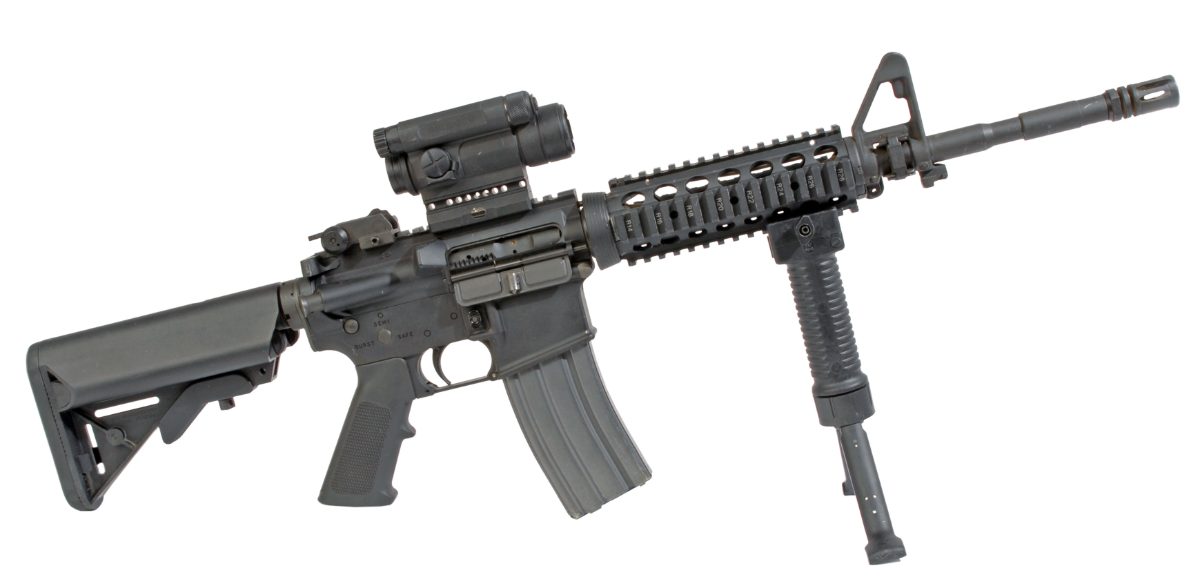
You have a new red dot sight and a rifle, and one question: Will the first one actually fit the second? Or maybe you are looking at a handguard and wondering why some have raised ridges while others are covered in rectangular slots. Does Picatinny fit everything, and is M-LOK the better modern choice? The answer comes down to the rail system, the part that decides which accessories your firearm can carry and how well they stay put.
By the end you should be able to tell the three common rail systems apart, match one to your firearm and your accessories, and install an accessory so it holds its position.
What a rail system does, and why a standard matters
A rail system is a standardized mounting interface that lets you attach accessories securely to a firearm's receiver, handguard or forend. Optics, lights, lasers, grips and bipods all depend on it. The accessory is built with hardware that matches the rail's grooves or slots, and when it is locked in place it can withstand recoil and harsh conditions while staying aligned.
The word that matters most there is standardized. Think of the outlets in your home. Any lamp with a standard plug works in any standard outlet, no matter who built the house or the lamp. A rail standard does the same thing for accessories. When a rail follows a published standard, accessory makers can design to it, and you can shop widely with confidence that the parts will fit.
Key idea: A rail system is only as useful as the accessories that fit it, so choose the rail and the accessories together.
Modern firearms have moved far beyond the old choice between iron sights and a scope. Three systems cover most of what you will see in the case: The highly standardized Picatinny rail, the older Weaver system, and the newer M-LOK system. Each solves the mounting problem differently, and each makes a different trade.
Picatinny rail: The standard that makes shopping easy
The Picatinny rail, officially known as MIL-STD-1913, was developed at the Picatinny Arsenal in New Jersey to meet military specifications. It quickly became the industry standard, and today it is everywhere, from tactical AR-15s to hunting rifles. Its design is a series of raised ridges with evenly spaced slots between them, and the numbers are part of the standard.
- Slot spacing of 0.206 inches
- Slot depth of 0.118 inches
- 90-degree angles on each side
- Typically aluminum or steel
Because those dimensions are fixed, an accessory designed for a Picatinny rail will fit any Picatinny-equipped firearm. The slots also do real work. An accessory locks into a slot, so when the firearm recoils the accessory is held by the shape of the rail, not just by how hard you tightened a screw. That is why Picatinny has a reputation for staying put.
Here is what that means for you in practice.
- Standardization and compatibility. A red dot or laser designed for Picatinny fits any firearm with a Picatinny rail, regardless of brand, which simplifies upgrades and gives you a wide selection.
- Secure mounting. Accessories lock into the precision-engineered slots, and that stability matters most for optics, where even a slight shift can affect accuracy.
- Versatility. Picatinny rails are available on the top of the receiver, the handguard and even the sides, so you can mount several accessories at once.
- Quick installation. Many Picatinny accessories have quick-release mechanisms that allow fast installation and removal without specialized tools.
Of the four, standardization is the one that saves you the most money and frustration, because it means your accessories are not tied to one rifle. Picture owning a scope, a flashlight and a foregrip from three different manufacturers. On a Picatinny rail they all share one firearm, and if you buy a second rifle with Picatinny rails, they can move to it. The cost is that Picatinny adds moderate weight, and the raised rail design can interfere with ergonomics if it is not properly integrated into the handguard.
The Weaver rail: An older design with its own niche
The Weaver system was developed by William Ralph Weaver in the 1930s as a way of mounting scopes on rifles, long before Picatinny existed. It has been widely used on older hunting rifles and handguns, but it lacks the strict standardization that came later with Picatinny.
That difference is the whole story. Weaver slots are generally narrower, and the spacing can vary, so an accessory built for a Picatinny rail might not fit securely on a Weaver rail. The construction is typically simpler and may not be as robust as a modern Picatinny system. On the plus side, Weaver rails are often lighter because they have fewer slots and less material, and many modern Weaver mounts are designed to accept Picatinny accessories, which gives you some flexibility.
Common mistake: Assuming that anything that clamps onto one of these rails will hold equally well on the other. Variable slot spacing can lead to a less secure mount, which is a real concern with a high-recoil firearm. Read the mount maker's description for compatibility instead of guessing.
So when does Weaver make sense? It suits older firearms, or firearms with limited space where weight is a critical factor, and shooters who do not need the full range of accessories available for Picatinny. If you inherited your grandfather's hunting rifle with a Weaver base and you simply want a scope on it, you may never need more than that. If you want to add a light, a laser and a grip, the limited customization will start to show.
M-LOK: A modern approach built around weight and handling
The Modular Lock system, or M-LOK, was developed by Magpul. It is a relatively recent innovation, and it works differently from the raised ridges of a Picatinny rail. Instead, rectangular slots are cut into a flat handguard or rail surface, and accessories attach through those slots using T-shaped nuts and bolts. It has rapidly gained popularity on modern AR-style rifles and carbines, and on some shotguns.
A good way to picture the difference is a pegboard in a workshop. On a Picatinny handguard, the rail sections sit in set places and accessories go on them. With M-LOK, you can place an attachment anywhere along the slotted area where it works best for you, rather than being locked into preset positions. That matters because where a light or a foregrip sits changes the balance and feel of the whole rifle.
M-LOK also cuts weight. Because it does not require a continuous raised rail, it adds significantly less weight, which matters to competitive shooters and to anyone carrying a rifle through a long day in the field. The flat, low-profile surface can also feel more comfortable in the hand than raised rail sections, and a more comfortable rifle reduces fatigue and can improve control and accuracy.
The trade-offs are real, and they are worth knowing before you buy.
- Limited compatibility. M-LOK accessories require M-LOK-specific mounting hardware and are not directly compatible with Picatinny or Weaver accessories, so moving to M-LOK may mean buying new accessories.
- Attachment speed. Placement is precise, but attaching and detaching may be slightly slower than the quick-release mechanisms on some Picatinny mounts.
Put simply, M-LOK rewards the shooter who is building a rifle around a plan and is willing to invest in M-LOK accessories. It is a harder fit for the shooter who already owns a drawer full of Picatinny gear.
Picatinny vs. Weaver vs. M-LOK: How they compare
| Feature | Picatinny Rail (MIL-STD-1913) | Weaver Rail | M-LOK |
|---|---|---|---|
| Standardization | Highly standardized; universal compatibility | Less standardized; variable slot spacing | Standardized by Magpul; specific to M-LOK |
| Slot Design | Consistent 0.206" intervals, raised slots | Variable spacing; generally narrower slots | Rectangular slots cut into a flat surface |
| Mounting Security | Extremely secure; ideal for high-recoil use | Less secure due to non-uniformity | Secure when properly installed; customizable placement |
| Weight | Moderate | Generally lighter than Picatinny | Lightweight; minimal added mass |
| Accessory Compatibility | Widely compatible with most optics, lights, etc. | Partial compatibility with Picatinny | Requires M-LOK-specific accessories |
| Ease of Installation | Quick-release options available | Varies; not as quick as Picatinny | May be slower to attach/detach accessories |
| Ideal Applications | Tactical, hunting, general all-around use | Older rifles, vintage platforms, or budget setups | Modern, lightweight builds; tactical/competitive setups |
Down the columns, each system has a personality. Picatinny is the generalist, strong in compatibility, security and speed of installation. Weaver is the lightweight classic that gives up standardization. M-LOK is the weight and ergonomics specialist that asks you to buy into its own accessories. The two rows to study first are Accessory Compatibility and Weight, because those are the trade-off most buyers actually feel.
Choosing the right rail system for how you shoot
Start by asking what you already own and what you want the firearm to do. Then follow the rule that fits.
If you shoot tactical or competitive matches, or you already own Picatinny accessories, choose Picatinny. It offers the widest accessory compatibility, a secure platform that stays reliable under heavy recoil, and quick swapping that suits fast-changing competitive environments. The downsides are slightly more weight than M-LOK and a raised rail that can interfere with ergonomics if it is not properly integrated. If you have a collection of Picatinny gear, or you need rapid attachment and detachment, it remains the gold standard.
If weight and handling are your top priorities, choose M-LOK, especially on a modern AR-style platform. The lightweight, low-profile design improves ergonomics, you can tailor accessory placement to your needs, and it helps in competitive or long-range tactical use where you want to reduce overall weight. The downsides are the need for M-LOK-specific accessories and a slight learning curve for rapid accessory changes.
If you are working with an older platform or prefer a simpler classic setup, a Weaver rail can still be a viable solution. It is lightweight and simple, and many modern Weaver mounts accept Picatinny accessories. Just keep in mind the inconsistent slot spacing, which may lead to a less secure mount, and the limited customization compared with Picatinny or M-LOK.
Hunters can use the same logic. A hunter putting a scope on a rifle is usually well served by Picatinny, which the comparison table lists for hunting and general all-around use, or by an existing Weaver base on an older rifle. Our guides to understanding rifle scopes and firearms accessories help you decide what to put on the rail in the first place.
Planning your accessories
A plan before you buy prevents most mismatches. With the firearm unloaded, the magazine removed and the action open so you can see the chamber is empty, look at the top of the receiver and the handguard: raised ridges with evenly spaced slots mean Picatinny or Weaver, and rectangular slots cut into a flat surface mean M-LOK. Each accessory you own or want, an optic, a light or a foregrip, lists the interface it needs in its product description or instructions. Pairing the two shows any mismatch, and then you decide whether to change the accessory, add a proper adapter or change the rail.
Installing and maintaining your rail system
No matter which system you choose, proper installation and care keep your accessories where they belong. Treat an installation like any other handling task, and make sure the firearm is unloaded before you work on it. If you want a refresher on the habits behind that, read firearm safety for beginners.
Installation
- Follow manufacturer guidelines. Use the mounting instructions from both the rail and accessory makers, because improper installation can lead to shifting that affects accuracy and reliability.
- Use the right tools. Quick-release levers, hex keys and torque wrenches help you secure an accessory without over-tightening, which might damage the rail.
- Double-check alignment. For optics, the mount must be aligned with the bore. Use a bore sighter or consult a professional to verify that the scope is correctly zeroed.
Maintenance
- Clean regularly. Dirt and debris can build up in rail slots and keep accessories from attaching securely, so use a soft brush or compressed air.
- Inspect for wear. Repeated attachment and detachment can wear rail surfaces, so check periodically for damage and address it promptly.
- Upgrade when necessary. If your current setup no longer meets your needs, consider upgrading. Many modern platforms allow the rail system to be replaced or modified with minimal fuss.
Of these, following the manufacturer's instructions and using proper tools matter most, since a loose or over-tightened mount causes problems that look like accuracy trouble. Alignment is the second priority for optics. If you are mounting a scope, our step-by-step guide to mounting a rifle scope walks through it, and mounting and sighting in pistol optics covers handguns.
Where rail systems may be heading
Rail design keeps evolving, and the next changes are likely to involve modularity, materials and electronics. Future systems may let shooters customize not just the placement but the type of mounting interface on the fly. New materials and manufacturing techniques will likely produce rails that are lighter, stronger and more resistant to environmental factors, which may further blur the lines between systems. And as smart optics and digital accessories become more common, rails may integrate built-in power supplies or data connectivity. Those are possibilities and not products you need to wait for, so choose the system that fits your needs today.
Putting it together
Picatinny is the most universal interface for optics and many accessories, and M-LOK has become the common choice for light, slim handguards, while Weaver still works on many older rifles. Identify what your firearm has, buy accessories made for that system or a proper adapter, torque mounts to the maker's specification, and confirm zero after you mount anything that aims.
Check your understanding
Try answering these before you open the answer. If you can decide what to do and explain why, you have it.
1. You own a red dot, a laser and a foregrip from three different brands, all for Picatinny. Why can they all share one firearm?
Picatinny follows the MIL-STD-1913 standard, with consistent slot spacing and dimensions, so accessories from various manufacturers are interoperable on any firearm with a Picatinny rail.
2. A friend offers you a light that mounts with M-LOK hardware, but your rifle has Picatinny rails. What is the problem?
M-LOK accessories attach through slots using T-shaped nuts and bolts, and they are not directly compatible with Picatinny or Weaver accessories. You would need M-LOK-specific mounting, so check compatibility before buying.
3. You carry a rifle on foot all day and want it as light and comfortable as possible. Which system should you look at, and what do you give up?
M-LOK. It adds much less weight than a continuous raised rail and has a low-profile, comfortable surface. What you give up is that you need M-LOK-specific accessories, and attaching or detaching them may be slightly slower.
4. You're mounting a scope on a hard-recoiling magnum rifle, and the only base you have is an old Weaver-style rail. What's the concern?
Weaver lacks strict standardization and its slot spacing can vary, which can make a mount less secure. Under heavy recoil, security is exactly what you need, so a properly fitted Picatinny base or a mount made for that rail is the safer choice.
5. After mounting an optic, you're tempted to crank every screw as tight as you can. Why is that a mistake?
Over-tightening can strip screws or damage the rail and the mount. Follow the manufacturer's torque specifications and use a torque wrench, so the accessory is secure without damage.
Where to go next
If you are putting an optic on a rifle, start with the beginner's guide to mounting a rifle scope, because mounting is where the rail knowledge pays off. Then read our guide to sighting in a rifle scope to confirm your mount holds its zero. If your project is a handgun, choosing the right optics for pistols shows what to put on the rail. And for the bigger picture of what else you might add, a guide to firearms accessories covers scopes, slings, bipods and more.
If this article helped you, we invite you to sign up for email notifications of new blog articles.