
Plain Edge or Serrated: Which Cuts Better, and When Each One Wins
Joseph McLain Nov 07, 2026
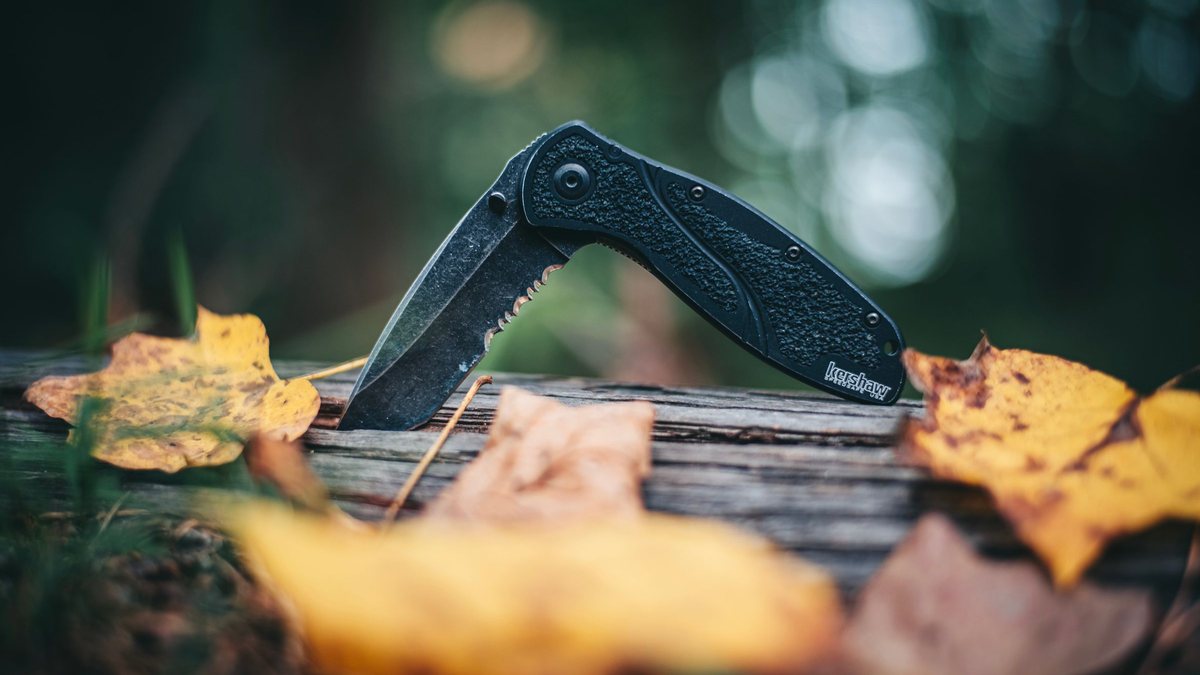
Two versions of the same folding knife sit side by side at the same price. One has a smooth edge; the other has a row of scallops near the handle. Is the serrated one better for rope, or do serrations belong on steak knives? And partly serrated blades are harder to sharpen. Plain and serrated edges cut in different ways.
By the end you should understand how each kind of edge cuts, which materials each handles best, where combination edges fit and what each asks of you when it's time to sharpen, so you can look at the things you cut most and choose the edge that does them best.
How a plain edge cuts: Push cuts and clean slices
A plain edge is one continuous, smooth edge. It can cut in two ways. A push cut is pressing the edge straight into the material, like shaving a curl of wood or trimming a fingernail. A slicing cut is drawing the edge along the material as it moves through it, like slicing a tomato.
Because the whole edge is in contact with the material at once, a sharp plain edge gives clean, controlled, precise cuts. It is the better choice for whittling, peeling, food preparation, opening envelopes and any job where you want the cut exactly where you put it.
The weakness is that the edge is fully exposed. Everything you cut wears on it, so a plain edge dulls steadily and needs regular honing. Once it starts to dull, it can slide off tough, slick or fibrous material instead of biting in.
Choose a plain edge for precise work and clean cuts, and plan to keep it sharp.
How a serrated edge cuts: Teeth that grab and saw
A serrated edge is a row of small scalloped curves with points between them. When you draw it through material, the points bite in and grab, and the scallops between them slice like a series of tiny curved knives. It cuts more like a saw than a razor.
Think of a bread knife on crusty bread. A plain knife presses down and squashes the loaf before it breaks through. The bread knife's teeth catch the crust and saw through it without crushing. Serrations work the same way on rope, nylon webbing, cardboard, rubber hose and other tough or slick material.
Serrations also hold up longer between sharpenings. The points take most of the wear, and the scallops behind them stay sharp because they are recessed. That is why a serrated knife can keep cutting rope after a plain edge of the same steel has gone dull.
Key idea: A plain edge works by pressure along one smooth line, and a serrated edge works by concentrating pressure at many points. The first gives control; the second gives grab.
Choose serrations for tough, fibrous or slick material you must saw through, especially if you cannot sharpen often.
Where each edge wins: Matching the edge to the material
| Material or job | Better edge | Why |
|---|---|---|
| Rope, cord, seat belt webbing | Serrated | Teeth grab and saw through fibers without slipping |
| Cardboard, plastic strapping | Either; serrated holds up longer | Abrasive material dulls plain edges quickly |
| Wood carving and whittling | Plain | Needs smooth push cuts and control |
| Fruit, vegetables, meat | Plain for clean slices; serrated for crusty bread and tomatoes | Depends on whether you want clean cuts or grip on a slick skin |
| Field dressing and skinning | Plain | Clean, controlled cuts; easier to clean |
| Fishing line, netting, wet rope on a boat | Serrated | Grips slick, wet fibers |
| Envelopes, tape, paper | Plain | Clean cuts without tearing |
The type of cut decides it. When the job calls for control and a clean result, the plain edge wins. When the job is fighting through fibers or slick surfaces, serrations win. Most everyday cutting falls into the first group, which is why most people do best with a plain edge, while people who work with rope, webbing or on the water often prefer serrations.
List what you cut most often, and let the majority decide.
Combination edges: Some of each
A combination edge, sometimes called a partly serrated edge, has serrations near the handle and a plain edge toward the tip. Many folders come in this version, including several Spyderco models.
The idea is sound. You use the serrated section, close to your hand where you can apply the most force, for rope and webbing, and the plain section toward the tip for fine work and clean slices. For someone who does a little of everything, it can be a reasonable compromise.
The cost is that each section is shorter. You get less plain edge for long slices and fewer serrations for sawing. The serrations near the handle also catch on material during long slicing cuts. And you now have two kinds of edge to sharpen.
Common mistake: Buying a combination edge because it seems to do everything, then using only the plain part. If you rarely cut rope or webbing, the serrations take away useful plain edge and add sharpening work for nothing.
Choose a combination edge only if you regularly do both kinds of cutting; otherwise pick the one that matches most of your work.
Sharpening: Simple for plain, specialized for serrated
A plain edge is easy to sharpen with almost any tool, from a pull-through sharpener in the truck to a bench stone at home. Because it dulls steadily, it needs touching up more often, but each touch-up is quick.
Serrations dull more slowly but take more care to sharpen. Each scallop must be sharpened individually with a tapered ceramic or diamond rod that fits its curve, working only on the beveled side and then lightly removing the burr from the flat back. Flat stones and pull-through sharpeners cannot reach inside the scallops, and a pull-through can damage the points. Many people send serrated knives back to the maker or to a sharpening service.
Think of it as the difference between mowing a flat lawn and trimming around a fence. The lawn is quick and often; the fence takes longer, but you do it less. Our guide to how to sharpen a knife covers both methods.
If you will sharpen yourself and often, a plain edge is easier to live with; if you rarely sharpen, serrations last longer between visits.
Safety and use: How each edge behaves in your hand
Each kind of edge brings its own habits. A serrated edge grabs, so it can catch and jerk when it bites into a tough fiber. Use controlled sawing strokes rather than forceful pulls, and keep your other hand behind the blade's path. A plain edge that has gone dull tends to skid off the material, which is how many cuts happen; keeping it sharp is the safety measure.
Serrations also matter if you need to cut something near a person, such as a seat belt or tangled rope in an emergency. A serrated edge combined with a blunt or sheepsfoot point lets you saw through webbing quickly while lowering the risk of stabbing whoever is wearing it. That is why rescue knives often use exactly that combination. Our knife safety tips cover grip and blade path in more detail.
With serrations, saw with control; with a plain edge, keep it sharp so it does not skid.
Testing both edges on real material
A few cuts at a table settle the question for your own work. With a plain-edge knife, a serrated or partly serrated knife and a cutting board, cut a short length of rope with each using controlled sawing strokes away from your body, then slice a sheet of paper held by one corner with your fingers clear of the blade's path, and cut a strip of cardboard. The rope usually favors serrations, the paper the plain edge, and the cardboard shows which needs less force. Set those results beside the three things you cut most in a normal week, and the edge that wins most of them is yours.
Putting it together
Plain and serrated edges are not better or worse than each other; they are tools for different material. A plain edge gives clean, precise cuts and is easy to sharpen, which makes it the right choice for most everyday, kitchen, carving and hunting work. A serrated edge grabs and saws through rope, webbing and slick or tough material, and it stays working longer between sharpenings, which makes it valuable on the water, in rescue work and in jobs full of cord and strapping. A combination edge earns its place only if you truly do both.
Look at what you actually cut in a normal week, and choose the edge for that, not for the job you imagine you might face someday.
Check your understanding
Try answering these before you open the answer. If you can decide what to do and explain why, you have it.
1. Why can a serrated knife keep cutting rope after a plain knife of the same steel has gone dull?
The points of the serrations take most of the wear, and the recessed scallops behind them stay sharp. The teeth also grab the fibers instead of sliding over them, so even a slightly worn serrated edge keeps biting.
2. A friend wants a knife mainly for whittling with his grandkids. Plain or serrated?
Plain. Whittling depends on smooth, controlled push cuts, and serrations would catch and tear the wood.
3. You keep a knife on your boat for cutting wet line. Which edge makes sense, and why?
A serrated edge, because its teeth grip slick, wet fibers that a plain edge tends to slide over, and it stays working longer between sharpenings. Pair it with steel that resists rust.
4. You bought a pull-through sharpener for your serrated knife, and the points look worse after using it. Why?
A pull-through sharpener can't reach inside the curved scallops and grinds the points between them. Serrations need a tapered rod that fits each scallop.
5. Your partly serrated knife's serrations keep catching when you slice an apple. What does that suggest?
That most of your cutting is slicing work suited to a plain edge. A full plain-edge knife may serve you better.
Where to go next
You can find pocket and fixed-blade knives on our website, and anything listed there can be ordered if it isn't in stock.
To keep either edge working, read how to sharpen a knife, which covers rods for serrations. The edge is one part of the blade, and knife blade shapes and grinds explains how the point and belly work with it. If rust is a concern for a knife used around water, see knife care and rust prevention. And for how the edge fits your job, the best everyday carry knives for different occupations matches knives to kinds of work.
If this article helped you, we invite you to sign up for email notifications of new blog articles.