
The Evolution of Pistol Optics
Joseph McLain Nov 07, 2026
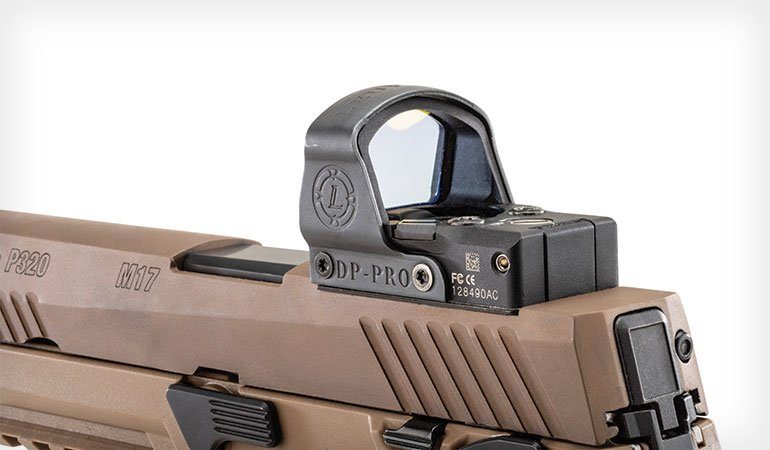
Two pistols look almost alike. One has the usual notch-and-post sights; the other has a small glass window on the slide with a dot floating in it. A dot puts your aim on one focal plane; iron sights never need batteries. Which will you shoot better, and is the dot worth learning?
How pistol optics grew from a curiosity into a mainstream tool explains why they work. By the end you should be able to tell the main types apart, decide whether one fits how you shoot, and keep it running for years.
Why iron sights left room for improvement
For most of handgun history, aiming meant iron sights. The simplest design is open sights, either two fixed posts or a notch and blade, lined up to give a basic, reliable reference point. They are durable and simple, and that is why they are still on most pistols today.
The weakness is in the human eye. To shoot well with iron sights, you line up a rear sight, a front sight and a target, and your eye can only focus sharply on one of them at a time. That takes intense concentration and fine motor skill to do consistently. In high-stress or low-light situations, the small sight picture can be hard to acquire quickly. Think of threading a needle while someone is rushing you. The skill is real, but the task is fiddly.
Almost every improvement in pistol optics since then has been an attempt to simplify that alignment job. Keep that in mind as you read, because it is the best test of any optic feature: Does it make the aiming job easier for the kind of shooting I do?
From borrowed rifle scopes to the red dot revolution
As optical technology advanced, the idea of mounting a scope or sight on a handgun took hold, at first as an experimental add-on for target shooters and military specialists. Early attempts adapted small telescopic sights, originally designed for rifles, to a pistol's compact frame. They were bulky and needed custom mounting. Size, weight and the ruggedness a sidearm demands were real hurdles, and manufacturers had to miniaturize optical systems without sacrificing clarity or durability.
The true revolution came with reflex and red dot systems. A red dot is a simple, non-magnified optic that projects a red dot onto a lens, allowing rapid target acquisition. Because it gives a clear, open view with minimal magnification, it suits fast-draw defensive situations. Two close relatives complete the family.
- Holographic sights. Use laser-etched holograms for aiming, which gives a slightly different reticle than a traditional red dot and often improved target acquisition under dynamic conditions.
- Reflex sights. A variation of red dot optics designed to be extremely compact, rugged and user-friendly, and often integrated into a pistol's slide.
Key idea: With an iron sight you must align three things. With a red dot you place one dot on the target and fire, which is why it is quicker to learn and faster to use.
The names overlap in everyday use, and one product may be described as a red dot or a reflex sight depending on who is talking, so judge an optic by its features and not its label.
What modern engineering added, and why each piece matters
Several breakthroughs turned the early experiments into dependable shooting aids. Here is what each does for you at the range.
Glass and coatings
Modern pistol optics use premium optical glass that minimizes distortion and color aberration, so the image stays sharp. Multi-coated lenses add two kinds of protection. Anti-reflective coatings reduce glare and improve light transmission, which matters most in low light. Hydrophobic and anti-scratch layers repel water and guard against minor abrasions. If you shoot in rain, dust or dim light, coatings are worth paying attention to.
Smaller and lighter
Advances in optical design let manufacturers build extremely compact optics that mount on even the smallest handguns without interfering with ergonomics. Materials such as aircraft-grade aluminum and high-strength polymers cut weight, which preserves the balance and handling of your pistol. Many modern pistols also come with accessory rails, so a reflex sight or mini scope can be mounted quickly and securely without changing the pistol's form. For help with the mounting itself, see our guide to mounting and sighting in pistol optics.
Reticles and adjustments
The reticle is the aiming mark you see through the optic, and a few reticle terms are worth knowing. A bullet drop compensator (BDC) reticle provides multiple aiming points for different distances, which can be crucial in defensive or competition shooting where target distance may change quickly. Two focal-plane types describe how a reticle behaves when the optic has magnification.
- First focal plane (FFP). The reticle changes size with magnification, so its subtensions stay constant. This is more common on rifles but is beginning to appear on high-end pistol optics for long-range applications.
- Second focal plane (SFP). The reticle stays the same size, which makes it easier to use at low magnification and ideal for close-quarters defense.
Subtensions are simply the spacing of the marks on the reticle measured against the target, and our article on rifle scope reticles explains them in depth. Some compact optics also offer adjustable turrets for windage (left-right) and elevation (up-down), allowing fine zeroing and quick reticle adjustments in the field.
Electronics
LED-illuminated reticles keep the sight picture clear in low light without external lighting. At the high end, smart optics with digital displays, Bluetooth connectivity and onboard ballistic calculators are beginning to appear. They are still emerging, but they could eventually show real-time data such as range, wind and bullet drop in the shooter's view. Some optics also use holographic technology for a more dynamic aiming solution that can adapt to changing lighting conditions and shooter movement.
Of all these, the ones most shooters notice daily are the dot itself, the lens quality and the optic's size and weight. Turrets, FFP reticles and smart features are specialized, so ask whether you will truly use them before paying for them.
Matching an optic to how you shoot
The same technology serves very different needs. Think about which of these four describes you most.
Self-defense and concealed carry
Red dot and reflex sights allow instantaneous alignment, which is critical when a defensive shot is required. Small, integrated optics add little bulk, so concealment and balance are maintained, and illuminated reticles give a clear sight picture at night or in low-visibility environments. A carry pistol with a red dot such as the Aimpoint Acro P-2, or a mini reflex sight, can be drawn quickly and engaged in a defensive scenario.
Recreational and plinking use
Even casual shooters can improve group consistency, because the optic removes the need to align small iron sights by hand. Quickly acquiring targets also adds enjoyment to a plinking session. A lightweight pistol with a compact reflex sight lets recreational shooters enjoy improved accuracy without extensive training.
Competitive pistol shooting
In disciplines like IPSC, IDPA or bullseye shooting, every fraction of an inch matters. High-end optics with adjustable reticles and fine-click turrets can make the difference between winning and losing. Competitors may prefer scopes with BDC or even FFP reticles for precise adjustments over a variety of distances. A competition pistol with a high-quality mini scope or a red dot with customizable reticle settings gives the shooter confidence and precision in high-pressure matches.
Tactical and law enforcement use
Optics built for tactical work must withstand harsh conditions, including recoil shocks, adverse weather and rapid target transitions. Some tactical optics add ballistic compensation features, which let the shooter adjust for range and wind without manual turret adjustments. A law enforcement pistol with a rugged holographic sight or a compact red dot can perform better in both stationary and dynamic defensive scenarios.
Notice the pattern. The defender prizes speed and concealment, the casual shooter prizes ease, the competitor prizes adjustability, and the professional prizes toughness. Decide which of those you value most, and the choice among optic types gets much simpler. Our article on choosing the right optics for pistols builds directly on this step.
Red dot, reflex or holographic: Reading the comparison
The table summarizes how the three main types compare.
| Feature | Red dot optics | Reflex sights | Holographic sights |
|---|---|---|---|
| Design | Simple LED dot projected on lens | Non-magnified reflex system, typically with an LED dot | Laser-etched holographic reticle; dynamic imaging |
| Field of view | Very open view with minimal magnification | Similar to red dot, very open view | Typically wider field; may have slightly reduced brightness in low light |
| Battery life | Excellent; many models exceed 5,000 hours | Generally comparable | Slightly lower due to more complex technology |
| Adjustment options | Fixed reticle with some models offering limited adjustments | Often fixed; some offer minimal windage and elevation adjustments | Advanced models may offer adjustable reticles, though many are fixed |
| Durability | Highly rugged; built to military specs | Rugged and reliable | Generally robust, but can be more sensitive to shock if not designed for heavy recoil |
| Best use | Rapid target acquisition in defensive and competitive scenarios | Close-quarters engagements and concealed carry due to compact size | Shooters who value dynamic, advanced reticle imaging and rapid target acquisition |
| Price range | Varies from budget to premium | Typically budget-friendly to mid-range | Often positioned in the premium segment |
Pick the row that matters most to you and compare across. Red dots stand out for simplicity, durability and battery life, which makes them a top choice for concealed carry and self-defense. Reflex sights offer similar benefits with a more traditional design, and they are favored by shooters who want an unambiguous, low-profile sight. Holographic sights provide an enhanced, dynamic reticle that can help in fast-paced scenarios, but they come at a higher price and give up a little battery life. Choose the simplest type that meets your need, since simple optics tend to be the most rugged and last longest on a battery.
Where pistol optics may be headed
Several trends are still taking shape, so treat these as possibilities and not products you can count on. On the digital side, future optics may include onboard ballistic calculators that work out bullet drop, wind drift and target distance in real time, Bluetooth connection to a smartphone that updates ballistic data based on location and conditions, and augmented reality (AR) overlays showing range estimates or shot placement data in the shooter's view. Some advanced models may also integrate laser rangefinders for instant range data.
On the hardware side, improved multi-coatings and nanocoatings could further enhance clarity and durability, and lighter high-strength composites may allow even more compact designs. Modular designs could let shooters swap reticle modules, battery packs or even the optical tube. Adaptive reticles may one day adjust brightness or even shape automatically as ambient light changes. When a new feature arrives, ask the same question as before: What aiming problem does it solve for me?
Caring for your optic so it stays reliable
A quality optic is only half the equation. Regular care is what keeps it dependable. These six habits cover the essentials.
- Clean the lens properly. Use a lens cleaning kit with a microfiber cloth, lens cleaner and a soft brush to remove dust, oil and fingerprints. Brush off grit before wiping so it is not dragged across the coating.
- Use covers. Lens caps or protective covers prevent scratches and dust buildup when the optic is not in use.
- Check batteries. For digital or illuminated optics, check and replace batteries regularly, and consider models with low-battery indicators.
- Prevent moisture. Store optics in a dry, padded case. Some are rated waterproof and fog-proof, so follow the manufacturer's guidelines.
- Mount securely. Make sure the optic is firmly attached and that the mounting system (rings, bases) is compatible with your firearm.
- Re-check your zero. Do it periodically, especially after extensive use or changing conditions, because environmental factors and recoil can shift it slightly over time.
If you do only two things, keep the battery fresh and re-check the zero. A dead battery leaves you with no dot, and a shifted zero sends accurate shots to the wrong place.
Common mistake: Assuming an optic replaces the fundamentals. A dot shows you where the pistol is pointed, but stance, grip and trigger control still decide where the bullet goes. Our guide to pistol shooting fundamentals covers them.
Finding the dot, safely
The most common frustration with a pistol dot is not seeing it when the gun comes up, and dry practice fixes it. With the pistol unloaded, all ammunition out of the room and the muzzle in a safe direction (our firearm safety rules cover the habits), keep your eyes on a small spot on a wall and bring the pistol up to eye level without looking at it, as you would from a ready position. Note where the dot appears, adjust your grip and presentation, and repeat. When the dot lands on or near the spot most of the time without hunting for it, your presentation is consistent, and that is what makes a dot fast.
Putting it together
A red dot lets you keep your focus on the target and often helps shooters, especially those whose eyes struggle with iron sights, but it needs batteries, a solid mount and practice to find the dot quickly, and backup iron sights remain a good idea. Try both if you can, pick an optic built for your pistol's cut and use, and practice until finding the dot is automatic.
Check your understanding
Try answering these before you open the answer. If you can decide what to do and explain why, you have it.
1. In a timed drill you're slower with iron sights than your friend is with a red dot. Why can a dot be faster?
Iron sights require aligning a rear sight, a front sight and the target, a fine task that's hard under stress or in low light. With a dot you keep your focus on the target and place one dot on it, which allows faster target acquisition.
2. You carry concealed and shoot in dim light. Which optic features matter most, and why?
A compact red dot or reflex sight, so concealment and balance are maintained, plus an illuminated reticle for a clear sight picture in low light. Anti-reflective coatings help too, because they improve light transmission.
3. You're choosing a magnified pistol optic for close-range defense. Should its reticle be in the first or second focal plane?
Second focal plane. An SFP reticle stays the same size at every magnification, which keeps it easy to see at low power for close-quarters use. An FFP reticle changes size with magnification, which matters more for holdovers at distance.
4. A competitor wants an optic for IPSC or bullseye. What should they look for?
High-end optics with adjustable reticles and fine-click turrets, and possibly BDC or FFP reticles, because every fraction of an inch matters.
5. After a long day of shooting your groups sit slightly off the aiming point. What should you check?
Re-check the zero and make sure the optic is still securely mounted. Recoil and environmental factors can shift a zero over time.
Where to go next
When you are ready to pick one, Choosing the Right Optics for Pistols turns what you learned here into a buying decision. After you buy, Mounting and Sighting in Pistol Optics walks you through installation and zeroing. And if the reticle terms made you curious, Understanding Rifle Scopes explains magnification and the numbers on a scope.
If this article helped you, we invite you to sign up for email notifications of new blog articles.