
The Best Everyday Carry Knives for Different Occupations: Choosing the Right Tool for Your Job
Joseph McLain Nov 07, 2026
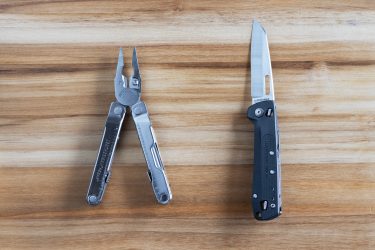
Ask for the best everyday carry knife, and the honest answer is another question: What do you do all day? Someone who opens shipping boxes at a desk and someone who repairs fence at dawn will carry very different knives, and each carries what their own work calls for.
Six kinds of work, office, farm, medical, trades and mechanics, outdoors, and emergency response, show how the job points to the features. By the end you should be able to name the few features that matter for your own work and choose a knife or multi-tool that fits.
Start with the job: Three questions that narrow the field
A knife is a tool, and tools are chosen by what they have to do. Before you look at any model, answer three questions.
- What will it cut? Packaging, thread and labels call for a small, simple blade. Rope, thick plastic and other tough materials call for a sturdier knife with more cutting power.
- How fast must it open? If a few seconds only costs you patience, any opening style works. If seconds count, you want a knife you can open with one hand.
- Where does it ride, and who sees it? A knife in a pocket at a quiet office has different needs than one in a pack on a trail.
Notice that none of these questions mention brand or price. Those details come later, because the three questions tell you which details are worth caring about. For a broader walk-through of the same decision, see how to choose the right everyday carry knife for your needs.
Key idea: The job decides the features, and the features decide the knife. Start with the work, and the short list almost writes itself.
How the job shapes the features you should look for
The table below puts the six occupations side by side, so you can see what each one asks of a knife.
| Occupation | What the work needs most | Features to look for |
|---|---|---|
| Office | Easy, quiet carry | 2 to 3 inch blade, minimalist design, non-intimidating look |
| Farm | Versatility for repairs | Pliers, wire cutters, serrated blade, durable construction |
| Medical | Fast access in emergencies | Combination blade, one-handed opening, light and compact |
| Trades and mechanics | Toughness | Durable steel and handle, partially serrated edge, easy one-handed opening |
| Outdoors | Weather resistance and range of tasks | Corrosion-resistant blade, full-tang or sturdy folding mechanism |
| First responders and law enforcement | Speed and rescue tools | Seatbelt cutter, glass breaker, strong lock, quick deployment |
Read across a row to see one job's priorities, then read down a column to spot patterns. Where seconds count (medical, trades, first responders), quick opening shows up. Assisted opening uses a spring to finish the job once you start the blade moving, and one-handed opening matters because your other hand is often busy holding something. Where the material is tough (farm, trades), serrated edges appear. A serrated edge works like a saw, biting into fibrous material such as rope that a smooth edge can slide across. Where the weather is rough (outdoors), corrosion resistance leads, because a blade that rusts in a damp pack will not stay sharp or dependable.
What to carry for each kind of work
Office work: Small, smooth and unremarkable
Office tasks are light, such as opening packages, cutting loose threads or trimming labels. A blade around 2 to 3 inches handles all of that and rides comfortably in a pocket. A subtle, elegant design also fits a professional setting in a way an aggressive or tactical look does not. If two knives cut equally well, choose the one nobody would notice.
- Kershaw Leek. Slim, assisted-opening and discreet enough for office carry.
- Spyderco Dragonfly 2. A compact, lightweight knife with excellent blade quality and a refined appearance.
- Case Mini CopperLock. A classy, traditional pocketknife with smooth action that blends well into a professional setting.
Farm work: When one tool has to do many jobs
Farm tasks rarely arrive one at a time. Picture a loose fence wire and a frayed rope in the same ten minutes. A blade handles the rope, but the wire needs pliers and wire cutters, which is why a sturdy multi-tool is the classic farm companion. It should also have a serrated blade for tough materials like rope or thick plastic, and high-quality steel and rugged construction to survive daily work. Our guide to knives with added features goes deeper on multi-tools.
- Leatherman Wave Plus. Versatile with a robust toolset, built to handle a variety of tasks encountered in farming.
- SOG PowerAccess Deluxe. Offers heavy-duty pliers, multiple blades and integrated screwdrivers in a durable, field-ready package.
- Case Sod Buster. A classic single-blade work knife that is simple yet reliable for various agricultural applications.
The first two are multi-tools and the Sod Buster is a plain work knife. If your repairs involve wire or fasteners, lean toward a multi-tool. If most of your work is cutting, the simpler knife may be all you need.
Medical professionals: Quick access in an emergency
Medical professionals may need to cut anything from a seatbelt to clothing in an emergency, so speed and range matter more than size. A combination blade, part serrated and part flat, covers both ends, with the serrations working on tough material and the flat section making clean cuts through fabric. One-handed opening lets you deploy the knife while the other hand stays busy, and a light, compact build is easy to carry through a long shift or between locations.
- CRKT M16-14ZLEK. A tanto-style folder with a partially serrated edge and quick one-handed opening.
- Spyderco Rescue 3. A fully serrated edge designed specifically for emergency responders, ensuring fast, reliable cutting performance.
- SOG Escape. Compact, lightweight and equipped with both a seatbelt cutter and glass breaker, making it ideal for rapid deployment.
Many medical professionals carry trauma shears for cutting clothing, and some employers restrict knives on the floor, so check your workplace policy first. Notice that the Rescue 3 is fully serrated rather than a combination blade. That trade gives up the flat edge's clean slicing in exchange for aggressive cutting of tough material, so decide which of those two you will need more often.
Tradespeople and mechanics: Heavy-duty for tough tasks
Trades and repair work means cutting thick materials, stripping wires and sometimes prying objects open. That calls for tough blade steel and a sturdy handle that will not give up under strain. A partially serrated edge adds cutting power for the materials common in construction, automotive and repair work, and easy one-handed opening keeps you efficient when your other hand is holding the work. Prying is hard on any blade, so use a real pry tool whenever you have one nearby.
- Cold Steel Recon 1. Built tough with a Tri-Ad lock for extreme durability, perfect for heavy-duty applications.
- Kershaw Blur. Assisted-opening with a durable, partially serrated blade designed to tackle the rigors of a mechanic's workshop.
- CRKT Homefront. A rugged folding knife that features easy field-stripping for maintenance and reliable performance in demanding conditions.
Field-stripping means taking the knife apart for cleaning, which matters when it lives around grit and grease. If you want to understand what makes any knife last under this kind of use, read what makes a knife durable.
Outdoor enthusiasts: Rugged and rust-resistant
Hiking, camping and wilderness survival ask a knife to cut rope, cut firewood and prepare food, often in wet weather. Look for stainless or coated steel that resists rust. Then choose a construction style. A full-tang fixed blade, where the blade metal runs the full length of the handle, has no hinge to fail, while a solid folding knife carries smaller. Either one can provide the durability rugged use demands.
- Spyderco Endura 4. Lightweight, made from high-quality stainless steel and designed for dependable outdoor use.
- SOG Seal XR. Built for rugged conditions, highly durable and corrosion-resistant for extended outdoor adventures.
- Cold Steel SRK. A tough fixed-blade survival knife engineered for extreme conditions, perfect for hiking, camping or emergency situations.
First responders and law enforcement: Built for speed and heavy use
Police officers, firefighters and other emergency personnel need knives that deploy quickly, include safety tools and survive heavy use under stress. A seatbelt cutter and glass breaker give rapid access during a rescue; not every tactical folder has them, so check the specific model if you need them. A strong lock matters because you may be pushing hard on the blade, and the lock is what keeps it from folding closed on your fingers. Assisted or one-handed opening gets the knife into play fast.
- SOG Trident Elite. Assisted opening plus a groove in the handle for cutting cord or webbing without opening the blade.
- CRKT Tighe Tac Two. A tactical folding knife with smooth, rapid deployment and a robust locking mechanism for field reliability.
- Kershaw Emerson CQC-7K. A tactical folder with Emerson's "wave" feature, a hook on the spine that catches the pocket edge and opens the blade as you draw it.
Putting your choice to work, safely
Whatever you choose, a knife is still a cutting tool. Cut away from your body, keep your fingers behind the edge, and close and secure the knife when you are done. Rules about where you may carry a knife vary by place, and many workplaces have their own policies, so check yours before you carry. Our article on knife safety and responsible carry covers the habits in more detail.
Common mistake: Buying for the dramatic scenario instead of the daily one. A tactical knife makes an awkward office companion, and a tiny slip-joint knife struggles with farm repairs. Choose for what you actually do most days.
Finding the features your day calls for
The knife you need is defined by the cuts you actually make. Most people's days sort into one main kind of cutting: light work such as opening packages and trimming tags, tough materials such as rope, hose and cardboard, repairs that also need pliers, cutters or a driver, or urgent tasks where one hand is busy and seconds matter. Light cutting calls for a small, smooth blade. Tough materials call for a sturdier blade, often partly serrated. Repairs call for a multi-tool, and urgent tasks call for one-handed opening and a secure clip. Two features matched to your main kind of cutting matter more than any list of extras.
Putting it together
A desk worker and a fence repairer should carry different knives, because each needs the tool their day calls for. Answer the three questions, find your row in the table, and pick the two features that matter most. Then choose a model that has them, confirm the specific features on the one you buy, and check your local carry rules and workplace policy before you carry it.
Check your understanding
Try answering these before you open the answer. If you can decide what to do and explain why, you have it.
1. You work in an office and your coworkers have noticed your large tactical folder. What would fit your day better, and why?
A 2- to 3-inch blade with a subtle design. Office cutting is light, opening packages and trimming labels, so a compact blade handles it easily, and a quiet, professional look fits the setting better than an aggressive one.
2. A farmer has a loose fence wire and a frayed rope to deal with. Why might a multi-tool beat a single knife?
The rope is a blade job, but the wire needs pliers and wire cutters. A multi-tool carries both, along with a serrated blade for tough materials and durable construction for daily work.
3. A nurse, an electrician and a firefighter all want a knife that opens quickly. What do their jobs have in common?
In each, seconds can matter and one hand is often busy. One-handed or assisted opening lets them ready the blade without stopping what the other hand is doing.
4. Your outdoor knife spends a damp week in a pack. Which feature matters most, and why?
A corrosion-resistant blade, such as stainless or coated steel, because it resists rust and stays durable in harsh outdoor conditions.
Where to go next
You can find pocket and fixed-blade knives on our website, and anything listed there can be ordered if it isn't in stock.
To understand what "high-quality steel" really means on a spec sheet, read Choosing the Right Knife Blade Steel. If you are weighing how much a knife will really be used, why you should have an everyday carry knife shows practical uses for everyday life. And if the farm or trades sections made you think about a multi-tool, Multi-Function: The Best Knives with Added Features is the natural next stop.
If this article helped you, we invite you to sign up for email notifications of new blog articles.