
Multi-Function: The Best Knives with Added Features
Joseph McLain Nov 06, 2026
It is the first warm Saturday of the year, and you are at a backyard cookout. Someone needs a bottle opened, a porch-swing screw has worked loose, and a tangle of cord needs cutting. You reach for your pocket knife and wonder whether a tool built for more than cutting would have handled all three. Your brother-in-law says a real multi-tool is the only thing worth carrying. Your neighbor says a plain knife does everything and the rest is gimmicks. That is the question this article answers. By the end you should be able to decide between a knife with added features and a full multi-tool, know which features you will really use, and keep the tool you choose working for years.
Two kinds of everyday carry tools: The knife with extras and the multi-tool
An everyday carry tool, usually called EDC, is the tool you keep on you daily. Within that world there are two families, and they solve different problems.
A multi-function EDC knife is still a knife first. It keeps a sharp blade but adds a few helpful features, such as a bottle opener or a screwdriver, without sacrificing portability. A multi-tool goes further. It combines cutting with other essential functions such as pliers, wire cutters and files, all in one tool, so it is closer to a small toolbox than a knife. Think of the difference between a good pocket pen with a stylus on the end and a pencil case. The pen is quick and light. The pencil case holds more, but you have to open it and pick what you need.
Key idea: More features are not automatically better. Every added tool is only useful if you will reach for it, so choose the features that match the jobs you actually do.
If the blade is the part you care about most, start with our guide to how to choose the right everyday carry knife, which covers steel, blade shape and locks. This article focuses on what you add around the blade.
Features on multi-function knives: What each one does for you
Here are the five features you will see most often on EDC knives. Each one is useful for a different reason.
- Bottle opener. A built-in opener is a staple, whether you are camping, at a picnic or simply enjoying a cold beverage.
- Screwdriver (flathead or Phillips). Built into the design, it can save you from carrying a separate tool and is ideal for small repairs or adjustments.
- Pry tool. A sturdy prying edge lets you open stubborn containers or lids without damaging your knife.
- Glass breaker. In an emergency, it can help you get out of a vehicle by breaking a side window. Know its limit: Most car side and rear windows are tempered glass, which shatters when struck with a hardened point, but windshields, and on some newer vehicles the side windows too, are laminated and will not shatter that way. Know which kind your vehicle has.
- Cord or seatbelt cutter. A dedicated cutting hook for ropes, cords or even seatbelts can matter a great deal in a critical situation.
Notice that these split into two groups. The opener, screwdriver and pry tool are everyday features you may use weekly. The glass breaker and the cord or seatbelt cutter are emergency features that you hope to use never but would be glad to have. A good rule is to choose the everyday features for the way you live and treat the emergency features as a bonus. Use the pry edge for prying, not the blade tip, because a broken tip cannot be repaired by sharpening.
Four multi-function knives, and who each one suits
| Model | Features | Why it stands out |
|---|---|---|
| CRKT M16 series (law-enforcement models) | Tanto-style blades; some models in the series add emergency features | Sturdy, well-known folding design; check the exact model for which emergency tools it includes |
| Kershaw Shuffle | Compact and affordable, with a bottle opener, integrated screwdriver, lanyard hole and a versatile blade | Ideal for daily use and small tasks, with an emphasis on portability and ease of use |
| Gerber Fastball | A slim, plain-blade flipper without added tools | Included as a contrast: A ball-bearing pivot for smooth deployment and a light aluminum handle. If you want the extras, it is the wrong choice; if you want the slimmest carry, it shows what you give up |
| Victorinox Swiss Army Knife (modern models) | Timeless design with scissors, a bottle opener, screwdrivers and more in a compact package | Renowned for quality and versatility, and a proven classic in the EDC world |
To read this table, match the features column to your jobs, then use the last column to see what the maker is known for. The CRKT law-enforcement models lean toward emergency readiness, while the Shuffle is built for ordinary daily tasks at an affordable price. The Fastball is the reminder that every added tool costs thickness, so it suits someone who wants a light, slim knife and nothing else. The Victorinox suits someone who wants many small tools, such as scissors, in a package that has a long track record. Features change between model years, so confirm them on the knife in your hand.
Multi-tools: When a knife is not enough
Some jobs need more than a blade, no matter how many extras it has. Pliers give you grip and leverage for tasks a simple knife cannot handle, which is why a multi-tool earns its extra size. A multi-tool is best when you regularly grip, twist, bend or cut wire.
- Pliers. Essential for gripping, twisting and even bending tasks that a simple knife cannot handle.
- Wire cutters and strippers. Ideal for quick electrical fixes, hobby projects or any situation requiring precise wire work.
- Scissors. Small built-in scissors offer a quick solution for trimming paper, cloth or other materials.
- Can or bottle opener. Just like on EDC knives, this is invaluable for outdoor or everyday tasks.
- File. It helps sharpen other tools and can smooth rough edges or surfaces.
Of the five, the pliers and wire tools are what set a multi-tool apart from a knife, since the opener and scissors are available on many knives. If you fix fences, wire up a barn light or tinker with equipment, the pliers will likely be the tool you reach for most. If your jobs are mostly cutting and opening, a multi-function knife may be all you need.
Four popular multi-tools
| Model | What is included | Why it stands out |
|---|---|---|
| SOG PowerAccess Assist | Robust pliers, multiple screwdrivers, a bottle opener and two knife blades (straight edge and serrated) with an assisted-opening mechanism | Compact design and quick-access feature set make it a favorite for rapid tool deployment in various situations |
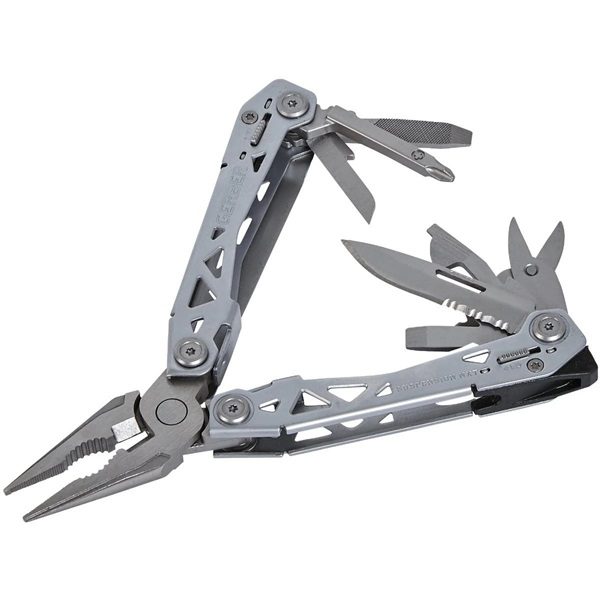
| Gerber Suspension NXT | A budget-friendly tool with pliers, wire cutters, scissors and a bottle opener, for everyday tasks and outdoor adventures | Excellent functionality with affordability |
| Leatherman Wave Plus | A flagship model with a large set of integrated tools, including knives, pliers, screwdrivers and scissors, in a robust stainless-steel body | Praised for durability, versatility and ease of use, and one of the most popular multi-tools on the market |
| Victorinox SwissTool Spirit X | High-quality stainless-steel construction with pliers, scissors, screwdrivers and a high-performance knife blade | Combines Swiss precision with a versatile tool set, for both urban and outdoor applications |
The Suspension NXT is the clear budget pick, and the Wave Plus offers the largest tool set of the four. The PowerAccess Assist is for the person who wants the fastest access to a blade, and the SwissTool Spirit X suits someone who values precise build quality. Choose by asking which description fits how you work.
Why carry one at all, and how to choose
The case for a multi-function tool comes down to convenience and readiness. Instead of carrying several separate tools, one tool saves space and weight, and it makes everyday jobs such as opening a package, tightening a loose screw or popping open a bottle simpler. In an emergency, features like glass breakers, seatbelt cutters or wire strippers can matter a great deal, and an EDC tool that does many things means you are prepared at home, at work or on the move. Over time, a high-quality tool means you are less likely to need several single-function tools, and trusted brands such as Gerber, SOG, Leatherman and Victorinox have built reputations on durability and performance. For more everyday examples, see our article on why you should have an everyday carry knife.
When you choose, weigh four questions in this order.
- Intended use. For light everyday tasks, a compact multi-function knife might suffice. For frequent outdoor work or demanding environments, a full multi-tool with pliers and wire cutters is more appropriate.
- Size and weight. The tool should be lightweight and compact enough to carry comfortably every day, but robust enough to handle the tasks at hand.
- Ergonomics. Look for adjustable grips or handles designed to fit your hand, especially if you will use the tool for long stretches.
- Build quality. Reputable brands known for durable, high-quality materials give a tool a longer life and better performance.
Intended use comes first because it sets the category, and size comes second because a tool left at home helps no one. Ergonomics and build quality then decide between models in the same category. Picture two buyers. One mostly opens boxes, bottles and the occasional jammed lid, so a Kershaw Shuffle fits. The other repairs fences and equipment, so a multi-tool with pliers and wire cutters earns its weight. Our article on what makes a knife durable adds more ways to judge build quality.
Safety: Treat every blade on any of these tools with the same respect you give a full-size knife. Open and close it with your fingers out of the blade's path, and read our guide to knife safety for handling and carrying before you carry.
Try this: Run a one-month tool audit
- For one month, keep a note on your phone or in your shop of every time you needed a tool beyond a plain blade.
- Write down what the job was, such as opening a bottle, turning a screw, or gripping a wire.
- Count how often each type of job appeared. If pliers or wire work show up repeatedly, lean toward a multi-tool.
- If the list is mostly cutting, opening and light screw work, lean toward a multi-function knife.
You will know it worked when your list points clearly to one family and you can name the two or three features that mattered most.
Keeping it working: Care for a multi-function tool
A tool with many moving parts has many places for dirt and moisture to collect. A few habits keep a multi-tool performing at its best. Each habit prevents a specific problem, so it helps to know why you are doing it.
- Wipe it down after use. This removes dirt, debris and moisture that can lead to corrosion.
- Apply a light machine oil. A drop on the pivot points and moving parts keeps operation smooth.
- Sharpen the blades periodically. Use a quality sharpening stone or a dedicated knife sharpener.
- Store it in a dry place. This avoids rust and degradation of the metal parts.
If you want to understand why some blades rust more easily than others, our guide to choosing the right knife blade steel explains how steel affects care. The simplest routine is to wipe the tool dry each evening, oil the pivots when they begin to feel stiff, and keep it indoors where moisture will not collect on it.
Putting it together
Your brother-in-law and your neighbor are each describing their own week. If your days include gripping, twisting or cutting wire, a multi-tool earns its weight, and nothing else will substitute for pliers. If your days are mostly cutting, opening and the occasional screw, a plain knife or one with a couple of well-chosen extras will be carried more often, and a tool you actually carry beats a better one left in the truck. So run the one-month audit, choose the family it points to, pick the two or three features you will really use, and keep the tool clean, dry and lightly oiled so it works when you reach for it.
Check your understanding
Try answering these before you open the answer. If you can explain it in your own words, you understand it.
1. How is a multi-tool different from a multi-function EDC knife, and when would you pick each one?
A multi-function knife is a knife first, with a few added features such as a bottle opener or screwdriver. A multi-tool combines cutting with pliers, wire cutters, files and more. Choose the knife for light everyday tasks, and the multi-tool if you frequently work outdoors or in demanding environments and need to grip, twist or cut wire.
2. Which features on a multi-function knife are for everyday use, and which are for emergencies?
The bottle opener, screwdriver and pry tool are everyday features. The glass breaker and cord or seatbelt cutter are emergency features that can matter a great deal in a critical situation.
3. Why does intended use come before size and ergonomics when you choose?
Intended use sets which category of tool you need, so you compare knives with knives and multi-tools with multi-tools. Size, ergonomics and build quality then help you pick between models in that category.
4. Your multi-tool pivots feel stiff and you see spots of rust. What went wrong and what should you do?
Moisture and dirt likely collected on the tool. Wipe it clean and dry, apply a light machine oil to the pivot points, and store it in a dry place from now on.
Where to go next
To see how the same ideas play out for people in different jobs, read the best everyday carry knives for different occupations. If you want to judge whether a tool will last, what makes a knife durable is the natural next read. And for the larger question of why a knife belongs in your pocket in the first place, practical uses for an everyday carry knife shows what it does in everyday life.
Explore our knife offerings here and let us know if there's something you'd like that we don't have on the website or in stock. Our goal is to have everything you need so if we're lacking, say the word and we'll add it.
If you found this informative, we invite you to sign up for email notifications of new blog articles.