
Medical Preparedness: What Helps Before the Ambulance Arrives
Joseph McLain Nov 07, 2026
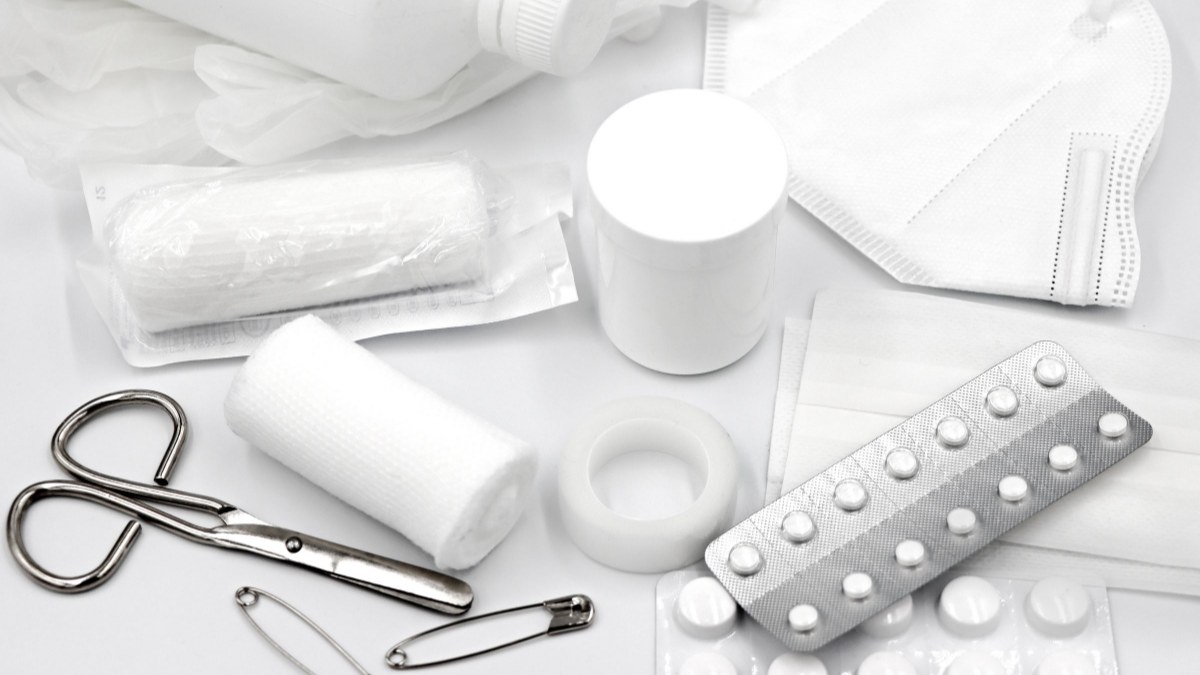
Picture a Saturday at an outdoor range west of town. A shooter two lanes down drops a heavy steel target stand on his forearm, and the edge opens a deep cut. Blood is coming fast. Everyone stops. One man reaches for his phone, another starts digging through a range bag for a first-aid kit he has never opened, and a woman who took a class last year is already kneeling and pressing a folded towel into the wound with both hands.
She is the one who will make the difference, and not because of her kit. A tourniquet can save a life, CPR is the skill you are most likely to need, and calling for help is always step one. Medical preparedness is recognizing what is wrong, getting the right help on the way, and knowing a few skills well enough to use them under stress. Hands-on training matters more than any kit.
By the end you should be able to tell a bleeding emergency from a cardiac emergency, explain what each one needs in the first few minutes, and build a plan for training and equipment that fits the places you actually spend time.
If someone needs help right now, call 911 and follow the dispatcher's instructions. This is education, not a substitute for a hands-on class.
Start with the problem, not the bag
Most emergencies that kill quickly fall into two groups, and they need different help. The first is severe bleeding. Blood carries oxygen to the brain and organs, and a person can lose enough of it to die within minutes, sometimes while still awake and talking. The second is cardiac arrest, when the heart stops pumping effectively. The person collapses, stops responding and stops breathing normally. Without help, brain damage starts within minutes.
Think of it like a car that will not run. An empty fuel tank and a dead battery both leave you stranded, but filling the tank does nothing for the battery. In the same way, a tourniquet does nothing for a stopped heart, and CPR does nothing to keep blood inside a cut artery. Owning one tool or holding one certificate does not prepare you for everything.
That is why both kinds of training matter. Gunshot wounds and serious cuts are a real risk around firearms, ranges, hunting and shop work. But cardiac arrest can happen anywhere, at church, at a ballgame or at the dinner table, and it is the emergency most adults are most likely to see. A balanced plan starts with CPR and AED training, adds bleeding control, and for parents and grandparents includes training that covers children.
Key idea: Bleeding means blood is leaving the body. Cardiac arrest means the heart has stopped pushing it around. The first needs pressure and sometimes a tourniquet. The second needs chest compressions and an AED. Recognizing which one you are looking at is the first skill.
Train for both bleeding control and CPR with an AED, and do not let skill in one stand in for the other.
Make sure you do not become the second patient
Picture a pickup in the ditch on a two-lane highway at dusk, with a driver bleeding behind the wheel. The urge is to run straight to the door. But cars are still coming over the hill, and a helper hit by traffic now leaves two people hurt and nobody helping. Scene safety is not hesitation. It is part of helping.
Look for the hazards that could hurt you: Traffic, fire, downed power lines, an unstable vehicle or structure, an angry person, or a weapon. If the scene is unsafe, you may still be the most valuable person there by calling 911, telling the dispatcher exactly where the injured person is and what is keeping you back, and directing others away from the danger. Conditions change. A road can be blocked, a fire can go out, and you may be able to help a minute later.
The same applies after violence. An attack ending does not mean the danger is over. If you have used your own firearm, holster it or put it down before you start helping, so your hands are free and responding officers do not see a gun in your hand. Our article on what to do after defensive force explains that moment in more detail.
Before you touch anyone, look for what could hurt you, and if you cannot reach the patient safely, call, describe and guide instead.
The 911 call: Give them what they need to find you
"Send an ambulance" tells the dispatcher what you want, but not where to send it. At a rural range, on a farm or at a big shopping center, a business name may not be enough. Ambulances have driven to the wrong entrance of large properties and lost precious minutes.
Before an emergency, learn how to describe the places where you spend time. At your range, know the street address, which building or bay you are in, and which gate responders should use. At home, make sure every household member, including older children, can give the address and directions from the nearest crossroads. If a gate needs to be opened, decide in advance who will go open it so the patient is not left alone.
On the call, describe what you see rather than guessing at a diagnosis. Is the person awake and responding? Are they breathing normally? Is there heavy bleeding, and where? What hazards are present? Then answer the dispatcher's questions and follow their instructions. Dispatchers are trained to walk callers through CPR and bleeding control, and the call can continue on speaker while you work.
When more than one person is around, give each one a specific job. "You in the red shirt, call 911. You, go get the AED by the front office." Pointing at a person works better than shouting "Somebody call!" to a crowd, because in a crowd everyone tends to assume someone else is doing it.
Know your address and access route wherever you spend time, describe what you see, and assign tasks to specific people.
Severe bleeding: What you can see and what you cannot
Bleeding you can see is external bleeding, blood coming out through a wound. Direct pressure controls most of it. MedlinePlus, the National Library of Medicine's health site, recommends pressing firmly on the wound with a clean cloth, a bandage or your hand, and keeping that pressure on. Do not lift the cloth to check. If blood soaks through, add more on top rather than pulling the first layer off. Leave any embedded object, such as a knife or a stick, in place and pad around it, because pulling it out can make the bleeding much worse.
The bleeding you cannot see is often more dangerous. Blood can collect inside the chest, belly or pelvis with little or nothing showing on the outside. MedlinePlus warns that any wound to the abdomen, pelvis, groin, neck or chest needs immediate emergency care, because these can cause severe internal bleeding even when they look minor. A small hole from a bullet or a deep stab can look like almost nothing.
Watch the person, not just the wound. Confusion, growing drowsiness, pale or clammy skin, weakness, dizziness, a rapid pulse or shortness of breath after an injury can all signal serious blood loss and shock. Keep the person still, warm and talking, and keep the dispatcher updated. Do not wait for these signs before acting on obvious heavy bleeding, though. By the time someone shows signs of shock, they have already lost a lot of blood.
Common mistake: Deciding an injury is minor because there is not much blood on the floor. A small wound to the chest or abdomen can hide life-threatening internal bleeding. Anyone hurt by gunfire, a serious fall, a crash or a deep stab needs emergency care, no matter how calm the outside of the wound looks.
Press hard on visible bleeding and keep pressing, and treat any wound to the chest, abdomen, pelvis, groin or neck as an emergency even if it looks small.
Pressure, packing and tourniquets: Three tools for different wounds
The American College of Surgeons' Stop the Bleed course teaches three bleeding-control skills: Direct pressure, wound packing and tourniquet application. Instructors watch students practice each one and correct their technique. These are not three versions of the same thing. Each one fits a different kind of wound.
- Direct pressure. Firm, steady pressure on the wound, which controls most bleeding you can reach and is always the first tool.
- Wound packing. Pushing gauze deep into a wound, such as in the armpit, groin or a deep cut on a limb, so pressure reaches the bleeding source inside, followed by firm pressure on top.
- Tourniquet. A band tightened around an arm or leg above the wound to stop blood flow to life-threatening limb bleeding that pressure has not controlled.
Of these, the tourniquet gets the most attention, but it has the narrowest job. A tourniquet only works on arms and legs. It cannot help a wound to the chest, belly or neck, and those wounds must never have a tourniquet placed around them. MedlinePlus advises using one when pressure has not stopped life-threatening bleeding, placing it on the limb about 2 to 3 inches above the wound and not over a joint, and noting the time it was applied so you can tell responders. Packing, meanwhile, takes practice on a training model to do well. That is why a photo of a well-stocked kit is not the same as knowing how to use it.
Research on civilian tourniquet use is still developing, and studies vary in quality. Some reviews have found an association with survival, while others are less certain, partly because the people who need tourniquets often have the worst injuries to begin with. No reliable source says tourniquets guarantee survival, and none says you should avoid them for life-threatening limb bleeding. The responsible take-away is to learn when a tourniquet is called for, how to apply it correctly, and what it cannot do.
Start with hard, direct pressure, use packing and tourniquets only as you have been trained to, and never put a tourniquet anywhere but an arm or a leg.
Cardiac arrest: CPR and the AED work together
Recognizing cardiac arrest comes first. MedlinePlus advises tapping the person's shoulder, shouting, and checking for normal breathing. If they do not respond and are not breathing normally, start CPR right away. One detail fools many people: Gasping or gurgling is not normal breathing. Those noises can sound reassuring, but they are often a sign the heart has already stopped.
For a teen or adult who has collapsed, hands-only CPR is the method the public is taught: Hard, fast chest compressions in the center of the chest, about 2 inches deep at 100 to 120 per minute, letting the chest come back up fully between pushes. If you are trained, you add two rescue breaths after every 30 compressions. Children are different. MedlinePlus notes that children need both compressions and breaths, and compressions about one-third the depth of the chest, which is a strong reason for parents and grandparents to take a class that covers children.
An automated external defibrillator, or AED, is a device about the size of a lunchbox that checks the heart's rhythm and gives a shock if one is needed. Turn it on and follow its voice instructions. It will tell you when to stop compressions and when to stand clear, and then tell you to resume CPR. A "no shock advised" message does not mean the person is fine. It means a shock will not help right now, so keep doing CPR. CPR keeps blood moving to the brain, while the AED fixes certain deadly rhythms. Neither replaces the other.
An AED only helps if people can get to it. One locked inside an office after hours, or one with a dead battery or expired pads, is not much use. If you help run a church, a range, a club or a school, find out where the AED is, who checks it, and whether it is reachable whenever people are there. Iowa's Good Samaritan law, Iowa Code 613.17, protects people who act reasonably and in good faith in retrieving or using an AED in a cardiac emergency, and protects good-faith volunteers who give emergency care without pay, except for recklessness or willful misconduct. The fear of being sued for helping is mostly unfounded.
If someone is unresponsive and not breathing normally, call 911, start compressions and send someone for the AED.
Gear: Build the kit around training and access
A good kit holds items you know how to use, packed so they can be found and opened quickly. For bleeding control, that usually means gloves, a commercial tourniquet of a type taught in reputable courses (the C-A-T, SOF-T Wide and SAM XT are the ones most instructors teach, and all three are on the military's recommended list), packing gauze, a pressure bandage and trauma shears. A marker for writing down the tourniquet time is useful too. For everyday injuries, add ordinary first-aid supplies. A longer list is not a better kit if you do not know what half of it does.
Think about where your kit needs to be. A trauma kit in your range bag helps at the range. A kit in your vehicle helps at a crash scene on the way home. A kit in the house helps at the kitchen table. Our article on home defense planning suggests keeping one in the room your family gathers in.
Keep training gear separate from emergency gear. A tourniquet you have practiced with dozens of times may be stretched or worn, and an opened gauze package is no longer sterile. Mark training items clearly so they never end up back in the real kit. Check the kit a couple of times a year, replace anything used, expired or damaged, and follow the manufacturer's instructions for storage.
Safety: Buy your tourniquet from a reputable dealer, not the cheapest listing online. Counterfeit tourniquets that look like the real thing have been sold for years, and some break under the tension of real use. Train with the same model you carry.
Carry a small kit you are trained on, put it where you spend your time, and keep it separate from your practice gear.
Training: Correction, not just exposure
Watching a video of someone applying a tourniquet makes the skill familiar. It does not show whether you can do it with your heart pounding and blood on your hands. In a hands-on class, an instructor watches you and corrects mistakes you would never notice yourself, such as a tourniquet that is not tight enough or compressions that are too shallow. That feedback is what turns information into skill, which is the whole difference between telling and training.
Stop the Bleed courses are widely available in Iowa through hospitals, fire departments and other instructors, and many are free or low-cost. CPR and AED classes are offered by the American Heart Association, the Red Cross and local providers. MedlinePlus recommends refreshing CPR skills every two years. Treat the card's expiration date as a reminder, not a guarantee. If you cannot remember the steps, take a refresher sooner.
Practice at home, too. A calm household drill can start with "Grandpa just collapsed in the living room" and end when someone has given the address out loud, someone has named who will call, and someone has found the kit and the nearest AED. Never place a real 911 call for practice.
Take hands-on training for CPR, AED and bleeding control, refresh it at least every two years, and practice the call and the kit at home.
Putting it together
Go back to that range on a Saturday. The woman kneeling by the bleeding shooter had a plan without thinking about it. She checked that the line was cold before stepping forward. She pointed at one man and said, "Call 911 and tell them we are at the north bay," and at another and said, "Bring me the red kit from the office." She pressed hard on the wound and kept pressing. When the kit arrived and the bleeding kept coming through the towel, she put a tourniquet high on the arm, tightened it until the bleeding stopped, and asked someone to write down the time. When the ambulance crew arrived, she told them what happened, what she had done and when the tourniquet went on, and stepped back.
Nothing about it required being a paramedic. It required recognizing the problem, getting help on the way, and having practiced one or two skills until her hands knew them.
Check your understanding
Try answering these before you open the answer. If you can decide what to do and explain why, you have it.
1. A man collapses at church. He does not respond, and he is making slow gasping sounds. Is he breathing?
Not normally. Gasping or gurgling is not normal breathing and is often a sign of cardiac arrest. Call 911 or have someone call, start chest compressions, and send someone for the AED.
2. A hunting partner has a small wound in the abdomen from a stray pellet. There is very little blood. Is it minor?
Not necessarily. Wounds to the abdomen, chest, pelvis, groin and neck can cause severe internal bleeding with little blood visible outside. Call 911, keep the person still and warm, and watch for confusion, pale or clammy skin, weakness or a rapid pulse.
3. A friend says you should put a tourniquet above a chest wound to slow the bleeding. Why is that wrong?
A tourniquet only works on arms and legs, where it can squeeze the limb above the wound to stop blood flow. It cannot be used on the chest, abdomen or neck. For those wounds, call 911, apply pressure as trained, and get the person to emergency care.
4. The AED says "no shock advised." Is the person okay?
Not necessarily. It means a shock will not help the heart's current rhythm. Keep doing CPR and follow the AED's voice prompts and the dispatcher's instructions until responders take over or the person starts breathing normally.
5. An older shooter says helping a stranger could get you sued in Iowa. What does Iowa law say?
Iowa Code 613.17 protects people who give emergency care in good faith without pay, unless their conduct is reckless or willful and wanton. It also protects people who act reasonably and in good faith in retrieving or using an AED in a cardiac emergency. For a bystander trying in good faith to help, the risk of being sued is low.
Where to go next
You can find trauma-kit pouches and tourniquet carriers on our website, including Blue Force Gear Micro Trauma Kit NOW! pouches and a C-A-T tourniquet case, and anything listed there can be ordered if it isn't in stock.
For how a home emergency plan ties together the safe room, the 911 call and the trauma kit, read our guide to home defense planning. For what to do in the moments after you have had to defend yourself, see what to do after defensive force. For keeping people safe at the range in the first place, read range etiquette. And for how to choose good classes, see choosing firearms training.
If this article helped you, we invite you to sign up for email notifications of new blog articles.