
Lumens vs. Candela: Choosing a Flashlight That Helps You See
Joseph McLain Nov 07, 2026
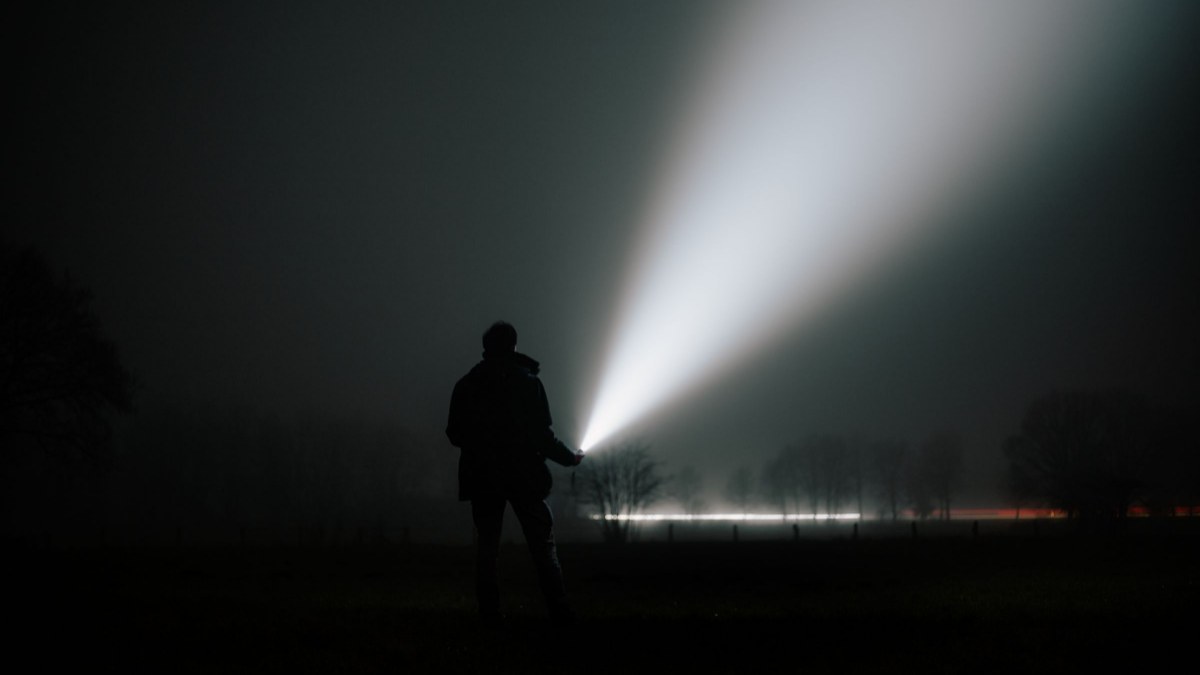
Flashlight packaging loves big numbers. One box claims 2,000 lumens. The one next to it claims 60,000 candela and a 500-meter beam. The photos show a dim yellow circle beside a blazing white flood, and the message is simple: Bigger number, better light.
So which number tells you what you will see? Is candela the one that matters, are lumens what make a light bright, and is anything over a thousand lumens plenty? Lumens and candela measure two different things, and which matters more depends on where you use the light and what you need to see.
By the end you should understand lumens, candela and lux in plain terms, what "beam distance" really means, why beam shape matters, why an extremely powerful light can be worse inside your house and how to read runtime claims, so you can predict how a light will behave in your hallway and your yard and choose one for the job instead of the biggest number.
Start with the job the light is doing
A handheld flashlight is an observation tool. You use it to find keys, read a license plate, check a noise, look under the truck or get down the basement stairs in a power outage. You can point it at anything without pointing a gun at it, and that independence is the most important thing about it.
A pistol-mounted light has a narrower job. It lights up what is in front of a handgun that is already legitimately in your hands. Because it is attached to the gun, wherever the beam goes, the muzzle goes too. If the shape in the doorway turns out to be your teenager coming home late, shining a flashlight at them and pointing a pistol at them are very different acts. Our article on weapon-mounted pistol lights covers that difference in depth. For this article, the key point is that a good handheld light is not made unnecessary by a good pistol light. The handheld is the one you will use most.
Lumens: How much light comes out
A lumen measures the total amount of visible light a flashlight puts out, all directions combined. Think of it as a bucket of paint. You can spread that paint thinly across a whole wall or pile it onto one small spot. The amount of paint tells you nothing about how thickly any particular area gets covered.
Two lights can each put out 1,000 lumens and look completely different. One spreads its light wide across the area just in front of you. The other squeezes most of it into a tight beam. Point both down a long driveway and the second one reaches much farther, even though the total light is the same. That is why a 2,000-lumen light is not necessarily better at lighting something far away than a 700-lumen light.
One more surprise: Twice the lumens does not look twice as bright. Your eyes do not perceive brightness in a straight line. Contrast, the size of the beam, the surrounding light and how adapted your eyes are to the dark all change how bright something seems.
Candela: How concentrated the beam is
If lumens are the total amount of light, candela describes how intense that light is in one direction, usually the brightest center of the beam. Think of an adjustable garden hose nozzle. On the wide setting, the water covers a broad area close by. Twist it to a tight stream and the same amount of water reaches much farther. The flow did not increase; it just got concentrated.
A flashlight's reflector or lens works like that nozzle. The LED makes the light, and the optic decides where it goes. That is how a light with modest lumens can have far higher candela than a light with more total output.
Real products show this clearly. These are the manufacturers' published numbers, not our own measurements.
| Light | Lumens | Peak candela | Rated beam distance |
|---|---|---|---|
| SureFire X300U-A pistol light | 1,000 | 11,300 | 213 m |
| SureFire X300T pistol light | 650 | 66,000 | 514 m |
| Streamlight TLR-7 X pistol light (rechargeable) | 725 | 9,500 | 195 m |
| Streamlight ProTac HL-X handheld (rechargeable) | 1,300 | 35,000 | 374 m |
Look at the two SureFire lights. The X300T puts out about a third fewer lumens than the X300U-A, yet its center is nearly six times more intense, and it is rated to reach more than twice as far. Same company, same family, completely different job. Neither is simply better. One floods nearby space; the other throws a hard beam a long way.
Notice too that battery choice changes the numbers. Streamlight lists the ProTac HL-X at 1,300 lumens on its rechargeable battery and 1,000 lumens on two CR123A batteries. A claim like "this light has 1,300 lumens" is incomplete without knowing which battery it was measured with.
Key idea: Lumens tell you how much light a flashlight makes. Candela tells you how tightly it is focused. You need both numbers, plus a look at the actual beam, to know how a light will behave.
Lux: How much light reaches the target
There is a third measurement that ties the first two to the real world. Lux measures how much light lands on a surface. For the center of the beam, lux equals candela divided by the distance in meters, squared. That is the inverse-square law, and it explains a lot.
| Distance | 10,000 candela beam | 60,000 candela beam |
|---|---|---|
| 10 m (33 ft) | 100 lux | 600 lux |
| 25 m (82 ft) | 16 lux | 96 lux |
| 50 m (164 ft) | 4 lux | 24 lux |
| 100 m (328 ft) | 1 lux | 6 lux |
The pattern is the lesson. Every time you double the distance, the light on the target drops to about a quarter. To light something twice as far away just as well, you need four times the candela. That is why high-candela lights shine outdoors, where you may need to see across a farmyard, a parking lot or the edge of a field. But remember that lux only measures light arriving at the target. It does not tell you whether your eyes can make out what someone is holding.
"Beam distance" does not mean seeing distance
When a box says the beam reaches 500 meters, most people assume they can see clearly at 500 meters. They cannot. Under the ANSI/PLATO FL 1 standard that flashlight makers use, beam distance is the distance at which the center of the beam drops to 0.25 lux. That is roughly the light of a full moon. It gives you a fair way to compare one light with another. It is not a promise that you can recognize anything at that distance.
It helps to think in three steps. Detection means noticing something is there. Recognition means knowing what kind of thing it is, a person rather than a mailbox. Identification means seeing enough detail to make a decision, such as whether that person is holding a phone or a pistol. A light may let you detect something far beyond the distance at which it lets you identify it.
Common mistake: Reading "500-meter beam" as "I can identify a person at 500 meters." The rating describes a very low level of light at the center of the beam, useful for comparing lights, not a promise of what you will be able to see.
Beam shape: Hotspot and spill
Most lights have a bright center called the hotspot and a wider, dimmer ring of light around it called spill. The hotspot gives reach. The spill shows you what is around the thing you are looking at.
Picture walking down a row of parked cars. A light with a tight hotspot puts a blazing circle on one car door, but tells you little about the gaps between cars. A light with less intense center and more spill shows you more of the row and the ground at your feet. In a barn, the tight beam lights the far wall, while the wider beam helps you notice the tools, steps and animals near you. What you usually need is context, not just a bright spot.
That is why "flood versus throw" is too simple. A good light can have a useful hotspot and generous spill at the same time. When you compare beam photos online, look for ones taken with the same fixed camera settings. Photos on automatic exposure can make a weak light look as bright as a strong one.
Why a very powerful beam can be worse indoors
Point a powerful light at a white wall six feet away in a dark house and the wall turns into a glaring white sheet. Your eyes adjust to that bright surface, and the dark hallway and doorways beyond it get harder to see. Mirrors, glass, glossy cabinets and light-colored walls all do the same thing. Lighting engineers call this disability glare: Stray light that reduces contrast and makes detail harder to see, not just uncomfortable.
This does not mean high candela is bad indoors. A very bright wide flood can wash out a white room too. What matters is whether you can see useful detail in your actual space. Indoors, a balanced beam with good spill and a lower setting is often more useful than the most powerful light you can buy. Indoors, choose for a beam you can see well with, not for the farthest throw.
Outdoors, candela earns its keep, within limits
Outside, there are fewer nearby surfaces bouncing light back at you and more distant objects worth seeing. A concentrated beam is genuinely useful for checking a dark driveway, the edge of a pasture or an outbuilding across the yard. It also helps when a yard light or headlights have adjusted your eyes to a bright foreground and the area beyond looks black.
Weather changes things. Fog, rain, snow and dust scatter light back toward your eyes, the same way high beams make a bright wall in heavy fog. A tighter, more powerful beam does not automatically punch through it, and sometimes makes it worse. For a rural property, a strong center with useful spill is a sensible choice, but the most extreme candela rating is not automatically the best.
Your eyes are not a light meter
The flashlight is only half the system. Your eyes constantly adjust to the light around you, and that adjustment takes time. After you turn off a bright bathroom light, the hallway looks pitch black, and a little later you can make out shapes. The hallway did not get brighter; your eyes adapted.
A powerful light, especially one bouncing back at you, can undo that adaptation. On the other hand, enough light makes fine detail and color much easier to see. There is no single ideal brightness. This is one more reason a good light has a lower mode, and why practicing with your light in the places you will actually use it teaches you more than any specification.
Runtime: The most misunderstood number
Suppose a light says 1,500 lumens and 90 minutes of runtime. It is natural to assume 1,500 lumens for 90 minutes. That is usually not what it means. Under the FL 1 standard, ordinary output is measured shortly after the light turns on, and runtime is measured until output falls to 10 percent of that starting level. A light can start very bright, step down because of heat a few minutes later and keep running dimly long enough to claim 90 minutes. Both numbers can be accurate while the everyday reading of them is wrong.
The 2025 revision of the standard added separate measurements for short "turbo" or "boost" modes, which helps, but not every product on the shelf uses the new labels yet. The useful questions are how bright the light starts, how quickly it steps down and how much light remains after several minutes. An independent output-over-time graph answers those far better than the box.
Small, very bright lights often step down sooner because they have less metal to shed heat. And if your light lives in a truck through an Iowa winter, check the battery's temperature limits. Cold can sharply reduce what a battery delivers.
Good practice: Turn your light on high and set a timer. Check it at one, three and ten minutes. Knowing how your own light behaves after it steps down is more useful than any number on the package.
Handheld and pistol lights: What to prioritize
For a handheld light, look for a switch you can find and operate without thinking, momentary-on so you can flash it briefly, a useful low mode for close work and a size you will actually carry. A light that cycles through five modes to reach the one you want, or that surprises you with a strobe, is a poor emergency tool. The best handheld is the one you have with you and can operate confidently.
For a pistol light, the mount, switch placement, holster and reliability come before candela. The light must fit your exact pistol's rail, the switch must not pull your trigger finger out of position, and you need a holster made for that exact gun and light that completely covers the trigger. Some lights can even affect how a particular pistol feeds, so test the combination with your own ammunition. A light with tremendous throw does you no good if you cannot carry the gun safely.
Be skeptical of claims that a bright light will blind or stop an attacker. Bright light can cause glare and brief difficulty seeing, especially for someone adapted to the dark, but people react differently and may simply look away. Judge a light by how well it helps you see, not by what it might do to someone else.
Comparing two lights in your own house
Your own house is the best test of a flashlight. With two handheld lights, or one light on high and low, and never a pistol-mounted light for this, stand at one end of your longest hallway after dark with the house lights off and shine each down the hall, noticing how well you see the floor, the doorways and the far end. Shine each at a white wall from about six feet and notice how the glare affects your view of the rest of the hallway. Then step outside and light something 50 to 100 feet away across the yard or driveway. The difference between indoors and outdoors usually shows which light belongs where, and why.
Putting it together
A lumen tells you how much light a flashlight makes. A candela tells you how concentrated it is. Lux tells you how much lands on the target, and it falls off fast with distance. Beam distance is a comparison tool, not a seeing distance. The shape of the beam, the surfaces around you, the weather and your own eyes decide what you can actually see, and runtime claims rarely mean full brightness for the whole time.
So do not shop by one number. Ask what you need to see, where, how the beam will behave there, how long it keeps useful output and whether you can operate it without thinking. And keep the purpose in view. A good light does not make you certain; it gives you information you would not have otherwise. Sometimes the most valuable thing it shows you is that the shape in the dark is not a threat at all.
Check your understanding
Try answering these before you open the answer. If you can decide what to do and explain why, you have it.
1. Light A has 1,000 lumens and 11,300 candela. Light B has 650 lumens and 66,000 candela. Which reaches farther, and why?
Light B. Candela measures how concentrated the beam is, and B focuses its smaller total output into a much more intense center, so more light lands on distant objects.
2. A light is rated for a 400-meter beam. Can you identify whether a person is holding a phone at 400 meters?
No. Beam distance is where the center of the beam drops to 0.25 lux, a very low level. It is a way to compare lights, not a promise of identification.
3. You double the distance to a target. What happens to the light landing on it?
It drops to about one quarter. To light it equally well at twice the distance, you would need about four times the candela.
4. Your new high-candela light makes your hallway harder to see when you point it at a white wall. Why?
The intense reflection creates glare that your eyes adapt to, reducing the contrast and detail you can see in darker parts of the hallway. A beam with more spill or a lower setting may work better indoors.
5. A light claims 1,500 lumens and a 90-minute runtime. What should you not assume?
That it gives 1,500 lumens for 90 minutes. Runtime is usually measured until output falls to 10 percent of the starting level, and many lights step down within minutes.
Where to go next
If you are considering a light on your pistol, read weapon-mounted pistol lights for the safety, reliability and holster questions. For planning what to do about a noise at night, home defense planning puts the flashlight in its place in a larger plan. If you will be shooting in bright or low light, shooting glasses lens colors explains how your eyes handle light on the range. And for everyday preparedness beyond firearms, see personal defense options beyond a firearm.
If this article helped you, we invite you to sign up for email notifications of new blog articles.