
Long-Term Food Storage: Choosing Foods That Last 20 Years or More
Joseph McLain Nov 06, 2026
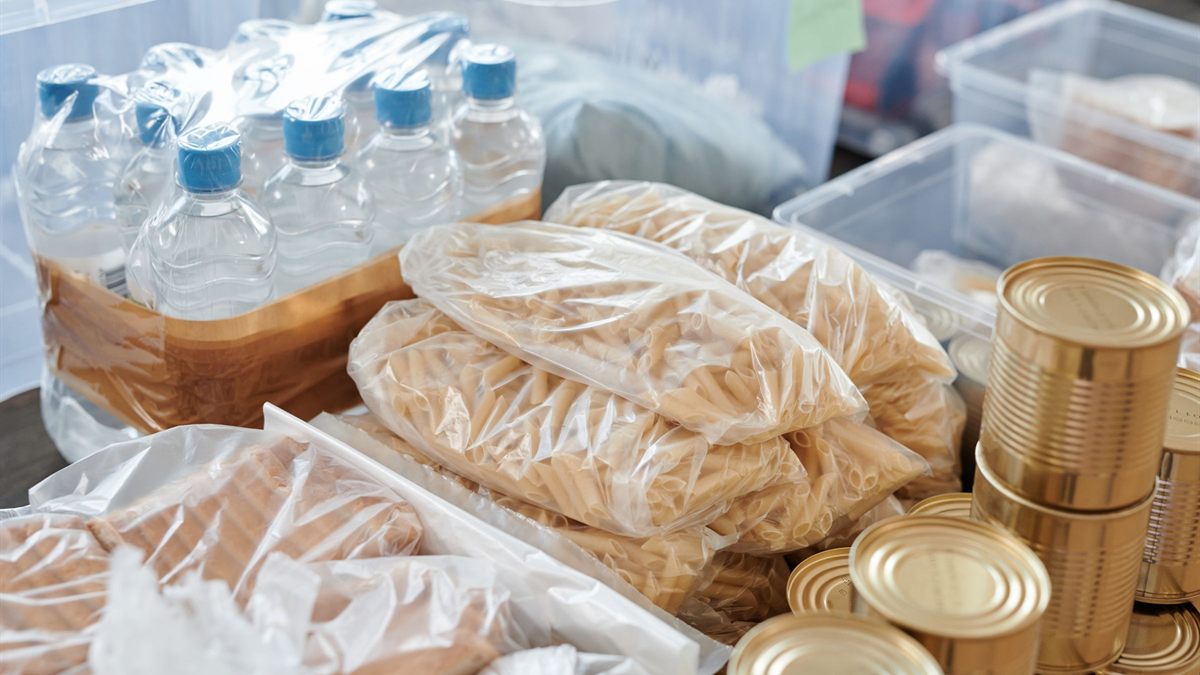
Picture your neighbor the morning after a bad summer storm. The power has been out since midnight, the roads are full of branches, and the crews say it could be a week. The refrigerator is already warming up. She opens the pantry and finds what most of us would find, which is a few boxes of cereal, some canned soup, half a bag of chips and a jar of peanut butter. That is enough for her, her husband and their 15-year-old son for a couple of days, not for a week, and certainly not for anything longer.
When she asks around afterward about building a real food supply, the advice pulls her in four directions. Her brother-in-law says to buy freeze-dried meal buckets because they last 25 years and you just add water. A coworker says that is a waste of money and all anyone needs is rice and beans from a warehouse store. Her mother says a well-stocked pantry of canned goods has always been enough. And someone online insists that honey never spoils, so she should buy a lot of it.
Each of them is right about something. Freeze-dried meals are convenient and can last decades, rice and beans are cheap calories, a rotating pantry is the first layer of any plan, and honey keeps almost indefinitely. What none of them gave her is a way to decide. She still does not know how much food her family needs, which foods will really last, where to keep them, which company to buy from or how to avoid spending a lot of money on food her family will not eat.
This article walks through those decisions in the order you would make them, and follows your neighbor's household through each one so you can see the reasoning applied. By the end you should be able to judge for yourself whether a food will last 20 years, choose a storage spot that lets it get there, turn your family's real meals into a three-month can list, pick the companies and package sizes that fit your household, and keep the supply from going to waste.
Start with the job: What your food supply has to do
Most people start by asking what to buy. The better first question is what the food has to do, because different jobs call for different foods. Think of it the way you think about money. You keep a checking account for this week's bills, savings for a rough few months, and retirement money you do not touch for decades. Each one is built differently because each one has a different job.
A food supply works the same way, in three layers. The first is your everyday pantry, the canned and boxed food you already eat, which covers the first week or two of a storm, an illness or a lost paycheck. It rotates itself because you are always eating it. The second is a three-month supply, enough to carry a household through a long disruption without a store. The third is a long-term reserve of foods that last 20 or 30 years, so that you are not throwing money away every few years replacing them.
The layers matter because the foods that last longest are the least convenient. Wheat that keeps for 30 years has to be ground and baked. Dried beans have to be soaked and simmered. That makes them poor food for the first chaotic days, when you may have no power and little time, but excellent food for month two. Easy food, such as canned soup or a freeze-dried pouch, covers the first days; long-lasting staples carry the long stretch.
Your neighbor decides her job is three months for three people, built mostly from foods that will still be good in 20 years, with a couple of weeks of easy meals on top. That one sentence answers questions she was stuck on. It tells her how much to buy, which foods to favor, and why her brother-in-law's buckets and her coworker's rice are both part of the answer rather than rivals.
The trade-off is that a bigger, longer-lasting supply costs more money and space and asks more of your cooking, while a small, easy supply runs out quickly. The rule: Write down how many people and how many days your supply must cover, and build it in layers, with easy food for the first days and long-lasting staples for the long stretch.
Why some foods last 30 years: A test you can apply to any food
You do not need to memorize a list of long-lasting foods. You need to understand why some food lasts and other food does not, and then you can judge any food in the store yourself.
Stored dry food rarely spoils the way leftovers do. It slowly loses quality through chemical change, and that change needs something to work with. Water lets mold and bacteria grow, which is why long-term foods should be about 10 percent moisture or less. Fat reacts with oxygen and turns rancid, giving food a stale, bitter taste. And grinding exposes the inside of a grain to air, so the oil that was protected starts to break down. Take away water, fat and exposed surfaces, and there is very little left that can change.
That gives you a three-question test for any food. Is it dry, dry enough to snap or pour rather than bend? Is it low in fat? Is it whole, rather than ground or processed? A food that passes all three is a candidate for long-term storage. A food that fails one will not last decades, no matter how it is packaged.
Try the test on a few foods and watch it explain things that otherwise seem arbitrary. White rice passes, while brown rice fails because it keeps its oily bran layer, and the LDS church's storage guidance lists brown rice as not recommended for long-term storage. Whole wheat berries pass, while whole wheat flour fails because grinding exposed the oil. Nuts, granola and jerky fail on fat. Salt, white sugar and honey pass easily, because there is almost no free water in them for anything to grow in; Mississippi State University Extension says honey is safe to eat indefinitely when stored properly, though it darkens and crystallizes over time and can be warmed in water to bring it back. Powdered butter and eggs only partly pass, because they contain fat, which is why Augason Farms rates its egg and oil products at about 10 years instead of 20 to 30.
Testing by Brigham Young University backs the rule up. BYU's food science researchers have opened decades-old cans and asked taste panels whether they would eat the food in an emergency. In BYU's reporting, wheat and white rice were still very acceptable after more than 30 years, beans, rolled oats, pasta and potato flakes were acceptable up to about 30 years, and nonfat dry milk lasted about 20. Cooking oil and dried eggs had to be used within a few years. The foods that lasted are the ones that pass the test. Rolled oats are the instructive exception. They are flattened rather than whole, yet they held up in BYU's testing and are the one milled grain the LDS church's guidance accepts for long-term storage, which is a reminder that the test tells you what to expect and the research has the final word.
There is one safety rule that goes with this. Long-term packaging removes oxygen, and the bacteria that cause botulism thrive without oxygen. Both Utah State University Extension and the LDS church warn that storing moist food in reduced-oxygen packaging can cause botulism. Dryness is not just about quality; it is what makes oxygen-free storage safe.
Common mistake: Sealing whatever is in the pantry into mylar bags with oxygen absorbers. Packaging cannot turn a short-lived food into a long-lived one, and sealing a moist food without oxygen can create a real health hazard. Run the three-question test first.
Your neighbor puts the test to work on her own shelves. The trail mix and the jerky her son likes stay in the everyday pantry, where they will be eaten within months. The white rice, oats and dried beans go on her long-term list. And she decides to store whole wheat only if she is also willing to buy a grain mill, because the wheat is only as useful as her ability to grind it.
The trade-off is that the foods that pass the test are the plainest ones, so a long-term reserve will never be as varied as a grocery pantry. The rule: Put a food in long-term storage only if it is dry, low in fat and whole, and keep everything else in the pantry you rotate within a year or two.
Heat decides whether you get 30 years or 5
A shelf-life number on a can is like the gas mileage on a new car's window sticker. It is a real, tested number, but you only get it if you drive the way the test assumed. For stored food, the biggest assumption is temperature.
Citing USDA research, Utah State University Extension explains that shelf life is cut roughly in half for every 10.8°F rise in storage temperature, and recommends a steady 40 to 60°F, without freezing. The LDS church recommends storing at 75°F or lower whenever possible, and BYU warns that attics and garages greatly shorten shelf life. The table below shows what the halving rule does to a food rated for 30 years at 60°F. It illustrates the rule rather than reporting a lab result for any one food.
| Average storage temperature | Approximate shelf life | Typical place in an Iowa home |
|---|---|---|
| About 60°F | 30 years | A basement storage room away from the furnace |
| About 71°F | 15 years | A heated living area or upstairs closet |
| About 82°F | 7 to 8 years | A room that runs warm all summer |
| About 92°F | 3 to 4 years | An attached garage or attic in July |
Read the table as a warning about where you put your supply, not about what you buy. The same expensive case of food loses most of its value in a hot garage, and moving it downstairs protects it more than buying more would. That means the most valuable thing you can do before spending a dollar is to measure your storage spot. A spot that feels cool in October may be much warmer in July.
Iowa basements are often the coolest, steadiest space in the house, but they bring their own problem, which is dampness. Moisture is the second enemy after heat, and light and oxygen follow. Keep containers on shelves or pallets rather than bare concrete, away from sump pits, water heaters and anything that could leak, and out of direct light.
Your neighbor had planned to stack her storage in the attached garage because it had the room. She puts an inexpensive thermometer out there and another in the basement for a few summer weeks, sees the garage climb well above 90°F, and moves her plan to a basement corner on a metal shelf. That single decision is worth more years of shelf life than any brand choice she will make.
Key idea: A 30-year shelf life is a promise the food makes only if you keep your side of it. Measure your storage spot in summer before you buy, because the coolest dry place you have decides how long everything in it will last.
The trade-off is that the best storage space is often the least convenient one. The rule: Store long-term food in the coolest, darkest, driest place you have, measured in summer, and treat any spot that runs above about 75°F as short-term storage only.
Turn calories into meals: Plan from a menu, not a shopping list
Here is where many food supplies fail. People buy a pile of rice, beans and wheat, which really will keep them alive, and then discover in an emergency that their family does not know what to make with it and does not want to eat it. Stored food is only useful if it becomes meals people will eat, and the reliable way to get there is to start from meals rather than foods.
Begin with seven dinners and a few breakfasts your family already eats. Then break each one into storable parts. Most meals have the same four parts, a starch that supplies most of the calories, a protein, a vegetable or fruit, and something that gives flavor or fat. Once you see meals that way, the shopping list writes itself.
Picture how that works for your neighbor's family. Chicken and rice with broccoli becomes white rice, freeze-dried chicken, freeze-dried broccoli and butter powder. Chili becomes dried beans, freeze-dried ground beef, tomato powder and dried onions. Spaghetti becomes pasta, freeze-dried sausage and tomato powder. Breakfast becomes rolled oats with dry milk, sugar or honey and dried apples, or pancakes made from ground wheat, powdered eggs, butter powder and baking powder. Every one of those ingredients is sold for long-term storage, and the starches and dried onions pass the three-question test outright.
The add-ons are where you choose between two kinds of drying. Freeze-dried food is frozen and has its water drawn off under vacuum, so it keeps its shape and rehydrates in minutes, and meats are usually cooked before drying. Dehydrated food is dried with warm air, so it is denser and cheaper but usually needs simmering. Choose by how you will cook. If fuel may be short, freeze-dried add-ons save it. If you will be simmering a pot of beans anyway, dehydrated onions and carrots cook right along with them.
Planning from a menu also exposes nutrition gaps a shopping list hides. BYU warns that a diet of stored staples lacks vitamin C, and that less than 10 milligrams a day can cause scurvy within a few months. A menu with fruit only a few times a week will not reliably prevent that, so BYU's plan includes vitamin C tablets, which BYU found keep much of their potency for more than 20 years. That is a cheap fix for a serious problem that the menu helped you notice.
Complete freeze-dried meals still have a place in a menu-based plan, for the first days when cooking from scratch is hardest. Mountain House meals are fully cooked before drying, so a pouch needs only boiling water and about 8 or 9 minutes, and Mountain House says cold water works in roughly twice the time. Picture a family on day three without power, with one camp stove and no energy left for soaking beans. A pouch of stroganoff is worth a great deal at that moment.
Good practice: Before you buy any storage food by the case, buy one can or pouch and cook it for dinner. If your family will not eat a meal on an ordinary Tuesday, they will not want it in an emergency, and you will have learned that for the price of one can.
The trade-off is that a menu-based supply costs more than plain staples alone, because meats, vegetables and dairy cost more per calorie. The rule: Build your list from meals your family already eats, broken into starch, protein, produce and flavor, and add vitamin C and a couple of weeks of easy meals for the first days.
Counting it: How many cans for three months
Once you know your meals, counting becomes arithmetic rather than guesswork. Do it in two parts, the calorie base and the add-ons.
The calorie base: Start from tested amounts
The most careful starting point we know of is BYU's guide, "An Approach to Longer-Term Food Storage," which estimates what one adult needs for a year from long-term staples and states it in #10 cans, the large cans about the size of a coffee can. BYU says those amounts likely provide adequate calories and protein for an adult for a year. Dividing by four gives one person three months, and multiplying that by three gives a household of three.
| Food | BYU, 1 adult for 1 year | 1 person, 3 months | 3 people, 3 months |
|---|---|---|---|
| Wheat | 24 #10 cans | 6 cans | 18 cans |
| White rice | 12 cans | 3 cans | 9 cans |
| Dried beans, lentils, split peas | 12 cans | 3 cans | 9 cans |
| Rolled oats | 12 cans | 3 cans | 9 cans |
| Sugar | 12 cans | 3 cans | 9 cans |
| Pasta | 6 cans | 2 cans | 5 cans |
| Potato flakes | 6 cans | 2 cans | 5 cans |
| Dried apple slices | 6 cans | 2 cans | 5 cans |
| Dried carrots | 6 cans | 2 cans | 5 cans |
| Dried onions | 1 can | 1 can | 1 can |
| Dried eggs (for baking) | 2 cans | 1 can | 2 cans |
| Nonfat dry milk | 36 pouches | 9 pouches | 27 pouches |
| Iodized salt | 8 pounds | 2 pounds | 6 pounds |
| Cooking oil (rotate yearly) | 2 gallons | 2 quarts | 1.5 gallons |
| Baking soda | 1 pound | 1 pound | 1 pound |
| Baking powder | 4 pounds | 1 pound | 3 pounds |
| Yeast (freezer) | 4 pounds | 1 pound | 3 pounds |
Read the table as a calorie base built around wheat, and adjust it to your menu rather than buying it as printed. If your family will not grind and bake, move most of the wheat into extra rice and pasta so the calories stay in the plan. Notice too which rows do not triple. Dried onions, baking soda and the one-can minimum on eggs are set by the size of the package, not the number of people.
The add-ons: Count servings from your menu
For the meats, vegetables, fruit and dairy, count from the menu you wrote. Decide how many servings each person eats per week, multiply by 13 weeks and by the number of people, then divide by the servings printed on the can and round up. The table shows that math with typical can sizes and the planning assumptions in the second column. Change the assumptions to match how your family eats.
| Category (typical can) | Planning assumption | 1 person, 3 months | 3 people, 3 months |
|---|---|---|---|
| Freeze-dried meat (about 24 servings) | 4 servings per person per week | About 52 servings, better bought as pouches or small cans | 7 cans |
| Freeze-dried vegetables (about 34 servings) | 1 serving per person per day | 3 cans | 9 cans |
| Freeze-dried fruit (about 18 servings) | 3 servings per person per week | 3 cans | 7 cans |
| Butter powder (about 510 servings) | 1 serving per person per day | 1 can | 1 can |
| Complete freeze-dried meals (about 10 servings) | Dinners for the first two weeks | About 14 pouches | 5 cans |
| Vitamin C tablets | 1 per person per day | 100 tablets | 300 tablets |
| Water | 1 gallon per person per day (BYU) | About 90 gallons | About 270 gallons |
Read this table for the reasoning, because three people rarely need exactly three times as much. Butter powder shows it best. One person using a serving a day goes through 91 servings in three months, and three people go through about 273, so both households need just one 510-serving can. The can is the smallest unit you can buy, so the single person simply has butter left over. Meat works the opposite way. Three people can finish a 24-serving can of chicken within the week Mountain House allows after opening if they plan a week of chicken meals around it, but one person cannot, so the single person buys the same amount of meat in smaller packages. The next two sections explain how to make those calls.
Two more adjustments make the count fit your real household. Count by appetite rather than by heads, because a teenage boy who plays football eats more than the adult in BYU's estimate and a toddler eats far less. And plan for water separately. At BYU's gallon per person per day, three months for three people is about 270 gallons, more than most homes can store, so store what you reasonably can and have a way to make other water safe to drink and cook with.
Your neighbor, whose son eats like two adults, counts him as one and a half. She moves most of the wheat into rice and pasta because no one in the house bakes bread, keeps one can of wheat to try grinding, and ends up with a list of well over 100 #10 cans plus water. Seeing the whole list tells her she will build it in stages over a year, starting with the calorie base.
The trade-off is that a three-month supply for a family is a real investment of money and space, and a supply that is too small gives a false sense of security. The rule: Start from BYU's tested staple amounts, add the meats, produce and dairy your menu calls for, count by appetite, and build in stages you can actually finish.
Choosing a company: Match the company to the job
Ask five people which storage food company is best and you will get five answers, because each of them is answering a different question. One wants a meal that tastes like a restaurant, another wants the most calories for the money, and a third wants one box that covers a whole season. Asking which brand is best before deciding what job the food has to do is like asking which tool is best before saying what you are building.
These companies sell three different kinds of things. Meal makers sell complete dishes that are cooked and then freeze-dried, so you only add hot water. Ingredient makers sell single foods, such as freeze-dried chicken, powdered eggs or wheat, that you cook with the way you would from a grocery pantry. Kit sellers bundle pouches of meals into buckets, totes or ammo cans and sell them by the number of days they claim to cover. A menu-based plan like the one above mostly needs ingredient makers, with a meal maker for the first days.
Four questions that sort out any company
The first question is how many calories a day the food really provides. A serving is whatever the company decides it is, so servings and "days" tell you very little. In 2017 a class action alleged that Wise Company's kits supplied less than half the daily calories an adult needs over the period they were advertised to cover. The case settled, with final approval in February 2020, and Wise agreed not to claim a kit feeds someone for a set period unless it provides at least 2,000 calories a day. The spread among kits is still real. My Patriot Supply rates its Ready Hour kits at 2,000 or more calories a day, while Field & Stream's reviewer worked out about 1,555 a day for a three-month 4Patriots kit. Practical Self Reliance found that many of the "servings" in a Legacy Food Storage bucket were sides of about 50 calories, while its actual meals ran 330 to 370. To compare any two products, divide the total calories on the label by the days you want covered, and divide the price by the total calories in thousands. That second number, the cost per 1,000 calories, lets you compare a kit with a can of rice on equal terms.
The second question is whether the food is already cooked or is a mix you have to cook. Mountain House's meals are fully cooked and need only hot water. Many kit meals are dehydrated pasta and powders instead, and Practical Self Reliance found that nearly every My Patriot Supply meal and most Legacy meals need 15 to 20 minutes of simmering. On a camp stove with limited fuel, that difference decides whether a meal is easy, costly or impossible.
The third question is what stands behind the shelf-life number. The best-known independent testing, BYU's taste panels, covers plain staples. Meal and kit companies make their own claims, usually "up to 25 years" or 30, and every one of them depends on storage. My Patriot Supply, for example, specifies 55 to 70°F. A claim backed by a written guarantee, such as Mountain House's 30-year taste guarantee, gives you some recourse, but even that guarantee can be refused if the food was not stored properly.
The fourth question is whether your household has eaten it. Taste varies from product to product within the same company. The Survival Mom likes many Augason Farms products but found at least one she could not eat, and reviewers split sharply on kits, with Field & Stream's tester enjoying 4Patriots meals while Practical Self Reliance called Legacy's the worst-tasting emergency food she had tried. One pouch or one can tells you more than any review.
Which company fits which job
| Company | Kind | Choose it when you want | Check before you buy |
|---|---|---|---|
| LDS church home storage centers | Staples | The cheapest calorie base: Wheat, rice, beans, oats and dry milk, sold to anyone, member or not | You supply the recipes, grain mill and fuel |
| Honeyville | Ingredients | Bulk grains and baking mixes, including 50-pound bags, for a household that bakes | Bulk bags must be repackaged for long storage |
| Augason Farms | Ingredients | One source for nearly every pantry ingredient, from butter powder to freeze-dried fruit, at mainstream retail prices | Taste before buying a case; egg and oil products are rated about 10 years |
| NutriStore | Ingredients | Freeze-dried meats, fruits, vegetables and cheeses in #10 cans to turn staples into real meals | How fast you will finish an opened can |
| Mountain House | Meals | Fully cooked meals that need only hot water, from a company supplying freeze-dried food since the 1960s, with a written 30-year taste guarantee | Cost per 1,000 calories; opened meat cans last about a week |
| Ready Hour (My Patriot Supply) | Kits | A complete kit rated at 2,000 or more calories a day | Most meals simmer 15 to 20 minutes, so plan fuel |
| 4Patriots | Kits | A complete kit whose meals one reviewer found genuinely good | About 1,555 calories a day in the three-month kit, so plan to add staples |
| ReadyWise (formerly Wise Company) | Kits | Grab-and-go buckets, sold alone or bundled with survival backpacks | Total calories per day on the specific kit |
| Legacy Food Storage | Kits | What the company advertises as the most food by weight per dollar | Count only the meal servings; expect simmering and plain flavor |
| Emergency Essentials (BePrepared.com) | Retailer | One store for kits from 72 hours to a year and individual cans and pouches | Which maker's food is in the product you choose |
Read the chart from left to right. Decide which kind of food you need, find the company whose strength matches the job, and apply the last column before you pay. Most well-built supplies use two or three of these companies, not one.
Picture three households. A retired couple who do not want to grind wheat or bake might buy rice, oats and beans from an LDS church home storage center, add freeze-dried chicken, vegetables and cheese from NutriStore or Augason Farms so dinners feel normal, and keep two weeks of Mountain House meals for the first days. A family of five that already bakes might put its money into Honeyville wheat and a grain mill, which makes their supply far cheaper per calorie. And a single man who wants one order and no planning might buy a three-month kit, then do the math. A Ready Hour kit rated at 2,000 calories a day covers him as sold. A 4Patriots kit at about 1,555 a day leaves a gap of roughly 445 calories a day, about 40,000 over 90 days, which he can close with a few #10 cans of rice or oats after checking the calories on their labels.
Your neighbor looks like the first household with a teenager added. She buys her rice, beans and oats from an LDS church home storage center, her freeze-dried meats and vegetables from an ingredient maker after taste-testing one can of each, and two weeks of Mountain House dinners for the start of an outage.
The trade-off is that the companies with the most convenient food charge the most per calorie, and the cheapest calories ask the most of your time, fuel and cooking skill. The rule: Choose the kind of food first, judge every company by calories per day, cooking method, what backs its shelf life and whether you have tasted it, and expect to mix companies.
Pouches or #10 cans: The opened-can test
Most storage food is sold two ways. Pouches are mylar bags holding anywhere from one meal to a few pounds, often packed several to a bucket. #10 cans hold roughly a gallon. Unopened, both protect food well. As the LDS church's storage guidance points out, mylar blocks light and oxygen, but rodents can chew through it. A steel can stops rodents and crushing but can rust on damp concrete. Cans usually cost less per serving, and pouches are lighter and easier to carry if you have to leave.
The bigger difference shows up after you open them, and you can work it out before you buy with one piece of arithmetic. Divide the servings in the package by the servings your household eats per week. That gives the weeks it will take to finish the package. Then compare that with the package's opened shelf life. If you finish it in time, the large package is the better buy. If you will not, the savings go into the trash.
| Package | Opened shelf life | Household use | Weeks to finish | Result |
|---|---|---|---|---|
| Freeze-dried chicken, 24 servings | About 1 week (Mountain House) | 6 servings a week | 4 | Fails |
| Freeze-dried chicken, 24 servings | About 1 week (Mountain House) | A planned week of chicken dinners for four, 24 servings | 1 | Passes |
| Butter powder, 510 servings | About 1 year (Augason Farms) | 21 servings a week | About 24 | Passes |
| Rolled oats, #10 can | About 1 year (Augason Farms) | 8 servings a week | Well under 52, even for a large can | Passes |
Read the table as a method, not a verdict on any food. The same can of chicken fails or passes depending only on how it is used. That points to three ways to rescue a package that fails the test. You can buy the same food in smaller pouches. You can plan the week around the can, the way the second chicken row does, so that opening it means a week of chicken dishes. Or you can move what is left into smaller clean, dry, airtight containers of the kind Augason Farms specifies for transferred food, and still use it within the opened shelf life on the label.
Opened shelf lives vary widely, so take the number from the label or the maker, not from a rule of thumb. Augason Farms says most of its opened cans should be used within a year, Mountain House gives its opened chicken about a week, and a NutriStore reviewer advises a few weeks for that brand's opened cans. In these examples, meat is the least forgiving and dry staples the most.
Your neighbor runs the test on her list. Her rice, oats, sugar and butter powder pass easily in #10 cans. Her household of three eats chicken about twice a week, which would take a 24-serving can about four weeks to finish, so she plans a "chicken week" whenever she opens a can during rotation and buys the beef in smaller pouches.
The trade-off is that cans protect better and cost less, while pouches waste less and travel better. The rule: Before buying any large package, run the opened-can test with your own household's eating, and if it fails, buy smaller, plan the week around the can, or repackage the rest.
Packaging it yourself: When it is worth it
Buying bulk staples, such as a 50-pound bag of rice or wheat, costs less than buying them already canned, but the bag will not protect the food for decades. Packaging it yourself makes sense when you are buying enough to justify the work and are willing to do it carefully.
The LDS church's guidance describes the main options. Foil pouches, often called mylar bags, should be multilayer plastic and aluminum about 7 mils thick, and because they are not rodent-proof they belong inside a sturdier container. PETE plastic bottles, marked PETE or PET under the recycling symbol, work for smaller amounts with an oxygen absorber. Food-grade buckets with gasket lids keep out rodents and water, but the LDS church notes that oxygen absorbers and nitrogen flushing are not effective in the buckets themselves. The common solution combines them, sealing food in mylar with absorbers and setting the sealed bags inside a bucket, so the bag controls oxygen and the bucket protects the bag.
Oxygen absorbers are small packets of iron powder that react with oxygen in the container. The LDS church recommends one rated for 300 cubic centimeters for each container of up to a gallon. They start working as soon as they meet air, so open the package only when you are ready to seal, work quickly, and store unused absorbers in an airtight glass jar rather than a zip-top bag. And use them only with food that passed the three-question test, never with anything moist.
The trade-off is that packaging your own food saves money but adds work and room for error, while commercial cans cost more but come sealed correctly. The rule: Package your own only for dry staples bought in bulk, use the right absorbers and protect every soft package from rodents; buy everything else already sealed.
Keeping it alive: Rotation
A long shelf life tempts people to buy food, put it in the basement and forget it. Then the food is eventually wasted, and nobody knows how to cook with it when it is needed. Imagine learning to bake bread from home-ground wheat for the first time on day ten of an emergency, with a family waiting for dinner.
BYU's guide suggests preparing meals one day a week using only stored food. Doing that rotates the supply roughly every seven years, keeps cooking skills current and tests your menu while the grocery store is still open. Label every container with what it holds and the date it was packed, and use the oldest first, the same first-in, first-out approach a grocery store uses.
When you open a can that has been stored for years, BYU notes that dried foods may give off an odd smell at first that soon fades, so taste the food before throwing it out. Anything with a bulging can, mold, a rancid smell that does not fade, insects or signs of moisture should be discarded.
Your neighbor makes Sunday supper the stored-food meal. Within a month the family has found two meals they like better than she expected, one they refuse to eat, and the fact that her son goes through powdered milk twice as fast as she planned. Each of those discoveries changes her next purchase.
The trade-off is that rotation takes regular effort and may mean eating more plainly than you are used to, but it is the only way to know your supply works. The rule: Cook from storage one day a week, replace what you use, and let what your family actually eats shape what you buy next.
Putting it together
Go back to the neighbor with the warm refrigerator and the four pieces of advice. Each of them was right, and the decisions in this article show where each one fits. Her mother's rotating pantry is the first layer. Her coworker's rice and beans, along with oats, pasta, sugar and dry milk, form the calorie base, because they pass the three-question test and BYU's testing confirms they last decades. Her brother-in-law's freeze-dried meals cover the first hard days. And the honey belongs in the plan too, as long as it stays sealed and away from infants, since the CDC warns against giving honey to children younger than 12 months.
What made the difference was not a better shopping list but a sequence of decisions she could reason through. She defined the job, tested each food, measured her storage spot, planned from meals, counted by appetite, chose companies by the job, sized packages with the opened-can test and set up rotation. You can make the same decisions for your own household, and they will lead you to a different list, because your family, your basement and your menu are different.
Try this: Build the first week of your plan
- Write one sentence describing your supply's job, with the number of people, the number of days and how much of it should be long-term food.
- Put a thermometer in the space you plan to use and in one alternative, and check them during the warmest weeks you can.
- Write seven dinners and three breakfasts your family already eats, and break each into starch, protein, produce and flavor.
- Count the add-ons from that menu for three months, and run the opened-can test on anything sold in large cans.
- Buy one can or pouch of each new add-on and cook one stored-food meal this week without using the refrigerator.
You will know it worked when you have a one-sentence job for your supply, a measured storage spot, a menu-based three-month list with package sizes your household can finish, and at least one stored-food meal your family has actually eaten.
Check your understanding
Try answering these before you open the answer. If you can explain it in your own words, you understand it.
1. A coworker plans to store brown rice and whole wheat flour for 20 years because they are more nutritious. Using the three-question test, what would you tell him?
Both fail. Brown rice keeps its oily bran layer, and grinding wheat into flour exposes the oil inside, so both turn rancid within a few years. White rice and whole wheat berries pass the test and last decades. If he wants whole wheat flour, he should store the berries and a grain mill and grind as he needs it.
2. A friend keeps her storage food in an attached garage that reaches over 90°F in summer. The labels say 25 years. What is the single most useful thing she can do?
Move it somewhere cooler. Shelf life is roughly cut in half for every 10.8°F rise in temperature, so food rated for decades at basement temperatures may last only a few years in a hot garage. Moving it protects her investment more than buying more food would.
3. Your family's favorite dinner is creamy chicken and noodles. How would you turn it into stored food?
Break it into parts. The starch is pasta, the protein is freeze-dried chicken, the produce can be dried carrots and onions, and the flavor and creaminess can come from butter powder and dry milk. Then count servings from how often you would make it, and cook the stored version once before buying in bulk.
4. You live alone and are deciding between a 24-serving #10 can of freeze-dried chicken and the same chicken in small pouches. How do you decide?
Run the opened-can test. Mountain House says an opened can of its chicken should be used within about a week. If you would eat a few servings a week, the can would take several weeks to finish and much of it would spoil, so the pouches are the better buy unless you plan a week of chicken meals around opening the can.
5. A neighbor bought a 90-day kit and assumes he is covered for three months. What should he check, and how would he fix a shortfall?
He should divide the kit's total calories by 90 and compare the result with what he actually eats. If the kit supplies about 1,555 calories a day and he needs about 2,000, he is short about 445 a day, or roughly 40,000 over 90 days, which he can close with a few cans of rice or oats after checking their labels.
Where to go next
A food supply is one part of being ready when normal life stops, and our guide to family emergency communication and reunification covers how your household finds each other when phones and roads fail. Since an emergency that empties the grocery store may also bring injuries, read medical preparedness before the ambulance arrives. When the power goes out and you need to reach the basement shelves or cook after dark, lumens vs. candela explains how to choose a flashlight that actually helps you see. And to fit food storage into a broader plan for protecting your household at home, see home defense planning before an emergency.
We do not sell storage food, but we carry flashlights, knives and first-aid and trauma kits that belong beside it, and anything on our website can be ordered if it isn't in stock. Text or call us anytime.
If you found this informative, we invite you to sign up for email notifications of new blog articles.