
Knife Safety Tips: How to Handle and Carry Your Knife Responsibly
Joseph McLain Nov 07, 2026
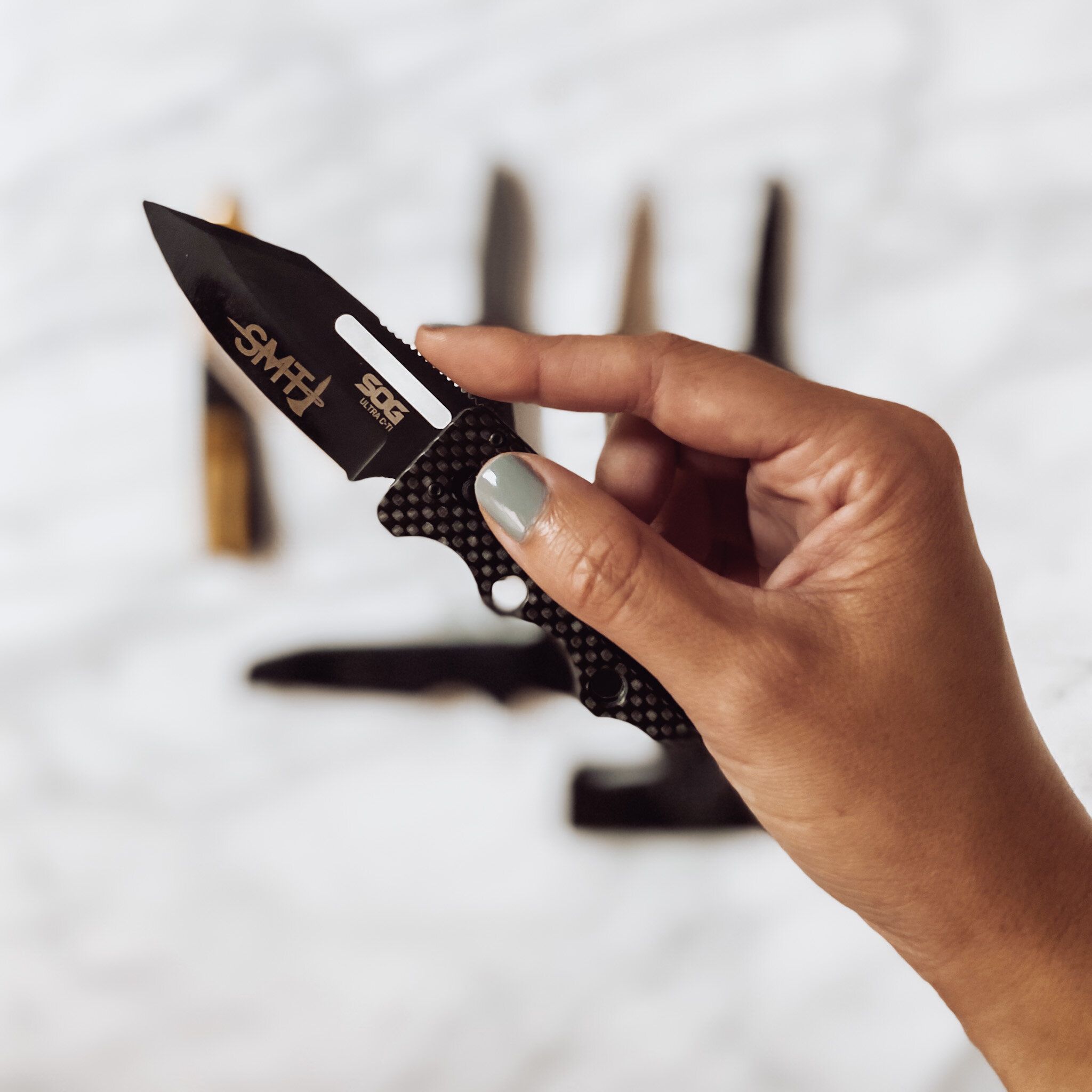
You open a folding knife to cut a zip tie, and the old lesson comes back: always cut away from yourself. A dull blade is its own danger, and a folder that closes on your fingers can hurt you worse than the job you opened it for. Those lessons fit together.
Most knife injuries happen in ordinary moments, and grip, blade path, a sharp edge, a good lock and sensible carry prevent them. By the end you should be able to cut, carry, maintain and hand over an everyday carry knife in ways that keep those moments uneventful, and know what to do if someone does get cut.
Why most knife injuries happen in ordinary moments
Few knife injuries come from anything dramatic. They happen while opening a box, cutting a zip tie, trimming a rope or slicing an apple, when the blade slips, meets less resistance than expected or closes unexpectedly. Because those tasks feel routine, attention drifts, and that is exactly when the blade goes somewhere you did not intend.
The good news is that the same few habits prevent most of those injuries. Each section below explains one of them, why it works and when it matters most. The common thread is control: Knowing where the blade is, where it will go if something gives way, and where your hands and other people are.
Grip, blade path and your free hand
A knife goes where the force behind it sends it, so start with a grip that gives you control. Hold the handle firmly, with your fingers clear of the edge and, on a folder, clear of the path the blade travels when it closes. For careful cuts, resting your thumb on the spine, the unsharpened back of the blade, lets you guide the edge with less force. A handle with good texture and a finger guard or choil helps keep your hand from sliding forward onto the edge, especially when your hands are wet, cold or gloved.
Then think about the blade's path. Picture opening a package held against your leg. The blade cuts through the tape, suddenly meets no resistance, and keeps going toward your leg or the hand holding the box. The fix is to arrange the cut so that if the blade slips, it travels into empty space: Cut away from your body, keep your free hand behind the blade or to the side of its path, and brace the work against a table rather than your body.
Some cuts have to come toward you, such as peeling fruit with your thumb as a stop. Those are controlled cuts with very little force and a short blade path. The more force a cut needs, the more important it is that the path points away from you.
Key idea: Before every cut, ask, "If this slips, where does the blade go?" If the answer is anywhere near you or someone else, change your position first.
Why a sharp knife is the safer knife
It sounds backward, but a dull blade causes more slips than a sharp one. A dull edge needs much more push to start a cut. That extra force builds up in your arm, and when the edge finally skids off the surface or breaks through, the force carries the blade suddenly and farther than you meant. A sharp blade bites in with light pressure and goes where you guide it.
Think of a dull kitchen knife sliding off a tomato skin, compared with a sharp one slicing straight through. The sharp knife is not more dangerous; it is more predictable. That is why touching up the edge belongs in regular maintenance. How often depends on the steel and how hard you use the knife; harder steels hold an edge longer but can be harder to sharpen, as our guide to choosing knife blade steel explains. Sharpen when the knife starts snagging or tearing paper instead of slicing it.
Locks, closing and carrying
On a folding knife, the lock is what keeps the blade from closing on your fingers while you cut. Common designs include the back lock, a rocker bar along the spine, as on the Spyderco Delica 4; the liner and frame locks, a spring of metal inside the handle that wedges behind the blade; and button and bar-style locks. Each works when it is clean and engaged fully. Check that the lock snaps fully into place every time you open the knife and that the blade does not wobble or give when you press lightly on the spine. If it does, stop using the knife until the problem is fixed. Our article on what makes a knife durable helps you recognize a worn or weak lock.
Close a folding knife or sheathe a fixed blade as soon as you finish cutting. An open blade on a workbench, in a bag or in a pocket is waiting to cut a hand that reaches for something else. When you close a folder, keep your fingers out of the blade's path, and on a lock that is released with your thumb or fingers, control the blade as it closes rather than letting it snap shut.
Carry the knife so it stays closed and secure. A pocket clip that grips firmly keeps the knife from working loose or opening by accident; a fixed blade belongs in a sheath that covers the edge and holds the knife in place. Tip-up or tip-down carry is a matter of preference, as long as the knife cannot open in your pocket and you can draw it without fumbling.
The rule for locks and carry is that the blade should be either fully open and locked, or fully closed and secured, and never in between.
Cut with a knife, pry with a tool
It is tempting to pry a lid, pop a staple or turn a screw with the knife tip. A knife is built to handle force along its edge, not sideways. Prying bends or snaps the tip, and a blade that snaps under force can send your hand into whatever you were prying against. It can also strain the lock, which you depend on for every cut afterward.
Keep a small multi-tool or pry tool for those jobs, and let the knife do only what it is designed for. Our guide to knives with added features and multi-tools shows what is available if you want both in one pocket.
Common mistake: Using the knife as a screwdriver or pry bar "just this once." That one job is how many tips are broken and locks are weakened, and a snapped blade can injure the hand holding it.
Passing a knife and handling a cut
When you hand a knife to someone, close it first if you can. If it must stay open, such as a fixed blade in a kitchen, hold it by the spine with the edge facing away from both of you and offer the handle, and let the other person take a firm grip before you let go. Say something simple, such as "handle," so both of you know who is holding it.
Even careful people occasionally cut themselves. For a minor cut, apply firm, direct pressure with a clean cloth until the bleeding stops, clean it, and cover it. A cut that is deep, gaping, bleeding heavily, causing numbness or loss of movement, or contaminated with dirt or rust needs medical attention, and heavy bleeding that does not stop with firm pressure is an emergency; call 911. Many people who carry a knife also keep a few bandages and a compact pressure bandage nearby for exactly this reason.
Treat a knife hand-off as a two-person action, and to have a plan for a cut before you need one.
The law, and the people around you
Knife laws vary by state, city and country, and they change. Rules may address blade length, type of knife, how it is carried and where it can be carried. In Iowa, state law treats some knives as dangerous weapons and has changed more than once in recent years, so check the current Iowa Code and any local rules, or ask a qualified attorney if you are unsure about a particular knife. Some places restrict knives regardless of state law. Federal facilities generally prohibit dangerous weapons, with an exception for pocket knives with blades under 2 1/2 inches, and the TSA prohibits knives in carry-on bags, so pack them in checked luggage when you fly. Schools, courthouses and many workplaces have their own rules. If you travel, check the rules where you are going before you pack.
Responsible carry is also about the people around you. Opening a knife in an office, store or crowded space can alarm people who do not know why you are doing it. Before you cut in a shared space, make sure others are a safe distance away and aware of what you are doing, or step aside to a quieter spot. A smaller, less aggressive-looking knife is often the better everyday choice in professional settings for exactly this reason.
A five-minute safety check of your own knife
Your own knife can tell you whether it is safe to use. At a table with clear space and no one within arm's reach, open it and confirm the lock engages fully; with your fingers clear of the edge and the closing path, press lightly on the spine, and the blade shouldn't move. Close it slowly with your fingers out of the blade's path, and check that the clip or sheath holds it firmly. Then hold a sheet of paper by one corner, away from your body, and slice down through it: a clean slice means the edge is ready, while snagging or tearing means it needs sharpening. A knife that passes all three checks is one you can trust in ordinary moments.
Putting it together
Knife safety comes down to control. Grip the knife firmly with your fingers clear of the edge, and set up every cut so the blade travels into empty space if it slips. Keep the edge sharp so you can cut with light pressure. Make sure the lock engages fully, close or sheathe the blade as soon as you finish, and carry it so it cannot open by accident. Use the knife only for cutting, pass it closed or handle-first, and know what to do if someone gets cut. Finally, know the rules where you carry, and be considerate of the people around you.
Check your understanding
Try answering these before you open the answer. If you can decide what to do and explain why, you have it.
1. Your kitchen knife has grown dull, and you find yourself pushing hard to cut. Why does that make a cut more likely?
A dull edge needs more force. When it finally slips or breaks through, that stored force carries the blade suddenly and farther. A sharp edge cuts with light, controlled pressure, so a slip has less behind it.
2. You need to cut open a box you are holding. How do you set up the cut?
Put the box on a table instead of against your body, keep your free hand behind or beside the blade's path, and cut away from yourself so a slip goes into empty space.
3. When you press on the spine of your open folder, the blade moves slightly. What should you do?
Stop using it until the lock is cleaned, adjusted or repaired, because a lock that does not hold can let the blade close on your fingers.
4. At camp, a friend asks for your fixed-blade knife while you're using it. How do you hand it over?
Hold it by the spine with the edge facing away from both of you, offer the handle, say "handle," and let go only after they have a firm grip.
5. You are flying with your everyday carry knife. Where does it go?
In checked luggage. The TSA prohibits knives in carry-on bags. Also check the knife laws at your destination.
Where to go next
You can find pocket and fixed-blade knives on our website, and anything listed there can be ordered if it isn't in stock.
If you are still choosing a knife, how to choose the right everyday carry knife turns these safety ideas into buying decisions, including handle shape and lock type. What makes a knife durable shows how to recognize a lock and pivot you can trust. To see why carrying a knife is worth the responsibility, read why you should have an everyday carry knife.
If this article helped you, we invite you to sign up for email notifications of new blog articles.