
Holster Cant, Rake and Ride Height: Fitting an IWB Holster to Your Body
Joseph McLain Nov 07, 2026
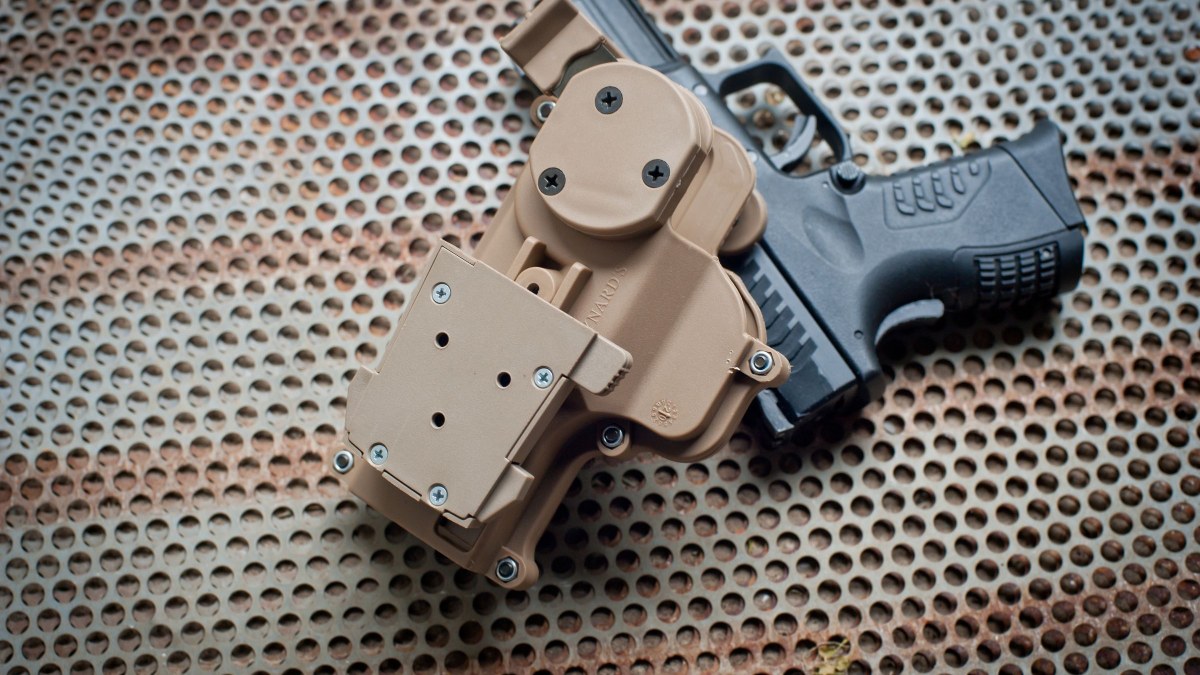
Picture two people carrying the same pistol in the same inside-the-waistband holster. One forgets the gun is there for most of the day. The other feels the grip jabbing a rib, sees its outline through every shirt and has to bend a wrist awkwardly just to get a hand on it. Same gun, same holster, very different experience. Sometimes the difference is where the holster sits, sometimes it is the belt, and sometimes it is as small as a ten-degree change in the angle.
There are familiar starting points: the "FBI cant" at 15 degrees, appendix carry straight up and down, or adjusting until it feels right. A starting angle is useful, appendix carry often works best near vertical, and in the end your body decides. What those answers don't give you is why the angle matters, which is what lets you fix your own setup instead of copying someone else's.
By the end you should understand what cant and rake mean, the three ways a holstered gun can be adjusted, how carry position and ride height change everything, why the belt matters and why a longer holster can hide a small gun better, so you can look at a holster that's printing, pinching or drawing badly, tell which direction the problem points and choose the adjustment most likely to fix it.
Cant and rake: Two words for one angle
Cant describes how far the holstered gun is tilted from straight up and down when you look at it from the side. A gun with its muzzle pointing straight down has neutral cant, or zero degrees. Tilt the grip toward the front of your body and you have forward cant. Tilt it the other way and you have reverse cant.
Rake describes the same tilt, but traditionally from the muzzle's point of view. Forward rake means the muzzle points forward; rear rake means it points back. That is why a typical strong-side hip holster can be described as having forward cant and rear rake at the same time. They are not contradictory. One phrase talks about where the grip goes, the other about where the muzzle goes.
Think of the gun as a seesaw with the trigger guard as the pivot. Push the grip end toward your belt buckle and the muzzle end swings toward your back. One movement, two descriptions.
Be careful with marketing labels. "FBI cant" usually means roughly 10 to 15 degrees of forward cant, but it is not a strict standard and makers use it loosely. Instead of buying by the label, look at the photo or diagram and answer three questions: Where does the grip point, where does the muzzle point, and how much adjustment does the mount allow? Learn the direction, not the name.
Three different adjustments that get lumped together
People say "adjust your holster" as though there were one knob. There are really three, and they solve different problems.
- Cant. The tilt we just described. Picture a drawing of a holstered pistol on paper, then rotate the paper. The grip moves along the line of your waistband.
- Grip rotation. Turning the grip in toward your body, like a door swinging on hinges. Many appendix holsters use a claw or wing that pushes against the belt to rotate the grip inward.
- Grip tuck. Tipping the top of the gun in toward your body while the bottom tips slightly out. A foam wedge between the bottom of the holster and your body creates this leverage.
Of these, cant gets the most attention, but rotation and tuck often do more for concealment. A gun can have perfect cant and still print because its grip juts out away from your body, which is a rotation or tuck problem. Another holster can have an excellent wing and wedge and still be miserable to draw because the grip leans too far behind your hand, which is a cant problem. Knowing which lever does what is the whole game.
Key idea: Cant sets which way the grip lies along your waist. A wing rotates the grip toward your body. A wedge tips the top of the gun inward. Match the adjustment to the direction of the problem.
Where the gun sits changes which angle feels natural
Asking "What is the best cant?" is a bit like asking where to set a steering wheel without knowing where the driver's seat is. It depends on where the gun sits and the direction your hand comes from.
Carry positions are usually described on a clock face, with 12 o'clock at your belt buckle and 6 o'clock at your spine. For a right-handed shooter, 3 o'clock is the right hip, 4 o'clock is just behind it and about 1 o'clock is appendix. Left-handed shooters mirror that.
At appendix, the gun is in front of your hip and your hand comes down from above. An upright gun lets you get a full grip without chasing the handle around your waist, which is why appendix holsters usually have little or no cant. Some people do better with a few degrees either way. At 3 o'clock your hand comes from the side, and neutral or a little forward cant often feels natural. At 4 o'clock your shoulder reaches back and your elbow travels a different path, so forward cant helps by bringing the grip toward where your hand is arriving. That is why moderate forward cant has stayed popular for behind-the-hip carry.
| Carry position (right-handed) | Reasonable starting cant |
|---|---|
| Appendix, about 1 o'clock | Near 0 degrees |
| Strong-side hip, about 3 o'clock | 0 to 15 degrees forward |
| Behind the hip, about 4 o'clock | 10 to 20 degrees forward |
Treat those numbers as places to begin experimenting, not as proven ideals. They come from manufacturer and instructor guidance, not from controlled studies, and plenty of people land outside them. There is also a limit to how far you can push the angle. The gun has to come out along the line the holster sets, so a steeply tilted gun may tuck away nicely and still force your wrist into an awkward bend or bind on the draw. The best angle for hiding the gun and the best angle for drawing it are not always the same.
One more caution: Carrying directly over the spine, small-of-the-back carry, is a poor way to chase concealment. It is hard to reach when you are seated or on the ground, and falling onto a gun over your spine can cause a serious injury. Choose your position first, then use cant to bring the grip toward the direction your hand naturally travels.
Printing: Diagnose the direction before you fix it
Printing is when the gun or holster pushes your clothing into a shape people recognize. Your shirt can cover every inch of the gun and still show the square corner of the grip. Bodies are not flat walls. They curve, they move when you breathe and sit and reach, and the grip of a pistol sticks out at an angle that clothing loves to reveal.
The most useful rule in holster fitting is to figure out which way the grip is pushing before you change anything. If the grip is too far around your waist and is poking the fabric from the side, cant or position may fix it. If the grip is sticking straight out away from your body, the answer is more likely rotation, tuck, belt tension or holster length. Adding cant to the second problem accomplishes almost nothing.
This is also why a holster that disappears on your instructor can print badly on you. Holster makers talk about finding the body's natural "sweet spot," a valley between the high points of hip bone and belly where a rigid object can sit flat. Your sweet spot is not the same as anyone else's. Good concealment is not a magic angle; it is a good fit between a rigid object, a moving body and the clothes over both.
Common mistake: Cranking in more cant every time the grip prints. If the grip is sticking out away from your body, cant is the wrong lever. Look at rotation, tuck, your belt or the holster's length instead.
Ride height: Often mistaken for a cant problem
Suppose you try several angles and still cannot get a full grip on the gun while it is holstered. The problem may not be the angle at all. The gun may simply ride too low.
Ride height is how high the gun sits relative to your belt. Raising it exposes more grip, which makes it easier to grab but harder to hide. Lowering it hides more of the gun, but your hand may have to squeeze into a narrow gap between grip and belt, or may not be able to get a full grip at all. That matters a great deal, because if you cannot get a proper grip before the gun leaves the holster, you end up shifting it in your hand during the draw. No amount of speed practice fixes a holster that will not let you grip the gun.
Ride height also affects comfort. An appendix holster that rides too low can dig in when you sit. Raise it and that pressure may disappear, but the grip may print more. Behind the hip, a high grip can rub your ribs or arm. Neither higher nor lower is always better.
Because height and cant affect each other, change one at a time. Adjust the height, test it, then return to the angle. If you change both at once and things improve, you will never know which change helped. Get a full, repeatable grip first, then fine-tune the angle.
The belt is part of the holster
There is a mechanical reason a holster can feel rock-solid on a real gun belt and floppy on a dress belt. The belt is what the holster's clips, wing and wedge push against. A wing can only rotate the grip in if the belt pushes back. A thin, flexible belt bends instead, and the gun tips outward. A belt pulled too tight presses the holster painfully into you. A clip that does not fit your belt lets the whole holster shift, so a 15-degree holster becomes a 25-degree holster every time you grab it.
Some holsters use one clip and some use two. Two attachment points usually resist rotation better, but clip design, belt stiffness and holster construction all matter. The test is simple: Does the angle you chose stay the same when you move and when you draw? A good holster on a bad belt is a bad holster.
Why a longer holster can hide a small gun better
It seems obvious that a shorter gun should be easier to hide, and usually it is. But there is a surprising exception that explains a lot about how IWB holsters work.
Think about a short, top-heavy object balanced over the edge of a table. Most of its weight is above the edge, so it wants to tip over. A small pistol in a very short holster behaves the same way. The grip and most of the gun's weight sit above the belt, with very little holster below the belt to resist tipping. The grip leans out and prints, and the bottom of the holster digs in.
One holster maker calls the fix the keel principle. A boat's keel extends below the waterline and keeps the boat from rolling. A holster that extends a bit below the muzzle of a short gun gives the belt more leverage to hold the gun upright and tucked. That does not mean longer is always better. Extra length can create a new pressure point, especially for someone with a short torso. The lesson is that holster length and gun length are not the same measurement, and the part below the belt matters as much as the part above it.
Your body and clothes change the answer
A good fit is not a property of the gun alone. It belongs to the whole combination of person, equipment and clothing. Torso length changes the space between belt and ribs. Hip bones decide where a rigid shell can sit without constant pressure. The shape of your midsection matters for appendix carry, shoulder mobility matters for reaching behind the hip, and hand size decides how much grip you need exposed.
Clothing changes things through the day. High-rise and low-rise pants hold the gun in different places. A stiff work belt behaves differently from a casual belt. A fitted shirt reveals what a loose button-down hides. And sitting behind a steering wheel, tying a shoe or reaching a high shelf will reveal pressure points and printing a mirror never showed you. A setup that feels great for five minutes in front of the mirror may hurt after a two-hour drive, so test it in the life you actually live.
Safety comes before the perfect angle
It is easy to get so focused on hiding the gun that you forget what the holster is for. A carry holster is first a safety device. Whatever cant, rake, height or wedge you choose, the holster still has to cover the trigger completely with material stiff enough to stay protective under belt pressure, hold the gun securely, stay on your belt when the gun comes out and stay open so you can reholster without holding it open with your other hand near the muzzle.
Appendix carry deserves extra care because the muzzle sits close to your body. Behind-the-hip carry is not automatically safer; a careless draw or reholster can sweep the muzzle across your own body there too. No angle eliminates those risks. A properly fitted holster and careful handling do.
Remember too that changing the cant changes the path the gun takes in and out. If your belt, your shirt or your body blocks that path, the adjustment is wrong no matter how well it conceals.
Safety: Reholstering is never a race. Finger straight along the frame, look at the holster mouth, clear your shirt and any cords out of the way and slide the gun in slowly. If it resists, stop and find out why rather than pushing harder.
Diagnosing a holster that does not feel right
Rather than changing everything at random, start with the symptom and work toward the likely cause.
- Easy to hide but hard to grip. Suspect ride height and grip clearance before cant. If the belt blocks your fingers, the gun probably rides too low or the clip is in the wrong place.
- The grip prints. Decide whether it is poking along your waist, which suggests cant or position, or sticking out from your body, which suggests rotation, tuck, belt or holster length.
- It hurts when you sit. Find where the bottom of the holster presses. A small move around the waist, a height change or a wedge may help; more cant often just moves the pressure point.
- The draw twists your wrist. The gun may be too far behind your hip or canted too steeply. Reduce the angle or move the holster forward.
- The holster shifts when you draw. Fix the clip and belt before thinking about cant at all.
Notice the pattern. Each problem starts with something you can observe, then points to the adjustment most likely to address it. That is far more reliable than asking which angle is popular this year.
Fitting your holster in five steps
A methodical fitting session beats endless fiddling. With the pistol unloaded, the slide locked open, the chamber and magazine well confirmed empty, all ammunition in another room, and the check repeated before each step, pick your carry position on the clock face, set a starting cant from the table above and set the ride height so you can get a full firing grip while the gun is still holstered. In front of a mirror in your normal clothes, walk, sit, bend and reach overhead; if the gun prints, decide which direction the grip is pushing before changing anything. Make one change at a time, about five degrees of cant or one clip hole of height, and repeat the checks, then practice a slow draw and reholster with your finger straight along the frame to confirm the path is clear. When it works, note the clock position, cant setting, clip holes, belt and clothing, so a setup you can wear all day without adjusting stays that way.
Putting it together
Cant and rake describe the same tilt from two ends of the gun. Cant is only one of three adjustments, alongside rotation and tuck, and it works hand in hand with carry position, ride height, the belt and the length of the holster. The right setup is not a famous number. It is the combination that keeps the gun safe and secure, lets you get a full grip every time, draws without binding and hides well enough for your clothes and your day.
Once you have that, write it down, and stop fiddling. Endless micro-adjustment does less for you than consistent, careful practice with a setup you trust. Choose an angle because you understand what it changes and you have verified that the change helps.
Check your understanding
Try answering these before you open the answer. If you can decide what to do and explain why, you have it.
1. A holster is described as having forward cant and rear rake. Is that a contradiction?
No. Cant describes where the grip tilts and rake traditionally describes where the muzzle points. Tilting the grip forward swings the muzzle back, so both describe the same angle.
2. Your grip prints because it sticks straight out away from your side. Will adding cant fix it?
Probably not. That is a rotation or tuck problem. A wing, a wedge, a stiffer belt or a slightly longer holster is more likely to pull the grip in toward your body.
3. You can hide the gun well, but your fingers hit the belt when you try to grip it. What should you check first?
Ride height and grip clearance. The gun is probably riding too low for you to get a full grip before it leaves the holster.
4. Why can a small pistol print worse in a very short holster than in a slightly longer one?
Most of a small pistol's weight sits above the belt. A short holster gives little leverage below the belt, so the gun tips outward. A bit more length below the belt acts like a keel and holds it upright.
5. Your holster feels great on a dress belt in the store but flops around by lunchtime. What is the likely cause?
The belt. A thin, flexible belt cannot push back against the clips and wing, so the holster shifts and tips. A stiff gun belt is part of the system.
Where to go next
Once your holster fits, our guide to holster retention levels explains what actually holds the gun in and how much retention you need. To build habits that keep a holstered gun under control all day, read everyday concealed carry. For safe draw and reholster practice at home, see dry firing rifles and pistols. And if you are still choosing a carry gun, choosing the right pistol as a beginner covers size and fit.
If this article helped you, we invite you to sign up for email notifications of new blog articles.