
Iowa Knife Laws: What You Can Carry, Where, and When It Becomes a Problem
Joseph McLain Nov 07, 2026
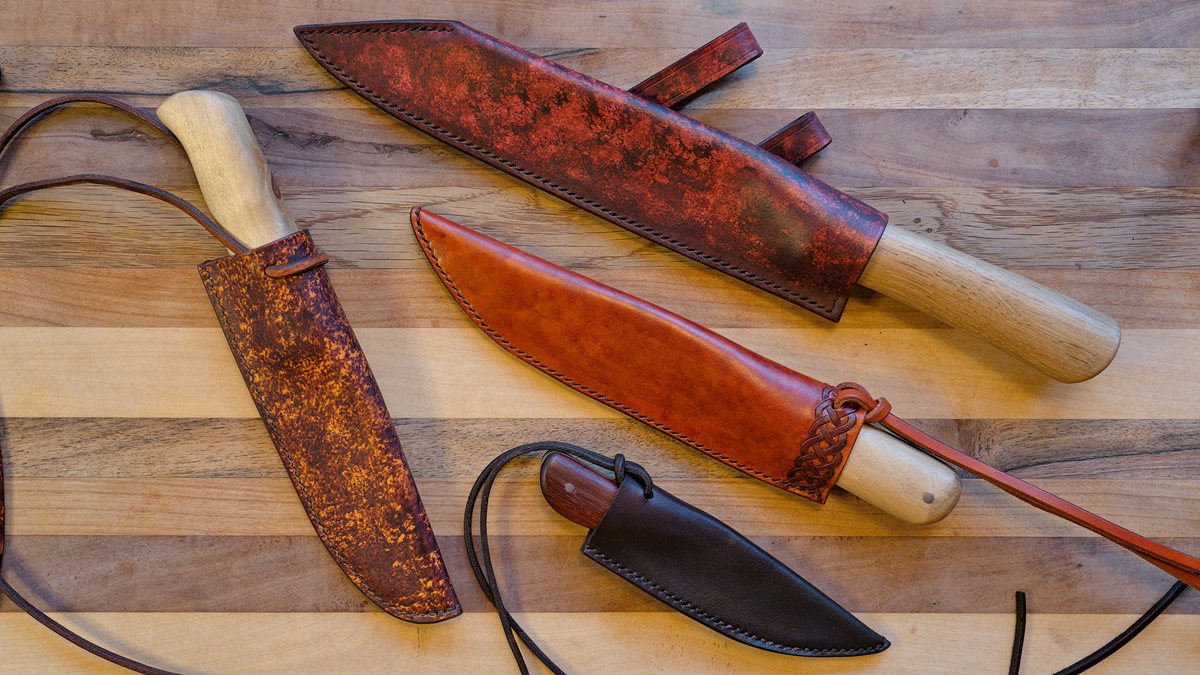
Picture a family reunion at a county park. Someone needs to cut the twine on a hay bale, and three knives come out at once. Your uncle has an old stockman he has carried since high school. Your cousin has a big fixed-blade on her belt from deer camp. A nephew who just turned twenty pulls an automatic from his pocket and flicks it open, and somebody says, "Isn't that illegal?"
Probably not, but the reason surprises people. Iowa changed its weapons laws in 2021, and much of what people remember about knife law is out of date. Blade length and concealment still matter, though, for some people and in some places.
Here is how Iowa law actually treats knives today. It is education, not legal advice, and laws change, so check the current Iowa Code or ask an Iowa attorney about your own situation. By the end you should be able to look at a knife and a plan for your day and tell whether either one raises a legal question.
Why the old rules stick around: What changed in 2021
For decades, Iowa's carrying law made it a crime to carry a concealed "dangerous weapon" without a permit, and it set specific penalties for carrying a concealed knife with a blade longer than five inches, and stiffer ones over eight inches. Many Iowans learned those numbers from a parent or a hunter education instructor, and they still repeat them.
On July 1, 2021, Iowa's permitless carry law took effect. It rewrote the carrying section of the Iowa Code, section 724.4, so that the basic offense is now going armed with a dangerous weapon and using it in the commission of a crime. The old blade-length tiers for simply carrying a concealed knife are gone. For an adult who is not otherwise prohibited, carrying a knife openly or in a pocket is no longer a crime in itself, whatever its length.
Think of it like a speed limit sign that was taken down. People who drove that road for years may still slow down at the spot out of habit, and that does no harm. The trouble comes when the old rule is passed along as current law, or when someone assumes that because one rule went away, every rule did. Several rules still apply.
For an ordinary adult, carrying a knife in Iowa is generally lawful, but "generally" depends on who you are, where you are and what you are doing.
The "dangerous weapon" label: Why the definition still matters
Iowa Code section 702.7 defines a dangerous weapon in two ways. The first is anything designed primarily to kill or injure a person or animal. The second is any object, even an ordinary tool, that someone actually uses in a way that shows an intent to kill or seriously injure. The section then lists examples, and several are knives: Daggers, razors, stilettos, switchblade knives, and any knife with a blade longer than five inches.
That is where the five-inch number still lives. It no longer decides whether you may carry the knife. It decides whether the knife is automatically a "dangerous weapon," and that label is what triggers the rules in the next sections for minors, intoxication, prohibited persons and crimes.
Notice also what the definition does not say. A three-inch pocket knife is not on the list, and it is not designed primarily to hurt people, so in ordinary use it is simply a tool. But the second half of the definition means any knife becomes a dangerous weapon the moment it is used to threaten or injure someone. The law looks at the object and at how it is used.
| Knife | On the 702.7 list? | What that means |
|---|---|---|
| Folding pocket knife, blade 5 inches or less | No | Treated as a tool unless it is used to threaten or injure |
| Hunting or utility knife, blade over 5 inches | Yes, by length | A dangerous weapon for purposes of the special rules below |
| Switchblade (automatic) knife | Yes, named | A dangerous weapon regardless of blade length |
| Dagger or stiletto | Yes, named | A dangerous weapon regardless of blade length |
| Ballistic knife (spring-launched blade) | Yes, and more | An "offensive weapon"; possession is a felony |
From top to bottom, the table moves from ordinary tool to tightly restricted item. Most knives people carry sit in the first row. A big camp knife, an automatic or a double-edged dagger moves into the middle rows, where the knife itself is legal for most adults but certain people and situations are not. Only the last row is off-limits to nearly everyone.
Key idea: The five-inch rule did not disappear. It moved from "may I carry this?" to "is this a dangerous weapon?", and that second question still matters for minors, drinking, prohibited persons and crimes.
Automatic and assisted knives: What Iowa and federal law each say
Iowa names "switchblade knives" as dangerous weapons but does not ban adults from owning or carrying them. An automatic knife, one that opens from a button or switch in the handle, is in the same position as a large fixed blade: Legal for an eligible adult, but subject to the special rules for dangerous weapons.
An assisted-opening knife is different. You start opening the blade yourself with a thumb stud or flipper, and a spring finishes the job. Federal law has treated knives built with a "bias toward closure," meaning the blade wants to stay closed until your hand overcomes it, as outside the federal switchblade definition since 2009. Most assisted knives are designed that way, which is why they are sold and shipped like ordinary folders.
Federal law still matters for true automatics. The federal Switchblade Act restricts moving automatic knives in interstate commerce and possessing them on certain federal lands, with exceptions such as members of the armed forces on duty. That is why some sellers will not ship an automatic knife to every state, and why you should check before ordering one shipped across state lines. Our guide to manual, assisted, automatic and OTF knives explains how each mechanism works.
In Iowa an adult may own and carry an automatic, but treat it as a dangerous weapon everywhere the dangerous-weapon rules apply.
Who may not carry: Minors and prohibited persons
Two groups face rules that ordinary adults do not.
Minors. Under Iowa Code section 724.4E, a person under 18 who goes armed with a dangerous weapon concealed on or about the person commits a serious misdemeanor. A young person can carry a typical pocket knife, which is not a dangerous weapon, but a concealed automatic, dagger or knife with a blade over five inches is a different matter. That rule is a good reason to start a young person with an ordinary folder or slipjoint, as we explain in our guide to a child's first pocket knife.
Prohibited persons. Section 724.8B says certain people may not carry dangerous weapons at all. That includes people who would be ineligible for a permit to carry weapons for reasons such as certain criminal convictions, people who illegally possess controlled substances, and anyone in the act of committing an indictable offense. If someone is barred from carrying a firearm, assume the same bar may reach a big knife or an automatic, and get legal advice.
Age and eligibility are the first checks. If either is in doubt, choose a small, ordinary folder, or ask an attorney before you carry anything on the dangerous-weapon list.
When the situation changes the answer: Alcohol, crimes and behavior
Some rules have nothing to do with the knife or the person and everything to do with the moment.
Alcohol and drugs. Section 724.4C makes it a serious misdemeanor to carry a dangerous weapon on or about your person, or within immediate reach in a vehicle, while intoxicated under the same standards Iowa uses for drunk driving. There are exceptions for your own home, business or land. Picture a fishing trip that turns into an evening around the fire with a cooler: The six-inch fillet knife on your belt is a dangerous weapon by length, and after a few drinks it is better off in the tackle box in the truck bed than on your hip. Our article on alcohol, drugs and carrying covers this rule in more depth.
Use in a crime. Under section 724.4, going armed with a dangerous weapon and using it to commit a crime is its own aggravated misdemeanor, on top of whatever the underlying crime is. Remember that any knife becomes a dangerous weapon when it is used to threaten or injure.
Behavior that worries people. Section 724.4D requires a person carrying a dangerous weapon to cooperate with an officer who is investigating behavior that creates a reasonable suspicion of danger. Waving a knife around, opening and closing it as a nervous habit, or flicking an automatic in a crowded place can draw that kind of attention even when the knife itself is legal.
Common mistake: Treating an opened knife as a way to settle an argument. Displaying a blade during a confrontation can turn an ordinary tool into a dangerous weapon in the eyes of the law and add charges to an otherwise minor situation. Keep the knife closed and in your pocket, and walk away.
A knife that is legal in your pocket can become a legal problem the moment alcohol, a crime or a threat enters the picture.
Places with their own rules: Schools, courthouses and federal buildings
Iowa has a strong preemption law, section 724.28. Cities and counties may not pass their own ordinances regulating weapons that are otherwise lawful under state law, so a knife that is legal in Des Moines is legal in Ottumwa and Sioux City. There is one important exception. A city or county may restrict weapons inside a building it controls if it screens people coming in and provides armed security. When you see a metal detector and a deputy at the door, expect that rule to apply.
Other places follow other rules.
- Schools. Iowa's school-grounds felony is written about firearms, but schools set their own rules for students, staff and visitors, and a knife can still mean discipline or being turned away. Leave it in the vehicle.
- Courthouses. Courtrooms and court offices may prohibit weapons, and screened courthouses enforce it at the door.
- Federal buildings. Federal law bars dangerous weapons in federal facilities, including post offices and Social Security offices, but excludes a pocket knife with a blade of less than 2 1/2 inches. Many federal buildings screen for knives anyway, so plan as if yours will be found.
- Airports. The TSA does not allow knives in carry-on bags, except rounded, blunt butter knives and plastic cutlery. Knives may go in checked bags if they are sheathed or securely wrapped.
- Private property. A business, employer or homeowner can set its own rules. If a store or workplace says no knives, the answer is to follow it or go elsewhere.
Of these, airports catch the most people, because a pocket knife becomes so much a part of you that you forget it is there. The habit that prevents most of these problems is the same one: Before you leave the vehicle, ask whether the place ahead screens or posts rules, and if it does, leave the knife behind.
Good practice: Give your knife a home in the vehicle, such as a small locking box or a specific console pocket, so leaving it behind is quick and you always know where it is when you come back.
Hunting, fishing and work: Where long blades belong
Many Iowans carry their longest blades in the field, not in town. A deer knife, a fillet knife or a machete for clearing a fence line may be a "dangerous weapon" by length, but carrying it for hunting, fishing or work is lawful for an eligible adult, and the reason you have it is plain from what you are doing.
The rule changes are about what comes after. The six-inch fillet knife that made sense on the dock still counts as a dangerous weapon when you stop at a bar on the way home. The big fixed blade from deer camp still counts if you carry it into a county building. When the work is done, the long blade goes back in the truck or the tackle box, and an ordinary pocket knife does the rest of the day's jobs. Our guides to choosing a deer-season knife and fillet knives for Iowa fishing cover those tools.
Carry the long blade for the job, and put it away when the job is over.
Leaving Iowa: Why your knife may not be legal across the river
Iowa's rules end at the state line. Neighboring states and cities outside Iowa may limit blade length, automatic knives, concealed carry of knives or carrying in certain places, and some cities in other states have their own ordinances where state law allows them. A knife you carry without a second thought in Iowa could be a problem on a road trip, at an out-of-state ballgame or on a hunting trip.
Before you travel, look up the law where you are going, using that state's official code or legislature website, and check any city you will spend time in. If the answer is unclear, carry a small, ordinary folder or leave the knife at home. The same goes for travel by air: Pack it in checked luggage, sheathed or wrapped, or leave it home.
Your knife follows the law of the place you are standing in, not the place you bought it.
Putting it together
Iowa law is friendly to knife owners, but it is not a blank check. Start with the knife: An ordinary folder is a tool, while a long blade, an automatic, a dagger or a stiletto is a dangerous weapon by definition, and a ballistic knife is off-limits. Then check the person: Minors may not conceal a dangerous weapon, and prohibited persons may not carry one. Then check the moment and the place: Alcohol, a crime, a threat, screened buildings, federal facilities, airports, private rules and other states all change the answer.
Run those three checks, the knife, the person and the place, and you will rarely be surprised. When you are unsure, the most practical choice is the smallest knife that does the job.
Check your understanding
Try answering these before you open the answer. If you can decide what to do and explain why, you have it.
1. A coworker says it is illegal in Iowa to carry a folding knife with a blade over five inches in your pocket. Is that right today?
Not for an ordinary adult. Since July 1, 2021, carrying a concealed knife is not a crime in itself for an eligible adult. The five-inch length now matters because it makes the knife a "dangerous weapon," which brings in the rules for minors, intoxication, prohibited persons and use in a crime.
2. A 16-year-old wants to carry an automatic knife in his jacket pocket. What is the problem?
An automatic is a switchblade knife, which Iowa lists as a dangerous weapon. A person under 18 who carries a concealed dangerous weapon commits a serious misdemeanor. An ordinary small folder or slipjoint would not raise that issue.
3. After a day of fishing, you stop at a restaurant and have several drinks with the six-inch fillet knife still on your belt. What rule could apply?
Section 724.4C makes it a serious misdemeanor to carry a dangerous weapon while intoxicated, and a knife with a blade over five inches is a dangerous weapon by definition. Leave the fillet knife in the vehicle, out of reach.
4. Your city council wants to ban knives over three inches in city parks. Can it?
Generally no. Iowa's preemption law bars cities and counties from regulating weapons that are lawful under state law. The exception is a building the city controls where it screens entrants and provides armed security.
5. You need to mail a package at the post office and have a three-inch pocket knife in your pocket. What should you do?
Leave it in the vehicle. Federal law bars dangerous weapons in federal facilities, and its exception covers only pocket knives with blades of less than 2 1/2 inches.
Where to go next
You can find pocket and fixed-blade knives on our website, and anything listed there can be ordered if it isn't in stock.
To understand what makes a knife an automatic, an assisted opener or an OTF, read our guide to manual, assisted, automatic and OTF knives. For the habits that keep a lawfully carried knife from hurting anyone, our knife safety tips cover grip, blade path and closing. If you are choosing a knife to carry every day, how to choose the right everyday carry knife walks through size, shape and lock. And if you are getting ready for a young person's first knife, our guide to a child's first pocket knife covers what to buy and how to teach it.
Photo: "Knives in cases (DSC08322)" by Trougnouf (Benoit Brummer), via Wikimedia Commons, licensed CC BY 4.0; cropped.

If this article helped you, we invite you to sign up for email notifications of new blog articles.