
Holster Retention Levels: What Level I, II and III Really Mean
Joseph McLain Nov 07, 2026
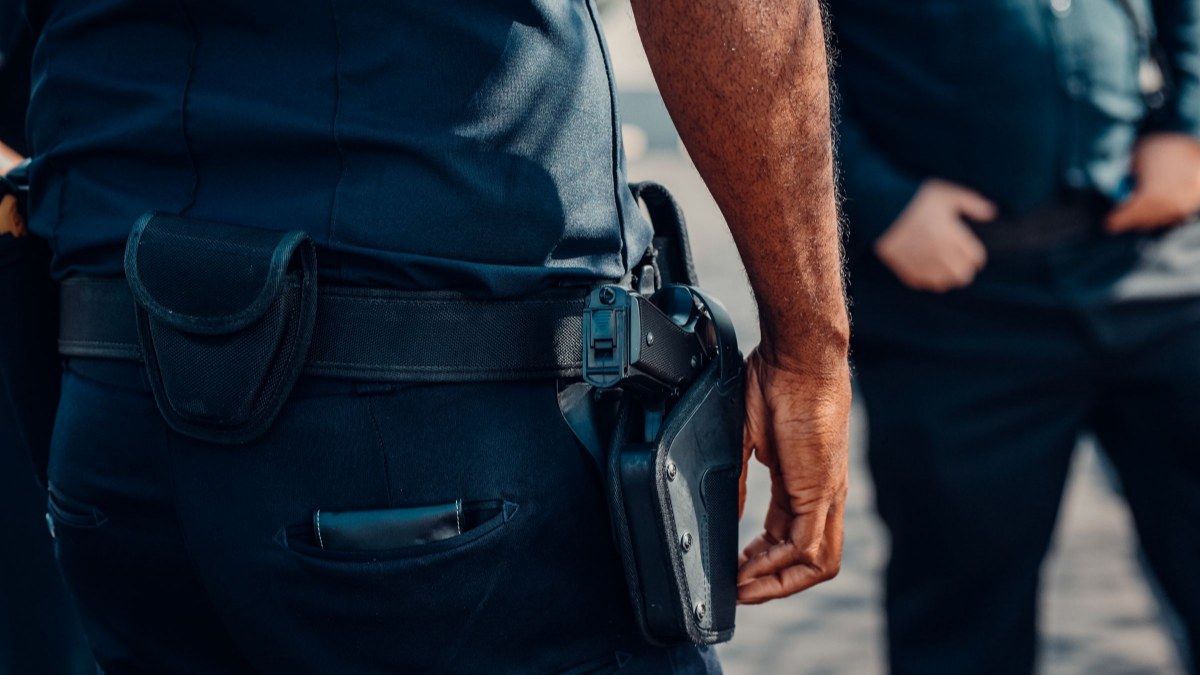
Set two holsters side by side. The first is a well-molded Kydex holster. Push the pistol in and it clicks into place, and it stays there until you pull firmly on the grip. The second has an internal lock that grabs the pistol automatically when it seats, and the gun will not come out until you press a lever with your thumb. Which one is Level I?
A common shorthand calls a friction holster Level I, a holster with a button Level II and one with a hood Level III, which would make a duty holster with a hood and a thumb lock Level III. Manufacturers' websites use other definitions again. The surprising truth is that both holsters above can be sold as Level I, depending on who made them, because there is no single industry-wide definition of retention levels.
By the end you should understand what retention is for, the difference between passive and active retention, and where the level numbers came from and why they confuse people, so you can look at any holster, ignore the number on the box and explain exactly what holds the gun in and what it takes to get it out.
What retention is supposed to do
A holster has several jobs at once. It has to cover the trigger so nothing can touch it, stay attached to your belt, let you get a firm grip and draw cleanly, and hold the gun in place. Retention is that last job, and it really covers two different problems.
The first problem is accidental loss. You bend down to tie your boot, run for the truck in the rain, climb over a fence or slip on ice. The holster has to keep the gun seated through ordinary movement and the occasional bump. The second problem is someone else taking the gun. If another person sees your pistol and decides to grab it during a struggle, the holster should give you a meaningful advantage.
Those two problems are not the same, and a holster can be good at one and weak at the other. A tight molded holster can keep a gun perfectly secure while you hike all day and still let it come out if someone pulls hard straight up along the normal draw path. A holster with a mechanical lock resists that pull, but only if the lock is engaged, the holster is mounted solidly and you know how to work it yourself.
Key idea: Retention is a system, not a number. What holds the gun, what releases it, how the holster is mounted and whether you can operate it reliably all matter more than the level printed on the package.
That is also why the most complicated holster is not automatically the best one. Security you cannot operate smoothly creates a different safety problem. Start by asking which problem you are solving, accidental loss, someone else grabbing the gun or both.
Passive retention: Holding the gun without locking it
Most modern concealment holsters use passive retention. A rigid Kydex or polymer shell is molded around part of the pistol, usually including the trigger guard. That shape creates resistance as the gun starts to come out, and many designs let you adjust the tension with a screw. A well-made, well-fitted leather holster can do something similar through careful molding.
Think of a snug lid on a food container. It clicks on and stays on when you carry it around, but a firm pull takes it off, and there is no latch to undo. That click you hear when the pistol seats is useful feedback that the gun is all the way in. It is not a lock.
For most people carrying concealed, good passive retention has real advantages. There is no release to find or operate under a shirt, the holster can be thin and comfortable, and it works especially well inside the waistband. But it depends on correct fit, sensible tension and a solid belt attachment. Cranking the tension screw until the gun is very hard to pull does not turn passive retention into a lock. It mostly makes your draw less predictable.
Here is a simple test. If the gun comes out when you pull hard enough in the normal draw direction, without anyone pressing, flipping or unsnapping anything, the retention is passive. That does not make it a poor holster. It just tells you what kind of protection it gives you and what it does not.
Active retention: A deliberate obstacle
Active retention adds a device that must be deliberately released before the gun can come out. It might be an internal lock released with your thumb, a rotating hood over the back of the slide, a thumb-break strap with a snap, or another mechanical restraint. What makes it active is not whether you can see it. It is whether the gun is physically blocked until you perform a release.
Take Safariland's ALS (Automatic Locking System). When you holster the pistol, an internal lock engages on its own. When you draw, your thumb presses a lever as you grip the gun. Someone pulling on that pistol without releasing the lock meets a solid stop, not just more friction. That is a different kind of protection, not merely a stronger version of the same thing.
An old leather holster with a thumb-break snap is also active retention, but it is a very different device from a modern internal lock. Calling both "active" tells you the shared principle. It does not mean they offer the same security.
Where the release sits matters a great deal. Most good designs put it under your thumb, because your thumb is already moving to its place on the grip during a normal draw, and your trigger finger stays straight along the frame. Some older designs put a release button under the index finger. Training writers have warned about those, because if you press hard and the finger keeps moving as the gun clears the holster, it can travel toward the trigger. Judge an active holster by where the release is and how it moves, not by what the box calls it.
Where the levels came from, and why they confuse people
Retention levels started in the 1970s with Bill Rogers, a former FBI agent and firearms instructor who designed duty holsters and developed a test of how well they resisted someone trying to snatch the gun. Safariland bought the Rogers Holster Company in 1985 and built its rating system from that approach. The original idea was about resisting a gun grab under specified test conditions, not about counting straps.
Over time other companies borrowed the words but not the test. Some counted the number of release movements. Others counted features and treated friction as the first level. Some began calling friction-only concealment holsters Level I. The result was predictable: Two holsters can carry the same level number and work completely differently. In 2014 the National Institute of Justice pointed to exactly this lack of a common standard when it explained why duty holster retention testing needed one.
The practical lesson is that a level number only means something when you know whose system it comes from and what testing stands behind it.
Safariland's system: Count the release movements
Safariland publishes a clear definition for its duty-rated holsters. Each level is based on the number of distinct hand movements needed to free the pistol, and the holster must pass Safariland's grab-and-snatch test while mounted on an approved Safariland mount and duty belt. Importantly, Safariland does not count passive friction as a level at all.
- Level I. The ALS internal lock, released with one thumb movement.
- Level II. The SLS rotating hood alone, which takes two movements to clear, or an ALS holster with an added guard over its lever.
- Level III. ALS and SLS together, three movements, which Safariland describes as the most common choice for patrol duty.
- Level IV. ALS, SLS and an additional Sentry guard, four movements, more common in corrections.
Notice that a Safariland Level I holster has a real mechanical lock, and a Level III holster has two locks, not three. The level counts movements, not devices.
How that compares with other brands
Blackhawk's T-Series shows how the same words can mean different things. Its Level 2 duty holster combines passive retention with a thumb-operated lock, roughly the same idea as a Safariland ALS Level I. Its Level 3 adds a strap across the back of the pistol. Neither naming system is wrong, and neither proves one brand is better. They are simply counting differently.
| What the holster actually has | Common feature-counting name | Safariland duty rating |
|---|---|---|
| Molded fit or friction, no lock | Often called Level I | Not a retention level |
| Friction plus one thumb-released lock | Often called Level II | Level I (ALS) |
| Rotating hood, two-movement release | Varies | Level II (SLS) |
| Internal lock plus rotating hood | Often called Level III | Level III (ALS and SLS) |
Across each row, the same holster wears two different numbers. Treat it as a teaching comparison, not a conversion chart for every brand. The common belief that "Level I is friction, Level II is a button, Level III is a hood" blends pieces of different systems into a rule that does not reliably describe any of them.
Common mistake: Buying by the number on the box. A "Level III" from an unfamiliar maker with no explanation of its mechanism or testing tells you less than a clearly documented Level I or II from a reputable manufacturer.
Not every hood is a lock
The word "hood" causes a lot of confusion because it describes several different parts. A rotating retention hood, like Safariland's SLS, wraps over the back of the gun and physically blocks it from coming out. A hood guard is a shield that protects the hood's release from an outside hand or a seat belt; it does not necessarily add a lock. An optic hood or dust cover on a red-dot holster keeps rain, mud and bumps off the sight, and it may flip out of the way on the draw without locking anything. Some release guards simply cover a thumb lever.
Instead of memorizing the shapes of plastic parts, ask one question: What has to be deliberately moved before the pistol itself is free? That question cuts through every naming scheme on the market.
Why it matters in a gun grab
Picture someone carrying openly on the belt. Anyone nearby can see the gun and where the grip sits. A person with bad intentions does not have to discover that a gun is there, and an encounter can begin with a grab rather than a conversation.
With a friction-only holster, the only things in the way are the holster's tension and whatever you can do to protect the gun with your body and hands. With a locking holster, the attacker also has to defeat a release they may not understand. That extra obstacle buys you time, which is valuable, but it is not a force field. Mounts can break, a hood can be left unsnapped and a determined person can figure out a mechanism. Even Safariland's test simulates grab attempts for a limited time; it does not promise a gun can never be taken.
The other side of the trade-off matters just as much. You have to operate the device too. A holster is not well chosen if you have to hunt for the release, shift your grip awkwardly to clear a strap or make movements that pull your trigger finger out of position. More retention is not always better. Enough retention, operated smoothly and correctly, is better.
Inside or outside the waistband is about location, not retention
Inside-the-waistband (IWB) and outside-the-waistband (OWB) describe where a holster rides, not how it holds the gun. Many IWB holsters use passive retention because a thin molded shell conceals well, but active IWB designs exist. Many OWB holsters are friction-only range or concealment holsters with no lock at all.
The more useful distinction is concealed versus exposed. Concealment reduces the chance that someone knows a gun is there to grab. It does not eliminate it, because clothing rides up and struggles happen. Exposed carry puts the gun in plain view and is the strongest reason to look hard at active retention and a solid mount.
Choosing retention for the way you actually carry
Everyday concealed carry
For most people carrying discreetly inside the waistband, a rigid, correctly fitted passive-retention holster is the most practical starting point. It should stay put when you bend and move, hold its position when you draw, cover the trigger completely and not require any manipulation under your shirt. There is usually no need for a duty holster designed for exposed carry and physical confrontations. If you do choose active retention for concealment, make sure you can release it smoothly with your normal clothing in place, not just in a quick check.
Concealed OWB and open carry
An OWB holster worn under a jacket or untucked shirt can work well with passive retention, but concealment is less consistent when a coat flaps open or you reach overhead. The more likely it is that your gun will be visible, the more a simple thumb-released lock makes sense. For true open carry, an established active-retention design with a natural thumb release is the sensible choice, along with a sturdy belt and mount. One well-designed lock you can operate without thinking is usually better than an unfamiliar multi-stage holster.
Uniformed and duty work
A uniformed officer or security officer may have to restrain people, break up fights and work within arm's reach of someone resisting, with the gun in plain view. That is why agencies often require tested multi-stage holsters, commonly Level III in Safariland's system. A volunteer on a church safety team carrying concealed does not face the same exposure, though a visibly armed guard who expects hands-on work has a strong case for duty-rated retention and formal retention training.
Farm work and outdoor activity
If you climb equipment, walk through brush or lift and bend all day, accidental loss becomes the bigger concern. A good passive holster may be enough, but a positive lock can be worth it even when nobody is trying to take your gun. The only real test is wearing your actual holster, on your actual belt, through the movements of your actual day.
The rule across all of these: Match retention to how likely it is that someone else could reach your gun and how hard your body works, not to a desire for the biggest number.
A great rating on the wrong holster is still the wrong holster
The retention level is only one part of the equipment. A Level III duty holster hung on a flimsy paddle or an incompatible mount can be ripped off the belt entirely, locks and all. That is why Safariland ties its ratings to approved mounts and belts.
Fit matters just as much. A holster for one pistol may not properly fit a different generation, slide cut, optic or weapon light. Some light-bearing holsters hold the gun by the light, and changing the light can change everything. Manufacturers have issued service bulletins on specific gun, light and holster combinations for exactly this reason. Check the maker's compatibility list for your exact setup, and look again whenever you change anything. Our guide to weapon-mounted pistol lights covers light-bearing holsters in more detail.
Finally, wear and construction count. A holster that collapses after the draw, lets debris into the trigger guard, has loose screws or no longer holds the gun firmly needs to be fixed or replaced, whatever level it claims.
Safety: Whenever you switch to a holster with a different release, practice with a verified unloaded pistol or an inert training gun, with all ammunition out of the room, until the release is automatic. The goal is not speed. It is a draw you can perform the same safe way every time.
Identifying your holster's real retention
Your own holster can tell you what the box doesn't. With the pistol unloaded, the slide locked open, the chamber and magazine well confirmed empty and all ammunition in another room, holster the empty pistol where you normally carry it and identify what physically holds it: friction only, a lock, a hood, a strap or a combination. Count the separate movements needed to free the gun and which finger makes each, watching that your trigger finger stays straight along the frame. Bending, sitting, kneeling and climbing a step show whether the gun shifts or the holster moves on the belt. Comparing what you observed with the maker's description and compatibility list for your exact pistol, light and optic tells you what your retention really is and whether it fits how you carry.
Putting it together
There is no reliable rule that Level I means friction, Level II means a button and Level III means a hood. Friction is passive retention, and it can be excellent for everyday concealed carry. A strap, hood or internal lock is active retention when it must be deliberately cleared. Safariland counts release movements and does not count friction; other brands count features. Both approaches are on the shelf.
When you shop, ask four questions in order. What physically holds the gun? What releases each device? Is the rating explained and tested, and does it depend on a particular mount? And does this holster fit the risks you actually face? For most concealed carriers, a quality passive holster is the right answer. For exposed carry, a reputable active design makes sense. For duty work with likely physical struggles, a tested multi-stage system deserves serious consideration. The number on the package does not protect your gun. The fit, the mechanism, the mount and your ability to use them do.
Check your understanding
Try answering these before you open the answer. If you can decide what to do and explain why, you have it.
1. Two holsters are both labeled Level I. One is molded Kydex, the other has a thumb-released internal lock. How can both labels be honest?
There is no single industry standard. Some makers count friction as Level I. Safariland does not count friction at all and calls its single-lock ALS holster Level I because it takes one release movement.
2. Your friend tightens the tension screw on his Kydex holster until the gun is very hard to pull. Has he added active retention?
No. The gun still comes out with enough force in the draw direction and no release, so it is still passive. He has mainly made his draw less predictable.
3. Why might a Safariland Level III holster have only two locking devices?
Safariland counts release movements, not devices. The SLS hood takes two movements and the ALS lock takes one, for a total of three.
4. You plan to open carry while walking a county fair. What retention would you look for, and why?
An established active-retention design with a natural thumb release on a solid belt and mount. The gun is visible to everyone, so someone could decide to grab it without first discovering it, and a lock buys you time.
5. Your duty holster is rated Level III, but you mounted it on a cheap paddle. What is the weakness?
The whole holster can be pulled off the belt, bypassing every lock. Ratings like Safariland's depend on approved mounts and belts.
Where to go next
To make your concealed holster comfortable enough that you stop adjusting it, read our guide to holster rake and cant. If you are weighing whether to carry openly at all, open carry or concealed carry walks through the trade-offs. For the day-to-day habits that keep a holstered gun under control, see everyday concealed carry. And if your pistol wears a light, weapon-mounted pistol lights explains how lights and holsters have to match.
If this article helped you, we invite you to sign up for email notifications of new blog articles.