
Bore Solvents, CLPs and Lubricants: What Each Gun-Care Product Actually Does
Joseph McLain Nov 07, 2026
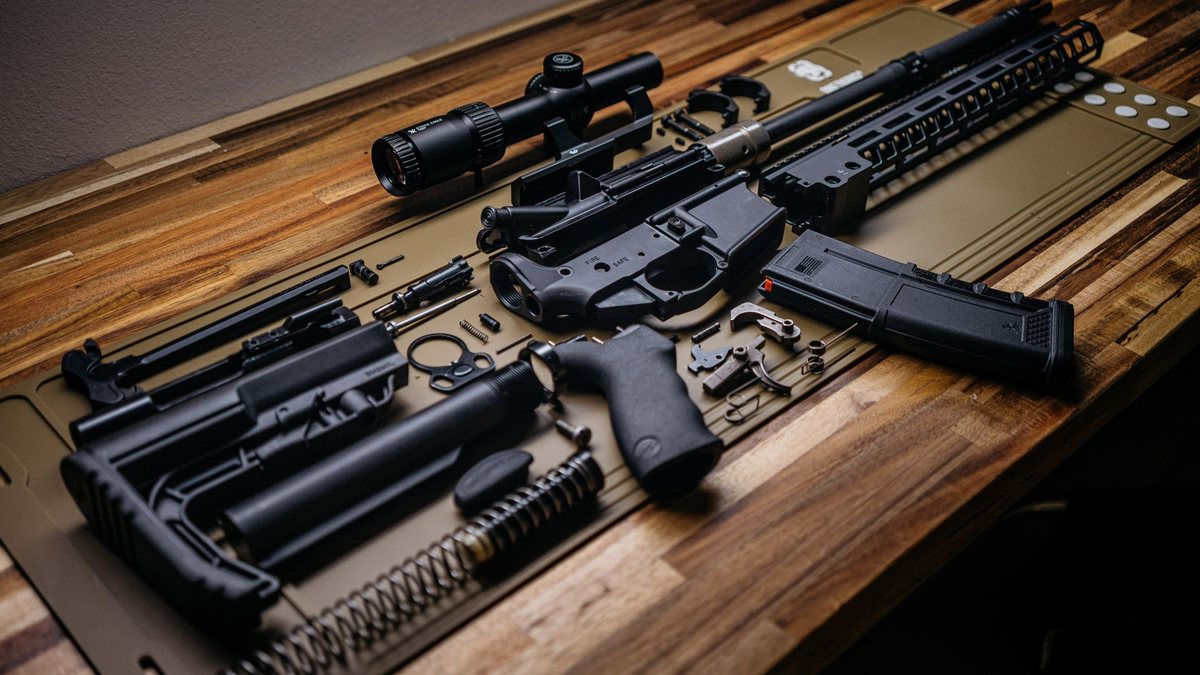
You walk down the gun-care aisle looking for "gun cleaner" and find a wall of bottles. There is the brown bottle your grandfather used, whose smell you would recognize anywhere. There is a newer black bottle from the same company. There are CLPs that claim to clean, lubricate and protect all at once, synthetic lubricants with names like "extreme weapons lubricant," and cleaners advertised as odorless and non-toxic. Is the classic solvent all you need, or a good CLP, and can a cleaner double as a lubricant? The products all work, but for jobs that aren't quite the same.
By the end you should understand the different jobs gun-care chemicals are designed to do and how to tell from a label which job a product is built for, so you can explain the difference between a solvent, a CLP and a dedicated lubricant, put together a small, sensible kit for the guns you own and use it safely.
Three jobs: Clean, lubricate and protect
Every product on that wall is trying to do one or more of three things.
- Clean. Dissolve or loosen fouling so it can be wiped or brushed away. Powder fouling, or carbon, is the most common. Metal fouling, meaning copper from jacketed bullets and lead from lead bullets, sticks to the rifling and takes a different kind of chemistry to remove.
- Lubricate. Put a film between metal parts that slide against each other, so they move smoothly and wear slowly. A good lubricant stays where you put it and keeps working as parts heat up.
- Protect. Leave a thin coating on steel that keeps moisture and the salts from your hands off the metal, so rust cannot start.
The difficulty is that the chemistry that makes a product an aggressive cleaner is often not what makes it a long-lasting lubricant, and the thin film that protects best in storage may be too light to lubricate a hard-working action. Think of the difference between dish soap, cooking oil and car wax. All three go on surfaces in your kitchen and garage, and each is excellent at its own job, but you would not wax a frying pan. Gun-care products are similar. A single bottle that does all three jobs is convenient and genuinely useful, but it is a compromise, and knowing that helps you decide when the compromise is fine and when it is not.
Key idea: Match the product to the job. Solvents clean, lubricants reduce friction and wear, protectants keep moisture off steel, and a CLP does a reasonable job of all three in one bottle.
Bore solvents: The cleaners
A bore solvent is made to break down fouling. Most general-purpose solvents target powder fouling and light metal fouling. Hoppe's No. 9, which has been sold since the early 1900s, is the classic example and the source of the smell many shooters associate with cleaning day. Traditional solvents like it work well on carbon and moderate fouling and are easy to find, but many have strong fumes, so they belong in a well-ventilated space.
Copper solvents are a more specialized group. Rifles that shoot many jacketed bullets build up copper in the bore, and copper removers are designed to dissolve it. Some are ammonia-based and quite aggressive, which is why their labels often limit how long they may stay in a bore and warn against letting them sit on certain finishes. Follow those directions exactly, and never mix different cleaners in the same bore, because some combinations react with each other.
Many manufacturers now sell cleaners formulated to be lower in odor, water-based or less hazardous to handle, and some are marketed as non-toxic. M-Pro 7 is one well-known example of a cleaner sold on that basis. Lower-odor cleaners make cleaning indoors more pleasant. As with any product, read the label to see what kinds of fouling it is meant to remove, because a cleaner that is gentle on you may be gentler on heavy copper fouling as well.
A solvent's job ends when the fouling is gone. Most solvents are not meant to stay on the gun as its lubricant or rust protection, so the routine is to clean with the solvent, wipe it away with dry patches and a cloth, and then apply a lubricant or protectant. If you are building a routine from scratch, our guide to how to clean and maintain a firearm walks through the steps in order.
CLPs: One bottle for routine care
CLP stands for cleaner, lubricant and protectant. A CLP is designed to loosen fouling, leave a lubricating film and protect against corrosion from the same bottle. Break-Free CLP is the best-known example and has a long history of military use; the U.S. military buys CLPs to a published performance specification, which is part of why the category became popular with civilian shooters.
The appeal is obvious. One bottle in a range bag or a cleaning kit covers a quick wipe-down, a light cleaning and lubrication in the field. For many pistols and rifles that are cleaned regularly and not pushed hard, a quality CLP is all the chemistry needed. The compromise shows up at the extremes. A dedicated solvent will usually remove heavy carbon or copper faster, and a dedicated lubricant may hold up better on an AR-15 bolt carrier that is run hot and hard, or in very cold weather. If you shoot a lot, it is common to keep a CLP for routine care and add one specialized product for the job your guns demand most.
Common mistake: Using a CLP the way you would a solvent, then leaving the gun soaking wet. Wipe away the loosened fouling and excess product, and leave only a thin film. A gun that is dripping attracts grit no matter what is on it.
Dedicated lubricants: For parts that work hardest
A dedicated lubricant is formulated only to reduce friction and wear, and to keep doing so under heat, pressure and repetition. Slip 2000 EWL, an "extreme weapons lubricant," and the lubricants sold in Hoppe's newer Black line are examples of products sold this way. Lubricants come as thin oils, heavier oils and greases. Thin oils flow into small spaces and suit most actions and slides. Greases stay put on heavily loaded surfaces, such as the locking lugs of some rifles or certain slide rails, but can attract dirt and stiffen in cold weather.
The right lubricant depends on what the manufacturer of your gun recommends, where on the gun it goes and the conditions you shoot in. In cold weather, use less, and use a product rated for low temperatures, because thick lubricant can slow a firing pin or a bolt. In dusty conditions, a light film attracts less grit than a heavy coat. On guns that run hot and fast, like a busy AR-15, a lubricant designed for heat and high round counts can extend the interval between cleanings.
Protectants: Keeping rust away in storage
Rust protection is often overlooked until a gun comes out of the safe with orange spots. A protectant leaves a thin film on bare and blued steel that blocks moisture and the salts from your skin. Many CLPs and oils protect reasonably well for normal use. For long-term storage, or for guns kept in damp places, products made specifically to prevent corrosion leave a longer-lasting film. Wipe every surface you touched with bare hands, because fingerprints are one of the most common starting points for rust.
Comparing the common product types
| Product type | Main job | Examples | Best used for | Watch for |
|---|---|---|---|---|
| Traditional bore solvent | Clean powder and light metal fouling | Hoppe's No. 9 | General cleaning of pistols and rifles | Strong fumes; wipe it out before lubricating |
| Copper solvent | Remove copper fouling | Ammonia-based and other copper removers | Rifles that shoot many jacketed bullets | Follow dwell-time limits; do not mix with other cleaners |
| Lower-odor cleaner | Clean with fewer fumes | M-Pro 7 and similar | Indoor cleaning, sensitive households | Check what fouling it is designed for |
| CLP | Clean, lubricate and protect | Break-Free CLP | Routine care, range bags, one-bottle kits | A compromise at extremes; leave only a thin film |
| Dedicated lubricant | Reduce friction and wear | Slip 2000 EWL, Hoppe's Black lubricant, gun greases | Hard-working actions, high round counts | Use less in cold; follow the gun maker's guidance |
| Protectant | Prevent rust | Corrosion-prevention oils and films | Long-term storage, damp places | Wipe off excess before shooting |
Start from the job, not the brand. If your problem is copper in a rifle bore, no CLP will match a good copper solvent. If your problem is a gritty, dry AR bolt, a dedicated lubricant earns its place. If your problem is rust in the safe, a protectant does more than either. Brands appear here only as familiar examples of each type; products within a type differ, and the label is the best guide to what a specific bottle is designed to do.
Special case: Corrosive surplus ammunition
Some older military surplus ammunition uses corrosive primers, which leave salts in the bore and action that attract moisture and cause rust quickly, sometimes overnight. Ordinary solvents and oils do not dissolve those salts well. The usual guidance is to clean the same day with a cleaner made for corrosive residue, or with water-based cleaning that dissolves the salts, then dry the parts completely and oil them. Pay attention to gas systems as well as the bore. If you are not sure whether your ammunition is corrosive, treat it as if it is.
Safety with gun-care chemicals
Gun-care products are chemicals, and their labels deserve the same attention as any household chemical. Work with ventilation, wear eye protection, and consider nitrile gloves, since fouling contains lead and solvents dry out skin. Keep products sealed, labeled and away from children, heat and open flame, since some are flammable. Never use gasoline or other fuels as a cleaner. Wash your hands with soap and cold water when you finish.
A three-bottle kit
Most owners need only three bottles, chosen by the guns and how they're used. One cleaner matched to your most common fouling, one lubricant or CLP your gun makers' manuals allow, and one protectant if any gun is stored for long periods or in a damp place cover nearly everything. At the next cleaning, with the gun unloaded and ammunition out of the room, clean, wipe the cleaner out completely, lubricate only the points the manual shows, and wipe exterior surfaces with a lightly oiled cloth. After a range trip or a month of storage, a smooth action, a bore that patches clean in a few passes and no new rust show the kit is doing its job.
Putting it together
Each common view is right in part. The classic solvent really does clean well. A good CLP really can be the only bottle many owners need for routine care. And a cleaner really is not always a good lubricant, because those jobs pull chemistry in different directions. The sensible approach is to decide which jobs your guns need done, choose one product for each job that matters, follow the labels and your gun makers' guidance, and leave only a thin film behind.
Check your understanding
Try answering these before you open the answer. If you can decide what to do and explain why, you have it.
1. A bottle says "CLP." What three jobs is it designed to do?
Clean, lubricate and protect: it loosens fouling, leaves a lubricating film and helps prevent corrosion.
2. After scrubbing your bore with solvent, you leave it wet as lubrication. Why is that a mistake?
Solvents are made to dissolve fouling, not to keep lubricating or protecting metal. Wipe them out, then use a lubricant or protectant for those jobs.
3. Your rifle shoots many jacketed bullets and accuracy is falling off. Which product type addresses the likely cause?
A copper solvent, used exactly as its label directs, removes copper fouling that general solvents and CLPs handle less effectively.
4. Why use less lubricant in very cold weather?
Thick or heavy lubricant can stiffen in the cold and slow moving parts such as a firing pin or bolt.
5. What is different about cleaning after corrosive surplus ammunition?
Corrosive primer salts cause rust quickly and do not dissolve well in ordinary solvents. Clean the same day with a cleaner made for corrosive residue or water-based cleaning, dry thoroughly and oil.
Where to go next
For the step-by-step routine these products fit into, read how to clean and maintain a firearm. For the signs that point past cleaning to a repair, see when a firearm needs a gunsmith. For keeping guns dry and secure between uses, read proper gun storage. And if you shoot an AR-15, our guide to AR-15 barrel length explains how barrel and gas-system choices affect how hard the action works.
If this article helped you, we invite you to sign up for email notifications of new blog articles.